Photo credit: Atlantist Studio/Shutterstock.com
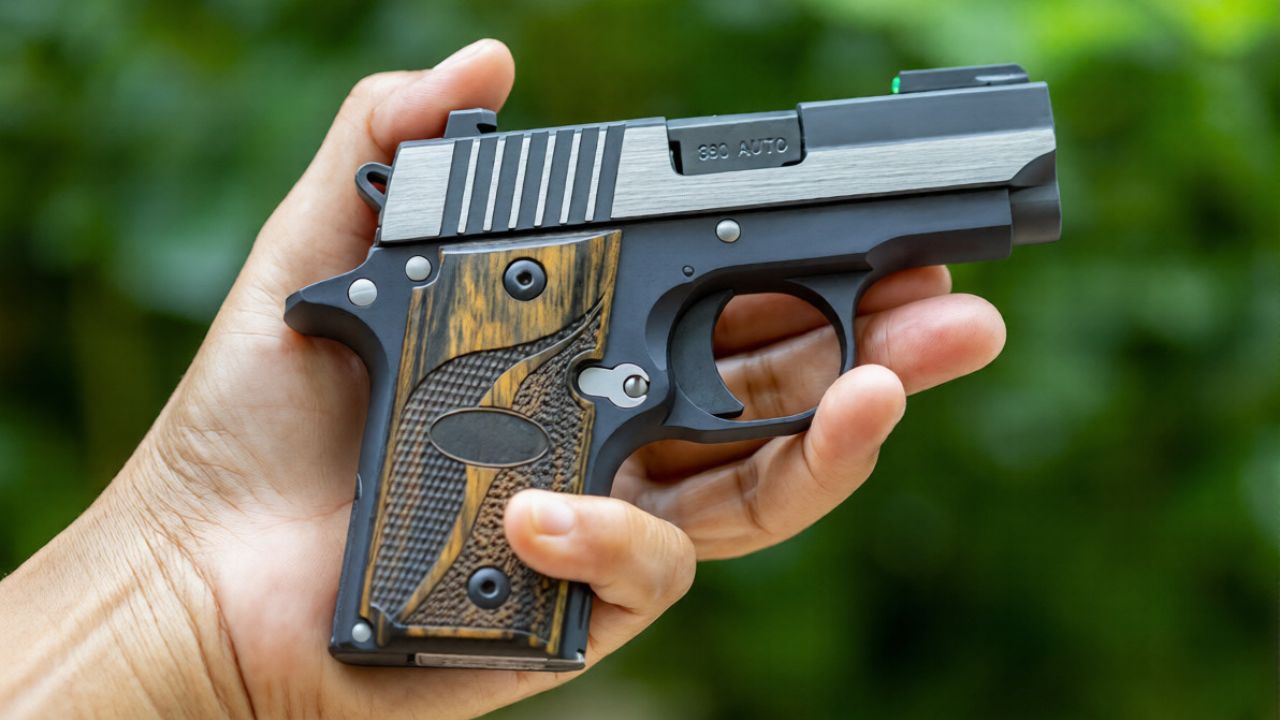
There’s a point a lot of shooters hit where smaller starts sounding better. Lighter, easier to conceal, easier to carry all day without thinking about it. That’s exactly where my head was when I picked up a tiny carry gun. On paper, it made sense. It disappeared under a shirt, fit easily in a holster, and felt like something I could keep on me without constantly adjusting or noticing the weight. I told myself I’d adapt to it on the range and that the tradeoffs were worth it.
What I didn’t expect was how much harder it would be to shoot well. Not just a little harder, but noticeably worse in ways I didn’t want to admit at first. My groups opened up, my follow-up shots slowed down, and the gun felt less predictable than what I had been used to. I kept telling myself I just needed more time with it. The truth was, the size that made it easy to carry was the same thing making it harder to shoot.
Smaller guns give you less to work with
The first issue showed up the moment I started running the gun through normal range drills. A smaller frame means less surface area for your hands to grab onto. That affects grip more than people realize. With a full-size or even compact handgun, you can lock both hands in and build a stable platform. With a tiny carry gun, your grip becomes more limited.
In my case, my pinky had nowhere to go, and that alone made the gun feel less anchored. Under recoil, the pistol shifted more in my hands than I expected. That meant I had to constantly readjust between shots, even if it was subtle. Over time, that inconsistency showed up on target.
Recoil feels sharper, not just stronger
A lot of people assume recoil is just about caliber, but gun size plays a huge role in how that recoil feels. Smaller guns are lighter, and lighter guns absorb less energy. That means more of that recoil impulse goes straight into your hands.
The tiny carry gun snapped harder than my larger pistols, even when shooting the same caliber. It wasn’t just uncomfortable—it made it harder to stay on target. The muzzle rose faster, and getting the sights back where they needed to be took more effort. That slowed everything down.
Sight radius makes a bigger difference than expected
Another thing I underestimated was sight radius. On a smaller handgun, the distance between the front and rear sight is shorter. That makes small alignment errors more noticeable on target.
With that carry gun, even slight mistakes in sight alignment translated into bigger misses downrange. Shots that would have stayed tight with a larger pistol started drifting. It didn’t take long to realize I was working harder to get the same level of accuracy.
Triggers feel worse on smaller guns
Compact and subcompact pistols often come with heavier or less refined triggers. Manufacturers do this for safety and reliability reasons, but it adds another challenge for the shooter.
The trigger on that gun wasn’t terrible, but combined with the smaller grip and sharper recoil, it became harder to manage cleanly. Instead of a smooth press, I found myself fighting through the trigger while also trying to control the gun.
Practice exposes the truth fast
At first, I told myself I just needed more time with it. That’s a common mindset, and sometimes it’s true. But after several range sessions, the pattern didn’t change much. I could improve slightly, but I never shot that gun as well as my larger pistols.
That’s when it became clear this wasn’t just a training issue. The platform itself was limiting what I could do with it.
Carry comfort and shootability have to balance
The biggest lesson from that experience is that carry comfort and shootability need to balance out. A gun that’s easy to carry but hard to shoot creates a different kind of problem.
If you avoid practicing with it because it’s unpleasant or frustrating, your skill with that gun won’t improve. And if your accuracy suffers, the whole purpose of carrying it starts to fall apart.
Slightly bigger guns often perform much better
One thing I noticed after that experience is how much difference a slightly larger handgun can make. Moving up just one size category—something like a compact instead of a subcompact—can improve grip, recoil control, and accuracy without making the gun significantly harder to carry.
That middle ground is where a lot of shooters end up once they’ve spent time with the smallest options.
Smaller isn’t always better
The tiny carry gun did exactly what it was designed to do. It was easy to carry, easy to conceal, and always within reach. But it came with tradeoffs I didn’t fully appreciate until I started shooting it regularly.
In the end, I had to be honest with myself. I shot that gun worse than I wanted to admit, and no amount of denial was going to change that. Smaller can be convenient, but convenience doesn’t always translate into performance.
Like The Avid Outdoorsman’s content? Subscribe to our newsletter so you never miss an article.
Here’s more from us: