Photo credit: Gun Addicts/YouTube
Carrying a .44 Magnum in the backcountry is one of those debates that never dies because both sides have a point. The cartridge has real punch, deep penetration with the right loads, and a track record that didn’t come from internet arguments. At the same time, it’s heavier, louder, and harder to shoot well than the options most people actually practice with.
So the real question isn’t whether the .44 Magnum works. It’s whether you’ll carry it all day, shoot it well when you’re smoked, and keep it in a setup that doesn’t fight your pack. If you can do that, the .44 still earns its spot. If you can’t, you’re better off with something you’ll actually keep on you and can run cleanly.
The .44 Magnum still hits with authority

A .44 Magnum brings a level of momentum that smaller handgun rounds struggle to match, especially when you step into heavy-for-caliber bullets built for penetration. In backcountry terms, that matters because you’re planning for worst-case angles, thick hide, heavy bone, and problems that can’t be negotiated away.
That doesn’t mean it’s a magic wand. You’re still carrying a handgun, and handguns are always a compromise compared to a long gun. The reason .44 keeps getting picked is that it gives you a wider performance margin than many common carry calibers, and it does it without relying on tricky mechanics. If you want a belt gun that can still be serious in serious country, the .44 remains relevant.
Recoil is the tax you pay, and it’s a big one

A full-power .44 Magnum load has recoil that can humble good shooters, especially in lighter revolvers. If you hate recoil, you’ll tense up, rush shots, and stop practicing. That’s how a powerful gun turns into dead weight. If you can’t get consistent hits quickly, the power doesn’t help you.
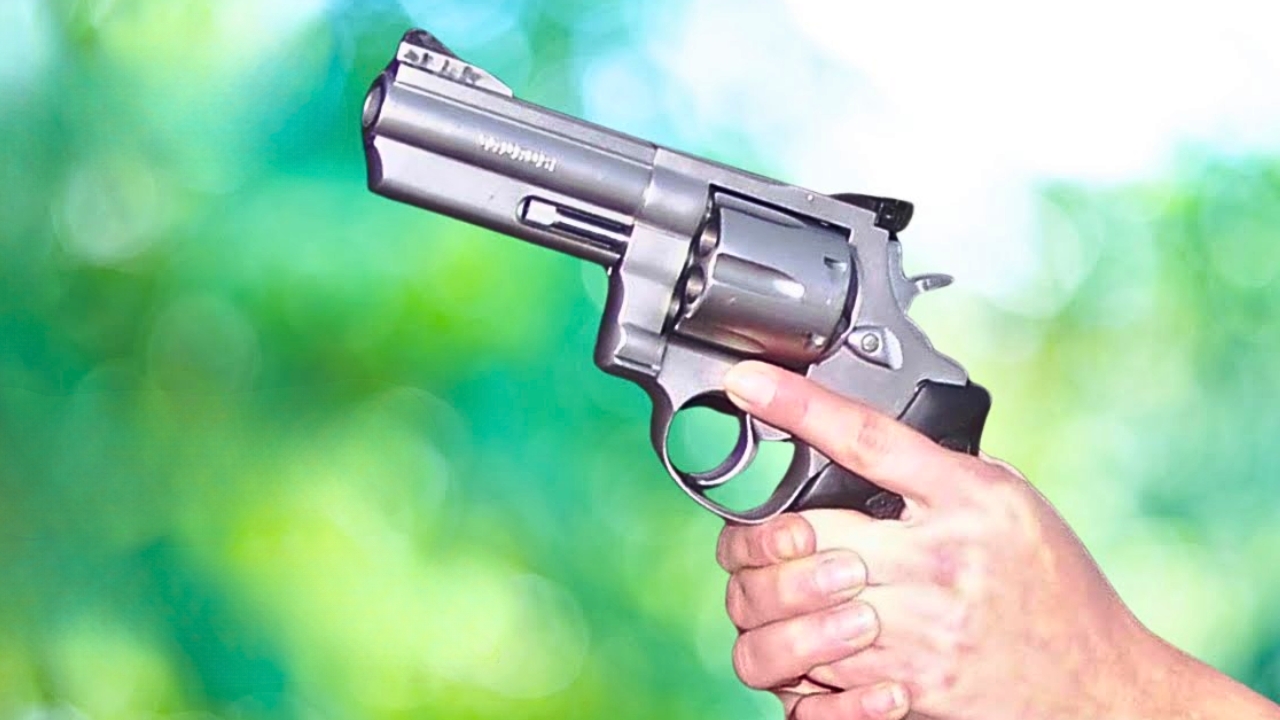
The smarter approach is picking a revolver and load you can actually run. A heavier gun like a Ruger Super Redhawk, Smith & Wesson Model 629, or a long-barreled Redhawk makes the recoil more manageable. Practice with .44 Special or milder .44 Magnum loads, then confirm your backcountry load often enough that it doesn’t feel unfamiliar. Power is useful, but controllability is what makes it real.
Penetration is the real reason people still carry it

In backcountry defense, penetration tends to matter more than pretty expansion. That’s why .44 Magnum loads with hardcast or other deep-penetrating bullet designs have such a following. When you’re dealing with heavy muscle, thick shoulders, and less-than-perfect angles, you want a bullet that keeps driving.
That’s also why the .44 stays in the conversation next to 10mm and hot .357 loads. It gives you a big, heavy projectile that can keep going when lighter bullets run out of steam. You still need to do your part, and bullet choice still matters a lot, but the cartridge starts you off with an advantage. If your backcountry time includes places where penetration is non-negotiable, .44 Magnum is still a strong tool.
Weight and bulk are what make people leave it behind

A .44 Magnum revolver that’s pleasant to shoot is usually not light. A four-inch Smith & Wesson 629 Mountain Gun carries easier than a long hunting revolver, but it’s still a chunk of steel. Add ammo, a real holster, and a belt that can support it, and you’ve got a noticeable load.
That’s where honesty matters. If the gun rides in your pack because it’s annoying on your body, it won’t help when you need it. The best backcountry sidearm is the one you keep on you through sweat, brush, sitting, bending, and miles. If you’re committed to .44 Magnum, plan your carry system around it instead of hoping it will “work out.” That decision matters more than the headstamp.
Barrel length changes how the gun behaves on your hip

Short barrels carry better, longer barrels shoot better, and you can’t cheat that trade. A 2.5-inch .44 like a Ruger Alaskan is compact, but it can be brutal with full-power loads and it throws a lot of blast. A 6-inch gun is easier to control and easier to hit with, but it can fight pack straps and poke you in the ribs all day.
Most people land in the 4-inch range for backcountry carry because it balances handling and portability. A Ruger Redhawk 4.2-inch or a Smith & Wesson 629 4-inch is still serious, still shootable, and less annoying than a long-barrel hunting setup. If you’re going to carry a .44 daily, that middle ground often makes the difference between “always on you” and “left behind.”
Your holster choice matters more than your brand choice

A .44 that’s uncomfortable will become a camp gun instead of a carry gun. Backpack waist belts and chest straps change everything, and a typical belt holster can get buried under a pack or rubbed raw against your side. That’s why so many serious backcountry carriers end up with a chest holster for heavy revolvers.
A good chest rig keeps the gun accessible, keeps it clear of the pack belt, and helps the weight ride in a spot your body tolerates. It also keeps the revolver out of brush and out of the “fall on it” zone. If you decide .44 Magnum is worth carrying, spend your effort on a carry setup that makes you forget it’s there. Comfort and access are what keep the gun on your body when it counts.
Reliability is a revolver strength, with real caveats

Revolvers have a reputation for reliability because they don’t depend on feeding cycles the way semi-autos do. In cold, grit, rain, and awkward grips, that’s a real advantage. You can press the trigger again if a round fails, and you’re not relying on slide velocity to keep the system alive.
But revolvers aren’t immune to problems. Debris under the ejector star, a loose screw, a high primer, or a gun that’s out of time can lock things up fast. Heavy recoil can also shake loose parts if the revolver isn’t maintained. The answer isn’t fear. It’s routine checks, tight hardware, and a gun that’s proven with the loads you carry. A .44 revolver can be extremely dependable, but you still have to treat it like equipment.
Practice needs to match backcountry reality

Backcountry shooting rarely looks like a calm range string. Your hands might be wet, your heart rate might be up, and you might be moving around brush or uneven ground. If you only shoot your .44 from a slow bench rest, you’re not preparing for the way the gun will feel when you’re tired and tense.
You don’t need stunt shooting. You need repeatable, practical reps: drawing from the holster you actually use, building a firm grip fast, and making accurate hits at realistic distances. A .44 also rewards you for learning recoil management the right way, because the gun will punish sloppy technique. If you commit to the cartridge, commit to practice that keeps you confident. Confidence is what keeps people carrying heavy guns.
.44 Special can be a smart part of the plan

A lot of .44 Magnum carriers do most of their practice with .44 Special because it’s easier on the hands and it lets you build skill without developing a flinch. That’s not a weakness. That’s how you keep training volume up while still owning a revolver that can run hotter loads when you need them.
The key is not drifting into a “practice soft, carry harsh” gap you never close. You should still shoot enough of your backcountry load to know what it does in your gun, and you should confirm point of impact. The .44 family gives you flexibility that many cartridges don’t. Use it. Train with the softer stuff, then verify the real carry load so it doesn’t surprise you. That approach keeps the .44 enjoyable instead of punishing.
Blast and noise are part of the backcountry equation

A .44 Magnum is loud. In a worst-case encounter, hearing protection won’t be on your head, and the blast can be disorienting. Short barrels make it worse. That doesn’t mean you shouldn’t carry one, but it’s part of being honest about what the gun actually costs you in the moment.
The practical takeaway is picking a setup that you can shoot well without needing perfect conditions. A longer barrel helps, and so do grips that let you hold the gun without getting chewed up. If you’re carrying a .44 in grizzly country, you’re already accepting risk and compromise. Don’t ignore the sensory side of it. The more familiar the gun feels, the less the blast will rattle you when you’re already dealing with stress.
The “worth it” answer depends on what you’re actually facing

In many parts of the country, the most common backcountry problem isn’t a big bear. It’s two-legged trouble, aggressive dogs, or the kind of unpredictable encounter that happens on crowded trails. In that context, a big revolver can be heavier than it needs to be, and slow reloads aren’t a bonus.
In areas where big bears are a real possibility, the calculus changes. That’s where penetration, heavy bullets, and a cartridge with a strong track record starts to matter more than convenience. The point is not fear. The point is matching the tool to the environment. If you’re hiking Illinois river bottoms, your needs differ from coastal Alaska. A .44 Magnum can be worth carrying, but only when it matches the risks you’re actually living in.
10mm is a real competitor, but it isn’t a replacement

10mm has become the modern “woods pistol” pick because it offers power, higher capacity, faster reloads, and lighter carry in guns like the Glock 20 Gen5 or SIG P320 XTen. For many shooters, it’s easier to shoot well than full-power .44 Magnum, especially when you practice a lot.
What 10mm doesn’t do is erase the .44’s strengths. A heavy .44 load still carries a lot of momentum, and revolvers don’t depend on feeding. If you shoot revolvers well, or you value deep penetration and mechanical simplicity, the .44 still makes sense. The better question is which platform you run more confidently. If you’re a semi-auto guy and you shoot it better, 10mm might be the smarter answer. If you’re a revolver guy, the .44 stays strong.
.357 Magnum can be enough, but it asks more of you

A .357 Magnum revolver is lighter, easier to carry, and often easier to shoot fast than a .44. In guns like a Ruger GP100 or Smith & Wesson 686, it’s a very practical backcountry option, and with the right loads it can penetrate well. For many hikers, it’s the sweet spot of power and portability.
The trade is that you’re working with a smaller bullet and less momentum. That can still work, but it puts a little more pressure on shot placement and load choice. A .44 gives you more margin when things aren’t ideal. A .357 gives you a gun you’re more likely to carry without complaint. If you’re honest about your skills and your environment, .357 can be a smart move. If you want more margin and you can handle the recoil, the .44 keeps its appeal.
Capacity and reload speed are real weaknesses of the .44 revolver

Most .44 Magnum revolvers give you six rounds. Some give you five. That’s not a lot if you’re thinking about multiple threats or a chaotic encounter. Reloading with speedloaders takes practice, and reloading under stress is never as smooth as it looks in a video.
That doesn’t automatically disqualify the cartridge. It means you should treat the revolver as a deliberate choice, not a romantic one. Carry spare ammo in a way that stays clean and accessible, and practice with your chosen reload method enough that it’s not clumsy. Also understand what the revolver is for: a powerful, dependable defensive tool, not a high-capacity fighting pistol. If you’re the type who wants more rounds and quicker recovery, a 10mm semi-auto may fit you better.
Grip and stocks can make or break your ability to shoot it
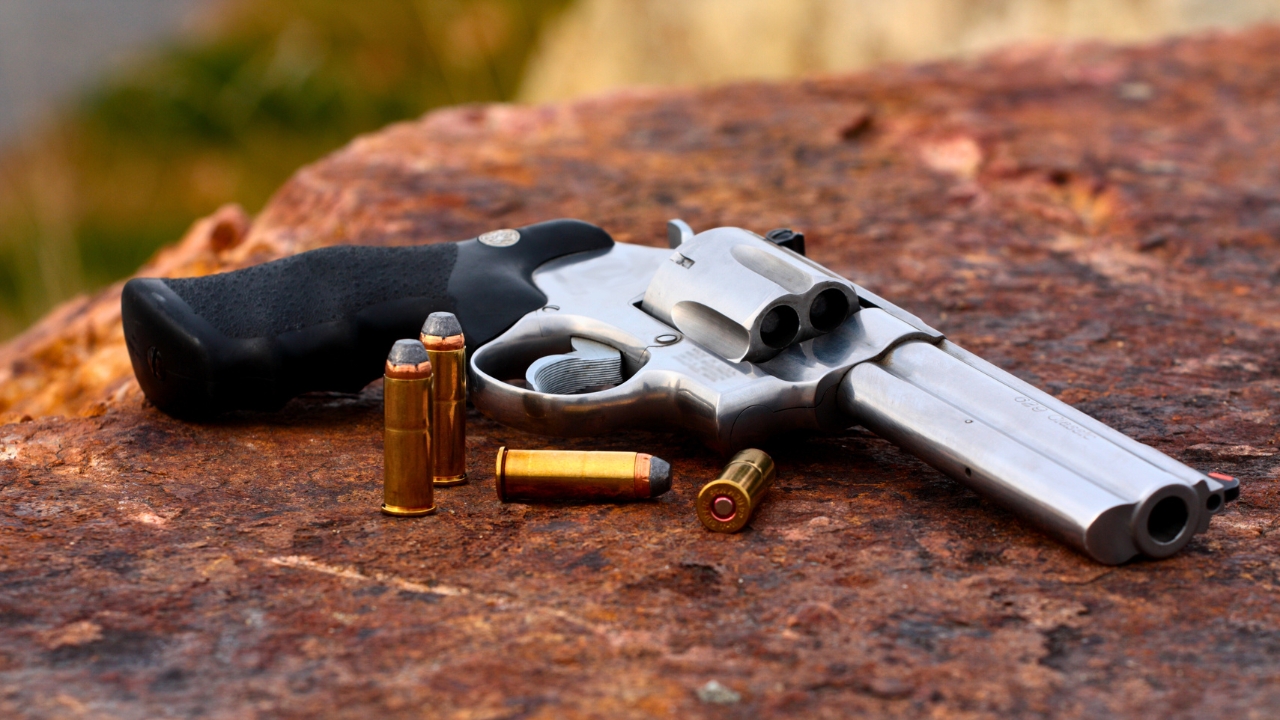
A .44 that hurts your hand will teach you to flinch. The wrong grips can turn recoil into sharp pain, especially with lighter revolvers. The right grips can spread recoil out and keep the gun stable without forcing you to death-grip it. That matters because your grip is your steering wheel.
Don’t pick grips for looks. Pick them for control. Many shooters do well with rubber grips on hard-kicking revolvers because they tame the bite and keep your hand from sliding. Others prefer grips that lock the hand in consistently. Either way, you should be able to draw, establish a solid hold, and shoot multiple accurate rounds without your hand getting wrecked. If you want the .44 to be worth carrying, you have to be able to shoot it without dread.
A .44 is more forgiving of awkward contact and weird positions

Backcountry encounters can happen in tight spots. You might be stepping around brush, dealing with a pack, or shooting from a position that isn’t textbook. A revolver has some advantages here: it doesn’t depend on slide movement, it can be fired from odd grips, and it’s less sensitive to being pressed against clothing or gear.
That doesn’t mean you can ignore safety or technique. It means the platform can be more tolerant when things get messy. If you train with your actual holster and pack setup, you’ll also learn what positions you can access the gun from without getting tangled. In real backcountry carry, access matters as much as ballistics. A .44 revolver carried in a chest holster can be reachable when a belt gun is blocked by a pack, and that alone can be worth something.
Maintenance is a bigger deal than people admit
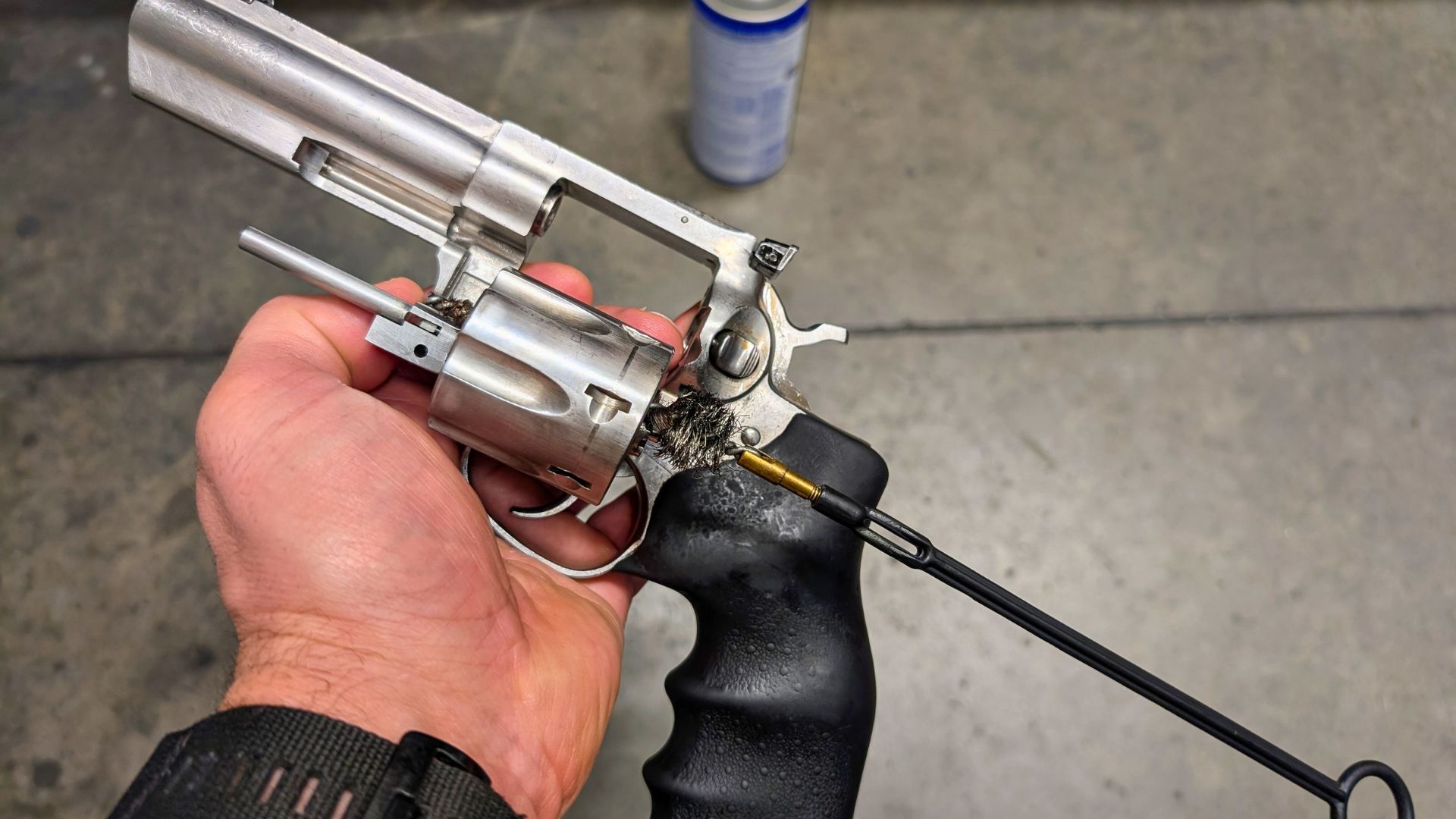
A .44 Magnum revolver can live in sweat, dust, and rain for long stretches. That’s a recipe for surface rust, gritty actions, and screws that work loose. Heavy recoil also shakes hardware over time. You don’t need to obsess, but you do need a routine.
Wipe the gun down, check screws, and make sure the ejector rod and cylinder lockup feel right. Pay attention to the area under the ejector star, because grit there can stop the gun cold. If you carry in wet climates, treat corrosion resistance as a priority, and don’t assume stainless means invincible. A backcountry handgun is working gear. The more you treat it like gear, the more it behaves like gear. A .44 can be extremely dependable, but it won’t stay that way through neglect.
Your comfort with recoil decides whether it’s worth it

If you shoot .44 Magnum well and you don’t dread practicing, the cartridge makes a lot of sense. You’re carrying real capability, and you can back it up with skill. That combination is rare enough that it deserves respect. A confident shooter with a .44 can do a lot.
If you don’t shoot it well, the cartridge becomes a confidence trap. You’ll tell yourself you’re covered because the gun is powerful, but you won’t put in the reps because it’s unpleasant. That’s how people end up carrying something they can’t run. A “worth it” backcountry gun is one you can shoot cleanly when you’re smoked and your hands feel clumsy. If that’s not you with .44 Magnum, there’s no shame in picking a softer option.
The backcountry answer: it’s still worth it when you carry it right

The .44 Magnum still earns its place because it offers deep-penetrating performance in a platform that can be very dependable under ugly conditions. With a good revolver—think Ruger Redhawk, Super Redhawk, or a well-chosen Smith & Wesson 629—and a carry setup that works with your pack, it remains a serious choice.
The catch is commitment. You need a holster that keeps it accessible, a gun weight you’ll tolerate all day, and practice habits that keep recoil from turning into flinch. If you do those things, the .44 is not outdated. It’s proven. If you won’t do those things, you’re better served by a lighter revolver, a 10mm semi-auto, or whatever you’ll actually carry and shoot well. In the backcountry, honesty beats ego every time.
Like The Avid Outdoorsman’s content? Be sure to follow us.
Here’s more from us: