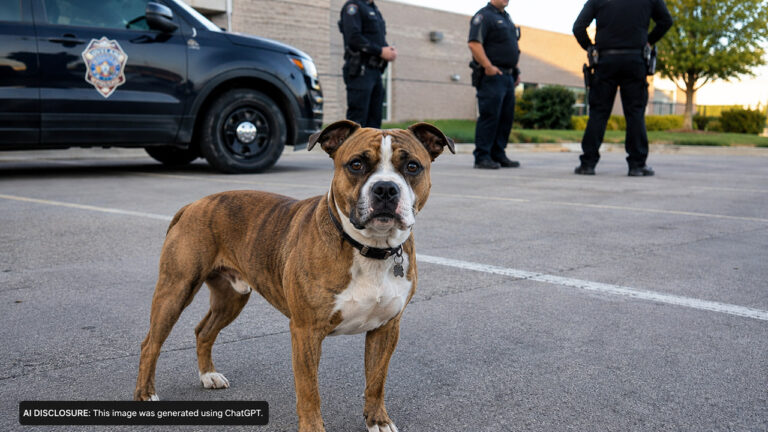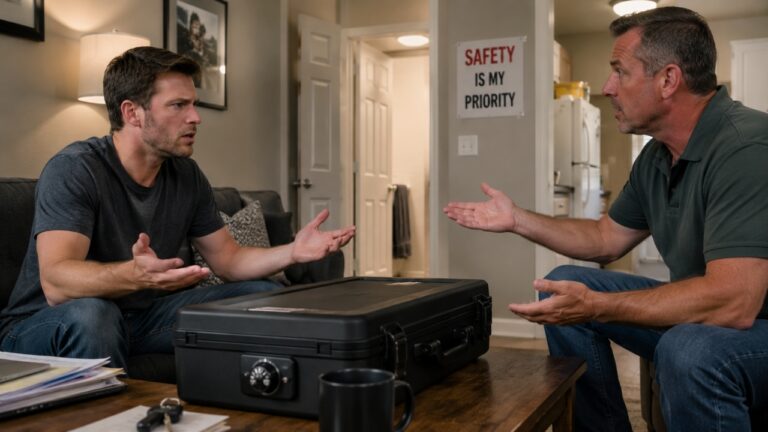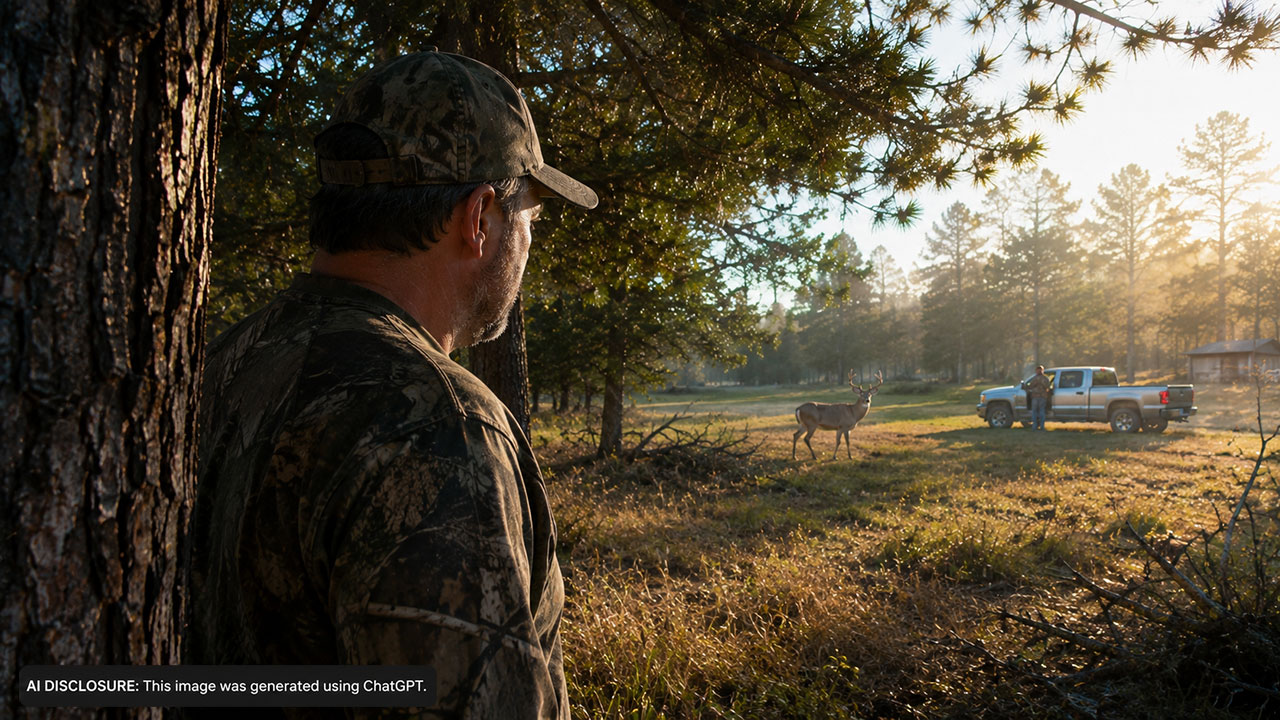
Photo credit: AI-generated image created using ChatGPT. Illustrative only
When you own a chunk of ground, you get used to seeing deer filter through the same draws and fencelines year after year. What you don’t get used to is finding out somebody has been treating your place like it’s public land—especially when they’re killing deer on it.
That’s the situation one Minnesota landowner laid out in the source post. He says deer have been getting poached on his private property for months. He believes he knows which neighbors are doing it, but when he reached out for help, he ran into a frustrating snag: the game warden wanted a name before he could do much of anything.
A private-property problem that dragged on for months
From the landowner’s perspective, this wasn’t a one-off incident during rifle season. He described it as ongoing poaching happening for months on his own ground. That matters, because repeated trespass-and-take isn’t just about one deer—it’s a pattern that can wipe out the local age structure, push deer nocturnal, and sour the hunting on a property for years.
It also changes how a landowner feels walking his own place. When you suspect someone’s sneaking in to hunt, you start noticing little things: a gate that doesn’t sit right, a boot track where it shouldn’t be, or deer that seem to vanish overnight. Even without a confrontation, it puts everybody on edge.
He says he knows the hunters—just not the “name” the warden needs
The landowner’s main question was simple: if he knows who’s doing it, does he have recourse? But the practical issue he ran into is one a lot of rural folks recognize. You can know exactly which house they came from. You might even know them by sight. Yet if you can’t hand an officer a clean, specific identity—an actual name tied to the right person—things can stall.
That’s where this case gets interesting. The landowner indicated he knows the hunters, but it sounds like the information he had wasn’t enough for an enforcement response he felt would stop it right now. Whether that was because he didn’t know their full names, couldn’t positively ID the right individual, or didn’t have proof that would hold up is the kind of detail that often makes or breaks these situations.
Why “proof” matters in the real world, not just in principle
A lot of outdoorsmen hear “I know who did it” and think that should be the end of it. But on the enforcement side, a conservation officer still has to build a case that’s clean enough to act on. A guess, a suspicion, or “everybody knows it’s them” isn’t the same as a solid identification tied to an actual unlawful take on a specific date and time.
And on the landowner side, accusing the wrong person can blow up neighbor relationships fast—and in the country, you don’t get to move away from your neighbors. The tighter the evidence, the less this becomes a shouting match and the more it becomes a straightforward trespass/poaching issue handled through proper channels.
Commenters pushed documentation, boundaries, and a paper trail
Even from the short description, you can see where the conversation naturally goes: document everything and make it easy for the warden to take action. That usually means nailing down the “who” and the “when” with something more than a hunch.
In situations like this, outdoorsmen tend to focus on the practical steps that reduce gray area—clearly marked property lines, signs at access points, and keeping records of incidents. Not because signs magically stop bad actors, but because they take away the “I didn’t know” excuse and help establish that someone was knowingly somewhere they didn’t belong.
What a landowner can do without turning it into a confrontation
The hard part is wanting to stop it immediately, while also staying safe and staying in the right. Most landowners don’t want a face-to-face argument in the timber with someone who may be armed and already willing to break the law. That’s not being timid—that’s being smart.
Generally speaking, the non-confrontational path looks like tightening up access, paying attention to patterns, and working through the proper law-enforcement channel. If an officer is saying he needs a name, that’s a clue that better identification is the missing piece. Depending on your situation, that might mean making sure you can tie a vehicle to a person, or that you can reliably identify the individual rather than “a guy in a jacket.”
It also helps to treat it like any other ongoing rural problem: keep your dates straight, keep your notes simple, and keep your emotions out of the report. If you call in tips, being able to say “this happened here, at this time, and this is who it was” is far more actionable than “it’s been going on.”
The bigger consequence: it’s not just about deer
Poaching on private property isn’t only a wildlife issue. It’s a safety issue. If someone is shooting on ground they don’t have permission to be on, you can’t trust where their bullets are going, what’s beyond their target, or whether they know (or care) who else is out there—family, kids, livestock, or a landowner walking his own line.
That’s why cases like this frustrate folks so much. A landowner can feel like he’s doing everything right—owning the land, trying to handle it through the proper authorities—and still gets told that without the right “name,” there’s no immediate fix. The best outcome is usually the one where the landowner stays out of a direct confrontation, gathers clear identification and documentation, and gives the conservation officer what he needs to make it stick.
For hunters who do it right, this is the kind of thing that makes your blood boil. Permission matters. Boundaries matter. And if you’re a landowner dealing with this, the goal isn’t to win an argument—it’s to stop the behavior, keep everybody safe, and make sure the next step has enough teeth to actually hold.
Like The Avid Outdoorsman’s content? Be sure to follow us.
Here’s more from us: