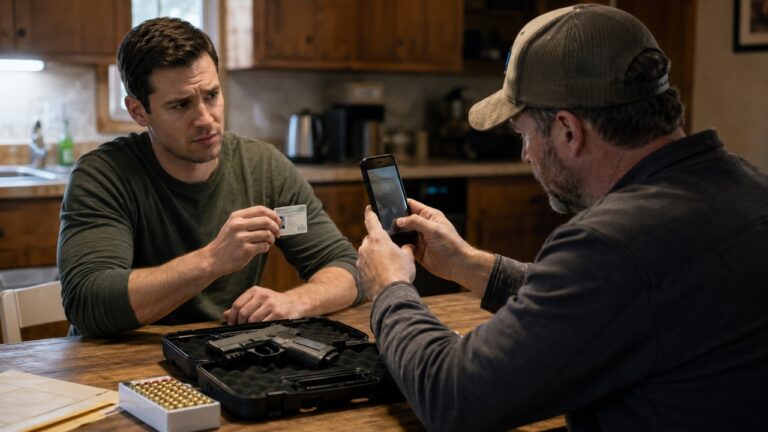
Photo credit: AI-generated image created using ChatGPT. Illustrative only
Buying a house is supposed to be a clean handoff: keys, paperwork, and you’re done. But one California buyer found out that “left behind” can get complicated when what’s left behind is a heavy gun safe with someone else’s firearms locked inside it. The situation was laid out in the original post, and it’s the kind of real-world mess that makes gun owners think twice about timelines, storage, and paperwork.
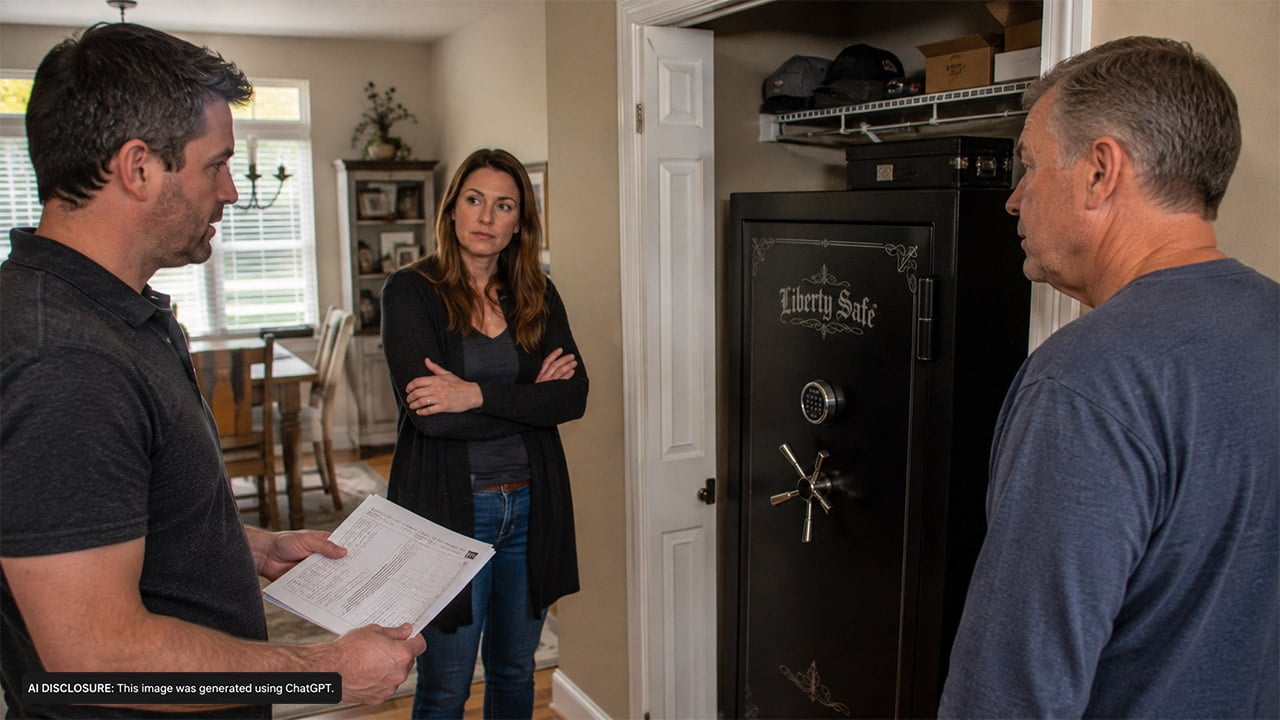
The buyer had just closed escrow the previous Monday. The seller left the safe as part of the deal, but said she wanted the guns inside back because they belonged to her late husband. One hitch: she was described as a massive hoarder and couldn’t find the combination.
A safe stayed with the house, but the guns were another story
In the buyer’s mind, the safe was now part of the property—no different than a refrigerator or a built-in cabinet. The seller, though, was treating the safe like a container that happened to be left behind, with personal property still inside.
That’s where homeowners can get sideways fast. A gun safe is immovable enough that it feels like part of the structure, but guns aren’t fixtures. They’re regulated items, and in California especially, the difference between “my stuff” and “your stuff” can carry real consequences.
The timeline slipped, and communication dried up
The buyer tried to be reasonable. He told the seller she had a week to figure out the code and retrieve the firearms. A week passed. Then more time passed. He said they were past the deadline and he hadn’t heard a word from her realtor.
That’s the part that makes folks uneasy: silence plus firearms. When there’s no communication, you start thinking about worst-case scenarios—whether the seller is avoiding the expense, avoiding the hassle, or just can’t get organized enough to follow through.
“Do I drill it?” quickly turns into “Do I own what’s inside?”
Eventually, the buyer said he could pay to have the lock drilled, but he wasn’t in a rush. He also didn’t sound eager to take on the cost for someone else’s problem, especially when the seller wasn’t “ponying up the cash” to get it handled herself.
The bigger question he asked was the one a lot of gun owners would ask in plain language: at what point can he tell the seller to take a hike and keep what’s in the safe? He added the detail that matters most here—this is California—and he didn’t know the state’s rules on this kind of situation.
From a practical outdoorsman standpoint, the temptation is to treat it like abandoned property once the seller misses the deadline. But guns aren’t a kayak or a box of old tools. Even if you end up legally entitled to the contents, taking possession the wrong way or handling it casually can put you in a bad spot.
The real-world risk: you’re stuck storing someone else’s firearms
There’s an immediate safety issue any time you’ve got firearms on your property that you can’t access, inventory, or verify. A locked safe is better than guns sitting in a closet, sure, but you still don’t know what you’re dealing with—how many firearms, what types, or whether anything has other baggage attached to it.
And it’s not just a “gun guy” concern. If a buyer has family in the house, workers coming and going, or a remodel underway, an unknown cache—even locked up—adds stress. You don’t want a scenario where the safe gets damaged, moved, or messed with because someone doesn’t understand what’s inside.
Then there’s the common-sense property angle: if you’re paying for the home, paying the insurance, paying the taxes, you don’t want to be a long-term storage unit for the previous owner’s personal property, especially when it’s regulated property.
What people tend to focus on in situations like this
Even without a blow-by-blow of responses, you can guess what seasoned gun owners and homeowners zero in on when a story like this comes up: document everything, keep communication in writing, and don’t do anything that looks like you’re trying to “acquire” guns in a backdoor way.
In places with strict transfer rules, the safest path is usually the boring path—set clear deadlines, involve the professionals already tied to the sale (agents, escrow, maybe an attorney if it gets nasty), and don’t let frustration push you into a decision you’ll regret. Drilling a safe you own is one thing; drilling a safe that contains someone else’s firearms creates a whole new layer of questions.
It’s also the kind of scenario where folks remind you that “possession” can get fuzzy. If the guns aren’t yours and you can’t legally take them into your name, you don’t want to be the one who unilaterally decides the rules because the other party is dragging their feet.
The seller eventually showed up and took the firearms
The story did get a clean ending. In an update, the buyer said the owner came and retrieved all the items. He noted it was “quite a collection of pistols and a couple of long guns,” but nothing spectacular. Mostly, he sounded relieved that the safe was finally empty and ready to be filled with his own guns.
That’s the best-case outcome: the rightful owner takes possession, the buyer gets their safe cleared out, and nobody has to gamble on what California will say about an awkward gray-area transfer. It also keeps the buyer from having to pay for drilling, and it avoids the kind of conflict that can turn a new-home honeymoon into months of headaches.
If there’s a lesson here for gun owners and landowners, it’s to treat firearms like firearms even when they’re wrapped in a real estate problem. Set deadlines early, keep things documented, and keep the handling and storage side squeaky clean. A heavy safe can be a nice “bonus” in a home purchase—right up until it comes with somebody else’s locked-up history inside.
Like The Avid Outdoorsman’s content? Be sure to follow us.
Here’s more from us: