Photo credit: The Avid Outdoorsman
A landowner who thought a locked gate would be enough to keep people out said he found signs that someone had been treating his private property like their own hunting lease.
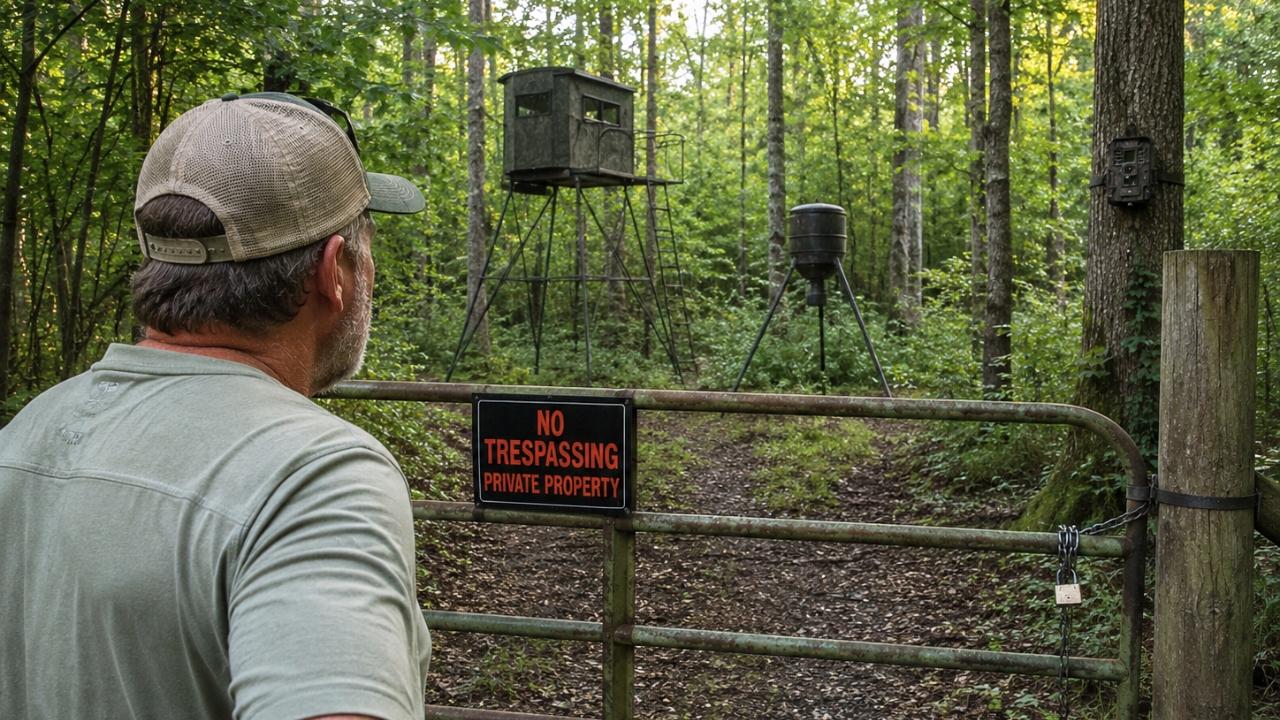
The situation was shared in a Reddit post titled “What to do? Trespasser/Hunter”. The poster said he had a property with a locked gate, but despite that, someone had gotten onto the land and set up hunting equipment. This was not a quick shortcut through the woods or one set of boot tracks near a boundary. According to the post, the trespasser had put up a stand, a feeder, and a trail camera.
That made the whole thing harder to brush off as a mistake.
A person can misread a property line. A hunter can get turned around. A dog can run through a fence line. But hauling in gear, setting up a feeder, hanging a camera, and placing a stand takes time and intention. It suggests someone either believed they had permission or decided to act like they did.
The locked gate made it even more frustrating. A gate sends a pretty clear message. It tells people the property is not open for casual access. If someone still got behind it and set up a full hunting station, the landowner had every reason to wonder how long it had been happening and whether the person planned to keep coming back.
That is the part that rattles landowners. The gear is the visible problem. The bigger question is who has been walking around when nobody was there.
The Setup Looked Too Deliberate to Ignore
A stand, feeder, and trail camera together tell a very different story than one item left behind.
A single camera could possibly be explained by a boundary mistake. A stand near a line could be awkward but legal if it is on the right side. A feeder in the wrong place could be the result of bad information from someone who thought they had access.
But all three together look like a hunting setup.
That means someone likely scouted the area, picked a spot, brought in equipment, and expected to return. A trail camera suggests they wanted to monitor deer movement. A feeder suggests they wanted to draw animals to that location. A stand suggests they planned to sit and hunt there.
For the landowner, that is not merely trespassing. It is someone making hunting plans on private land they do not control.
That can create safety issues, too. If the owner, family members, or invited hunters are on the property, an unknown hunter showing up with a firearm or bow is a serious problem. Nobody wants to walk into their own woods and find out another person is already sitting in a stand they never approved.
The landowner’s question was simple, but the situation was not. What do you do when someone has already gone far beyond “passing through”?
Commenters Treated the Gear Like Evidence
A lot of the advice in situations like this usually starts with one word: document.
Before touching anything, commenters tend to tell landowners to take photos of the stand, feeder, camera, gate, tracks, and any signs of entry. If there are tire marks, boot prints, cut fences, broken locks, or disturbed brush, document those too. The goal is to build a record before anything changes.
That matters because moving the gear too soon can create arguments later. The trespasser might claim he had permission from someone else. He might claim the setup was not on the landowner’s property. He might accuse the owner of stealing or damaging his equipment. Photos help show exactly what was found and where.
The trail camera may also hold useful information. If the owner can access the card without creating a separate issue, it may show who placed the gear, when they came in, and whether they harvested anything. But commenters often disagree on how far a landowner should go with someone else’s camera, especially before talking to law enforcement or a game warden.
The safest route is usually to take pictures, leave things in place long enough to contact the right authorities, and avoid making the first move out of anger.
That is not as satisfying as tearing everything down, but it can make the next step cleaner.
A Game Warden Was the Obvious Call
Because the setup involved hunting equipment, commenters were likely to point the landowner toward a game warden or conservation officer.
This was not only a trespassing issue. If someone was feeding deer, setting a stand, and preparing to hunt without permission, there may be hunting violations involved depending on the state, season, baiting rules, and whether any game was taken.
A sheriff can handle trespassing. A game warden understands hunting law, baiting rules, property access, and what kind of evidence matters when someone is illegally hunting land. In many rural situations, both may eventually be involved, but the warden is often the best first call when the problem is tied directly to hunting.
The locked gate also matters. If the land was clearly closed off and someone still entered, that makes it harder for them to claim they thought the property was open. If no-trespassing signs were posted too, the landowner’s case gets stronger.
A warden might advise the owner not to touch the gear until an officer can see it. Or they might tell him how to mark it, remove it, or set up cameras to catch whoever comes back. Either way, getting that guidance before acting helps keep the landowner from creating an unnecessary problem.
When someone has built a hunting setup behind a locked gate, it is time to stop guessing and get an official record started.
The Temptation to Keep the Gear Is Real
In threads like this, some commenters almost always say some version of: “Looks like you got a free stand.”
That reaction is understandable. If someone drags hunting equipment onto private land without permission, many landowners feel little sympathy when that gear gets removed. From their view, the trespasser took the first step by bringing it there.
But keeping or destroying the gear can still complicate things.
Laws vary by state, and the landowner may not be able to simply claim another person’s property without following a process. If the goal is to catch the trespasser or stop the behavior long-term, it may be smarter to use the gear as evidence rather than treat it as a prize.
That does not mean the landowner has to leave it there forever. It means the next move should be deliberate. A game warden or sheriff can explain what can be removed, what should be left for documentation, and how to handle it if the person comes back demanding his equipment.
A calm response also protects the landowner if the trespasser gets angry. If everything is documented and authorities are aware, the owner is in a much stronger position.
The gear may be sitting where it does not belong, but how the landowner handles it still matters.
More Cameras May Be Needed
A locked gate did not stop the person the first time, so several commenters would likely recommend adding cameras of the landowner’s own.
The key is placing them where they can catch entry points, not just deer trails. A camera near the gate may show vehicles, plates, and the direction people came from. A hidden camera watching the trespasser’s setup may catch whoever returns to check the feeder or camera. A cellular camera can send photos before someone has a chance to steal it.
If the trespasser already has his own camera out there, he may be comfortable checking gear regularly. That means the landowner may have a chance to catch him returning.
Placement matters. Obvious cameras can get stolen. Cameras mounted high, angled down, or hidden off the main trail are harder to spot. Some landowners use a visible decoy camera and a hidden one behind it. The goal is not to start a camera war. It is to get proof without walking into a confrontation.
That is especially important when the trespasser may be armed. Catching someone on camera is safer than confronting him from the truck or walking up on him in the stand.
Commenters largely treated the discovery as a serious trespassing and possible poaching issue.
Many would tell the landowner to photograph everything before touching it. The stand, feeder, trail camera, locked gate, access route, and any signs of entry could all matter if a warden or sheriff gets involved.
Others would push for calling a game warden quickly. Because the gear was clearly hunting-related, the issue was not only someone walking where they should not be. It looked like someone was preparing to hunt private property without permission.
Some commenters likely joked about keeping the stand or feeder, but the more careful advice was to document first and ask authorities how to handle the equipment. Removing it immediately might feel good, but it could make it harder to catch the person or create an argument over property.
A lot of users would also recommend setting up the owner’s own cameras, especially cellular cameras near the gate and around the illegal setup. If the trespasser comes back, proof of who he is and how he enters the property will matter more than guesses.
For the landowner, the locked gate was supposed to be the boundary. Someone ignored it and set up like they owned the place. At that point, the best response was not a hotheaded confrontation. It was photos, cameras, a call to the game warden, and a clear message that private land behind a locked gate is not open hunting ground.