Photo credit: AI-generated image created using ChatGPT. Illustrative only
Every gun owner I know has had that moment where they pause and ask, “Wait—am I actually allowed to do this?” Most of the time it’s about a new hunting regulation, a carry rule crossing state lines, or how to transport a rifle. But sometimes it’s deeper than that, like finding out a decades-old conviction changes the rules in your own home.
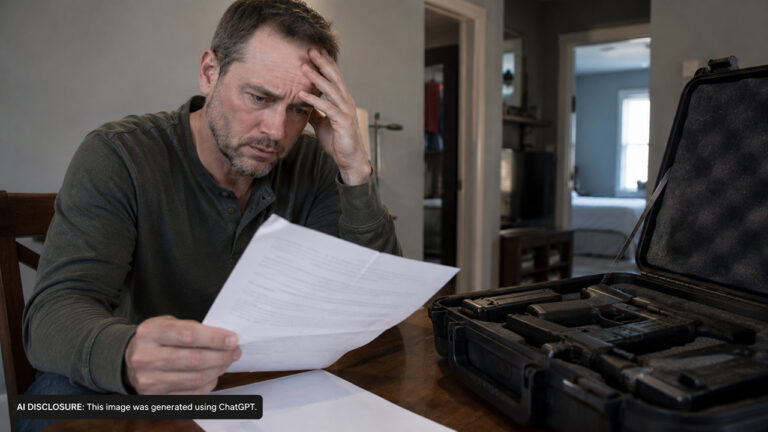
That’s the spot one person found themselves in when they asked a simple, practical question online: if someone is a convicted felon, can they be married to a non-felon and still have guns in the house under the spouse’s name? The full wording of the question is in the original post, but the heart of it is something a lot of rural families have worried about—especially when firearms are just part of everyday life.
A household gun cabinet can turn into a legal tripwire
The poster said they understood the basic rule: a convicted felon cannot purchase or possess a firearm or ammunition. Where they got hung up was the part that hits home for married couples—what if the guns are owned and registered (where applicable) in the non-felon spouse’s name?
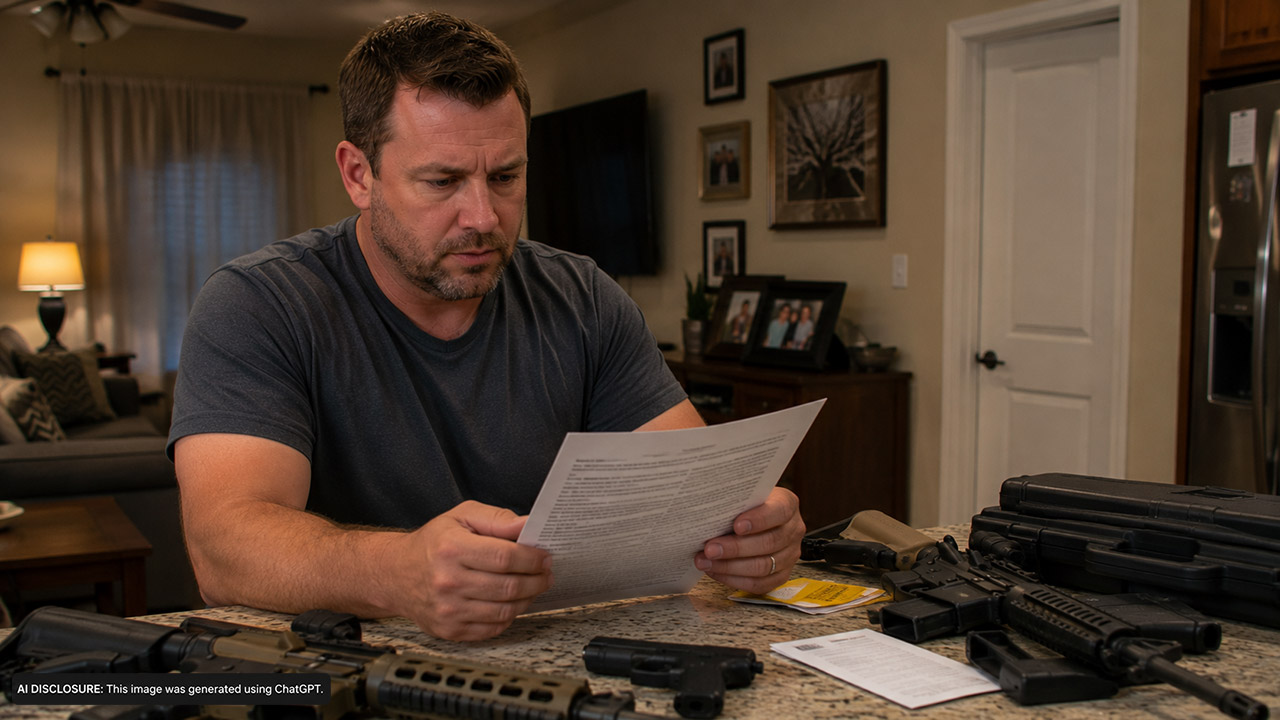
In the real world, “in the house” often means “everywhere.” A shotgun behind the bedroom door, a deer rifle in the closet, a .22 by the back door for pests, ammo stacked on a shelf in the garage—normal setups in a lot of homes. But when one adult in the home is prohibited, those normal routines can create major exposure if the prohibited person is seen as having access or control.
“Possession” isn’t just holding a rifle in your hands
Gun folks use “possession” like it’s plain English, but the legal meaning can be broader than most people assume. The question in the post zeroed in on that: does a felon “possess” a firearm just by living in the same home where guns are stored?
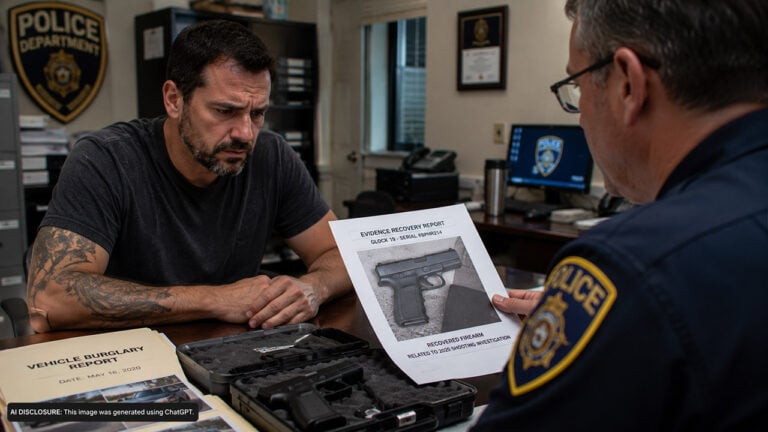
That’s where the trouble usually starts—because the issue often isn’t formal ownership. It’s access. If a prohibited person can get to firearms or ammunition without someone else’s active control, that can be treated as possession in many situations. Even without anyone getting pulled over with a gun in the truck, a simple domestic call, medical emergency, house fire, or burglary report can bring law enforcement into the home and put those storage choices under a spotlight.
Marriage doesn’t create an exception for prohibited persons
The post framed it the way many couples do: “under the non convicted felons name.” Folks want to do things the right way—keep the guns in the spouse’s name, keep receipts, keep the safe combination private, and assume that settles it.
But the hard reality is that marriage doesn’t magically carve out a firearms exception. A spouse can absolutely own guns, hunt, and keep firearms for home defense. The problem is whether the prohibited person can be said to have access, control, or the ability to exercise control over the guns or ammunition in the home. Once you’re in that territory, ownership paperwork doesn’t carry the weight people hope it will.
The outdoorsman angle: hunting season, home defense, and “everyday access”
This isn’t an abstract legal puzzle for a lot of families—it’s a deer-camp question. When opening morning rolls around, rifles come out, ammo gets staged, packs get loaded, and guns ride in the truck. If a prohibited person lives in the home, it’s easy for “that’s my spouse’s gun” to blur into “it was in the closet, I could’ve grabbed it.”
Home defense adds another layer. Many couples keep a handgun accessible because they live out of town and the sheriff is 30 minutes away. But “accessible” is exactly the word that can cause problems if one adult in the home is prohibited. If the plan is “whoever hears the bump in the night grabs the gun,” that plan itself implies shared access.
Even ammo can be an issue. Plenty of people forget that ammunition and components matter too. If there’s a case of shells in the mudroom or a box of .30-30s on the kitchen counter after a range day, you’ve created a situation where a prohibited person may be viewed as possessing ammunition.
What people tend to focus on: storage, access, and avoiding grey areas
The post didn’t include a long back-and-forth from commenters in the material provided, but the kinds of responses these situations usually draw are pretty consistent: people focus on keeping firearms secured in a way that prevents the prohibited person from accessing them, and on avoiding anything that looks like shared control.
That means thinking through the daily habits, not just buying a safe and calling it good. Who has the key? Who knows the code? Are guns ever left out while cleaning? Is ammunition stored separately? Do firearms get staged for home defense in a spot both adults can reach? Those practical details are what tend to decide whether a setup is viewed as responsible separation or as a thin cover over shared access.
And it’s not only the “big” guns. A single loaded magazine in a nightstand, a box of .22 in a junk drawer, or a spare revolver tucked in the closet can undo all the careful talk about “they’re my spouse’s firearms.”
The most practical path forward is usually boring—and that’s a good thing
If you’re in this situation, the goal isn’t to get clever. The goal is to stay out of trouble and keep everyone safe. In a household with a prohibited person, that often means making storage decisions that are clear, consistent, and defensible—so there’s no question about access.
It also means taking the time to confirm what “prohibited” means in your exact circumstances. People throw around “felon” like it’s a single switch that stays flipped forever, but real life has details: restoration of rights, expungements, set-asides, pardons, and state-to-state differences. None of that is something you want to guess at with firearms involved.
The smart move is to talk to a qualified local attorney who understands both state law and the federal rules, and to make changes before an unrelated incident forces the issue. Because when law enforcement is standing in your living room, it’s too late to wish you’d tightened up the safe setup or moved ammunition to a controlled location.
Most outdoorsmen are used to planning ahead—scouting a property, checking zero, packing for the weather. This is the same kind of planning, just less fun and a whole lot more important. When a prohibited person is in the home, the safest route is to remove grey areas entirely, even if it’s inconvenient.
Like The Avid Outdoorsman’s content? Subscribe to our newsletter so you never miss an article.
Here’s more from us: