Photo credit: AI-generated image created using ChatGPT. Illustrative only
One day you’re going about life like normal—work, errands, maybe a quick stop at the sporting goods counter—and the next you find out a piece of paper from a court just changed what you’re allowed to do. That’s the gut-level fear behind a situation an Oregon man laid out in the original post, after his ex-girlfriend filed for a restraining order that included a firearms prohibition.
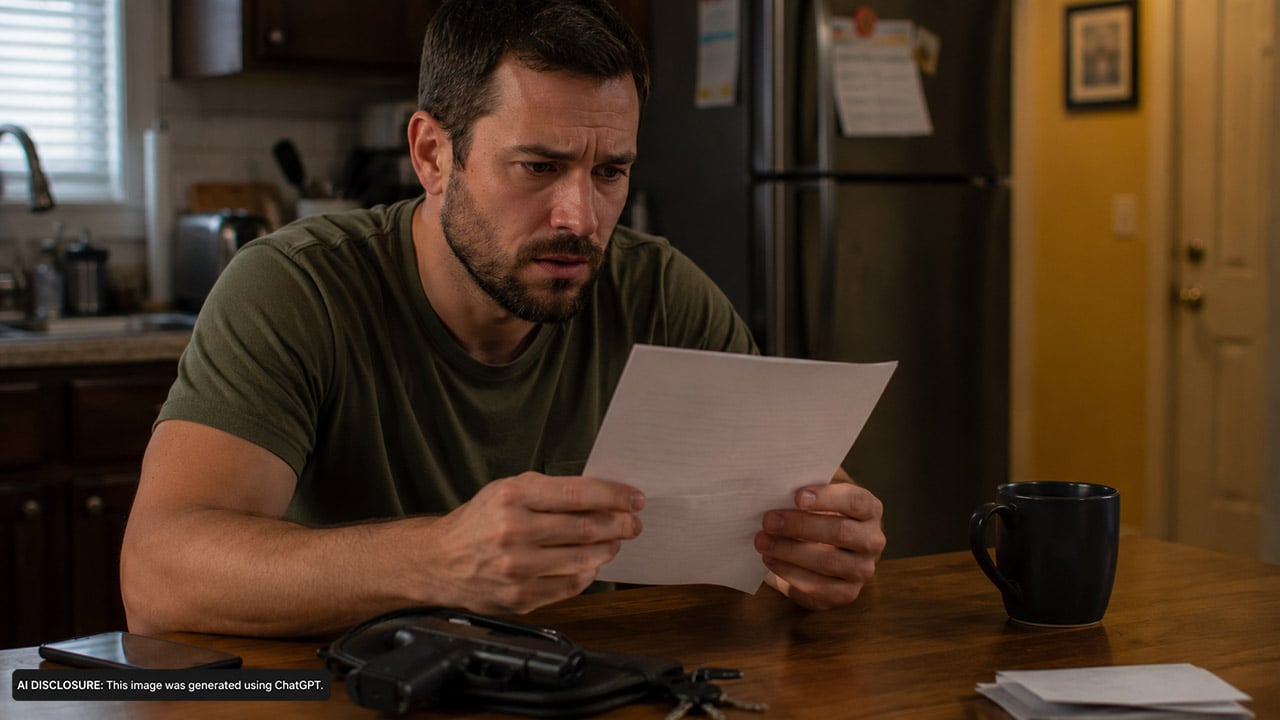
He said the order was filed on 10/12, but he didn’t receive it until 10/21. In the meantime, he’d been living like any other gun owner who assumes he’s on the right side of the law—only to learn that the court order, once served, put him on the wrong side of it if he had guns in his possession. That time gap is where a lot of folks can accidentally step in a hole.
The restraining order wasn’t just “stay away”—it included guns
According to his description, the restraining order required him to stay away from his ex, her residence, and her college. That’s the part most people expect when they hear “restraining order.”
The part that hits outdoorsmen and concealed carriers in the chest is the additional restriction: the order prohibited him from possessing any firearms. He wrote that he was fine complying and had no intention of seeing her again, but his concern was what the order could do to his future—especially anything tied to background checks, employment, and buying firearms later on.
The timeline is where regular people get jammed up
He said he hadn’t seen or been in contact with her for over a month after the breakup. He also admitted he made social media posts to vent his feelings and used derogatory terms, though he said he didn’t identify her by name or release confidential information.
Then comes the timeline: filed on 10/12, received on 10/21, and he had 30 days to request a hearing if he wanted to contest it. That’s a common real-world issue—paperwork can move faster than people. Whether or not the restrictions apply before service can depend on the type of order and local procedure, but from a boots-on-the-ground standpoint, the risk is obvious: you can get served and suddenly your normal routine is a violation.
“I’m not planning to violate it,” but compliance isn’t always simple
Plenty of folks read “no firearms” and think, “Okay, I’ll just not carry.” In real life, “possess” can get tricky fast. If there are guns in the home, if you have access to a safe, if a firearm is in a vehicle you control, or if you’re a regular hunting/shooting guy with gear spread across places, you can wind up in a technical mess.
He didn’t detail what firearms he owned or where they were kept, but the concern is still valid. The minute a court order says you can’t possess firearms, you need a clean, documented plan—one that doesn’t involve “I’ll just leave them in the closet and not touch them.” Outdoorsmen tend to be practical, and the practical move is to treat it like an immediate safety-and-legal priority, not a paperwork issue for later.
Will a restraining order “ruin” your future? That’s what he was really asking
His questions were the same ones I’ve heard at gun counters and ranges when somebody gets hit with family court trouble: Is it a criminal conviction? Does it wreck a background check? Can it be expunged after it expires? Will it stop future gun purchases?
In plain language, a restraining order isn’t automatically the same thing as a criminal conviction. But that doesn’t mean it’s harmless. Court orders can show up in background checks, and gun rights can be affected even without a conviction—especially if an order meets certain legal criteria and is entered into the systems used for firearm eligibility checks.
He also noted that if he doesn’t request a hearing, the order would be finalized and effective for one year, with the possibility of renewal if the petitioner later provides evidence she’s still at risk. That’s another thing outdoorsmen should clock: “one year” can turn into longer if you don’t understand the process or miss deadlines that matter.
People fixated on the gun prohibition and the hearing window
Even without seeing a full back-and-forth, you can tell where the focus usually lands in situations like this: the firearms restriction and the 30-day window to request a hearing. Those two pieces decide whether this is a short-term inconvenience or a long-term cloud that follows you around.
When there’s a hearing option, it’s not just about pride or “winning.” It’s about making sure the court has heard your side, that the terms are clear, and that you’re not agreeing—by silence—to something broader than you understand. Some folks choose not to contest for emotional reasons (they just want it over). But when firearms are involved, the stakes are higher than bruised feelings.
And from an outdoorsman’s perspective, a year without firearms isn’t just missing range time. It can affect hunting seasons, predator control on rural property, and even what you keep for home defense. That’s why people tend to urge getting competent legal advice quickly when a gun prohibition is on the page.
The practical lesson for gun owners: don’t assume “I didn’t know” will save you
This is the kind of scenario that can turn a law-abiding carrier into someone committing a serious violation without any bad intent. If you’re served with an order that says you can’t possess firearms, your intentions don’t change what the order demands.
The smart, common-sense approach is to treat it like a stop sign: you don’t debate it in the intersection. You get safe, lawful compliance handled immediately—especially if you normally carry daily or have guns stored where you have routine access. It’s also a good reminder to keep your house in order: know what you own, where it is, and who has access, because confusion is where mistakes happen.
For this Oregon man, the core worry wasn’t just the week-to-week inconvenience. It was the longer tail—background checks, career implications, and whether a one-year order becomes the kind of mark that follows you into the future. If you carry or hunt, it’s a reminder that court paperwork can change your legal status fast, and the only safe move is to take it seriously the moment it hits your hands.
Like The Avid Outdoorsman’s content? Subscribe to our newsletter so you never miss an article.
Here’s more from us: