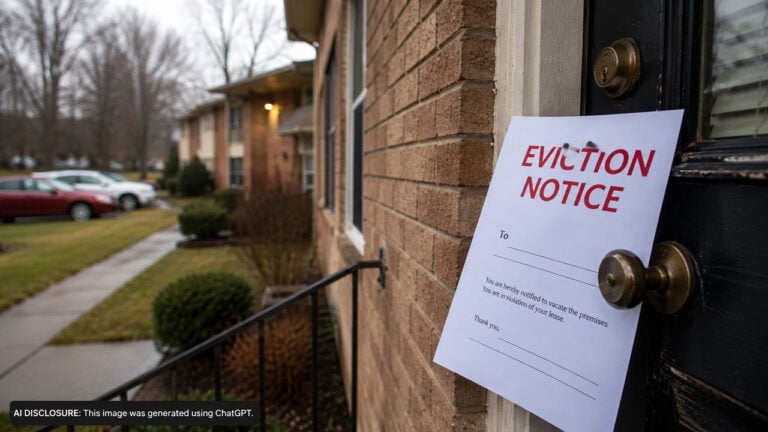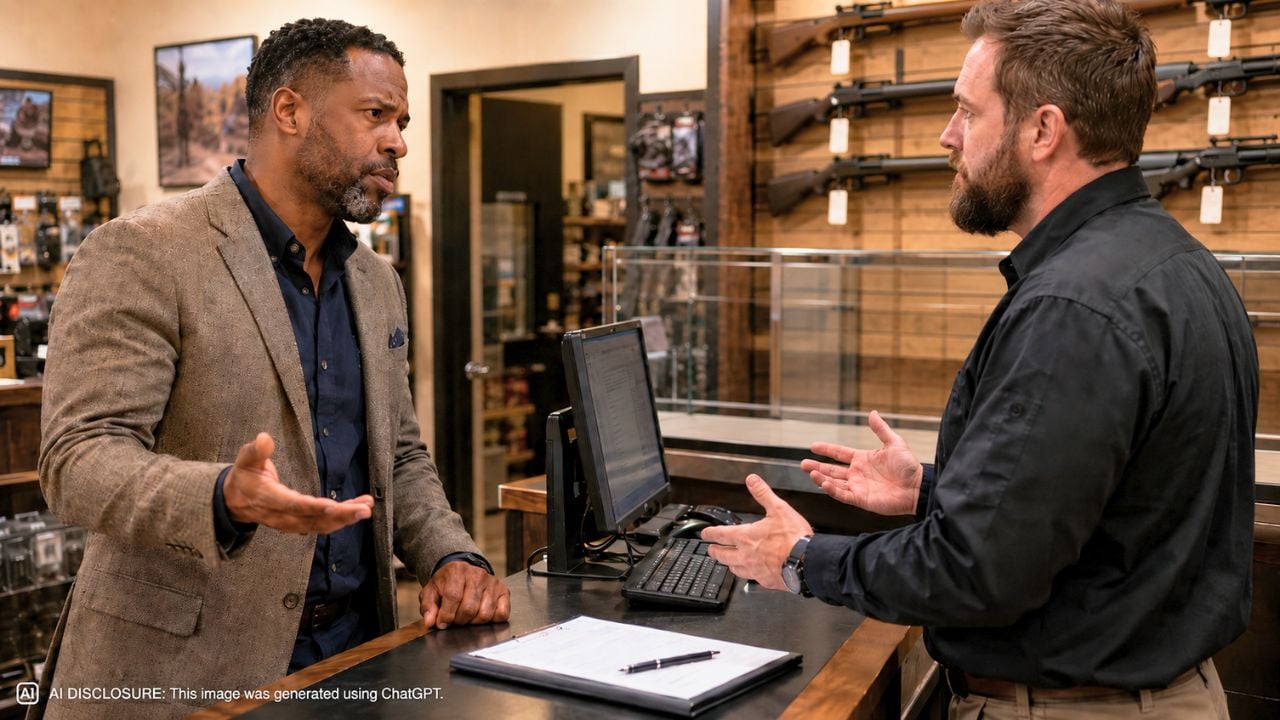
Photo credit: AI-generated image created using ChatGPT. Illustrative only.
You can do everything right when you buy a firearm online—pick a reputable seller, send it to a local FFL, show up ready to do the paperwork—and still end up walking out empty-handed. That’s what happened to one New Mexico gun owner who says he went to pick up a firearm he purchased through Brownells, only to get stopped at the counter because his identification was expired.
From there, the situation turned into the kind of tug-of-war that makes gun owners nervous: the gun is sitting at the armory/FFL, the buyer says a refund was approved, and the two businesses appear to be pointing fingers over a return shipping label. The details were laid out in the original post.
A denied transfer can happen fast when your ID isn’t current
According to the account, the firearm was ordered online in July 2022 and shipped to an armory in the buyer’s city in New Mexico. When the buyer went in to verify identity and complete the pickup, the transfer was denied because both IDs he had were expired.
That’s a rough lesson, but it’s also a common one. Dealers are on the hook for verifying identity and residency documentation in the way the law and their compliance program requires. If your ID is out of date, the counter staff often can’t “work with you” even if they want to. They either have acceptable, current documentation in hand, or they don’t.
Once the transfer doesn’t happen, the gun doesn’t go home with you
When a transfer can’t be completed, the firearm typically stays logged in with the receiving FFL. The buyer doesn’t get to just take it back out the door, because legally the gun hasn’t been transferred to them.
That’s where practical reality hits. In plain language: even if you paid for it, you may not be the legal possessor yet. And that means the path forward usually runs through the seller and the receiving FFL’s return process, not through a handshake at the counter.
The refund was “approved,” but the money still didn’t come back
The buyer says Brownells approved a refund, but the refund never actually landed. That’s a big deal, because time is not your friend on things like credit card dispute windows, merchant processing timelines, and any policies around restocking or return shipping.
He also describes a communications breakdown: Brownells said it sent a shipping label to the armory so the firearm could be returned, while the armory claimed it never received the label. He says he even has an email from November stating Brownells had sent the shipping label to the armory—yet the gun still hadn’t moved and the refund still hadn’t shown up.
When two businesses blame each other, you’re the one stuck in the middle
Every gun owner has seen some version of this in other parts of life: company A says they sent the thing, company B says they never got the thing, and you’re sitting there with no product and no refund.
Firearms just add extra friction. A normal return label isn’t always as simple as printing something at home and dropping it at the post office. The receiving FFL has to follow their procedures and the law, and many of them won’t do anything until they have the exact label or written instructions from the seller. Meanwhile, the seller may not want to issue final refund money until the gun is physically back in their possession.
That’s why documentation matters so much here. If you’re ever in this spot, you want a paper trail with dates: the purchase receipt, the shipping/tracking number to the FFL, the denial reason, the seller’s authorization for return, and proof of when the return label was sent (and to what email address).
The credit card chargeback didn’t solve it
Trying to force the issue, the buyer says he contacted his credit card company to reverse the charge. The card issuer sided with Brownells, leaving him without the firearm and without the refund he believed was coming.
That outcome can happen for a bunch of reasons in the real world: the purchase could have been outside the dispute window, the issuer may have considered Brownells’ evidence sufficient (shipment to the chosen FFL, refund process started, return contingent on receipt), or the documentation the buyer provided may not have met whatever standard the issuer uses. The post doesn’t go into those details, but the result is the same—no quick financial “reset button.”
What people tend to focus on in situations like this
When gun folks talk about this kind of mess, the conversation usually circles around a few practical points, and they’re worth keeping in mind if you ever find yourself staring at a similar brick wall.
First: expired IDs are a hard stop. Before you order anything, make sure your driver’s license and any supporting documents are valid, current, and match your current address. Second: pick your receiving FFL carefully and ask their policy up front—what happens if the transfer is denied, what fees apply, how returns are handled, and who communicates with the seller.
Third: don’t let the clock run out while you “wait for them to figure it out.” If you’re being told a label was sent, ask for it to be re-sent while you’re on the phone, and confirm the exact email address it was sent to. If the FFL says they don’t have it, ask what address they want it sent to and whether a faxed or printed copy is acceptable for their process.
Finally: treat it like any other property dispute—stay calm, stay polite, and keep records. Getting heated with a gun shop is one of the fastest ways to have them stop engaging, and it never helps you in the long run.
The buyer in this case asked whether small claims court is an option and who he could sue. That’s the point a lot of folks reach when the normal customer-service channels fail. Even before it gets that far, though, the practical path is usually the same: get clear written confirmation from the seller about the return authorization and label, and get the receiving FFL to acknowledge in writing what they have (or don’t have) and what they require to ship it back.
For everyday gun owners, the takeaway is pretty simple and pretty harsh: paperwork problems can lock up a firearm purchase just as effectively as a “denied” response, and once that gun is sitting in an FFL’s inventory, you’re dependent on their process and the seller’s process to unwind the deal. Keeping your ID current and sorting out return procedures before you ever click “buy” can save you a long, expensive headache.
Like The Avid Outdoorsman’s content? Be sure to follow us.
Here’s more from us: