Photo credit: The Avid Outdoorsman
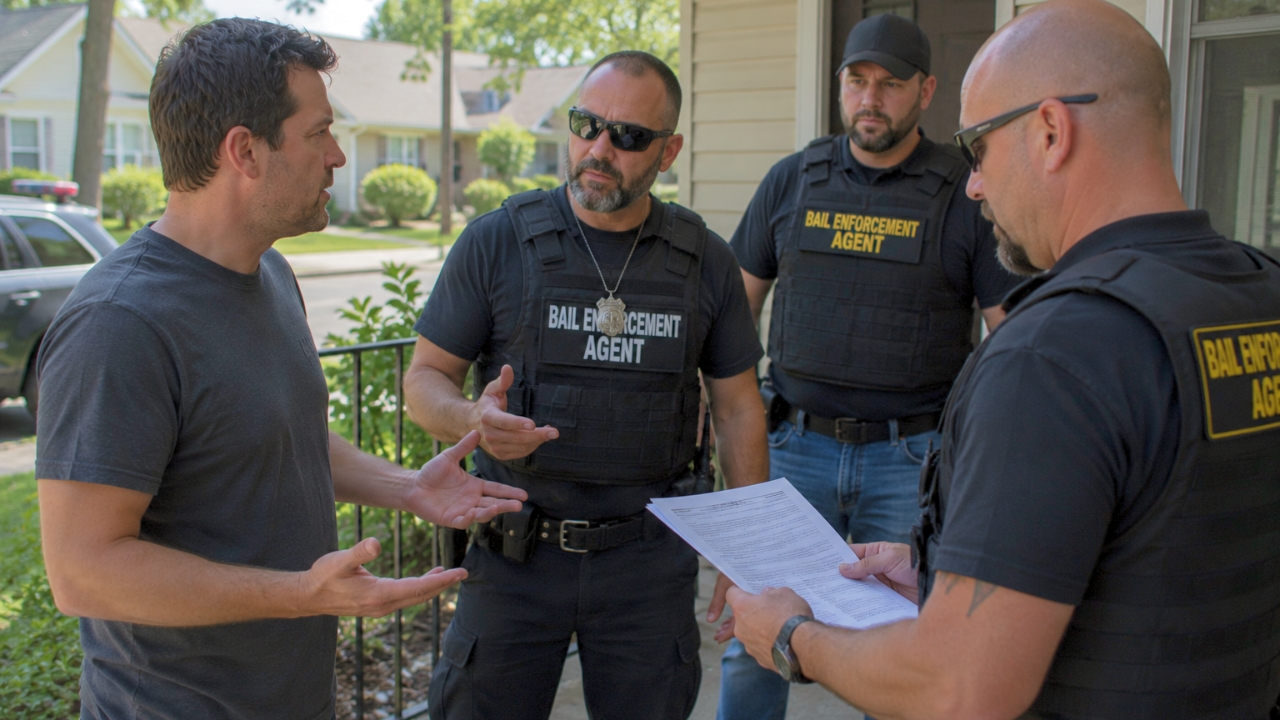
A man said he was pulled into a frightening mistake when bounty hunters came to his home looking for someone else.
According to the Reddit post, the bounty hunters entered his home and arrested him, apparently believing he was the person they were looking for. But the man said they had the wrong person.
The situation got even stranger when they allegedly realized the mistake and brought him back.
He explained the incident in a Reddit thread and asked what legal options he had after bounty hunters entered his home and arrested him by mistake: https://www.reddit.com/r/legaladvice/comments/dc2tba/bounty_hunters_entered_my_home_and_arrested_me/
The wrong-person mistake made the whole encounter terrifying
Getting confronted by bounty hunters is already intense.
Getting arrested by them when you are not the fugitive they are looking for is much worse.
The poster said the people who came into his home believed he was someone else. That means he was not just dealing with a bad knock at the door or a confusing conversation. He was allegedly taken into custody by private recovery agents over another person’s case.
That is the kind of mistake that can leave someone shaken even if it gets corrected later.
The fact that they brought him back did not erase what happened.
Bounty hunters are not ordinary trespassers
Part of what makes these stories complicated is that bounty hunters can have unusual authority in some situations.
They may be allowed to locate and recover a fugitive who signed a bail agreement. But that authority is not unlimited, and it does not mean they can grab the wrong person without consequences.
That was the heart of the poster’s issue.
If the agents were looking for someone who skipped bond, they may have had a reason to search for that person. But if they entered the wrong home or arrested the wrong man, the poster wanted to know what could be done about the mistake.
Commenters said identification mattered
A major question was how the bounty hunters confused him with the fugitive.
Did they have a photo? Did the fugitive use the address? Did the poster share a similar name? Did they check ID before taking him? Did they ignore him when he told them he was not the person they wanted?
Those details matter because they help show whether this was a reasonable mistake or reckless conduct.
If the poster had identification proving who he was and the bounty hunters failed to check it, that could make their actions look much worse.
Commenters wanted him to gather every detail he could remember.
The poster needed a police report
The clearest practical advice was to report the incident.
If private agents entered his home and arrested him by mistake, the poster needed an official record. A police report would document his version, the date, the people involved if known, and the fact that he says he was not the fugitive.
That report could matter if he later pursued a complaint, civil claim, or action against the bond company.
It also creates a paper trail if the bounty hunters come back, contact him again, or try to deny what happened.
Without a report, the whole incident becomes harder to prove.
Identifying the bond company was important
Bounty hunters usually work for someone.
Commenters would naturally push the poster to identify the recovery agents, the bail bonds company, and the case they were connected to. Those details matter because the agents themselves may not be the only ones responsible.
If a bond company sent people to the wrong address, relied on bad information, or failed to properly identify the person they took, the company may have to answer for it.
The poster needed names, phone numbers, business cards, license information if available, vehicle descriptions, and anything else that could connect the agents to a specific company.
That is hard to collect during a frightening encounter, but it becomes important afterward.
A lawyer may have been worth calling
Several commenters in a situation like this would likely tell the poster to speak with a local attorney.
That is because the claims could be more serious than a simple property dispute. Depending on the facts and state law, the incident could raise questions about false arrest, false imprisonment, trespass, assault, or civil rights issues.
Reddit could not determine all of that from a short post.
A lawyer could look at the state’s rules for bail recovery agents, whether they had any lawful reason to enter the home, how they identified the poster, and whether the mistake created a claim worth pursuing.
When someone is taken by force by private agents, it is not something to treat casually.
The return trip did not fix the arrest
One part of the story that stands out is that the bounty hunters allegedly brought him back after realizing the mistake.
That may sound like they fixed it, but it does not erase the time he was detained. It does not erase the fear. It does not erase the entry into the home.
If someone takes the wrong person, driving them back home later is only the beginning of accountability.
The poster still had reason to ask who authorized the entry, why his identity was not checked sooner, and how the same mistake could be prevented from happening again.
Documentation could make or break the case
The poster needed to write down the timeline as soon as possible.
What time did they arrive? How many people were there? Did they show badges or paperwork? Did they say they were police? Did they use force? Did they handcuff him? Did he show ID? Where did they take him? When did they realize the mistake? What did they say when they brought him back?
Those details can fade quickly.
If there were doorbell cameras, neighbors who saw the incident, phone records, texts, or any damage to the home, those should be preserved too.
A detailed timeline is much stronger than trying to reconstruct the event weeks later.
The mistaken address could be part of the issue
A lot of bounty hunter mistakes start with old addresses.
The fugitive may have once lived there, used the address on paperwork, stayed with someone there, or given it to the bond company. That does not mean the current resident is fair game.
If the poster had no connection to the fugitive, he needed proof of that too.
Lease documents, utility bills, ID, mail, or records showing how long he had lived there could all help show that the agents had bad information or failed to verify it.
If the fugitive never lived there at all, that would be even more important.
The incident could have become dangerous
Wrong-person arrests are not just legally messy. They can be physically dangerous.
A person inside the home may think intruders are breaking in. The bounty hunters may think they are dealing with a fugitive who might run or fight. Everyone is tense, and nobody has a full picture of what is happening.
That is exactly how a mistaken entry can escalate.
The poster was lucky the situation ended with him being brought back instead of someone getting hurt. But luck is not the same as a good process.
The practical advice was to build a record fast
The path forward was not to let it go just because they returned him.
He needed to document everything, file a police report, identify the bounty hunters and bond company, preserve any video or witness information, and consider speaking with a local attorney about whether the agents exceeded their authority.
The key point is simple: looking for a fugitive does not give bounty hunters a free pass to arrest the wrong man.
And when private agents enter a home, take someone into custody, and then realize they made a mistake, the person they grabbed deserves more than a ride back and an awkward apology.
Check out more from The Avid Outdoorsman here.