Photo credit: AI-generated image created using ChatGPT. Illustrative only
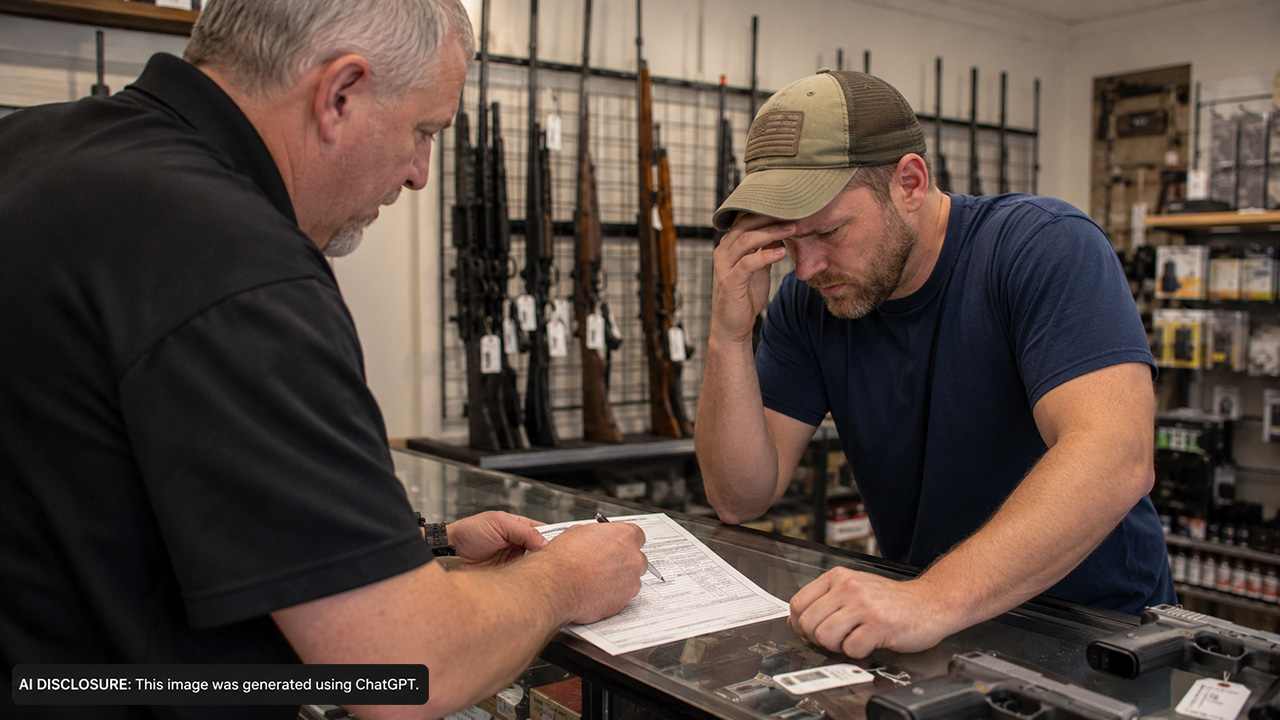
Most gun counter moments are routine: pick your firearm, show your ID, fill out the paperwork, wait on the background check. But one wrong mark on the ATF’s Form 4473 can turn a normal purchase into a serious problem in a hurry—especially when the question touches controlled substances.
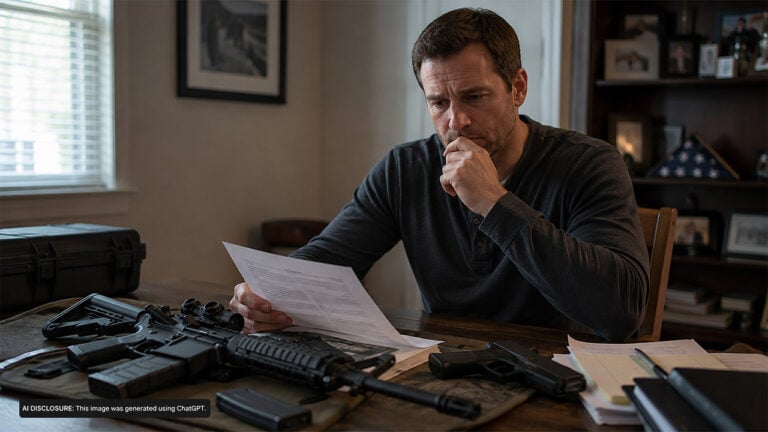
That’s the bind one Southern California buyer worried about after wrestling with Question 11e on the Firearm Transaction Record (ATF Form 4473). In the original post, the buyer asked a deceptively simple question: if you used marijuana in the past and once had a medical marijuana card, but you no longer use, can you legally answer “no” to 11e?
The box that makes people freeze at the counter
Form 4473 Question 11e asks: “Are you an unlawful user of, or addicted to, marijuana, or any depressant, stimulant, or narcotic drug, or any other controlled substance?” It’s the kind of line that makes even law-abiding folks pause, because it’s not asking about a conviction. It’s asking about use.
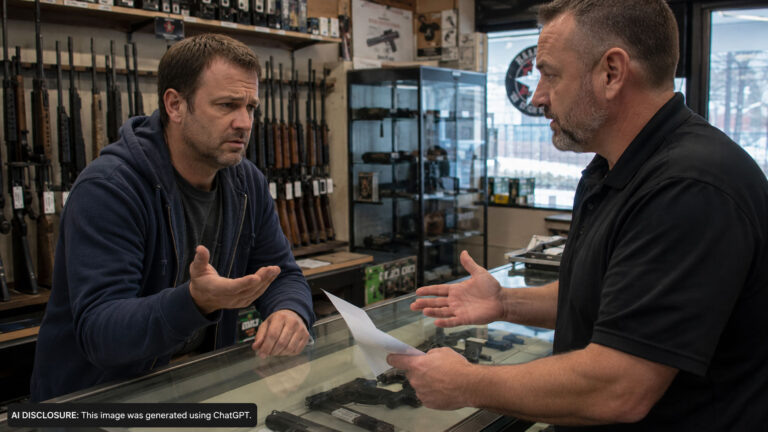
Out in the real world, the pressure is on. There’s a line behind you, the clerk is waiting, and nobody wants to announce their life story under fluorescent lights next to the holsters and ammo. But that question is there for a reason: it’s a federal form, and the government treats false statements on it as a very big deal.
Medical marijuana is “legal” in California—until federal law shows up
The outdoors crowd has watched this mismatch for years. A state may allow marijuana for medical or recreational use, but federal law still classifies marijuana as a controlled substance. That federal vs. state split is exactly why this question trips people up, especially in places like Southern California where medical cards were common long before recreational legalization.
The buyer’s situation was specific: they said they “at one point possessed a MMJ card and used marijuana but no longer do.” That’s not a question about current paperwork; it’s about whether past use changes what you can truthfully check today.
“Unlawful user” is about now—and that’s where the risk lives
From a common-sense gun owner’s perspective, the safest way to think about Question 11e is this: it’s trying to capture current unlawful use or addiction, not whether you ever experimented years ago. The wording doesn’t ask, “Have you ever used marijuana?” It asks whether you are an unlawful user or addicted.
But here’s the catch: people get into trouble when they treat that box like it’s a casual opinion question. It isn’t. If someone is currently using marijuana—medical card or not—federal law can still view that as unlawful use. Checking “no” while still using can be treated as a false statement on a federal document, and that’s the kind of mistake that can follow you far beyond the gun shop.
For the buyer in this scenario, the key detail is the “no longer do” part. If that’s true and they’re not currently using, their concern becomes less about “am I allowed to own a gun?” and more about “how do I answer this truthfully without guessing?” That’s a smart instinct, because guessing on a 4473 is how people end up sweating later.
Why this can go from paperwork to felony territory fast
Gun folks sometimes talk about “paperwork problems” like they’re minor—like the DMV kicking a form back. A 4473 isn’t that. It’s a federal record tied to a background check, and it’s designed to determine whether a person is prohibited from receiving a firearm.
When someone checks the wrong box, the problem isn’t just denial of the sale. The bigger exposure is the allegation that the buyer lied on the form. Even if the firearm never leaves the store, a false statement on the document can still be treated as a serious offense. That’s why this question matters so much: it’s not only about eligibility, it’s about truthfulness on the record.
For hunters, anglers, and working folks who like their freedom and keep their nose clean, that’s the nightmare scenario—getting jammed up not for some violent act, but for a pen mark made in a hurry.
The practical way gun owners handle this situation
The buyer’s post didn’t mention an arrest, a denial, or a confrontation at the counter—just the concern about how to answer legally given past marijuana use and a prior medical card. Still, the practical lessons are worth stating plainly.
First, don’t fill out a 4473 “the way you wish it worked.” Fill it out the way it’s written, and the way federal law will interpret it. If you’re a current user of marijuana, federal law doesn’t give you a free pass because your state does. Second, if you’re not currently using and you’re not addicted, the honest answer should reflect that—but it has to be honest, not convenient.
Third, if you’re unsure, don’t try to workshop it at the glass counter with strangers listening. Pause the transaction and get real legal advice from an attorney who understands firearms law in your state and the federal side of the house. That may feel like overkill, but it’s cheaper than gambling with a form that can carry felony-level consequences if you get it wrong.
And finally, remember that gun ownership is a long game. Losing your rights over a rushed checkbox is about as painful as it gets. Take the extra day, make the right call, and keep your record as clean as your bore after deer season.
Like The Avid Outdoorsman’s content? Subscribe to our newsletter so you never miss an article.
Here’s more from us: