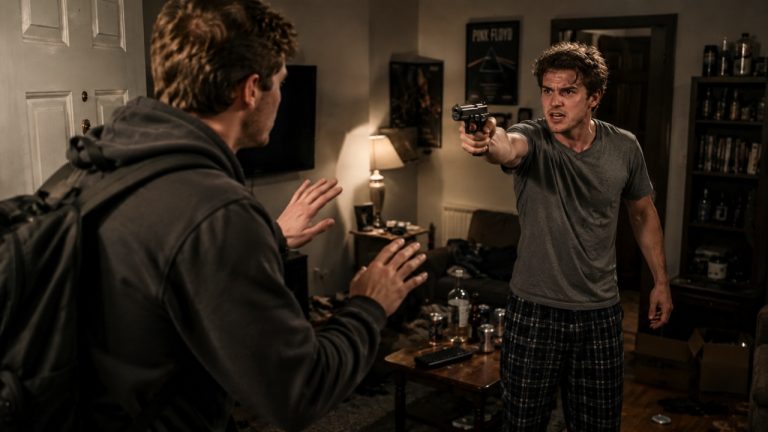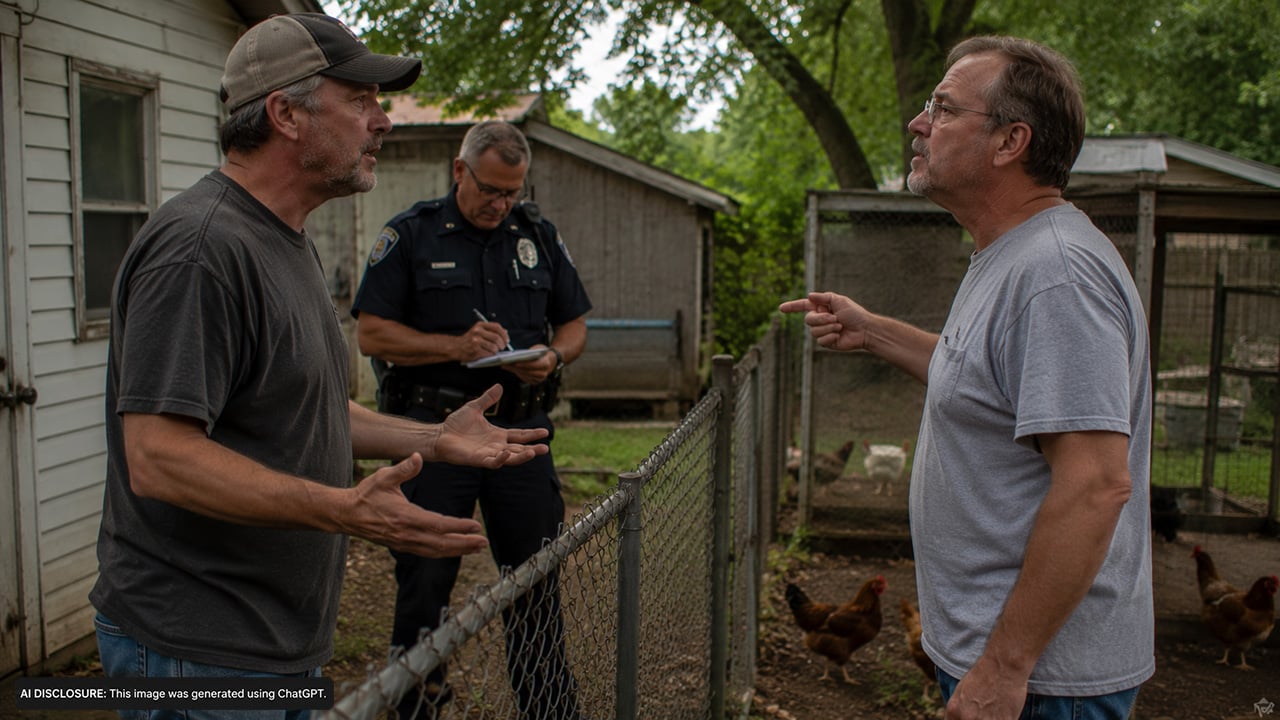
Photo credit: AI-generated image created using ChatGPT. Illustrative only
A family in Oklahoma thought they were buying a little breathing room when they moved onto a larger lot. Less than a month later, they were standing in the dark with flashlights, calling for a dog that had gotten loose again—right before a gunshot ended it.
In the original post, the homeowner said a neighbor shot and killed their dog near the back of the properties by a wooded area and a creek, then told police the dog had been attacking his chickens. The family says they’d already had tension with that neighbor after the dog got out once before and killed a chicken.
A new place, loose chickens, and one bad first incident
According to the homeowner, the neighbor lets his chickens roam without a fence. That’s not unusual in rural pockets, but it can turn into a headache fast when property lines are tight, fences aren’t perfect, and animals follow their instincts.
The first blow-up happened when the family’s dog jumped their fence and killed one of the neighbor’s chickens. After that, the neighbor allegedly threatened to kill the dog. That threat matters, because it changes this from “country problems” to “this could escalate.”
The second escape happened at night—and ended with a shot
The homeowner said that on the day of the shooting, the dog escaped again while the poster’s mom was taking him outside. Behind both houses is described as a wooded area with a creek—exactly the kind of boundary zone where people assume “it’s basically nobody’s yard,” even though property lines still exist.
Both parents were outside with flashlights, making noise and trying to get the dog back indoors when the neighbor fired and hit the dog. The dog died from the gunshot.
Property lines and “where it happened” can change everything
One of the biggest issues raised was that the family wasn’t sure whose property the shooting technically took place on, calling it “very ambiguous.” That’s a common problem around wooded buffers, creek bottoms, and unfenced edges—especially right after moving in, before you’ve walked every corner and found pins or surveyed markers.
In practical terms, the location can affect how law enforcement looks at the shooting, whether it’s viewed as defense of livestock, and whether there are local ordinances about discharging a firearm. It also matters for the simple reality of neighbor disputes: if you can’t clearly show where something happened, it’s harder to prove your side of it.
The safety piece: a bullet in the dark with a family nearby
This wasn’t just about a dog and a chicken anymore. The homeowner pointed out their 2-year-old son lives with them and “very well could have been outside.” When someone fires a shot at night near homes—especially in a yard area with unknown backstops—everybody’s ears should perk up.
Even folks who are fully comfortable around guns generally agree on two basic rules: know what you’re shooting at, and know what’s beyond it. In the back edge of a neighborhood lot, with woods and a creek, it’s easy for a round to skip, travel, or end up where it shouldn’t.
What the family did next: call law enforcement and start documenting
The homeowner said their father called the police and officers were speaking with the neighbor at the time of the post. That’s the right first move when shots are fired and a pet is killed—especially when there’s already been a prior threat.
From a common-sense standpoint, this is also where details become critical: time of day, where everyone was standing, where the dog was, where the neighbor was, and any evidence on the ground. Photos of the area, the fence line, tracks, and the general scene can matter later, even if you think it’s “obvious” now.
The hard reality in rural living: dogs roam, livestock dies, and tempers flare
This situation is ugly, but it’s not hard to see how it got there. A dog that has already killed a chicken is more likely to chase again. A neighbor who sees his birds as food security, a hobby he’s invested in, or just “his property” may feel justified doing something drastic.
At the same time, shooting a dog in a residential-type setting—while the owners are outside calling for it—crosses a line for a lot of people. Most rural folks expect neighbors to talk, to give a warning, to work out fencing and containment, and to avoid gunfire unless it’s truly unavoidable and safe.
The best prevention is the boring stuff: solid fences, supervised bathroom trips, leashes when you’re not confident in containment, and not letting conflicts simmer after the first incident. Once threats start getting tossed around, it’s smart to take them seriously and tighten up your routine immediately.
In the end, this Oklahoma family was left dealing with a dead dog, a shaken sense of safety, and a neighbor conflict that went from “my dog got out” to police on scene. If you live where chickens free-range and dogs slip fences, the lesson is plain: boundaries—physical and personal—need to be handled early, before somebody reaches for a gun in the dark.
Like The Avid Outdoorsman’s content? Subscribe to our newsletter so you never miss an article.
Here’s more from us: