Photo credit: AI-generated image created using ChatGPT. Illustrative only
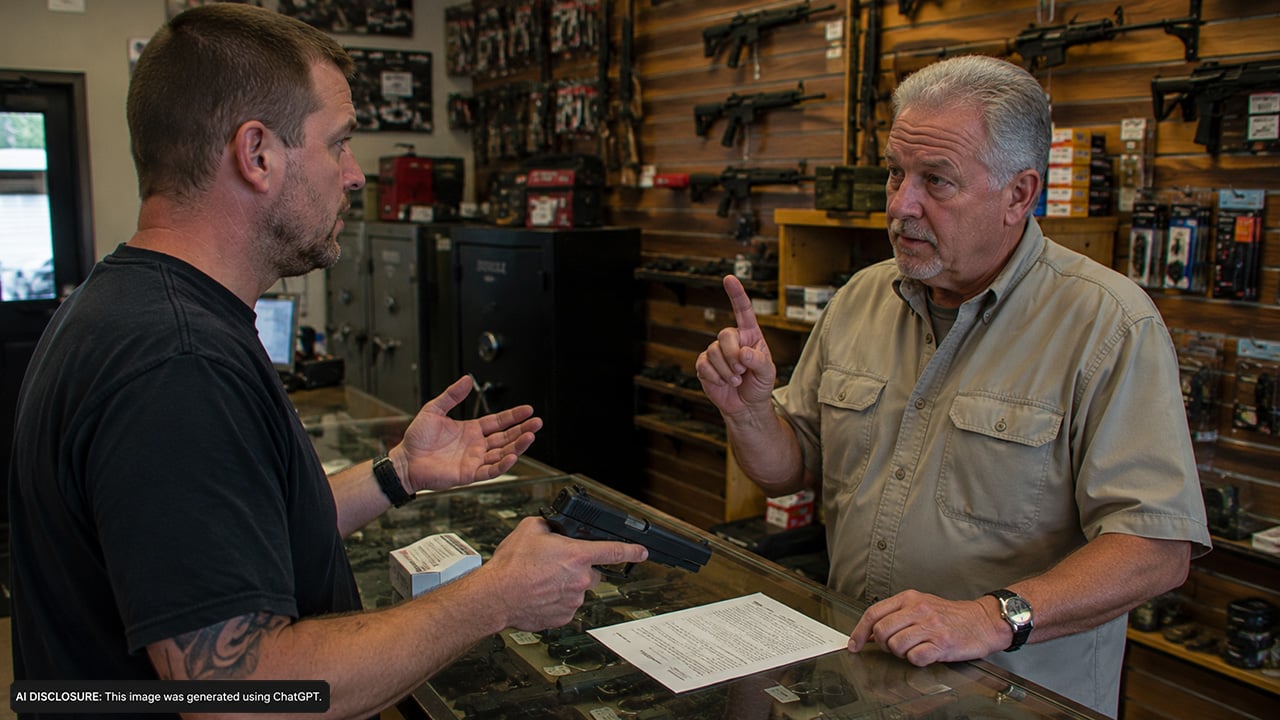
Buying a handgun from a pawnshop feels about as routine as buying a used scope or a secondhand chainsaw. You hand over the money, get a receipt, and figure you’re covered—especially if the sale went through the normal paperwork. But one Mississippi gun buyer found out the hard way that a clean-looking purchase can still turn into a long night and an empty holster.
In the original post, the buyer said he purchased a gun from a pawnshop and later ended up in jail “for the very same gun.” He said he had the receipt with him, but was still arrested, his truck was towed, and police also held onto another firearm that was in the truck that night. The charges were later dropped, and he said he was given $1,000, but he’s still asking whether he has grounds to sue and who’s responsible when a shop sells a gun that ends up coming back stolen.
How a “legal purchase” can still turn into an arrest
Most outdoorsmen assume a receipt is the golden ticket. If you bought it fair and square, the paperwork should settle things, right? In reality, a receipt proves you paid for it, not that the gun’s history is clean.
If a gun is entered as stolen and that serial number gets checked during a traffic stop, an investigation, or after some other contact with law enforcement, things can get sporty fast. Even if you didn’t do anything wrong, the officer on the side of the road is dealing with what the system is telling him about that firearm in that moment.
Why police usually seize the firearm first and sort it out later
From the buyer’s description, police took the gun tied to the arrest and also held another gun that was in the truck. That part matters for gun owners because once a firearm is seized, getting it back can be slow—even when charges get dropped.
When a firearm pings as stolen, officers commonly treat it as potential evidence and as property that may need to be returned to the original owner. The practical reality is they’re not going to leave it in circulation just because the current holder has a receipt. The receipt doesn’t erase the stolen status; it just helps show you may have bought it without knowing.
The pawnshop receipt helped, but it didn’t prevent the mess
The buyer said he “also had the receipt the pawnshop gave” him and was still taken to jail. That’s the gut-punch part for anyone who’s ever bought a used gun from a pawn counter and walked out thinking the transaction was wrapped up clean.
A receipt is still important. It can help show you’re not the thief, and it can help establish where the gun came from. But it won’t necessarily stop an arrest if the firearm is listed stolen, and it won’t necessarily stop the gun from being confiscated while things get untangled.
Refunds and responsibility: the hard question for the shop
The angle folks immediately think about is simple: if a business sold a stolen gun, why wouldn’t they just refund the buyer? On a common-sense level, most of us would expect the shop to make it right—especially if the buyer is now out the gun and the cash.
But pawnshops and gun sellers often operate under policies (and sometimes state rules) that can get tight once law enforcement seizes the firearm. The gun isn’t sitting in the display case anymore, and the shop may claim they don’t have the ability to “undo” the transaction without documentation, a determination of rightful ownership, or guidance from authorities. None of that makes it feel fair to the buyer who paid and walked out legally, but it explains why a store might dig in.
It also raises a bigger point for buyers: when you purchase used, you’re sometimes stepping into a paper trail you can’t see. If that trail leads back to a theft report, it’s the buyer who gets the immediate headache—even if the shop ultimately should have caught it.
The other gun in the truck is a separate problem
One detail that jumped out is that the buyer said police still had “another gun” that was in the truck that night. A lot of folks keep a handgun or a long gun around for coyotes, snakes, or just peace of mind on back roads. But when law enforcement takes possession of firearms during an arrest, they don’t always hand them back automatically just because the main charge gets dismissed.
That second gun may be tied up in whatever property return process the agency uses, or it could be held until the buyer follows a specific procedure to claim it. The key point for gun owners is that “charges dropped” doesn’t always mean “property returned tomorrow.” You may still have to make formal requests, show proof of ownership, and comply with any waiting periods or administrative steps.
What the $1,000 payment and dropped charges might really mean
The buyer said the charges were dropped and “they gave me $1000.” He didn’t explain who “they” is—whether that was the agency, the shop, or something tied to the towing or the incident itself—so you have to be careful reading too much into it.
Still, that detail suggests there was some recognition that the situation went sideways. Between a night in jail, a towed truck, legal stress, and at least one gun being seized, $1,000 doesn’t go very far in the real world. One tow and impound bill can eat a good chunk of that, and it doesn’t replace the firearm or the time spent dealing with the aftermath.
From a practical standpoint, money changing hands can also come with strings attached—sometimes formal, sometimes informal. Outdoorsmen should hear the warning bell here: before you accept any payment connected to an incident like this, it’s worth understanding what you may be giving up in return.
For gun owners, the lesson isn’t “never buy used.” It’s that you want as much documentation as you can get, and you want to be picky about where you buy. A pawnshop receipt is good. Any additional paperwork the store can provide is better. And if something ever feels off—serial number scratched, story doesn’t make sense, staff won’t answer basic questions—walk.
Because once a firearm comes back stolen, it’s not just an inconvenience. It can turn into handcuffs, a tow bill, and a fight to get your own property back—even when you did your part and paid like a regular customer.
Like The Avid Outdoorsman’s content? Be sure to follow us.
Here’s more from us: