Photo credit: The Avid Outdoorsman
The new bowhunter had the kind of setup that makes your stomach jump before your brain can catch up.
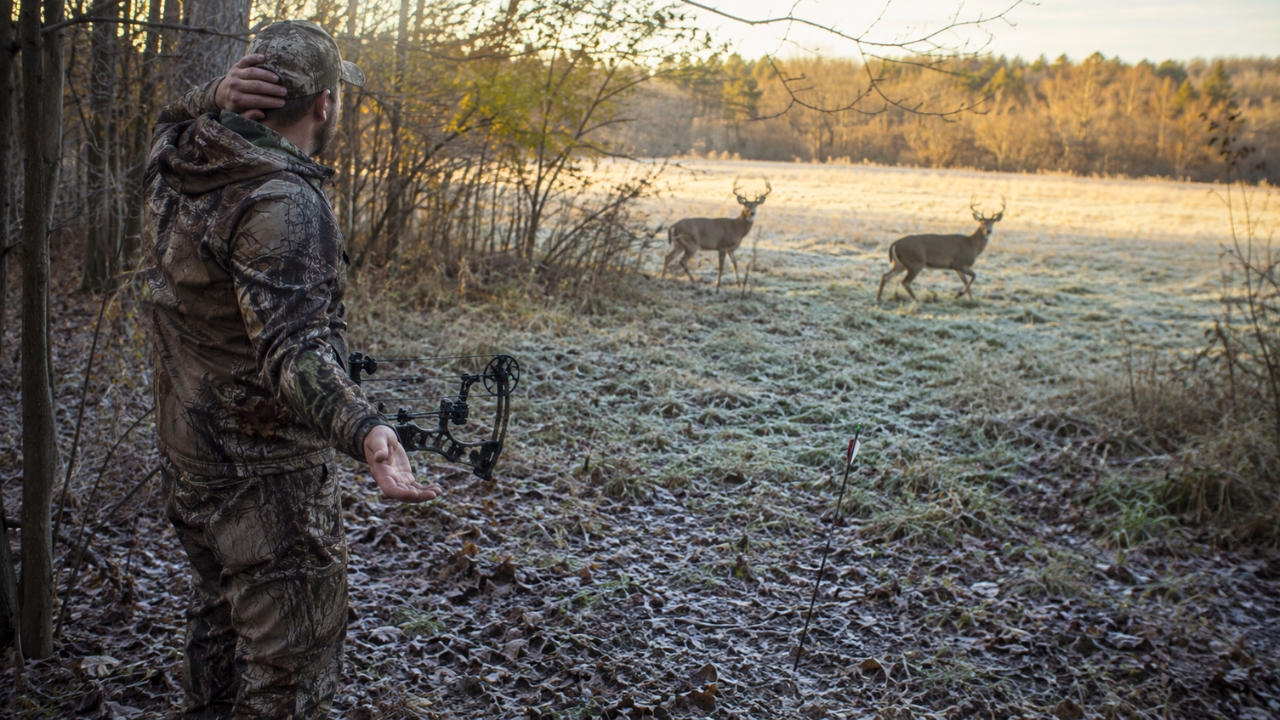
Two bucks were standing at 20 yards.
That is not a far-off glimpse through brush. That is not a deer slipping across a ridge where you barely have time to grab the binoculars. Twenty yards with a bow is real. Close. Doable. The kind of distance a hunter practices for over and over because, when it finally happens, you want the shot to feel automatic.
But nothing felt automatic once the deer were actually there.
In a Reddit post, the hunter described the kind of bowhunting moment that can make a person feel sick afterward. He had two bucks inside 20 yards, but buck fever hit hard. His nerves took over, his routine fell apart, and the shot ended up going about 10 yards short.
That is a brutal miss.
Not because it wounded the deer. A clean miss is always better than a bad hit. But missing short at 20 yards means the chance was there, the deer were close, and the mistake happened somewhere between the hunter’s head, hands, and shot process.
That is what hurts.
Bowhunting puts pressure on a person in a way that is hard to explain until it happens. A rifle gives you more distance and usually more margin for movement. With a bow, everything is close. You have to draw without being seen, anchor cleanly, settle your pin, pick a spot, control your breathing, and make the shot while the deer is close enough to hear every zipper, sleeve rub, and shaky inhale.
Now add two bucks.
One deer is enough to rattle a new hunter. Two can make the whole thing feel like a clock is counting down. You are trying to decide which one to shoot. You are watching heads, shoulders, angles, legs, brush, and movement. You are trying not to stare at antlers. You are trying not to rush. And the whole time, your body is doing the opposite of calm.
That is buck fever.
Hands shake. Knees feel weak. Breathing gets loud. The release feels strange. The bow feels heavier. The distance you knew five minutes ago suddenly feels uncertain. The pin will not settle. Your brain starts shouting instructions in no useful order.
Draw. Wait. Don’t move. He’s looking. Which buck? Is that 20? Don’t blow it. Shoot. No, wait. Now.
That kind of mental noise can wreck a shot before the arrow ever leaves.
The post’s mention of a forgotten release, or at least the release not being handled right in the moment, makes it even more painful. A release is a small piece of gear, but with a compound bow, it is part of the whole system. If it is not where it needs to be, clipped on cleanly, or used the way the hunter practiced, everything gets sloppy fast.
That is the kind of thing that feels unforgivable afterward.
The hunter probably replayed the shot a hundred times. He likely knew the deer were close enough. He probably knew the lane. He probably knew, once it was over, that he had rushed or broken his routine. But knowing after the fact is the curse of bowhunting. The lesson arrives when the deer are already gone.
And they were gone.
A miss 10 yards short at that range can happen for several reasons. Maybe he used the wrong pin. Maybe he guessed the distance wrong under pressure. Maybe he dropped his bow arm. Maybe he punched the trigger. Maybe he did not come to full anchor. Maybe the shot broke while his body was still panicking. Maybe the deer was slightly farther than he thought and buck fever made the gap feel smaller.
The exact mechanics matter for practice, but the emotional lesson is bigger.
The deer got inside his head.
That is not rare. It is basically a rite of passage. Every hunter likes to think they will be calm when the moment comes. Then a real animal steps in, and suddenly all the backyard confidence gets tested under a completely different kind of pressure.
Targets do not look at you.
Targets do not step behind brush.
Targets do not make you choose between two bucks.
Targets do not walk away while you are still trying to remember how to breathe.
The good news is that he missed clean. That gives a hunter a chance to learn without a blood trail, regret, or an animal suffering. It still stings, but it is the kind of sting that can make a person better. The next step is to turn the embarrassment into a routine that survives nerves.
That means ranging landmarks before deer arrive. Knowing the lanes. Practicing with the same release every time. Drawing from awkward positions. Holding at full draw longer than comfortable. Shooting one arrow at a time instead of casual groups. Building a shot sequence so the brain has something to follow when the heart rate spikes.
Pick the deer. Range or use known yardage. Draw only when the head is blocked or turned. Anchor. Settle the pin. Pick a hair. Squeeze. Follow through.
Simple, but not easy.
That is the thing this hunter learned the hard way. Bowhunting is not only about getting deer close. It is about staying controlled once they are close. The woods gave him the opportunity. His nerves took the shot away.
Two bucks at 20 yards is the kind of memory that can haunt a person.
A clean miss 10 yards short makes sure it does.
Commenters mostly treated it like a painful case of buck fever, not proof that the hunter had no business being out there.
Several people said almost everyone who bowhunts long enough has a moment where nerves take over. A real deer inside bow range feels nothing like a backyard target, especially when it is a buck and the hunter is newer.
Others focused on the clean miss. Missing short hurts, but it is far better than wounding the deer. A clean miss gives the hunter a hard lesson without creating a tracking nightmare or a lost animal.
A lot of practical advice came down to preparation. Range the area before deer show up, know your shooting lanes, keep the release where it belongs, and practice a repeatable shot routine until it feels automatic.
Some commenters also said the only real cure for buck fever is experience. The more deer a hunter sees from the stand, the easier it gets to keep the moment from taking over.
The main lesson was simple: bowhunting close-range deer is as much mental as physical. The shot has to be practiced, but so does staying calm enough to make it.