Photo credit: AI-generated image created using ChatGPT. Illustrative only
Most concealed carriers are careful about two things: keeping their handgun secure, and keeping it out of places it doesn’t belong. Airports are at the top of that list. But one everyday-carry mistake turned into a tense checkpoint moment, a legal headache, and a gun that won’t be coming home.
A routine trip turned into a checkpoint stop
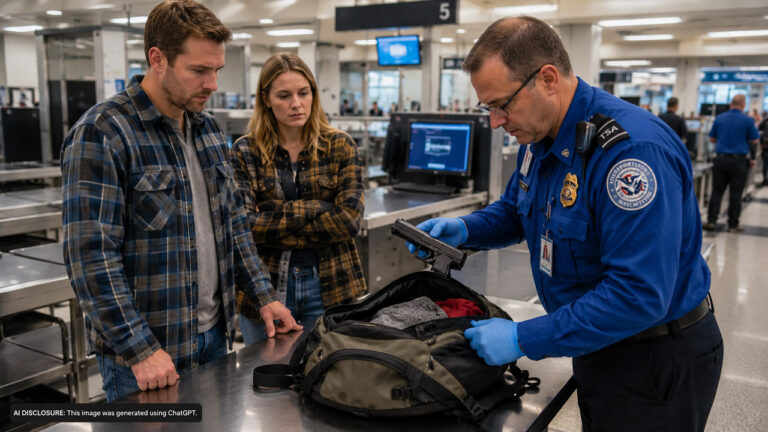
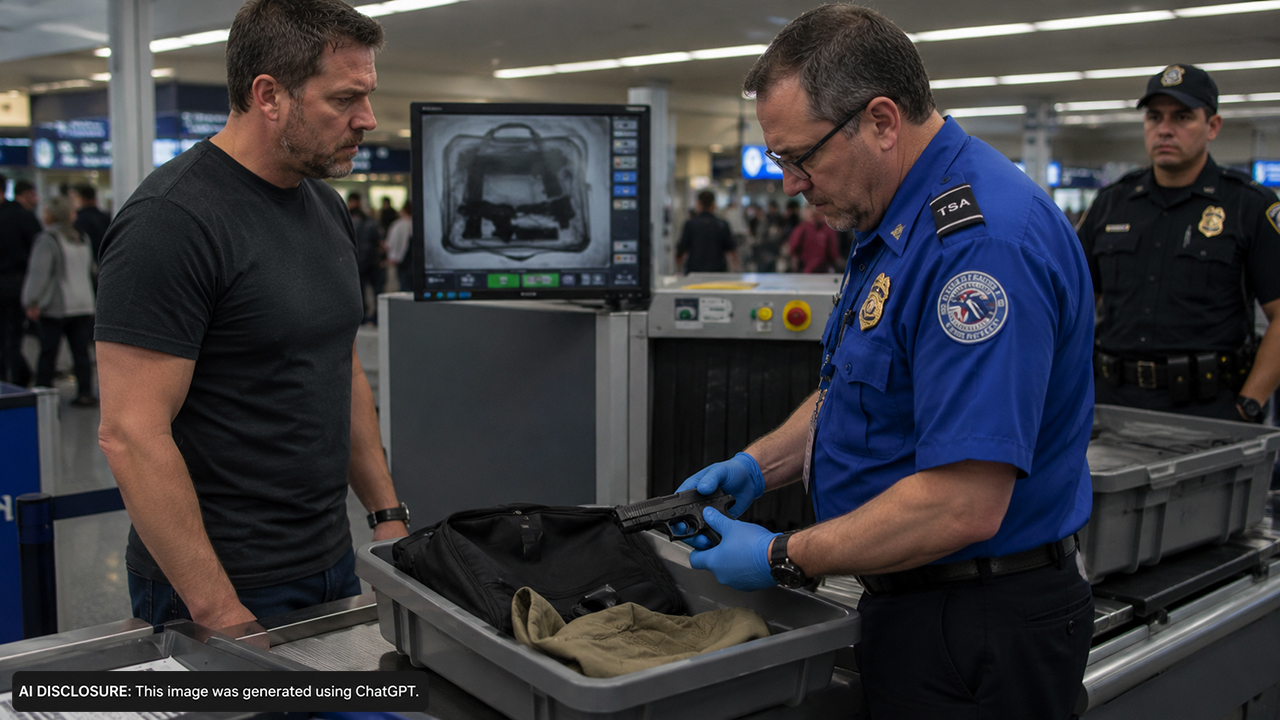
In a firsthand account shared online, a concealed carrier explained that he accidentally sent his loaded everyday-carry pistol through the TSA checkpoint X-ray. That’s the nightmare scenario a lot of folks worry about—because it doesn’t matter if you’re a solid, law-abiding gun owner 364 days a year. Airports have zero patience for “I forgot.”
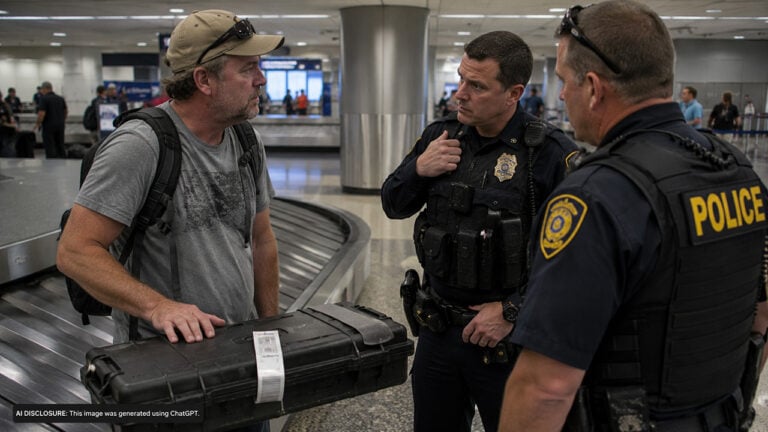
He didn’t lay out every second of the checkpoint encounter in the update, but the outcome makes it clear what happened next: officers detained him, airport police took possession of the firearm, and he ended up facing a citation that had to be handled in court.
Calling a lawyer early changed the trajectory
Instead of trying to wing it, he contacted a criminal defense attorney referred by CCW Safe. That decision alone is worth noting for anyone who carries—because when guns and restricted areas collide, the stakes climb fast, and “explaining it” to the wrong person can make things worse.
His attorney handled the initial arraignment and entered a not-guilty plea on his behalf. He wrote that he didn’t even have to be present for that first court appearance, which likely helped him avoid compounding a stressful situation with more missteps.
The plea deal: dismissal after 30 days, but it still cost him
After the case moved to the district attorney’s office, his lawyer negotiated a resolution. He agreed to plead nolo contendere (no contest) to the citation, with adjudication stayed—meaning the guilty plea would not be entered.
The deal required him to stay out of trouble for 30 days, and then the charges would be dismissed. There was also a financial sting: he’d have to pay a $503 fine or complete 50 hours of community service. And there was one more condition that will hit most gun owners right in the gut: he had to forfeit the firearm.
Why “no contest” mattered to him
The DA asked him to plead guilty, but he said he pushed for no contest instead. Even with the promise that the charge wouldn’t be recorded and would ultimately be dismissed, he didn’t want to ever have to say he pleaded guilty if a background check or other paperwork ever asked the question in a way that created problems.
That’s a detail some folks overlook. Legal language has a way of following you around in unexpected ways—employment questions, carry permit renewals, and certain applications don’t always leave much room for nuance. In his mind, “no contest” was the cleanest option available under the circumstances.
He didn’t fight for the gun, and he may have lost PreCheck
On the gun itself, his attorney wanted to fight for it, but he chose not to push that issue if it risked disrupting the negotiation. He said the pistol was a Ruger LCP, and he didn’t feel it was worth dragging the process out over what amounted to a relatively inexpensive carry gun.
He also noted what looked like a secondary consequence: TSA PreCheck stopped appearing on his boarding passes. He said he hadn’t received an official notification and wasn’t planning to poke the bear until everything was settled, but in practical terms, it appeared he’d lost that convenience.
What other gun owners focused on: checking pockets, casings, and “little stuff”
The comments around his update weren’t so much about kicking a man while he was down as they were about lessons learned—mostly revolving around the tiny things that can get you hemmed up. Several people talked about being obsessive before flying: checking every pocket, every bag, every nook in luggage and jackets.
One commenter pointed out that even if you’re careful about a firearm, it’s surprisingly easy to miss an empty casing tucked into a range jacket or wedged in a small pocket. Another mentioned a novelty keychain made from a 5.56 cartridge that still drew scrutiny despite having holes drilled through it for a key ring—while someone else said TSA confiscated a similar item from a family member.
That’s the part outdoorsmen and range regulars should pay attention to. Airport screening doesn’t just turn up guns. It turns up range souvenirs, loose ammo, spent brass, multitools, and all the little “everyday” items that are normal around a truck console or a shooting bench—but not normal in an airport line.
The practical carry lesson: build a “flight routine” that’s boring
He said he’d learned his lesson, and the best way to make sure you don’t repeat it is to build a repeatable routine. Not a complicated one—just a boring, consistent process you do every time you’re flying.
That can mean designating a specific travel bag that never goes to the range, and physically emptying pockets the night before instead of the morning of. It can mean doing a “hands on” check—wallet, keys, phone, nothing else—then looking again. For folks who carry small pistols like an LCP, it can also mean being extra mindful because those guns disappear into pockets and pouches that don’t feel like “gun storage” in the moment.
If you want to read his full update in his own words, you can find it in the source post.
In the end, his outcome could have been worse—he got a path to dismissal after 30 days—but it still cost him time, money, and a pistol, and may have cost him a trusted-traveler perk. For concealed carriers, it’s a reminder that responsibility isn’t just how you carry on the street. It’s how you manage your gear when life changes gears—especially when the next stop is an airport checkpoint.
Like The Avid Outdoorsman’s content? Subscribe to our newsletter so you never miss an article.
Here’s more from us: