Photo credit: sootch00/Youtube
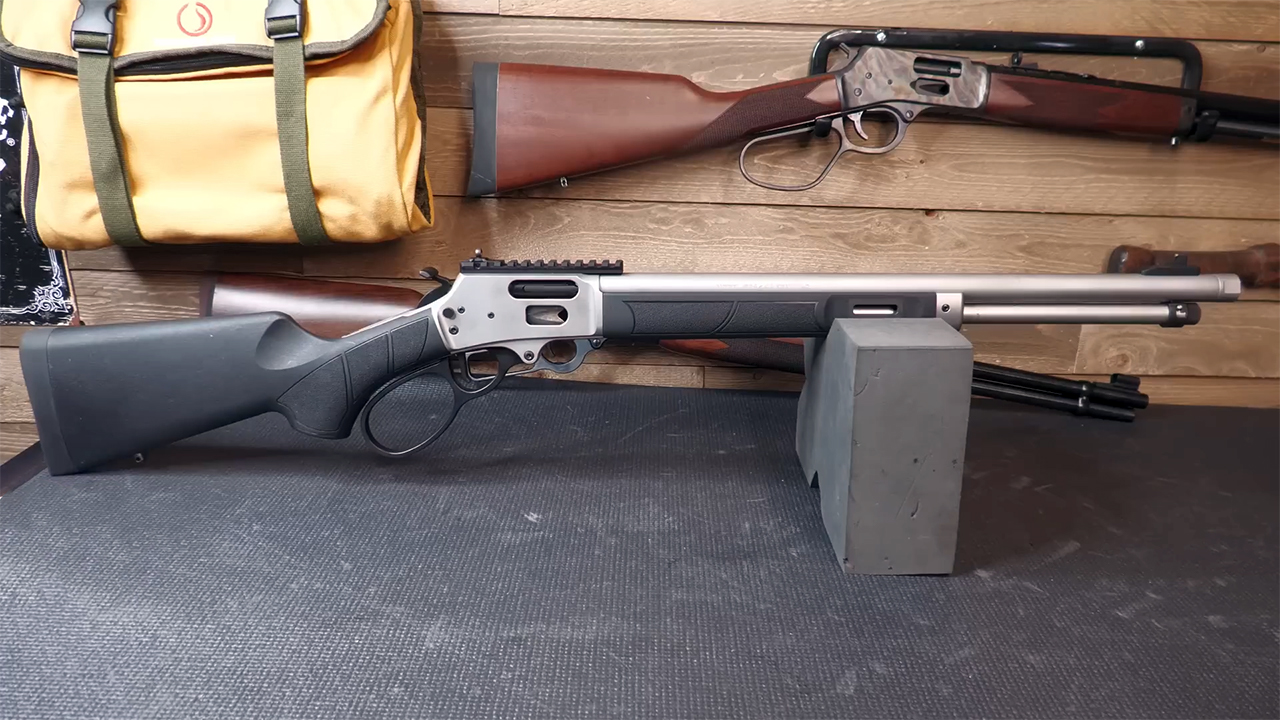
The Smith & Wesson Model 1854 is one of those rifles that got people’s attention the second it appeared, mostly because it felt unexpected. Smith & Wesson is deeply tied to handguns in most shooters’ minds, not lever guns, so when the company launched the Model 1854 in 2024, it felt like a real departure. Smith & Wesson’s own release said it was launching with two .44 Magnum versions, while the company’s 2024 annual filing called it the company’s first-ever lever-action rifle.
What makes the Model 1854 especially interesting is that it did not show up as a plain nostalgia play. From the start, Smith & Wesson leaned into threaded muzzles, stainless construction, synthetic furniture, M-Lok slots, flat-faced triggers, and later expanded the line into Stealth Hunter, Traditional Walnut, .30-30 Win., .45-70 Govt., .360 Buckhammer and other variants. That tells you right away this was meant to be a modern lever-action platform, not just a retro catalog piece.
1. The Model 1854 launched in 2024

LIPSEY’S/YouTube.
The rifle officially launched in 2024. Smith & Wesson’s launch article introduced the new Model 1854 series in 2024, and the company’s 2024 annual filing also identifies that year as the introduction of its first lever-action rifle.
That matters because the Model 1854 is not an old Smith & Wesson design revived from the archives. It is a genuinely new lever gun that just happens to carry a historic-feeling name. That last point is an inference grounded in the 2024 launch and “first ever lever-action rifle” description.
2. It is Smith & Wesson’s first-ever lever-action rifle
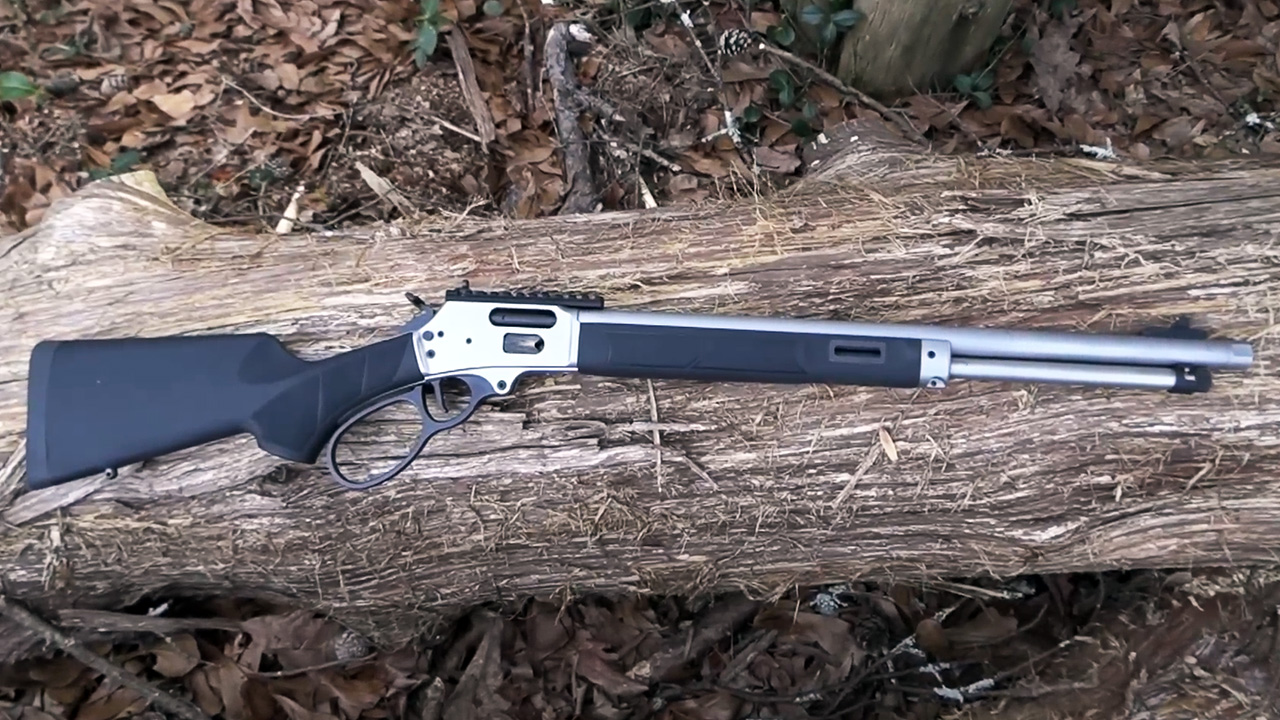
This is one of the biggest facts behind the rifle’s buzz. Smith & Wesson’s 2024 annual filing says, “In 2024, we introduced our first ever lever-action rifle, the Model 1854.”
That is a big deal because it means the company was not returning to a recent lever-gun tradition of its own. It was entering a new category for the modern brand in a very visible way.
3. The launch models were both chambered in .44 Magnum

Smith & Wesson’s original launch article says the Model 1854 debuted with two versions, both chambered in .44 Magnum. One was a bead-finished stainless/synthetic model and the other used Armornite-finished stainless with walnut furniture.
That matters because the company did not start with .30-30, which a lot of people probably expected. It started with a revolver-caliber lever-gun concept first, then broadened the lineup later. That second point is an inference grounded in the launch chambering details and later caliber expansion.
4. The rifle quickly expanded far beyond .44 Magnum
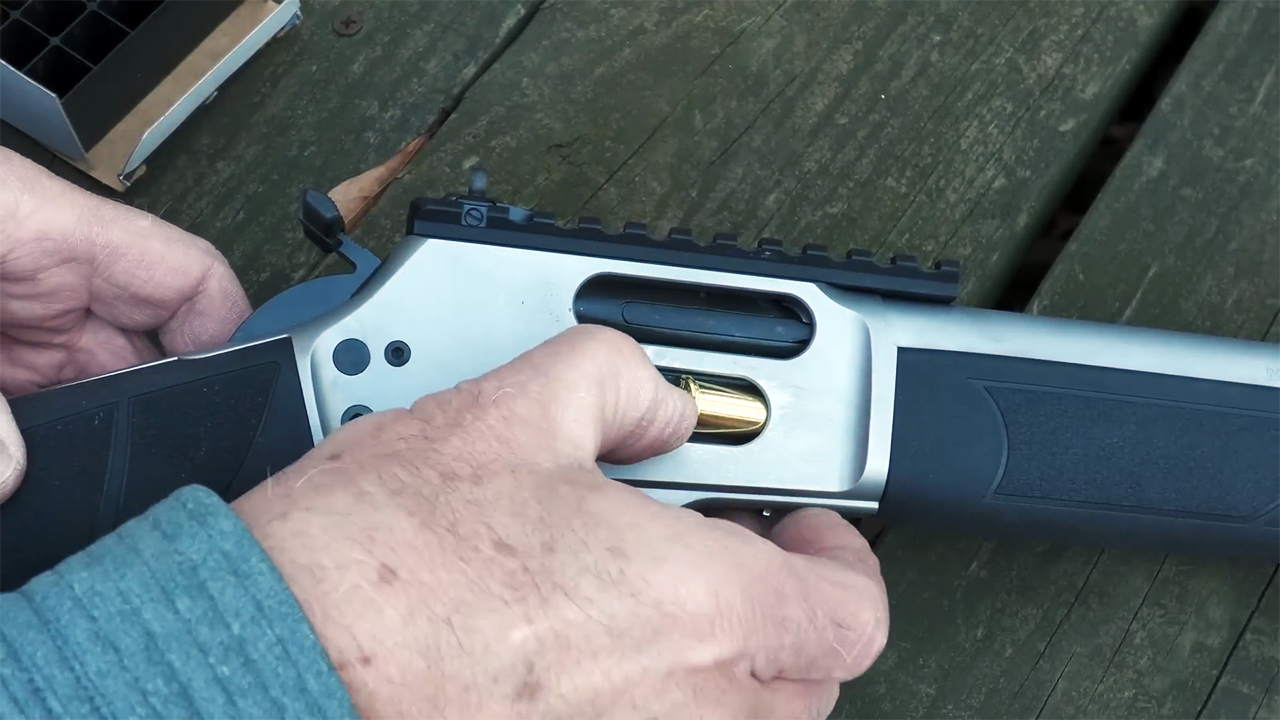
Smith & Wesson’s current Model 1854 lineup now includes .357 Magnum, .45 Colt, .30-30 Win., .45-70 Govt., and .360 Buckhammer, plus multiple furniture and trim variations.
That tells you the Model 1854 was not meant to live as a one-caliber curiosity. Smith & Wesson clearly intends it to be a real rifle family.
5. The base rifle was modern from the beginning
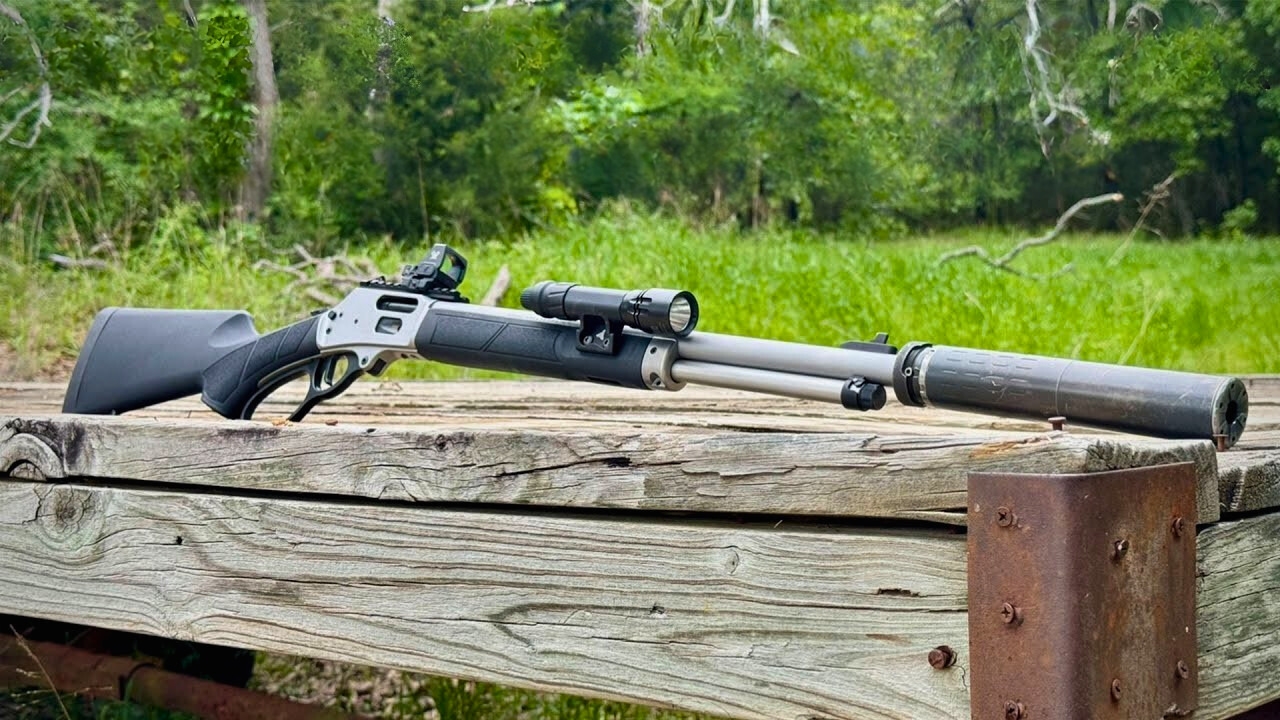
The original Model 1854 launch article highlights features like a forged 416 stainless steel receiver, 19.25-inch barrel, threaded muzzle, flat-faced trigger, removable magazine tube, walnut or synthetic stock options, and an aluminum handguard with M-Lok slots.
That matters because Smith & Wesson was not trying to build a museum-piece lever gun. It was blending lever-action styling with the kind of practical features current shooters actually expect.
6. The receiver is forged 416 stainless steel

Smith & Wesson’s product pages for current 1854 rifles describe the receiver as forged 416 stainless steel, and the launch article used the same material description from day one.
That is worth noticing because it reinforces the rifle’s “modern hard-use” identity. Smith & Wesson clearly wanted the action to feel substantial and current, not delicate or purely decorative. That interpretation is an inference grounded in the repeated stainless construction emphasis.
7. The muzzle is threaded on the standard rifles
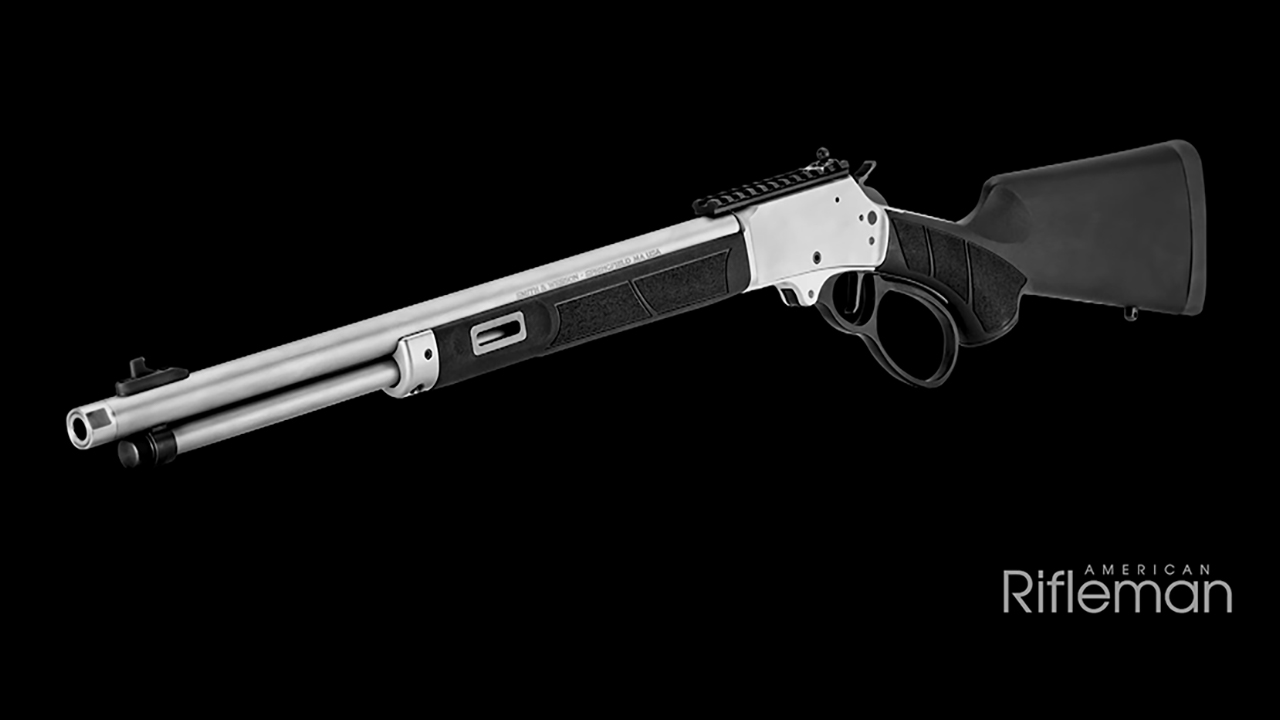
Smith & Wesson’s current .357 Mag. and .30-30 Win. product pages list threaded muzzles, and the original launch article highlighted a threaded barrel as one of the Model 1854’s core features.
That is a big deal because threaded muzzles are not a “traditional lever-action” feature in the old-school sense. Smith & Wesson was very clearly designing the 1854 for modern suppressor and muzzle-device use. That last point is an inference grounded in the repeated threaded-barrel feature across the line.
8. The standard line uses M-Lok slots
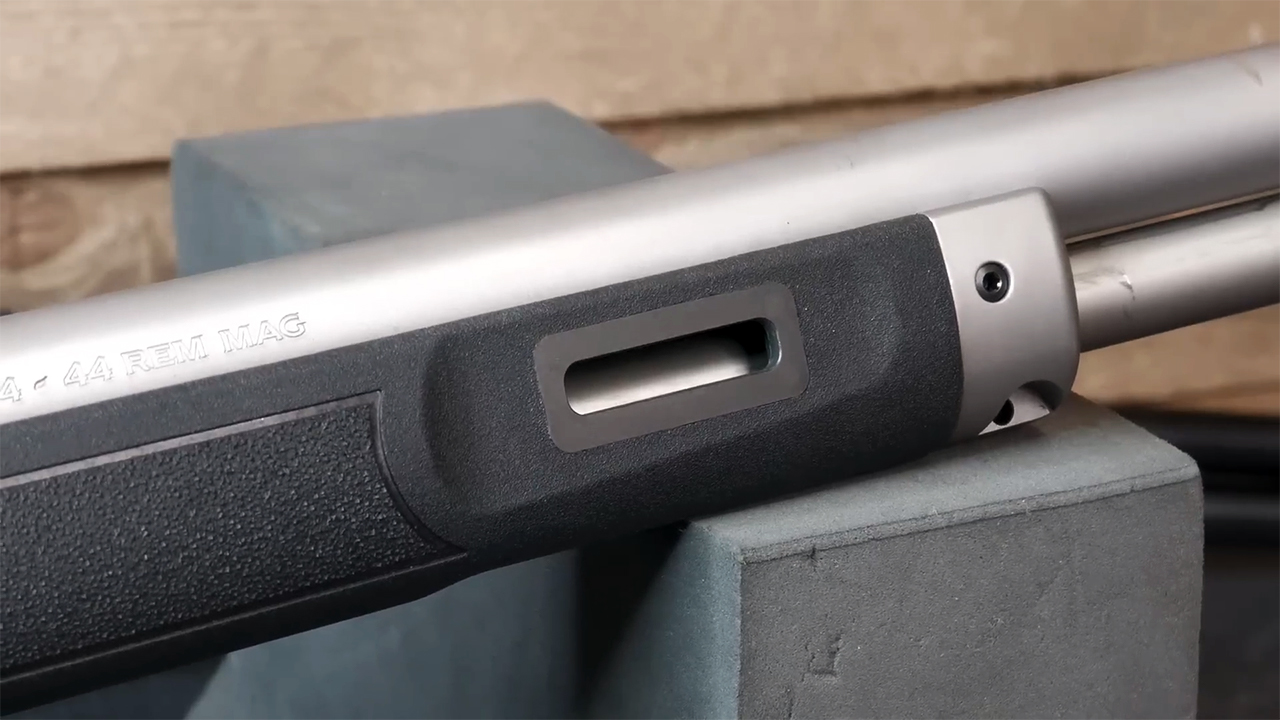
The original launch article and later American Rifleman coverage both note M-Lok slots as part of the rifle’s design. The launch article specifically described an aluminum forend with M-Lok compatibility, and American Rifleman’s 2024 Gun of the Week mentioned M-Lok slots as part of the gun’s modern appeal.
That matters because it shows Smith & Wesson was not trying to hide the rifle’s modern intent. The Model 1854 was built to accept lights and accessories the way a lot of current shooters want. That interpretation is an inference grounded in the M-Lok feature emphasis.
9. The trigger is flat-faced
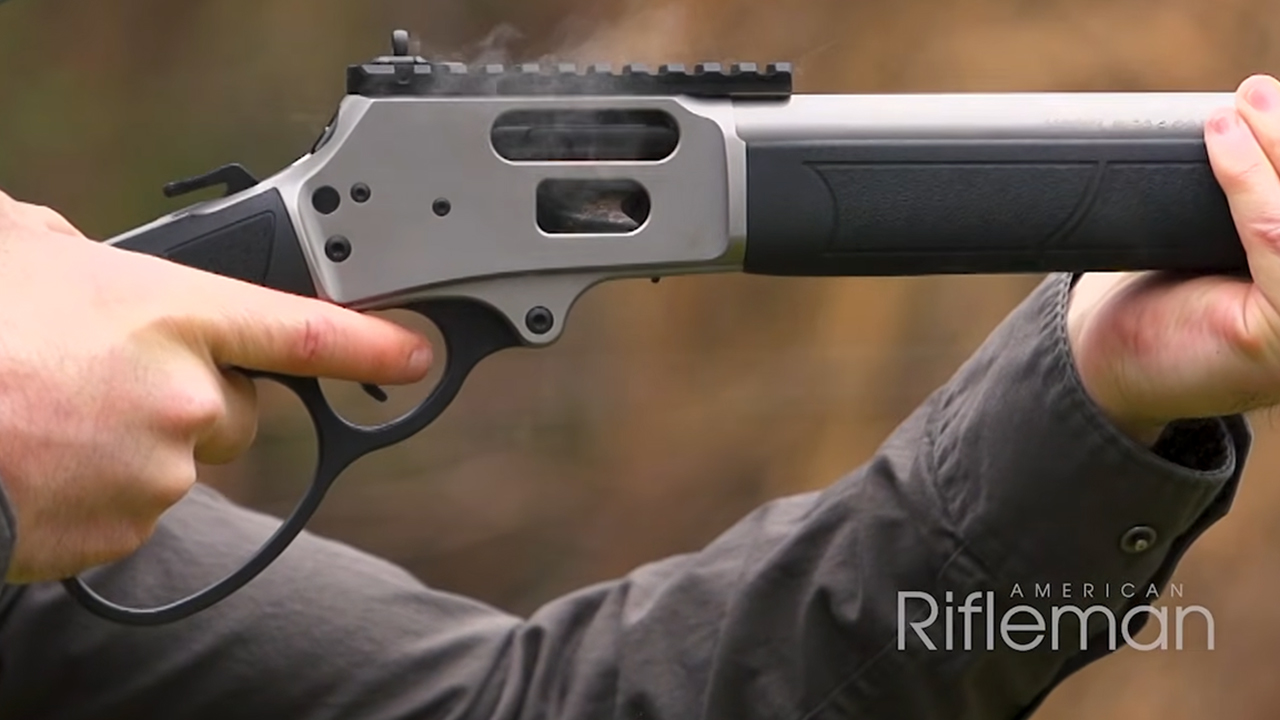
American Rifleman’s 2024 Gun of the Week specifically called out the flat-faced trigger as part of the rifle’s modern design, and Smith & Wesson’s launch materials described the trigger as a notable feature as well.
That is another clue that the 1854 was not built as a pure throwback gun. Flat-faced triggers are very much part of the current rifle market, and Smith & Wesson chose to carry that language into a lever-action.
10. The Model 1854 won American Rifleman’s 2025 Rifle of the Year
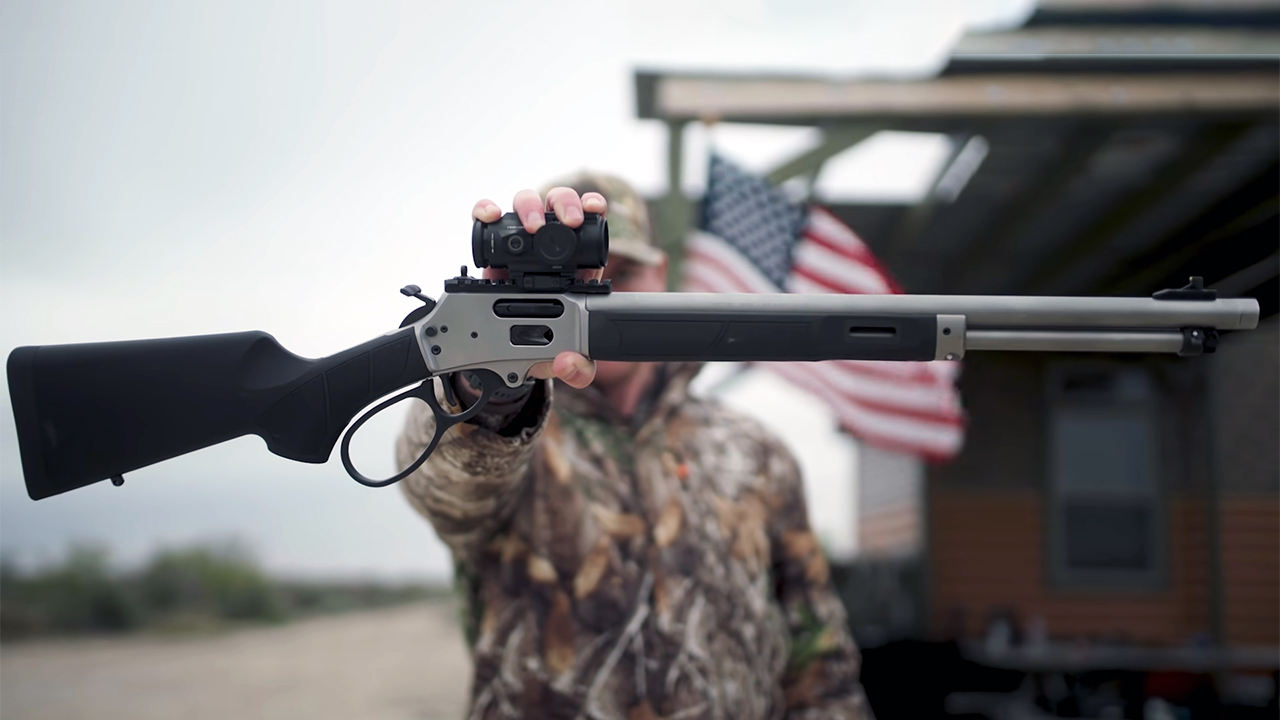
In June 2025, American Rifleman named the Smith & Wesson Model 1854 its 2025 Rifle of the Year. The magazine specifically tied that award to the rifle’s fresh entry into the lever-gun market and its broad appeal.
That matters because the rifle did not just get curiosity coverage for being “the Smith & Wesson lever gun.” It got real industry recognition after people had time to evaluate it.
11. The Stealth Hunter line pushed the platform even further into modern territory

Smith & Wesson’s current lineup includes the Model 1854 Stealth Hunter, and American Rifleman’s 2026 review says that version stands out for its long Picatinny rail, aluminum M-Lok handguard, and more overtly modern hunting setup.
That tells you the company did not see the 1854 as only a classic-style lever gun. It actively stretched the platform into more tactical-hunting and optics-heavy territory. That interpretation is an inference grounded in the Stealth Hunter’s feature set.
12. .30-30 did not arrive until later

A lot of shooters probably assumed the Model 1854 launched in .30-30, but American Rifleman reported in October 2025 that .30-30 Win. was a new addition to the lineup at that point. Smith & Wesson’s current product pages now show multiple .30-30 options.
That is a useful little detail because it shows the caliber rollout happened in stages. Smith & Wesson started with pistol-caliber lever guns, then expanded into more traditional deer-rifle territory later.
13. There are now Traditional Walnut versions too

Smith & Wesson’s current product lineup includes Traditional Walnut Model 1854 rifles in multiple calibers, including .357 Magnum, .45 Colt, .30-30 Win., and .45-70 Govt.
That matters because it shows Smith & Wesson understands the lever-action audience is split. Some buyers want M-Lok and threaded muzzles, while others want a more classic wood-stock look. The company is clearly trying to serve both. That conclusion is an inference grounded in the parallel synthetic and walnut sub-lines.
14. Accuracy was one of the early positive surprises

American Rifleman’s 2024 Gun of the Week said testers found strong accuracy potential from the Model 1854, likely helped by its heavy-profile barrel.
That is important because a rifle like this could have easily coasted on novelty and styling. Early testing suggested the gun actually had the performance to back up the attention.
15. The Model 1854 is really Smith & Wesson’s attempt to modernize the lever gun, not just copy one
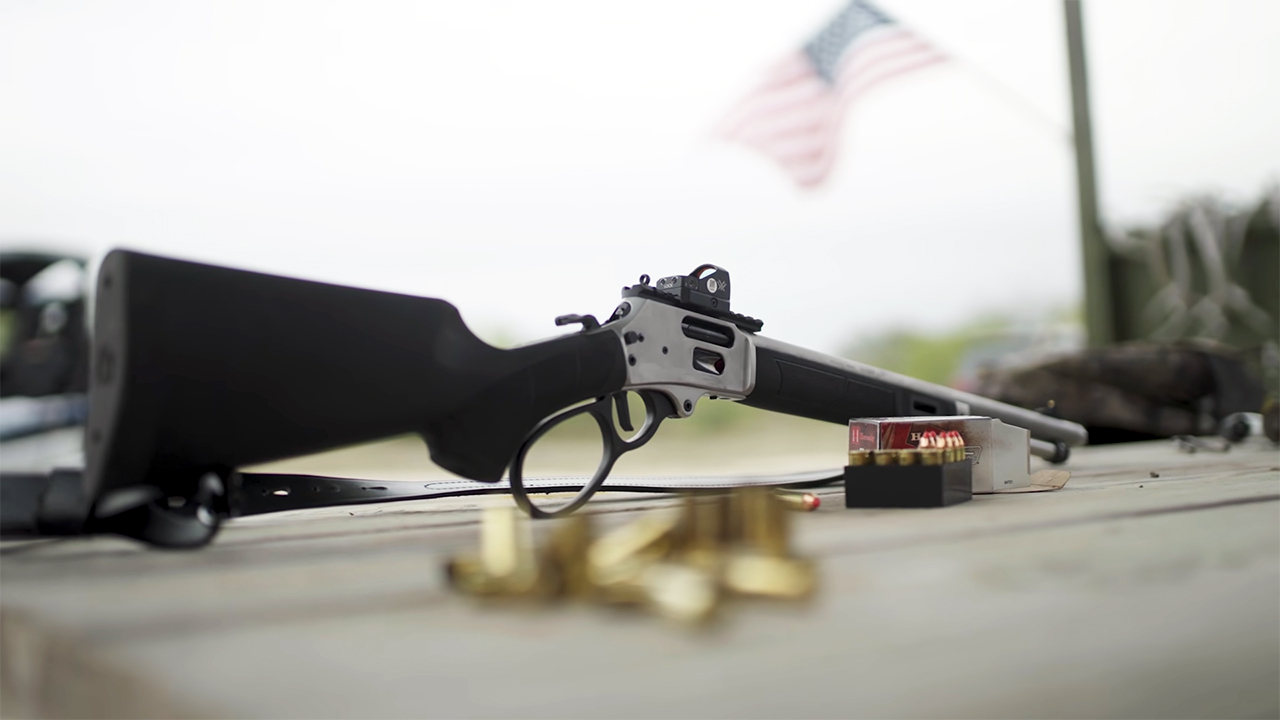
When you look across the launch article, current lineup, Stealth Hunter expansion, and Rifle of the Year award, the pattern is pretty obvious: the Model 1854 was built as a current-era lever-action platform with stainless construction, threaded muzzles, optics and accessory compatibility, multiple new chamberings, and both traditional and modern variants.
That is why the Model 1854 matters. It is not just “Smith & Wesson finally made a lever gun.” It is Smith & Wesson trying to make the lever gun feel current again.
Like The Avid Outdoorsman’s content? Subscribe to our newsletter so you never miss an article.
Here’s more from us: