Photo credit: AI-generated image created using ChatGPT. Illustrative only
Ten years is a long time to keep a little hope alive—especially when the item you lost is a firearm that’s both valuable and, in Washington, politically complicated. But that’s exactly what happened to one Washington gun owner who recently opened an evidence box and found a long-missing MP5-style firearm sitting there, scratched up but still his.
In the original post, the owner explained how his MKE Turkish MP5 clone was stolen from a storage unit in a Seattle-area suburb nearly a decade ago—then unexpectedly recovered years later during a large drug bust and finally returned once the case was closed.
It started with a storage-unit break-in during a move
The gun owner said the MP5 clone was brand new and had never been fired. He’d stored it in a rental unit because he was in the middle of moving—something a lot of us have done with gear we don’t want piled in the truck or left unattended at an empty house.
Then came the ugly part: a break-in. The poster said someone broke into the facility one night and hit multiple units, including his. The MP5 clone was among the items taken, and the timing couldn’t have been worse—he’d been planning to register it as a short-barreled rifle (SBR) before it was stolen.
They caught a suspect, but the gun was already gone
According to the owner, the person responsible was eventually caught. But by that point, the firearm had already been sold off or ditched, and it wasn’t immediately recoverable.
That’s the gut-punch with stolen guns: even when law enforcement finds the thief, the property often disperses quickly. Firearms can change hands fast, and once it’s off the original trail, it may sit in a closet for years or bounce around between people who don’t care where it came from.
A state “assault weapon” ban made it feel truly hopeless
Time kept rolling, and Washington’s legal landscape changed. The owner wrote that when the state’s assault weapon ban passed later on, he assumed any chance of seeing that MP5 clone again was dead—even if it did pop up.
That’s a real concern for gun owners watching laws tighten: you don’t just worry about getting your property back. You worry about whether you’ll be allowed to take it back, whether it’ll be destroyed, or whether a headache you didn’t ask for will land in your lap. In this case, he’d written the gun off as gone for good.
A letter from the sheriff’s office changed everything
Then the story took a turn most folks only see in movies. The owner said he received a letter from a neighboring county’s sheriff’s office telling him he could come pick up his firearm.
He learned it had been recovered during a “big drug bust” back in 2022 and held as evidence ever since. Once the case was closed and the firearm wasn’t needed anymore, the agency tracked him down, ran a background check, and sent the letter inviting him to claim it.
That last part matters. When a stolen gun resurfaces, returning it isn’t just a matter of “Yep, that’s yours—here you go.” Agencies have to confirm ownership, make sure it’s legally returnable, and follow their evidence procedures. In his case, the pieces finally lined up.
The handoff was simple, and the MP5 clone came back mostly intact
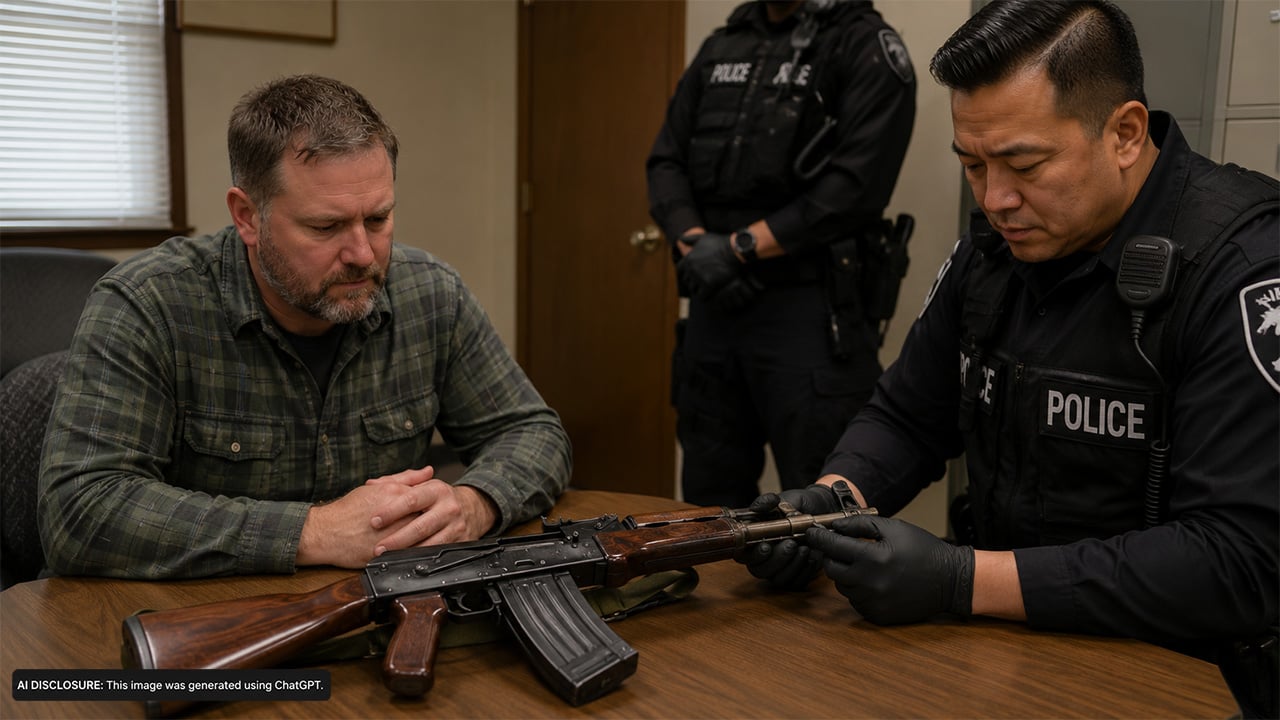
The owner called, set an appointment, and went in a few days later. He said staff handed him a large evidence box, checked his ID, had him sign electronically, and that was it.
Back home, he opened the box and saw something he never expected to see again: his MP5 clone, complete with the “pictogram lower.” It wasn’t pristine anymore. He described it as scratched up and dirty, and it was missing the thread protector. But it looked functional, and for a gun that had been missing for nearly ten years, that’s about as good of an outcome as you can ask for.
What other gun owners tend to focus on in recoveries like this
The post itself didn’t include a long comment thread in the material provided, but any time a stolen gun comes home years later, most experienced gun folks zero in on the same practical questions.
First: documentation. Having serial numbers recorded, purchase records saved, and a police report on file is often what separates “possible return” from “we can’t verify it.” Second: condition and safety. A firearm that’s been in unknown hands may have been neglected, modified, or run hard. The owner said he cleaned it and planned a range trip to see how it runs, which is the smart, cautious next step—function-check it safely, use known-good magazines and ammo, and confirm it’s mechanically sound before trusting it for anything serious.
Third: storage. This whole situation began with a storage-unit burglary during a move. Storage facilities get hit because thieves know people stash valuables there and don’t check them daily. If you ever have to store firearms off-site, it’s worth thinking hard about layered security—discreet cases, hardened locks, and choosing a facility that takes access control and cameras seriously. None of it is perfect, but slowing a thief down can be the difference between “they tried” and “they cleaned you out.”
From “gone forever” to back in the safe—plus plans to finally shoot it
After cleaning it up, the owner said he dug out his pre-ban magazines and was relieved to have the gun back. He also said he’s now planning to take it to the range and see how it runs—maybe even go through with the SBR plan he’d had before it was stolen.
The bigger takeaway isn’t that you should expect stolen guns to come back. Most don’t. It’s that good records, patience, and a little luck can still pay off years later—sometimes long after you’ve stopped checking the door for a package and accepted that a piece of your collection is gone. In this case, one Washington owner got his MP5 clone back in his hands, and that’s a win you don’t hear about every day.
Like The Avid Outdoorsman’s content? Be sure to follow us.
Here’s more from us: