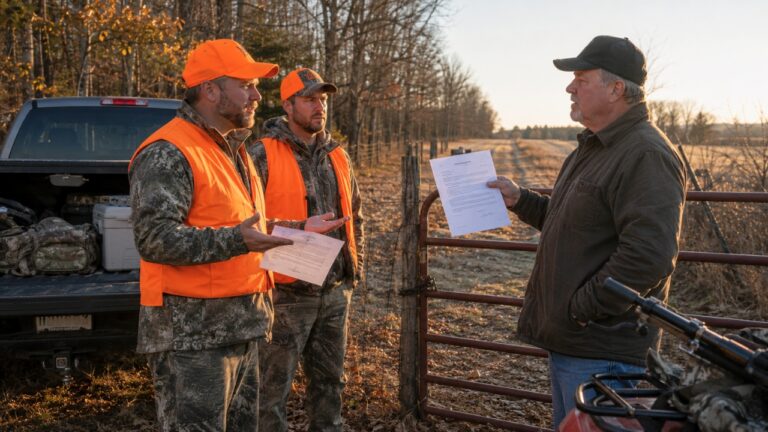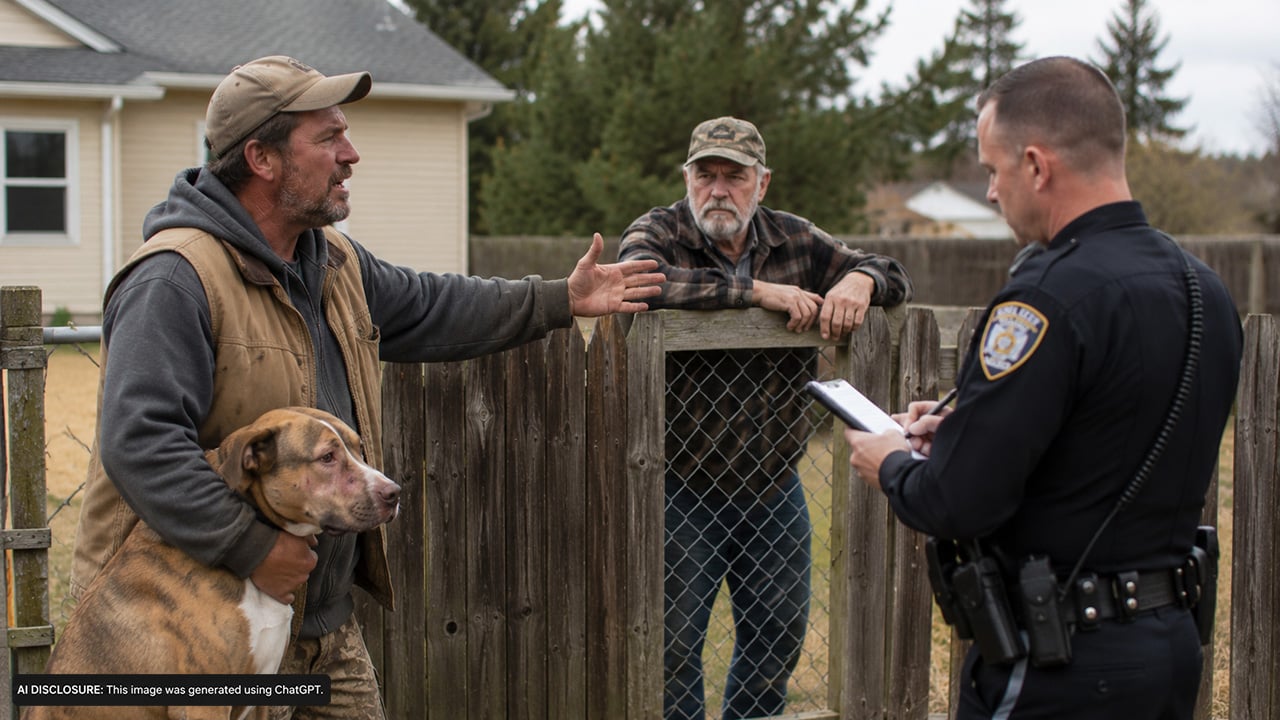
Photo credit: AI-generated image created using ChatGPT. Illustrative only
A rural neighbor dispute in Oregon turned ugly fast when a dog got through a fence, ran at free-ranging chickens, and ended up taking a .223 round to the face through a fence line. The owner says the bullet tore through the dog’s upper lip and exited the opposite cheek, leaving them with a substantial vet bill and a whole lot of anger.
The details came from the original post, where the dog’s owner admitted the dog “did something stupid” but felt the neighbor’s response was extreme—especially with no call, no warning, and no conversation afterward. They say they apologized, offered to pay for any chickens or damage, and got nothing but silence back.
A young dog, loose fencing, and free-range birds
By the owner’s account, their 1.5-year-old dog is still in training and had never shown aggression toward people. But on this day, the dog got out and went after the neighbor’s chickens. The owner didn’t try to pretend it was acceptable; they acknowledged the dog was at fault for being loose and for harassing livestock.
They also noted the chickens involved were not in a pen at the time and were free range. When they drove over to look around afterward, they saw an area with a lot of down feathers and assumed at least one chicken may have been killed, though they didn’t have confirmation.
The shot that changed everything
The neighbor reportedly fired a .223 and hit the dog in the face, though “thankfully” the owner says the aim was off from being fatal. The description is blunt: the bullet went through the upper lip and blew out the opposite cheek.
For folks who live out where predators, nuisance animals, and livestock conflicts are part of the landscape, shooting is sometimes treated like a tool. But a rifle round through a fence line is the kind of detail that makes people sit up straight—because it’s not just about the animal. It’s about where that bullet was going, what was beyond it, and whether the shooter had a safe backstop.
Radio silence and a “civil matter” response
After the shooting, the owner says the neighbor went completely quiet. No call. No checking whether the dog was injured. No discussion about damages. Just nothing.
They did what a lot of reasonable landowners would do next: apologized for the dog getting out and offered to pay for any chickens or property damage. At the same time, they contacted law enforcement and were frustrated by the response. The deputy, they said, wasn’t very helpful and told them the neighbor had the right to shoot, leaving the impression it was largely a civil issue between landowners.
Adding to the frustration, the owner noted their partner had seven years of experience as a police officer and interpreted the applicable laws differently than the responding deputy did. That gap—between what one officer thinks the law says and what another officer chooses to enforce in the moment—is where these situations often get messy.
Where rural reality and the law collide
Out in the country, chickens are property. So are dogs. And when those two collide, the temperature jumps quick. Most folks who keep livestock have at least one story about a dog that got loose and started running animals. It’s stressful, it’s expensive, and it can wipe out a small flock in minutes.
At the same time, most dog owners—especially owners who hunt, fish, and spend time outdoors with their dogs—see a family member when they look at that animal. Even when the dog messed up, a face shot feels personal. It feels like a punishment that doesn’t match the moment.
The hard truth is that in many places, the law gives livestock owners latitude to protect their animals. But “allowed” and “smart” aren’t always the same thing, and neither are “legal” and “safe.” A .223 is a fast, flat, lethal cartridge that can travel a long way if it doesn’t hit something solid. When a round is fired “through the fence,” the biggest question for a lot of outdoorsmen isn’t just the dog—it’s the line-of-fire decision-making.
What people tend to focus on in cases like this
When this kind of story gets shared, the discussion usually turns practical fast: documentation, vet records, photos, and a clear timeline. If you’re trying to get traction with an agency or in a courtroom, the “I think” and “maybe” parts won’t carry as much weight as receipts and written statements.
Another thing that tends to matter is damages—on both sides. The owner mentioned a substantial vet bill. The neighbor may have lost chickens. One of the most common rural outcomes in disputes like this is that both sides end up pointing at each other’s costs, and the fight becomes a messy balancing act of whose negligence caused what.
And then there’s the safety piece. Even people who believe a landowner has a right to defend livestock often draw a bright line around where and how shots are taken. If a bullet’s path could have reasonably endangered people, homes, or other property, that’s the sort of fact pattern that can change how authorities view the situation—regardless of feelings about the dog.
The options the owner was trying to find
The owner’s core question was simple: “Do we have any options here?” They were staring at a big vet bill and a neighbor who wouldn’t talk, and they felt a gunshot wound was an extreme response compared to calling, yelling, or even demanding payment for the flock.
In disputes like this, the “options” usually fall into two buckets: recovering costs and preventing the next incident. On the cost side, people often look at small-claims type routes for vet bills, livestock losses, and property damage—especially when local law enforcement treats the shooting as a civil disagreement. On the prevention side, it’s fences, gates, training, and sometimes changing how dogs are kenneled or supervised—because once one incident happens, the next one is easier to predict.
None of that is satisfying when you’re looking at a dog with a torn-up face. But it’s the reality of living around livestock: if your dog gets out once, it can happen again, and the neighbor who already pulled the trigger isn’t likely to get more patient the second time.
Out in rural country, good fences and clear communication solve most problems before they become emergencies. When those break down, you end up with exactly what this Oregon owner described—dead or missing birds, a wounded dog, big bills, and two neighbors who may never look at each other the same way again.
Like The Avid Outdoorsman’s content? Subscribe to our newsletter so you never miss an article.
Here’s more from us: