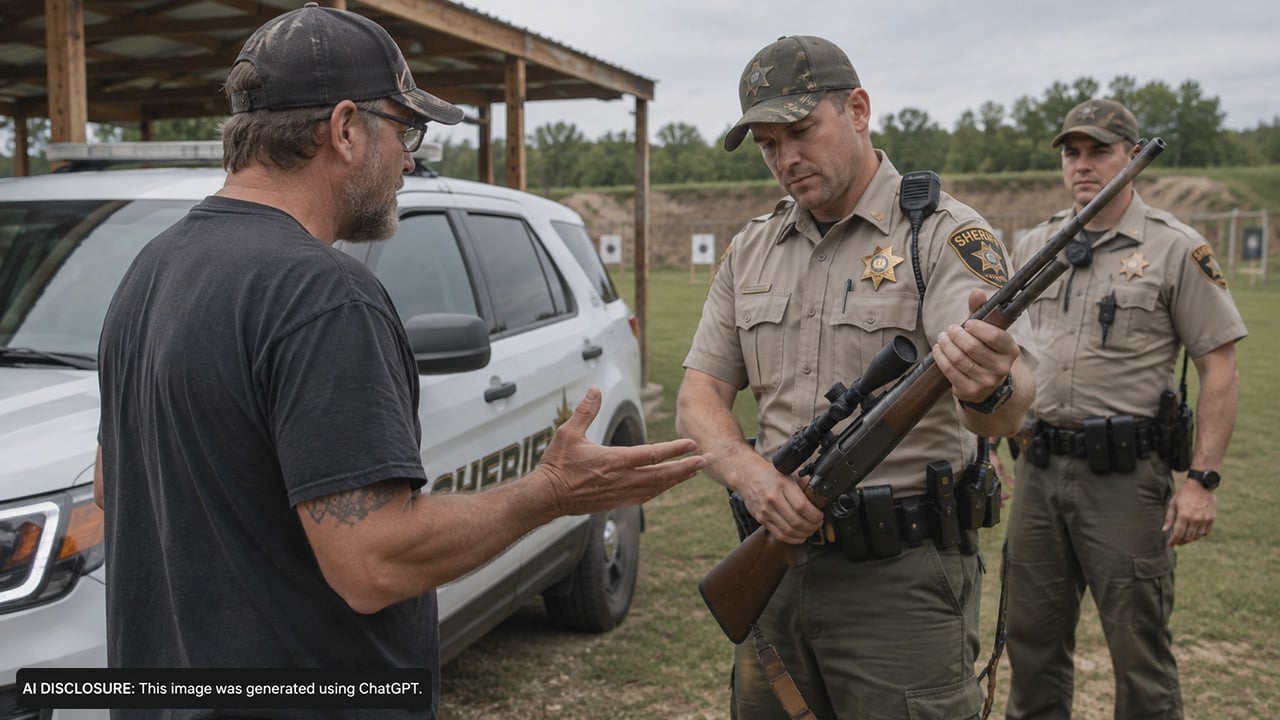
Photo credit: AI-generated image created using ChatGPT. Illustrative only
Anybody who’s spent time on a public range knows how fast a normal day can turn sideways when something sounds like full-auto fire. In Oklahoma, one shooter said that’s exactly what happened when a friend’s SKS had what he described as a slam-fire malfunction and briefly “went full auto,” drawing the attention of deputies who eventually walked off with the wrong rifle.
In the original post, the gun owner said deputies showed up with multiple sheriff’s vehicles, watched them shoot for a while, then said they’d been called because someone reported a man “bragging” that he’d made an SKS fully automatic. The shooter insisted no one was bragging, the rifle had malfunctioned, and it was immediately put away.
A range malfunction turned into a law-enforcement response
The shooter’s description is one a lot of surplus-rifle folks recognize: a slam fire in an SKS can happen when a firing pin sticks forward and the gun starts firing faster than intended. Whether it’s “common” or not, it’s the kind of noise that makes people look up from their bench, and it’s the kind of thing that can trigger a phone call if someone thinks they just heard an illegal machine gun.
According to the account, three sheriff’s cars arrived and initially acted like they were just hanging around. After about 30 minutes, the tone changed when deputies said they were there because of the report about a “full auto” SKS. The shooter said the rifle that malfunctioned was already put up and the incident was being treated like an equipment problem, not somebody trying to show off.
He says deputies seized the wrong rifle
Here’s where it gets messy. The poster said deputies took his AK-74 because it “looked similar to the SKS.” Anybody who’s handled both rifles knows they aren’t identical, but to the untrained eye they’re both long guns with detachable magazines, and that’s sometimes all it takes when nerves are up and somebody’s expecting trouble.
He also claimed the deputies “would not listen” and that “none of them knew how to function check a rifle.” Whether that’s fair or not, the practical issue for gun owners is this: when a law-enforcement interaction turns into a seizure, you don’t get to argue your way out of it on the firing line. You’re dealing with procedure, not persuasion.
The paperwork problem: only a case number
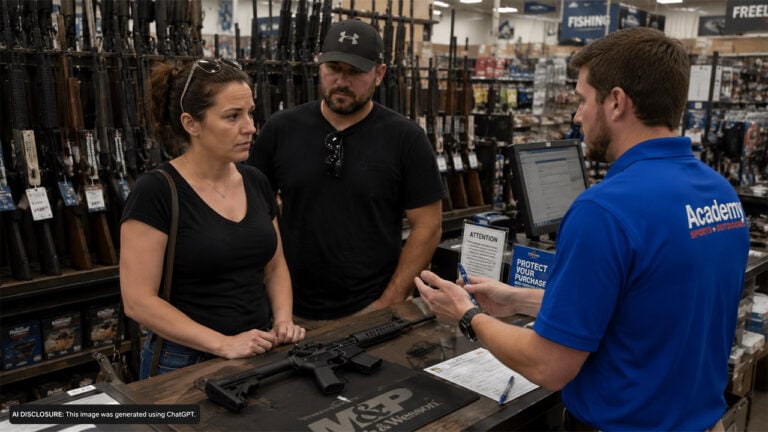
The part that would bother most lawful gun owners just as much as the seizure is what came next. The shooter said deputies did not provide any paperwork for the firearm they took—only a case number. He said statements were taken from him, his friend, and another person, and he was allowed to take pictures of his rifle and the deputies with it.
Deputies allegedly told him the ATF would inspect the guns and, “if everything is ok,” they’d be returned. After three days, he said he hadn’t heard anything and hadn’t contacted anyone yet.
That lack of documentation is where folks start to feel like they’re in limbo. A case number is better than nothing, but a property receipt is what ties the exact make/serial number to an official record. Without that, it can feel like you’ve got no proof of what was taken, what condition it was in, and who had custody of it when.
Worries about evidence handling and even ammunition
The poster’s biggest fear wasn’t just losing range time. He worried deputies might “do something” to the rifle before it ever got inspected, or otherwise mishandle it in a way that creates problems for him. He also voiced a specific concern that someone might load the wrong cartridge into the gun.
An AK-74 is typically chambered in 5.45×39, not .223/5.56. Trying to chamber and fire incorrect ammo is unsafe and could damage a rifle—or worse. Most professionals won’t do something that reckless, but the concern shows how quickly trust evaporates when property is seized without clear documentation and the owner feels brushed off.
He also noted his rifle wasn’t modified and functioned normally aside from “jamming with certain mags,” and that he did not give deputies any magazines. That detail matters because “runaway” fire incidents are often tied to the malfunctioning gun itself, not the gun sitting next to it on the rack.
What people tend to focus on in situations like this
When a rifle gets taken after a “full-auto” scare, experienced gun owners usually zero in on a few practical realities. First, malfunctions happen, but the sound of rapid fire changes the whole atmosphere—especially at public ranges where other shooters may not know you, don’t know your gun, and don’t know whether you’re safe.
Second, documentation is everything. A case number is a start, but a property receipt with serial number protects both sides. It helps the owner prove what was taken, and it helps the agency track custody and condition. Even if a firearm is ultimately returned, the time in between is where misunderstandings and mistakes create long-term headaches.
Third, the “it will be inspected” line can stretch out longer than most folks expect. Once a firearm is in the system, timelines are rarely built around the owner’s convenience, and the person at the counter may not be able to give a clean answer on when it clears, where it’s stored, or what step is next.
The grounded, outdoorsman takeaway: protect yourself with records and calm follow-through
This is the kind of story that makes a good argument for two habits at the range. One: when something breaks or runs away, stop shooting, make it safe, and be visibly responsible. The shooter said the SKS was put up, and that’s exactly the right move—because the first goal is preventing injury, and the second is avoiding any appearance that someone’s enjoying the chaos.
Two: keep your own records. Photos of your firearm, including the serial number, and any accessories can matter later. If law enforcement takes property, politely request a property receipt and clear instructions on who to contact for release. If you only get a case number, write down the date, time, who you spoke to if you can, and what was said while it’s fresh.
Most of all, don’t try to “win” the argument in the moment. On the range, you’re dealing with safety concerns and a report that put deputies on alert. The real leverage comes later, through calm follow-up and a clean paper trail—because the best outcome is simple: your rifle comes back in the same condition it left, and everybody goes home with all their fingers.
Like The Avid Outdoorsman’s content? Subscribe to our newsletter so you never miss an article.
Here’s more from us: