Photo credit: Shutterstock AI/Shutterstock.com
Outlaw-era guns have a look that modern designs can’t fake. They’re all steel and hard lines, with exposed hammers, long barrels, and wood that darkens the way old saddles do. Even if you never fire a shot, you can tell what they were built for: carried every day, used up close, and trusted when things got loud. That’s why they still look tough hanging over a workbench or above a fireplace.
A lot of people chase “wall guns” that have presence, and the Old West delivers. These are firearms tied to stage roads, cattle towns, bank jobs, and hard travel—sometimes more legend than truth, but always with a shape that reads serious. If you want a wall piece that looks like it belongs in a smoke-filled back room, start here.
Colt Single Action Army (1873)
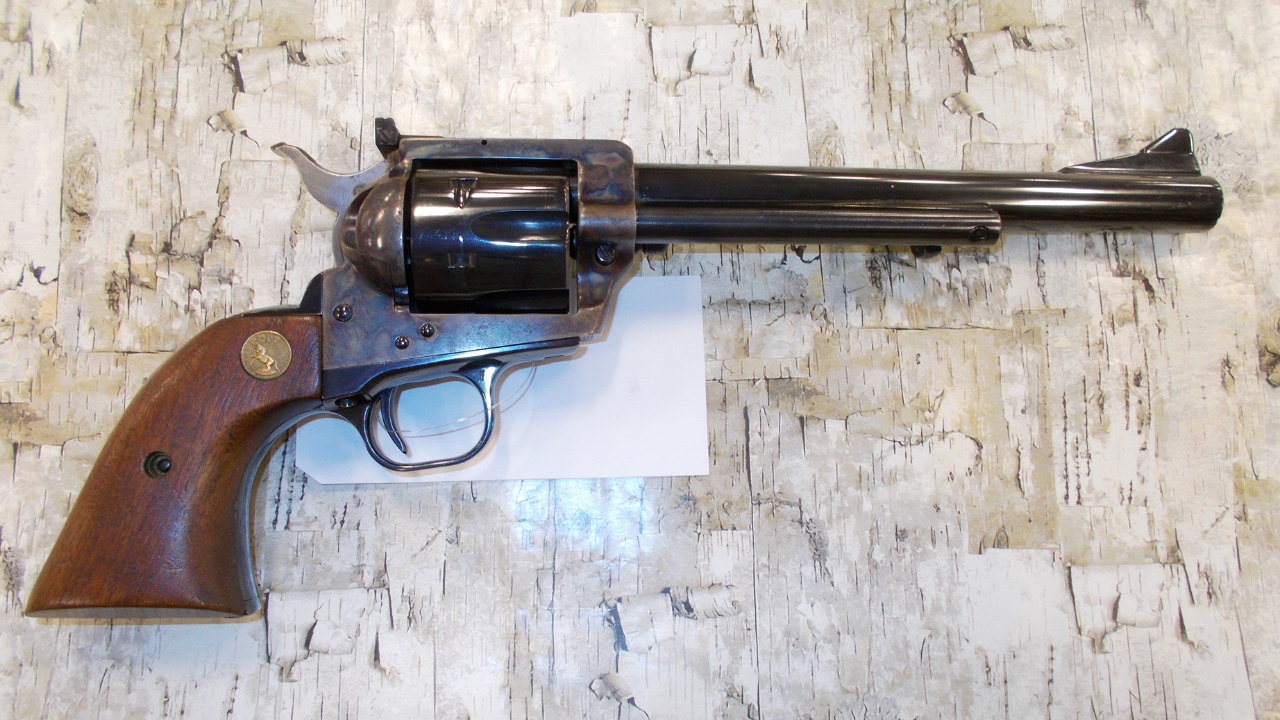
The Colt Single Action Army is the classic “don’t mess with me” revolver. The long barrel, the big front sight, the exposed hammer, and that clean plow-handle grip all look like business. On a wall, it doesn’t need decoration. The silhouette alone tells you it came from a time when arguments ended fast.
It also carries history without being fussy. The SAA shows up in frontier law, ranch work, and more than a few outlaw stories, whether the details are perfect or not. You’re hanging a symbol as much as a firearm. The blued steel and case-colored frame look even better with honest wear, and a simple leather rig beside it turns it into a whole scene.
Remington Model 1875
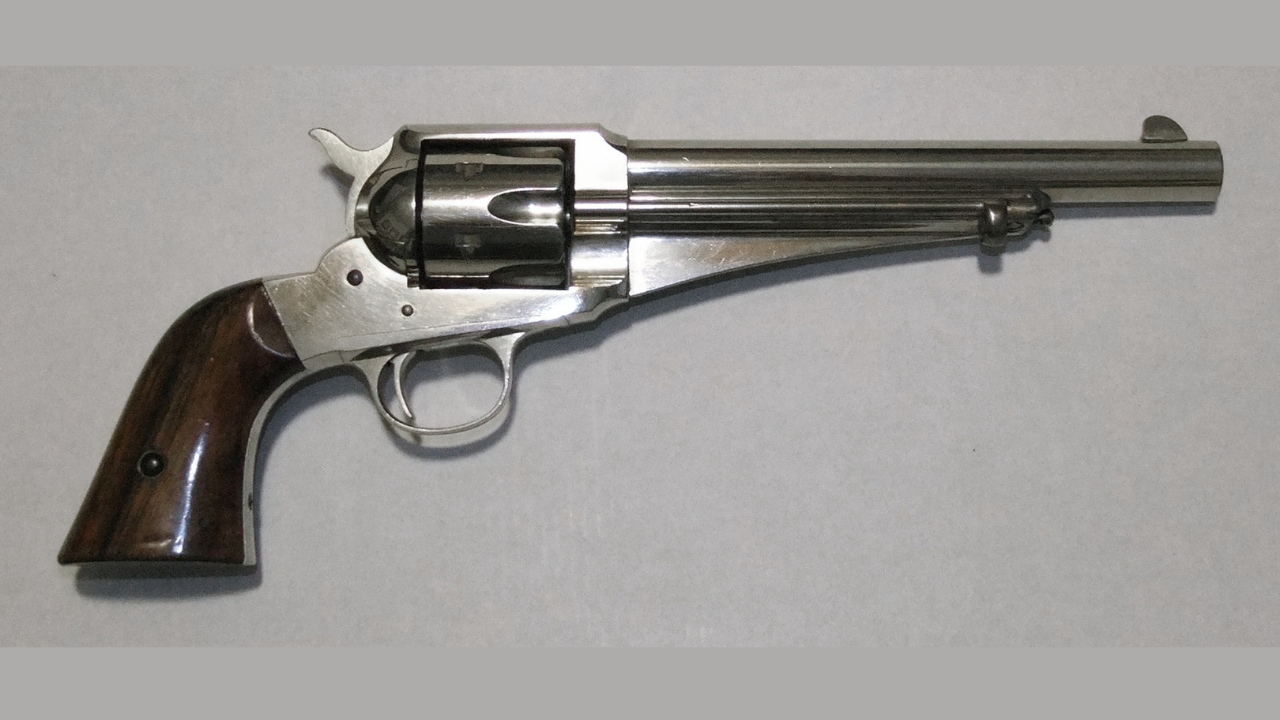
The Remington 1875 has a tougher, heavier look than a lot of its contemporaries. That top strap gives it a “built like a tool” vibe, and the lines feel more industrial than elegant. On a wall, it looks like something you’d pick if you expected trouble and wanted a revolver that felt solid in the hand.
It’s also a revolver with real outlaw-era credibility. You’ll see it tied to frontier carry and the late 1870s/1880s handgun world when metallic cartridges were taking over. The 1875’s profile stands out because it doesn’t look delicate. The frame looks stout, the cylinder looks serious, and the whole gun has a blunt confidence that still reads mean today.
Smith & Wesson Schofield (Model 3)
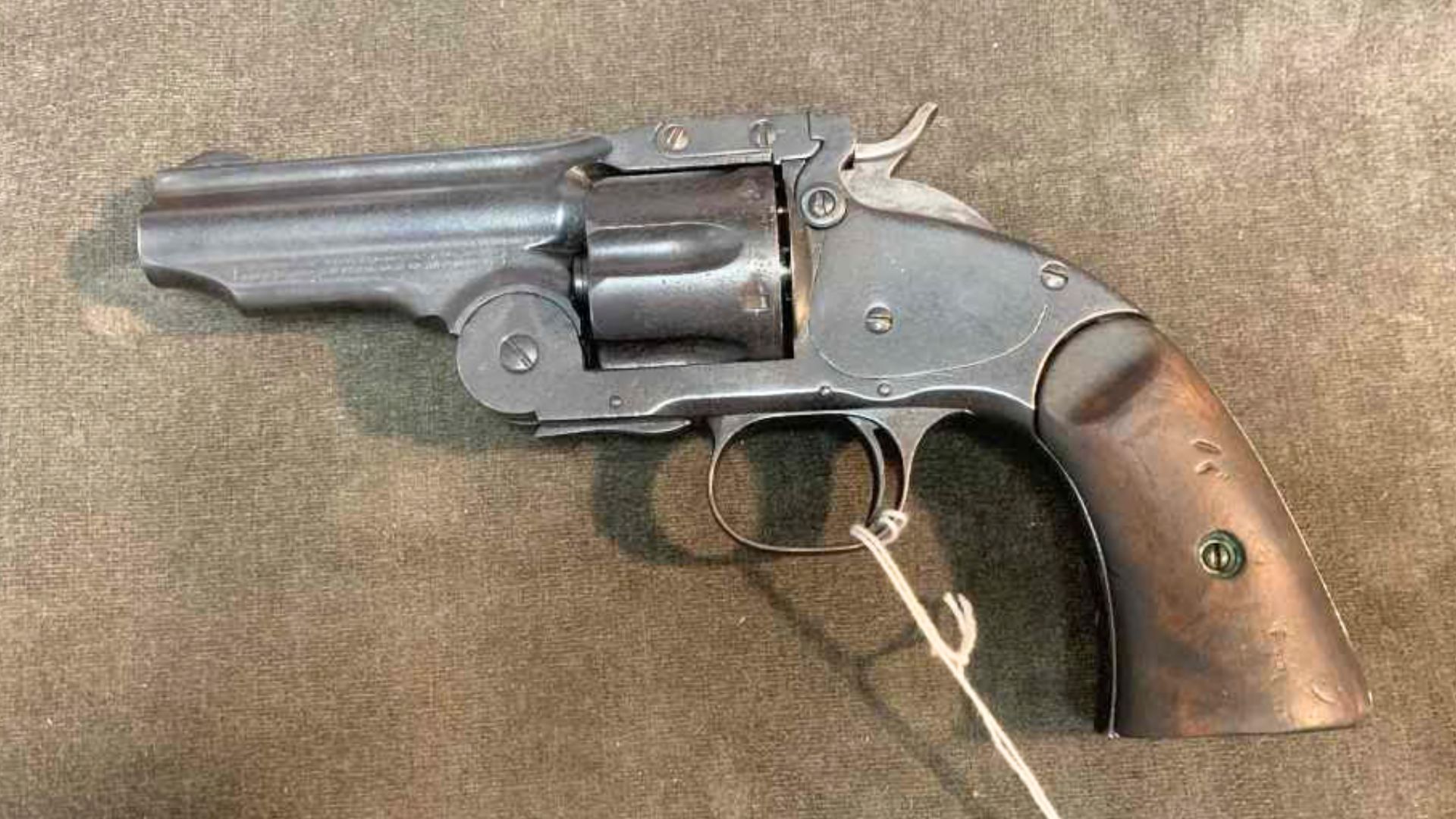
The Schofield is one of the coolest-looking revolvers ever made, and it’s all about that top-break shape. Hinge it open in your mind and you can almost hear the empty cases dropping. Even hanging on a wall, it looks mechanical in a way modern pistols don’t—like a hard-edged piece of 19th-century engineering.
The Schofield’s association with cavalry and frontier carry adds to the attitude. It’s the kind of gun that looks like it belongs with spurs and a worn hat, not a safe queen label. That barrel latch, the big frame, and the tall sight line give it a profile people recognize instantly. If you want a wall gun that looks fast and serious without being bulky, this one does it.
Winchester Model 1873

The Winchester 1873 is the rifle that screams “frontier” before you even know its history. The long octagon barrel, the tubular magazine, and the lever loop create a shape that looks ready for work. On the wall, it’s pure posture—long, lean, and confident.
It also has that “carried everywhere” reputation that makes it feel earned. Whether you’re thinking ranch gun, saddle gun, or the kind of rifle that ended up in the wrong hands, the 1873 looks like it’s seen miles. The wood-and-steel contrast is what makes it hang so well. A rifle like this doesn’t need a plaque. The lines and the wear tell the story for you.
Winchester Model 1892
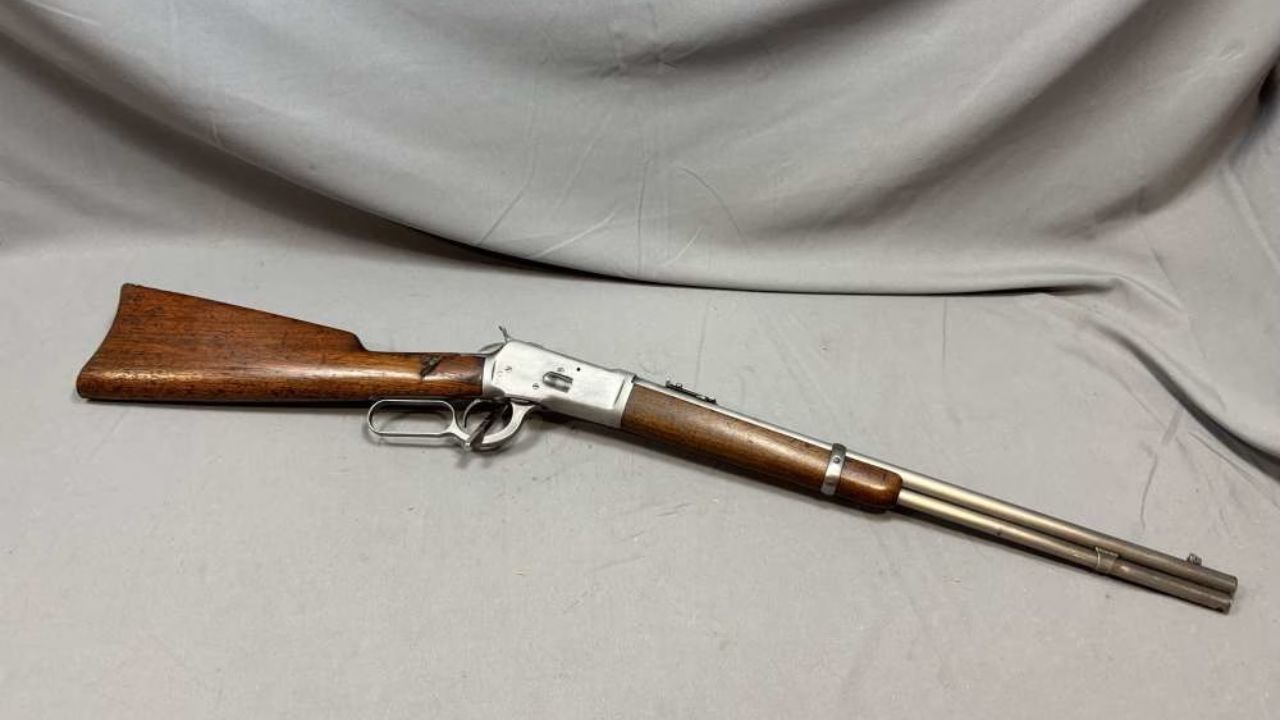
The Winchester 1892 looks like a sleeker, faster version of the classic lever gun idea. It has a trim receiver, quick handling proportions, and the kind of profile that still reads dangerous even when it’s unloaded and mounted above a door. It’s a “grab it and go” shape, which is why it works so well as a wall piece.
Historically, it fits that later outlaw-era window when the West was tightening up but trouble still found people. The 1892 shows up in ranch country and rough towns, and it stayed popular because it simply worked. On the wall, the 1892 looks purposeful—especially in a shorter configuration. The straight stock and clean receiver lines make it look like a rifle that doesn’t waste motion.
Henry Model 1860
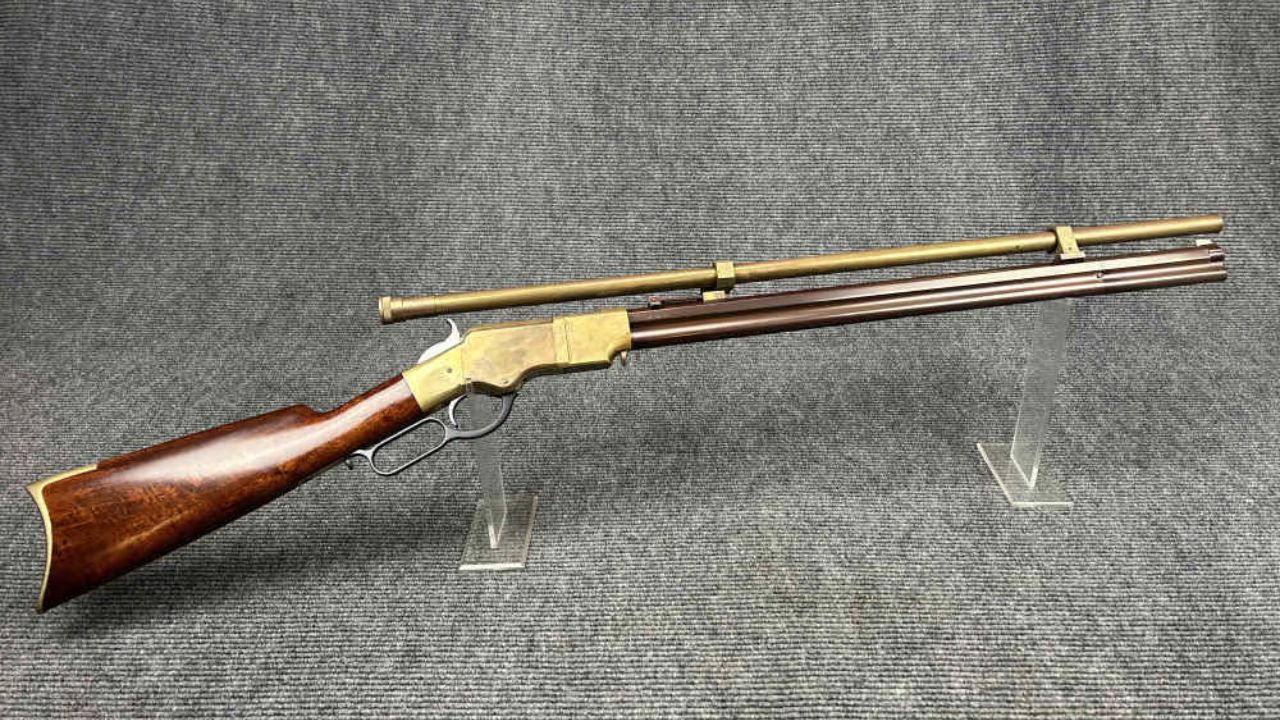
The Henry 1860 doesn’t look mean in a bulky way. It looks mean in a confident way. That brass frame catches light like a warning sign, and the long barrel and magazine tube give it a smooth, relentless profile. Hanging on a wall, it looks like a rifle that changed the rules when most people were still working bolt-by-bolt or cap-by-cap.
It’s also a rifle with real historical gravity. The Henry predates the classic outlaw golden age, but it absolutely shaped the lever-gun mythos that followed. If you hang one up, you’re hanging the moment repeating rifles became part of the conversation. The brass, the dark wood, and that unmistakable receiver shape make it a wall gun that people notice immediately, even if they don’t know what it is.
Winchester Model 1897 (Trench/riot styling vibe, outlaw-era roots)

The Winchester 1897 pump shotgun has a hard look that never got polite. That exposed hammer, the long receiver, and the pump action profile make it look like it belongs behind a counter in a place where people don’t ask twice. On a wall, it has presence in a way most shotguns don’t.
It’s also tied to an era where shotguns were serious close-range tools for guards, lawmen, and anyone protecting money or property. The 1897’s reputation grew well beyond the frontier years, but its roots are still in that late outlaw-era mindset: fast handling, heavy hit, simple manual of arms. If you want a wall gun that looks like it could end a problem in one sentence, the ’97 does that visually without trying.
Colt 1877 “Lightning”
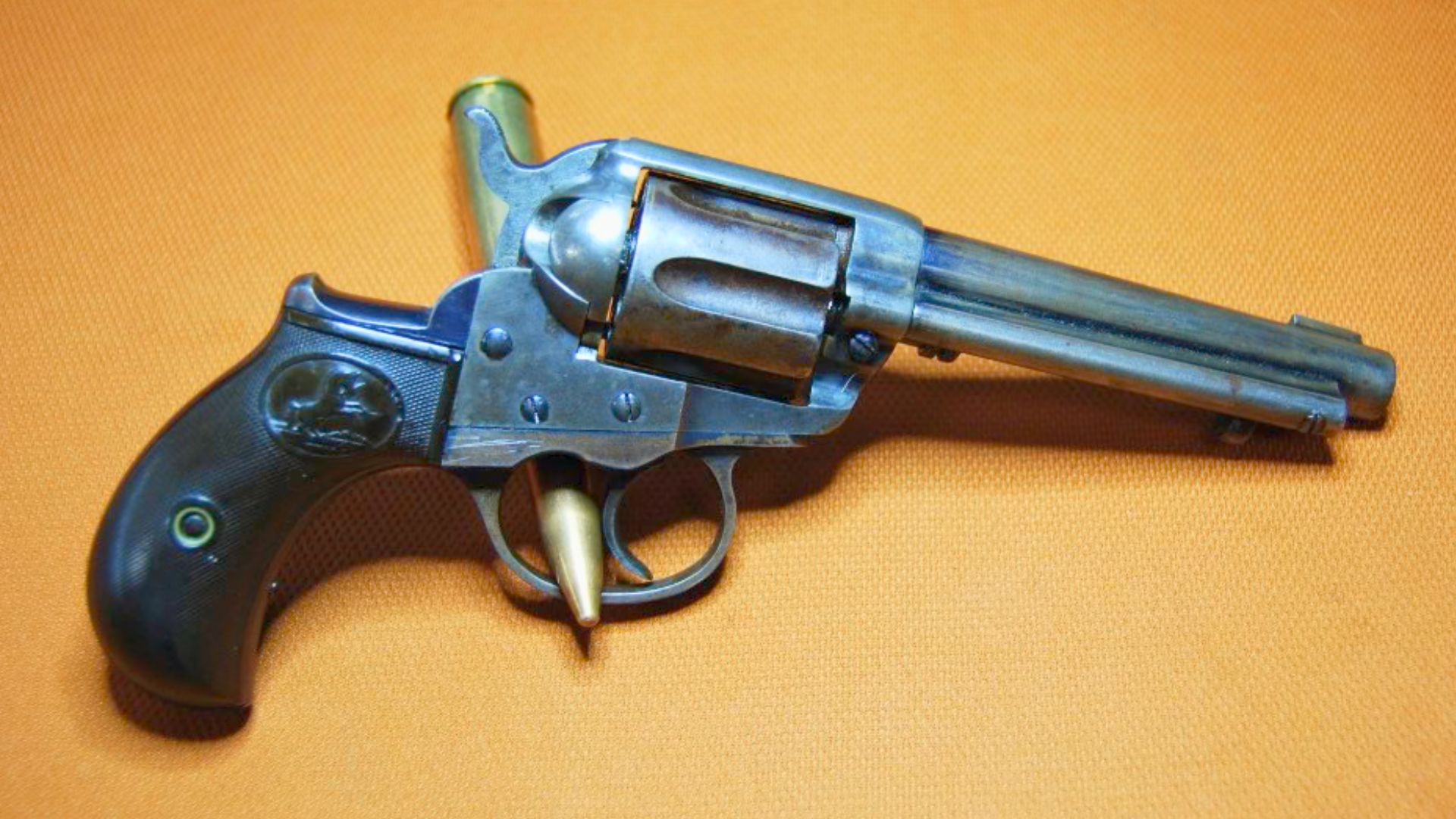
The Colt 1877 Lightning looks sleek, almost refined—until you remember what it’s for. The compact frame and classic Colt lines make it feel like a “city trouble” gun, the kind you’d keep close when you’re moving through crowds and alleys. On a wall, it looks like a revolver that’s seen card tables and bad decisions.
It’s also one of those models older shooters love to talk about because it’s so tied to a specific time. The Lightning sits right in that transition where revolvers became daily carry items, not just battlefield tools. The shape is what sells it: long enough to look serious, compact enough to look personal. If you want a wall piece that looks like it came out of a coat pocket in a frontier town, this one fits.
Colt 1878 Double Action
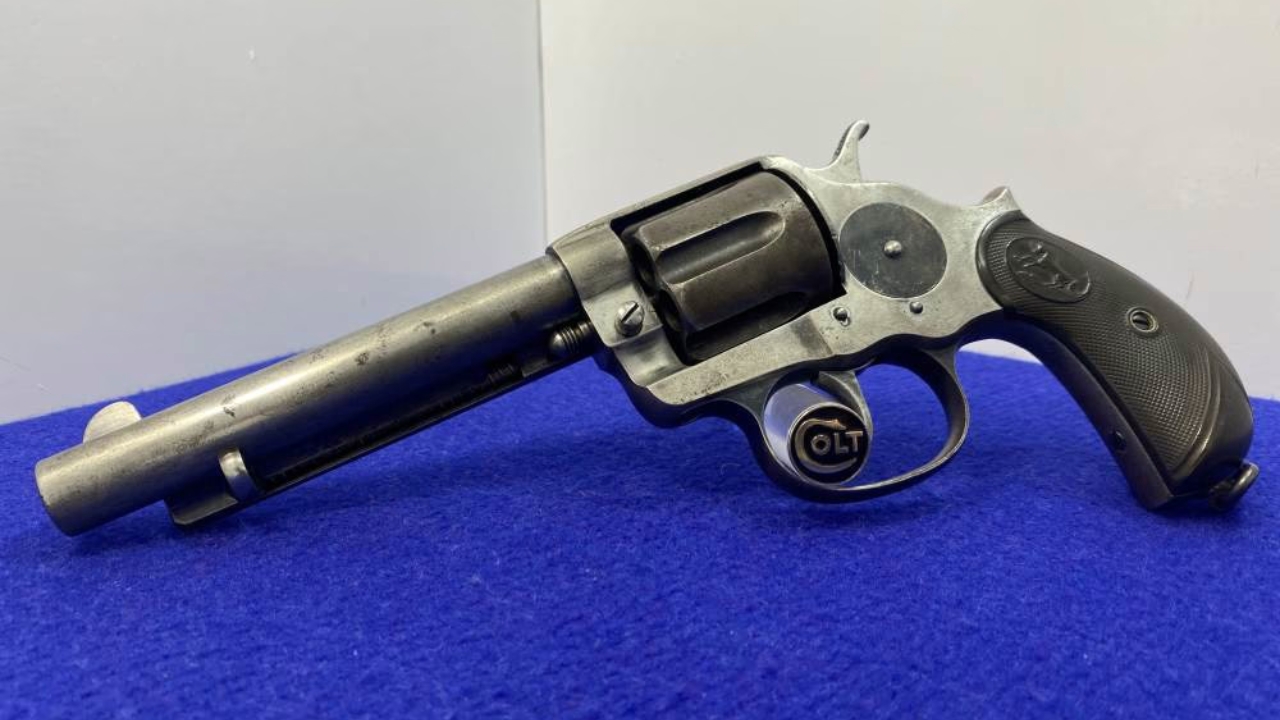
The Colt 1878 has a heavier, more forceful presence than the smaller Colt double-actions. The frame looks thick, the cylinder looks substantial, and the overall profile feels like a bruiser. On a wall, it looks like a gun chosen by someone who wanted a real fighting revolver, not a delicate showpiece.
It also represents that later frontier era when double-action revolvers started making sense for people who might need speed. Whether you’re thinking lawman, guard, or someone living on the edge of trouble, the 1878 looks like it belongs. The long barrel versions especially have a dramatic silhouette, and the steel-and-wood contrast is classic. It hangs well because it looks like it was meant to be grabbed, not admired.
Remington New Model Army (1858)

The 1858 Remington New Model Army has a blunt, rugged look that still reads tough today. The solid top strap makes it look sturdier than many cap-and-ball revolvers, and the cylinder and barrel lines feel purposeful. On a wall, it looks like it belongs in a leather holster next to a Bowie knife.
Even though it’s earlier than the classic outlaw period, it fed directly into the guns people carried when the frontier era was forming. That matters for wall appeal because it feels like a bridge between war guns and town guns. The 1858 also looks “real” because it’s not sleek—it’s mechanical. The loading lever, the big frame, and the sight picture all look like working parts, not decoration.
Colt 1860 Army

The Colt 1860 Army has one of the best profiles of the percussion era. The barrel lines are clean, the grip feels classic, and the whole gun looks like it was built to ride on a belt day after day. Hang it up and it looks like the sidearm of someone who lived outdoors and didn’t get to choose easy days.
It’s also a revolver with a strong visual identity. The fluted cylinder on early versions, the long barrel, and the way the frame flows into the grip give it a “serious but refined” look. You’re not hanging it because it’s modern—you’re hanging it because it looks like history you can touch. It pairs well with a lever rifle on the wall, too, because it makes the whole display feel like a real period kit.
Colt 1851 Navy
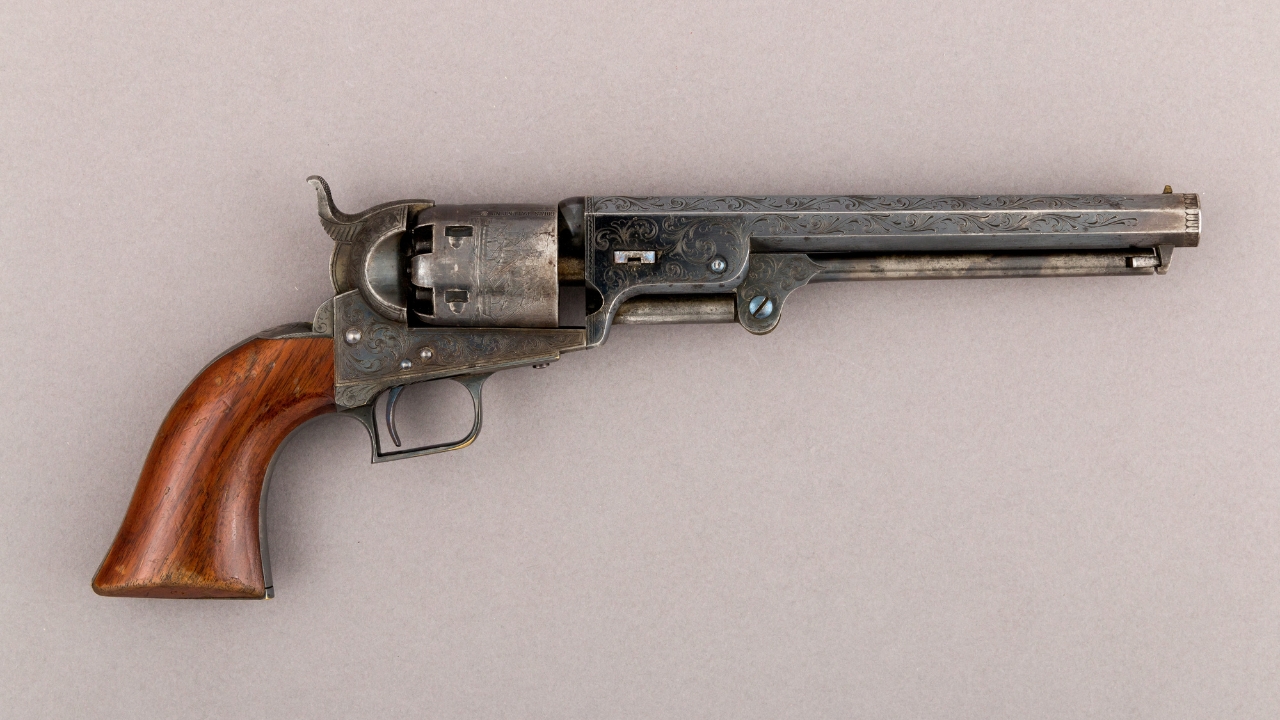
The Colt 1851 Navy looks lean and quick, like it was made for a belt and a fast draw. It’s not bulky, but it still looks dangerous because it has that long-barrel confidence and the unmistakable Colt percussion shape. On a wall, it looks like a gun that’s been near trouble even if it never left the holster.
Older shooters love it because it represents the time when revolvers became personal weapons, not just military tools. The 1851’s lines are clean enough to look good in any room, but it still has edge. The loading lever and cylinder give it that old mechanical feel, and the slim grip makes it look like a gun you could carry all day. If you want “mean” without huge size, this one works.
Spencer Model 1860 Carbine
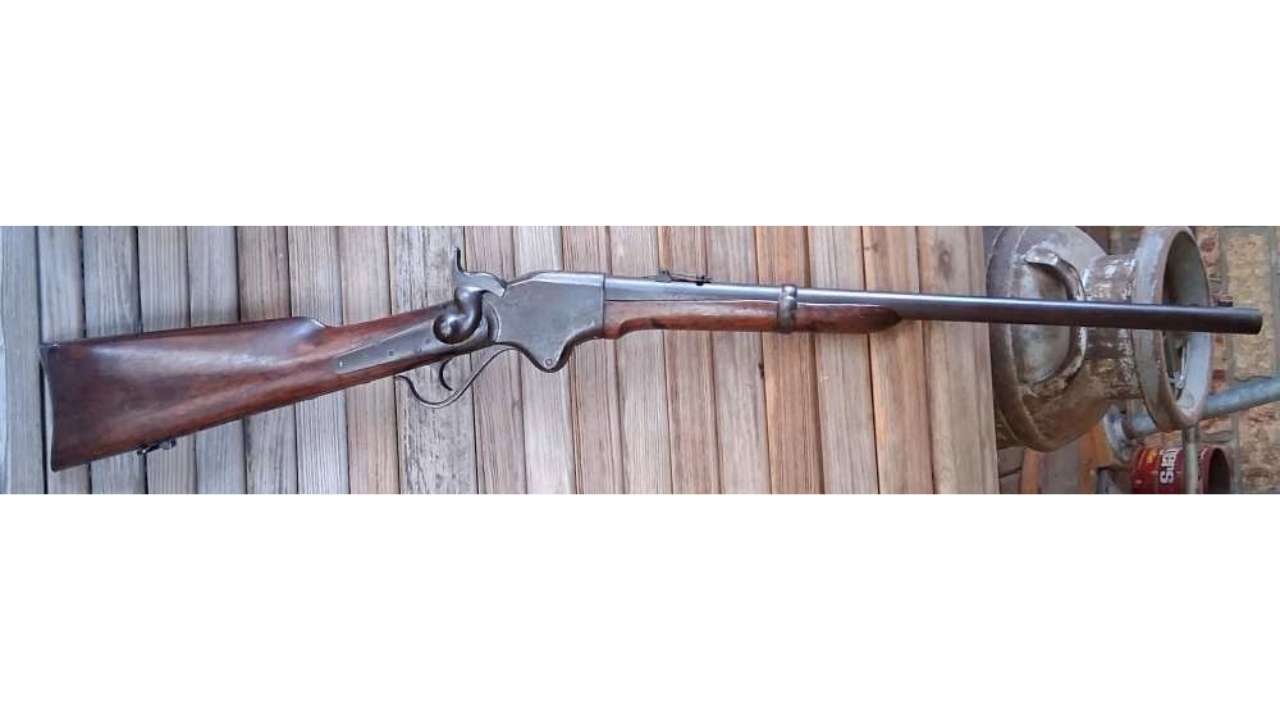
The Spencer 1860 carbine looks like a problem-solver. Shorter overall, chunky receiver, and a repeating system that was ahead of its time, it has a compact aggression that looks great on a wall. It doesn’t look like a target rifle. It looks like something built for hard riding and fast work.
It’s also got that rare “you don’t see these everywhere” factor that makes people stop and stare. The Spencer bridges the gap between Civil War tech and the repeating rifle culture that later defined the West. If you hang one, you’re hanging a piece of that transition. The carbine proportions make it look ready and mobile, and the wood-and-steel contrast is pure period. It has a blunt, practical look that still hits hard visually.
Sharps 1874
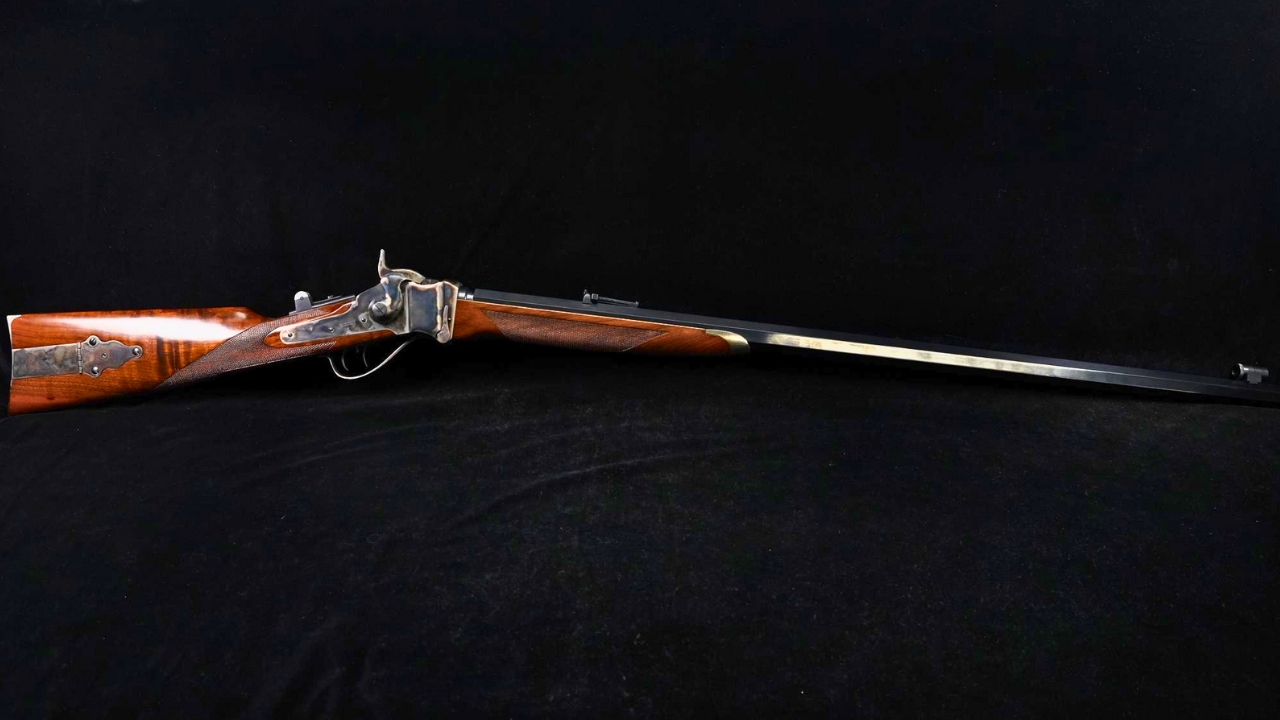
A Sharps 1874 looks like authority. Big receiver, heavy barrel options, and that classic falling-block shape that says “one shot, do it right.” On a wall, it doesn’t look like an outlaw’s pistol. It looks like the rifle you’d bring when the stakes are real and the distances are long.
That’s what makes it mean in a different way. It’s not flashy. It’s confident. The Sharps is tied to buffalo hunting and frontier marksmanship culture, which overlaps the same rough era that produced plenty of outlaw legend. A long Sharps with a tang sight has a silhouette that fills a room. It looks like it belongs in a lodge or a shop where people respect tools that were built to work.
Winchester Model 1887 Lever-Action Shotgun
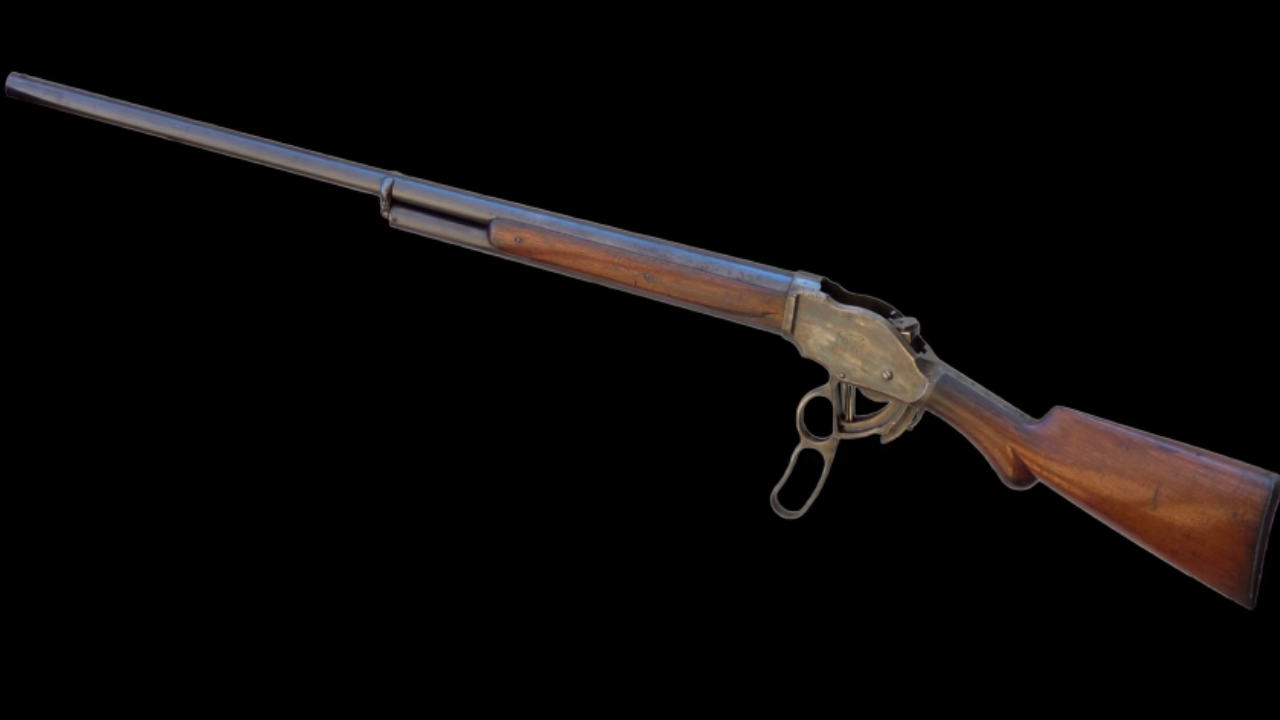
The Winchester 1887 lever-action shotgun looks aggressive because it’s unusual. A lever shotgun already feels like it shouldn’t exist, and that’s exactly why it pops on a wall. The big loop, the long receiver, and the thick barrel give it a heavy, confrontational profile.
It’s also tied to that late 1800s moment when repeating shotguns were becoming a serious idea. The 1887 looks like a gun that would’ve shown up around rail depots, bank guards, and rough town jobs—anywhere close-range power mattered. Even if you never touch it, it looks like it was built to stop things fast. Visually, it pairs well with a big revolver because the whole display starts to look like a frontier kit that wasn’t for show.
Marlin Model 1894

The Marlin 1894 has a slightly different attitude than the classic Winchesters. The receiver shape and side-eject look give it a strong, squared-up profile, and the rifle feels like it was built for hard use without fuss. On a wall, it looks like a working lever gun that’s seen real seasons and real miles.
It also fits the later outlaw-era timeline when lever guns were common tools, not museum pieces. The 1894 is the kind of rifle you could imagine in a saddle scabbard or behind a truck seat in a later century, which tells you how long the design stayed relevant. For wall appeal, the straight stock and the clean receiver lines matter. It looks like it belongs in a place where people fix things with their hands and don’t collect dust.
Colt Model 1903 Pocket Hammerless
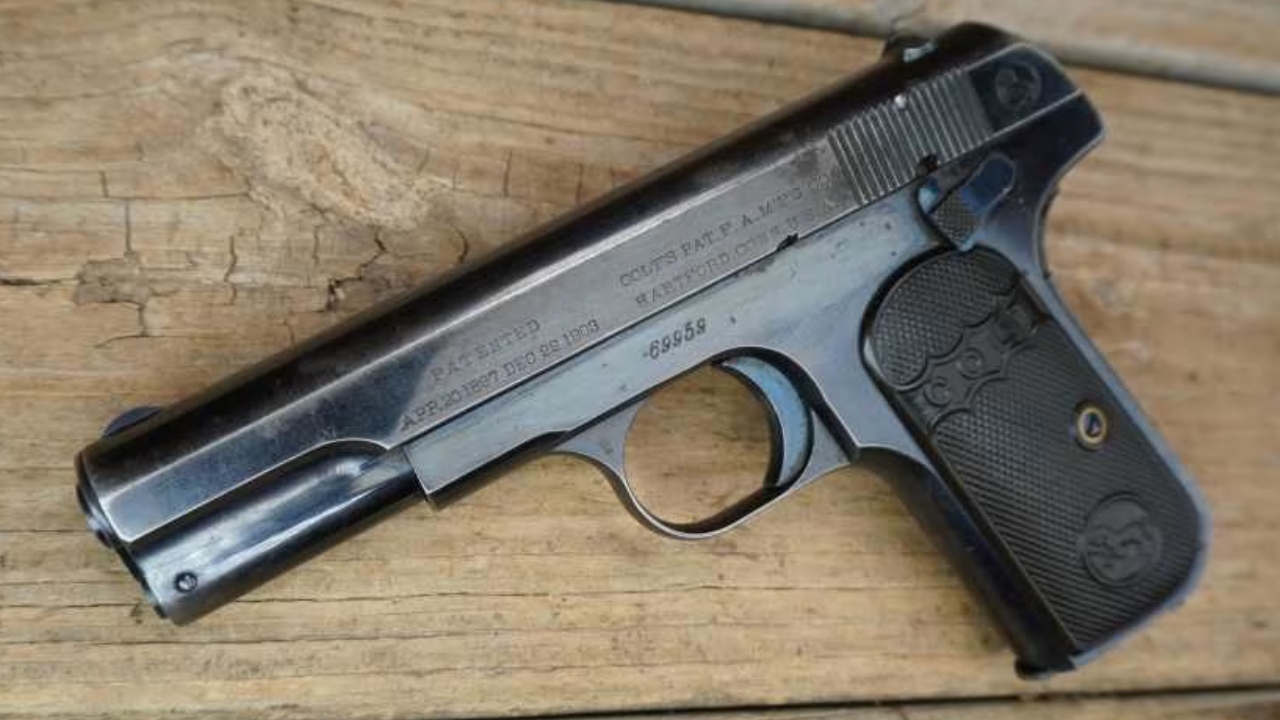
The Colt 1903 Pocket Hammerless looks like a quiet threat. It’s slim, clean, and built for a coat pocket, which makes it feel more personal than a big revolver. On a wall, it has that early 1900s “city outlaw” energy—bank jobs, back rooms, and suits instead of dusters.
It also represents the moment handguns started looking modern, while still being all steel and old-school. The flat sides, the low profile, and the lack of an exposed hammer make it look sleek, but not friendly. You’re hanging a gun that looks like it was meant to be carried close and used fast. If your idea of “outlaw-era” includes the later frontier fading into organized crime style, the 1903 is a perfect bridge.
Colt Model 1911

The 1911 looks mean because it’s honest about what it is. Straight lines, heavy steel, and a profile that still shows up in serious circles more than a century later. On a wall, it doesn’t look like a toy or a range gimmick. It looks like a fighting pistol, period.
It also fits the “outlaw” conversation once you move into the Prohibition and Depression-era crime world, when the definition of outlaw changed. The 1911 became part of that American hard-time mythology—along with Thompsons, BARs, and the guns that show up in grainy photos. Even if you never touch it, it has weight and attitude. Hang it beside a lever gun and you get a timeline on your wall: frontier to modern trouble, with steel connecting the whole story.
Colt Detective Special

The Colt Detective Special looks like the kind of revolver you carry when you don’t want attention, but you still want the fight to go your way. Short barrel, heavy frame, and that classic Colt cylinder and grip shape—it has a compact toughness that looks great on a wall. It’s not flashy. It’s confident.
It also lives in that early-to-mid 20th century outlaw and lawman overlap, where revolvers were still standard and “serious work” often happened at bad distances. The Detective Special has a reputation for being a real-world carry gun long before “concealed carry culture” was a thing people argued about online. On a wall, it looks like a tool that belonged in a coat pocket in a hard town. If you want a smaller wall gun that still has bite, this one delivers.
Like The Avid Outdoorsman’s content? Subscribe to our newsletter so you never miss an article.
Here’s more from us: