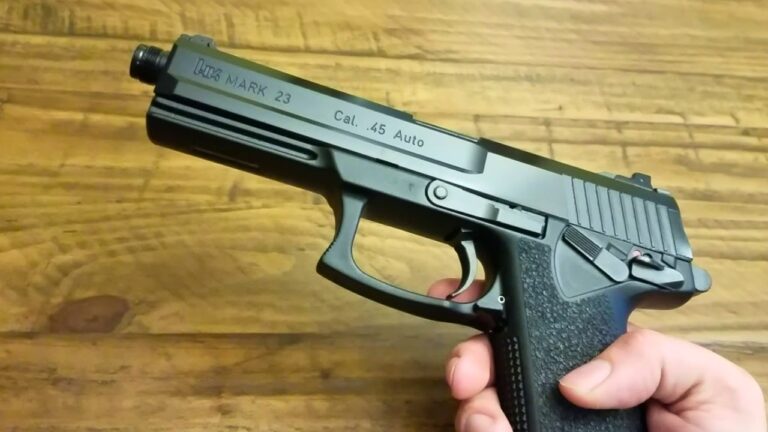
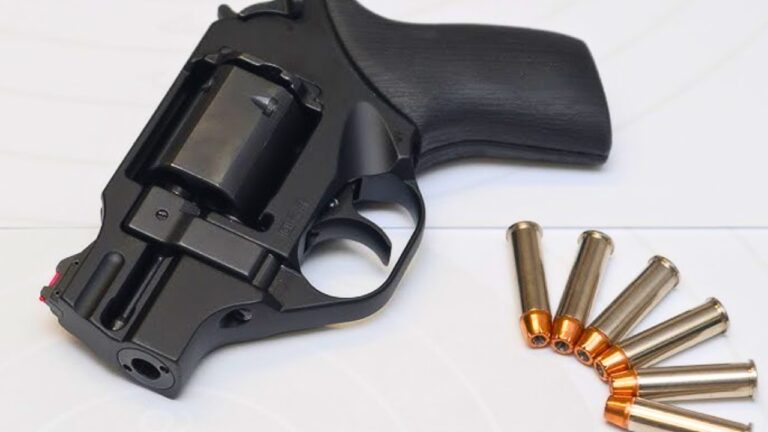
Photo credit: misterguns/GunBroker
The P365 is one of the most influential carry pistols of the last decade because it made the “small gun, real capacity” idea feel normal. A lot of people bought one, carried it, and immediately loved how easy it was to live with. That’s the P365’s superpower. It disappears, it’s convenient, and it gives you enough rounds that you don’t feel undergunned. For day-to-day carry, it can feel like the perfect answer—right up until you try to shoot it cold and realize convenience and performance aren’t the same thing.
Cold shooting has a way of telling the truth. No warm-up. No settling in. No “let me shoot a mag to get my grip right.” Just draw, see sights, press. That’s where small guns expose what they cost you. The P365 is absolutely shootable, but it’s less forgiving than many people want to admit, especially in the first few shots of the day. A lot of owners don’t notice because they mostly shoot slow or they don’t shoot often. When you put the gun on a timer or shoot it first thing without easing in, the cracks show up fast.
The P365 is easy to carry because it’s small, and small is always a tradeoff
There’s no free lunch in handgun size. A smaller gun gives you less grip area, less mass, and less sighting forgiveness. That means your grip has to be more consistent and your trigger press has to be cleaner to get the same results you’d get with a slightly larger pistol. The P365’s whole appeal is that it’s compact while still offering good capacity, but that compactness is exactly what makes cold performance harder.
Cold shooting exposes grip issues because you haven’t “found” the gun yet. Your hands aren’t settled into the same locked-in pressure pattern you get after a few strings. On a bigger pistol, you can get away with that. On a small pistol, the gun reacts more sharply to tiny inconsistencies. The P365 can feel snappy, and that snap tends to pull people into anticipation, especially on the first few shots when the body hasn’t adjusted.
The first shots reveal how much you’re relying on rhythm
A lot of shooters get better as they shoot because they fall into rhythm. They find their cadence, they relax, and their confidence builds. That’s normal. The problem is that self-defense doesn’t guarantee you a rhythm. Cold shooting forces you to perform without the comfort of a groove, and that’s where the P365 can humble people.
You’ll see it in the hits. The first string might be low-left (for right-handed shooters), or wide, or inconsistent. Then, after a few magazines, things tighten up and the shooter says, “See? I shoot it fine.” The gun didn’t change. The shooter did. Cold shooting is about what you can do before your brain and hands settle into their happy place. With the P365, that gap between first-string performance and warmed-up performance can be bigger than people expect.
The short sight radius makes tiny errors show up fast
With irons, the P365’s short sight radius means small alignment errors turn into bigger misses downrange. The gun doesn’t have to be wildly off to throw shots outside a tight target zone at speed. In slow fire, you can correct this easily. In cold draws and quick strings, you often don’t notice the error until you see the hits. That’s why the P365 feels like the answer on paper and in carry comfort, then feels less impressive when you’re trying to shoot it like a larger pistol.
This is also why some people start chasing solutions like optics, different sights, or grip modules. Those can help, but they don’t change the core reality: a small gun demands more precision to get the same results. If you’re not practicing cold draws and first-shot accuracy, the P365 will punish you in ways that don’t show up in casual range time.
The grip encourages “almost” consistency, and “almost” isn’t enough under speed
Many P365 owners grip the gun well enough for casual shooting but not well enough for repeatable performance under stress. The grip is short, and depending on hand size, you may have fingers floating or inconsistent contact. That inconsistency shows up most when you’re cold because you’re not actively thinking about building the exact same grip pressure every time. People assume they’re gripping the same way. They’re not.
Cold performance improves dramatically when you treat grip like a procedure: same hand placement, same pressure, same support hand clamp, same wrist lock. The P365 demands that kind of deliberate setup more than larger pistols. If you don’t give it that, it’ll shoot like a small gun—snappy, twitchy, and less predictable until you settle in. That’s why some people love carrying it but don’t love training with it.
Recoil management is where most people realize they’re working harder
The P365’s recoil isn’t “too much,” but it’s sharp enough that it exposes bad habits. The first few shots are where anticipation shows up, because the shooter hasn’t acclimated yet. After they acclimate, they stop flinching as much and the hits improve. That’s the cold-shooting truth: you can’t count on acclimation when you’re talking about defensive use.
This is also why some shooters end up carrying a P365 but training more with a larger pistol. They enjoy shooting the larger gun, then assume those skills transfer perfectly to the smaller one. Some do. Some don’t. The jump from compact training gun to micro-compact carry gun isn’t always smooth, especially on cold starts. If you carry the P365, you need to practice with the P365, specifically cold, because that’s where the gun demands the most from you.
What “shoot it cold” should actually look like
Cold shooting isn’t one dramatic test. It’s a repeatable habit. The simplest version is: show up, load, and make your first ten shots count. Draw to an 8-inch circle at realistic distances. Start slow, then add time constraints once you can keep hits in. Record what happens. If your first ten are consistently worse than your next fifty, you’ve learned something important about your true carry readiness.
A shot timer helps, but even without one, you can make cold shooting honest by setting a standard and sticking to it. And if you want to keep your practice consistent, having a basic, reliable target setup and training gear makes it easier to keep reps structured instead of wandering through random range time. The point isn’t to buy stuff. It’s to create repeatability so you can measure progress instead of guessing.
Like The Avid Outdoorsman’s content? Subscribe to our newsletter so you never miss an article.
Here’s more from us: