Photo credit: SPN Firearms/GunBroker
Some pistols carry history. Others carry headaches. There’s a reason certain handguns never spark a family squabble when they get passed down—nobody wants them. Maybe they’re unreliable, maybe they’re ugly, maybe they’ve got a reputation that never recovered. Either way, they end up forgotten in the back of the safe or sold off at the first gun show. These are the pistols that get handed down with a shrug, and the next generation is already thinking about trading them for something that actually runs.
Remington R51

The Remington R51 had a promising start with its low bore axis and retro appeal, but it went south fast. Early models were plagued with reliability issues, slide bite, and inconsistent manufacturing. Even after the redesign, many shooters were still wary. It never earned back trust.
If you inherit one, you’re likely inheriting a headache. The magazine design is quirky, the takedown is awkward, and holster options are limited. Add in poor aftermarket support and low resale value, and it’s no surprise this pistol rarely gets anyone excited. It’s the kind of gun that gathers dust, not compliments.
Jennings J-22

The Jennings J-22 is a pot metal plinker that looks like it belongs in a sock drawer. Accuracy is marginal, reliability depends on ammo brand and luck, and long-term durability is questionable at best. It was cheap when it came out—and feels even cheaper now.
If one shows up in your inheritance, it’s probably been sitting neglected for decades. Parts support is limited, and you’ll spend more time trying to make it run than enjoying it. Rimfire pistols can be a lot of fun, but this isn’t one of them. Most people take one look and quietly move it down the road.
Hi-Point C9

The Hi-Point C9 is known for being reliable enough, but no one gets sentimental over one. It’s heavy, bulky for a 9mm, and not exactly a looker. The trigger isn’t good, the magazine release is clunky, and aftermarket options are minimal.
You don’t bond with this gun—you tolerate it. When someone inherits a Hi-Point, they usually don’t argue over it. It was probably bought as a budget nightstand piece, and once it changes hands, it rarely sees the light of day again. It’ll run, sure, but it won’t earn a permanent place in the family collection.
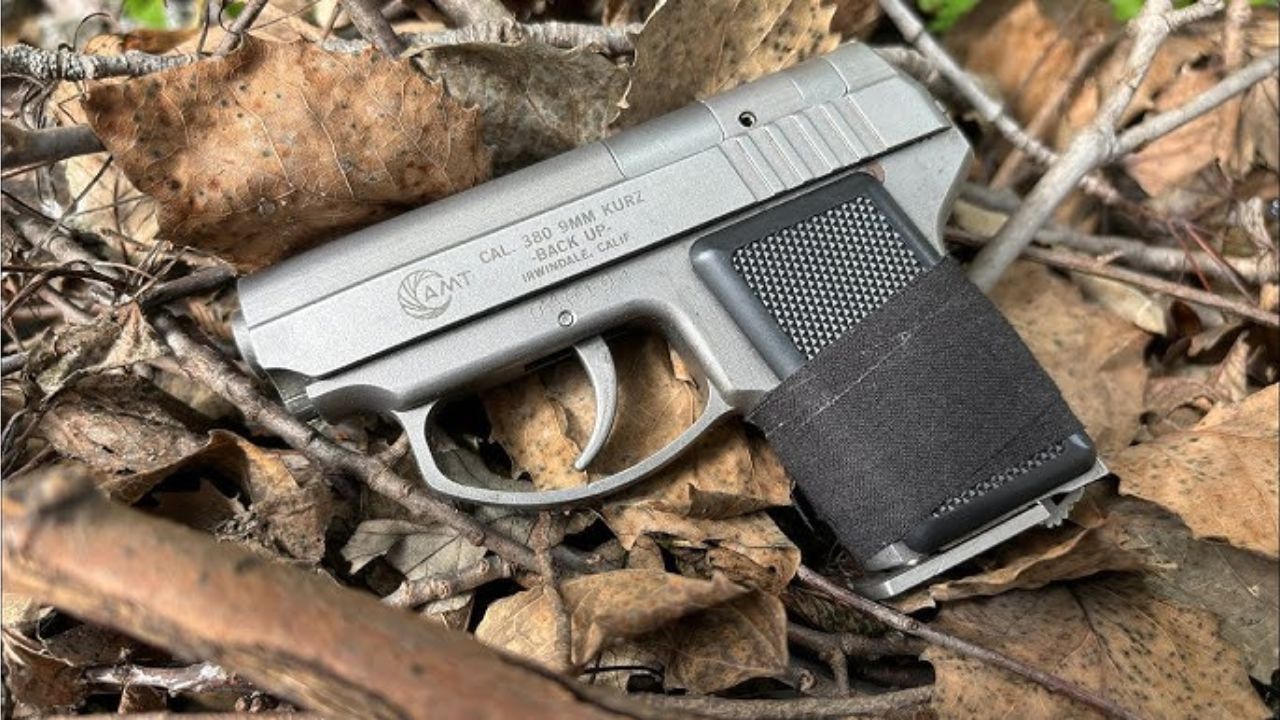
AMT Backup

The AMT Backup came in big calibers for small frames, but it’s not something you want to shoot often. The trigger is absurdly heavy, the sights are nearly nonexistent, and reliability varies wildly depending on the individual pistol.
It was a neat idea—deep concealment in .45 or .380—but execution fell short. Recoil is snappy, controls are stiff, and disassembly can be a chore. Inherited AMTs tend to be wrapped in oily rags, stuffed in a forgotten safe corner, and pulled out with curiosity that turns into disappointment. It’s not a piece you reach for—or keep.
Bryco Model 38

Bryco pistols were built to hit a price, not win hearts. The Model 38 is heavy for what it is, with a rough trigger and questionable reliability. It’s one of those guns you probably got for under $100 at a pawn shop—or inherited without ever asking for it.
Functionality is hit or miss. Disassembly is clumsy, materials are soft, and there’s not much pride in ownership. These are the kind of pistols you inherit and immediately look up online—only to realize they aren’t worth fixing or selling. They’re forgettable on every level.
Jimenez JA-380

The Jimenez JA-380 fits squarely into the Saturday night special category. It’s compact, cheap, and prone to malfunctions. Feeding issues, failures to eject, and cracked frames aren’t uncommon. If you’ve inherited one, you’re holding onto a pistol that’s more of a liability than a legacy.
There’s no real collector market, no emotional attachment, and no performance advantage. It’s not fun to shoot, and most shooters wouldn’t trust it for anything more serious than a paperweight. You might test-fire it out of curiosity, but odds are it won’t stick around long after that.
Lorcin L380

Lorcin pistols have a reputation—and it’s not a good one. The L380 is bulky for its caliber, with poor ergonomics, a sloppy trigger, and a slide that often feels like it’s grinding through sand. Long-term reliability is sketchy, and parts support is almost nonexistent.
If you inherited one, it likely came with an old box of surplus ammo and a cracked plastic case. These guns were built cheap and sold cheap. Nobody’s building a collection around a Lorcin, and most folks who end up with one are looking for a legal way to get rid of it, not keep it.
Arminius HW-7

The Arminius HW-7 is a German-made .22 revolver that looks better than it shoots. Accuracy is inconsistent, and the trigger is gritty both in double and single action. Cylinder lockup often wears down quickly, and timing issues are common with older examples.
You might come across one in a relative’s collection and mistake it for a solid little shooter. Then you take it to the range and realize it struggles to keep a group on a standard target. They’re not dangerous, just disappointing. It’s the kind of inheritance you quietly relegate to the “maybe trade pile.”
RG-14

The RG-14 is one of the most infamous pistols in American history—not for performance, but for being cheap and ubiquitous. Chambered in .22 or .38 Special, it was made of low-grade materials and often suffered from timing and reliability issues.
If you inherited one, odds are high it hasn’t been fired in decades—and for good reason. It’s neither accurate nor durable, and there’s no real collector value. This is the type of revolver people remember hiding in drawers, not carrying to the range. You don’t feel proud to own it—you feel stuck with it.
CZ 52

The CZ 52 is a tough old military pistol chambered in 7.62×25 Tokarev, but it’s not exactly fun to shoot or easy to live with. The roller-locked system is cool, but the grip angle is weird, the trigger is rough, and the decocker is notorious for being dangerous.
Most folks who inherit one are curious at first—until they try finding reliable surplus ammo or realize how sharp the recoil impulse is. It’s loud, flashy, and interesting, but it’s not something many shooters keep as a primary or even secondary piece. It’s more of a range relic than a trusted sidearm.
Polish P-64

The P-64 is a compact surplus pistol that looks great on the table—but surprises you with a brutal trigger and snappy recoil. The double-action pull is well over 20 pounds on some models, and the sharp edges make it uncomfortable to carry or shoot for long.
Some folks inherit one thinking it’ll be a neat little carry gun, only to realize they can barely get through a magazine without regretting it. Ammo is more available than it used to be, but the shooting experience never improved. Most end up back in the safe or sold to someone chasing Cold War collectibles.
Like The Avid Outdoorsman’s content? Be sure to follow us.
Here’s more from us:
The worst deer rifles money can buy
Sidearms That Belong in the Safe — Not Your Belt
*This article was developed with AI-powered tools and has been carefully reviewed by our editors.