Photo credit: AvidOutdoorsman
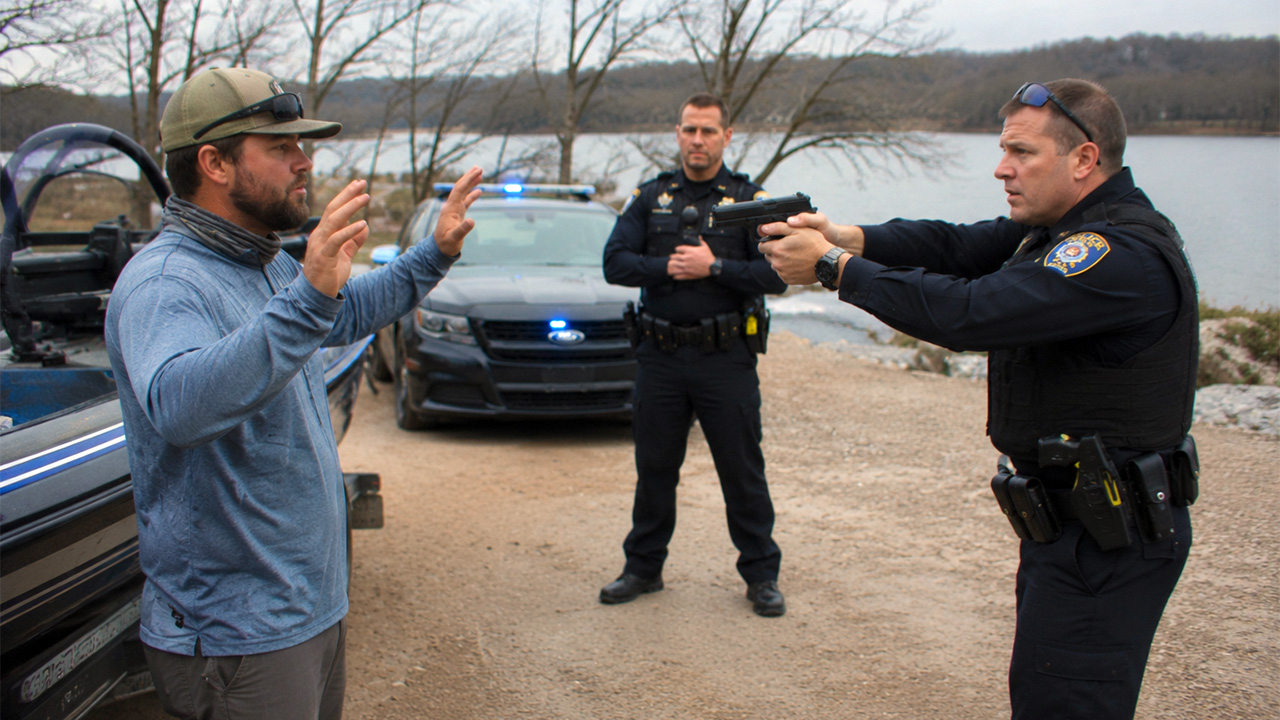
It started the way a lot of river days start—pre-dawn launch, a thermos on the console, and a guide trying to get clients on fish before the wind came up. By mid-morning, that same guide was standing on a gravel bar with his hands visible, his clients behind him, and a patrol officer leveling a handgun in his direction.
In the days that followed, the department’s chief stepped out early to back the officer’s decision, framing it as a “high-risk” contact tied to a complaint on the water. But when body camera footage surfaced, the picture looked a lot less like a dangerous suspect and a lot more like a working guide trying to answer questions while keeping everyone calm.
The call came from a familiar kind of complaint
According to the incident narrative discussed by locals, the original complaint wasn’t about drugs or violence. It was about access—boats near a private bank, clients stepping out on what a landowner believed was his side of the line, and a guide who’d been seen drifting the stretch more than once.
If you spend time on rivers in rural country, you’ve heard some version of this. One person thinks the public easement is wider than it is. Another thinks the riverbed is private. Somebody’s mad about litter or anglers walking around a fence corner. The problem is those disputes get emotional fast, and a phone call to dispatch turns into an officer arriving with half the story.
A traffic stop mindset doesn’t fit a riverbank
The officer contacted the guide after the drift boat pulled into a shallow edge to regroup and get a snagged anchor loose. The guide had his fishing license and guide credential ready, and he motioned toward a dry bag where he kept permits and client paperwork.
Body cam later showed the guide doing what most instructors tell you to do in any law enforcement contact: hands out, calm voice, no sudden movements. He repeatedly asked what the issue was and offered to keep his clients seated and quiet. The officer, working off the complaint and apparently worried about “weapons on board,” escalated quickly and drew his sidearm.
That’s the part that shook a lot of outdoorsmen. River contacts are different than a roadside stop. You’ve got rods sticking up, knives in PFD pockets, a bear spray canister clipped to a strap, and sometimes a cased shotgun in duck season. None of that should surprise anyone who patrols outdoors, but it can look “busy” and threatening to someone who isn’t used to it.
Body cam showed compliance from the first second
When the footage hit the public, it didn’t match the initial defense offered by the department. The guide didn’t square up, didn’t argue, and didn’t make a move toward his waist or the boat. He stayed planted where he was told, and he kept reminding the officer that clients were present and that he didn’t want anyone spooked.
The officer, on the other hand, stayed on a hair-trigger script—commands stacked on top of commands, volume up, firearm still out even as the guide tried to clarify where documents were stored. At one point, the guide asked permission before reaching for anything and got barked at to “stop moving,” despite not moving.
That’s a recipe for a bad outcome. If you’ve ever coached kids in hunter safety or spent time around a range, you know confusion plus yelling doesn’t create control. It creates mistakes.
The chief defended the decision—then the narrative changed
The chief’s first public comments leaned hard on officer safety, suggesting the guide’s movements and the environment justified drawing a weapon. There was also talk of prior complaints about the guide “refusing to comply” in earlier contacts. That kind of statement carries weight with people who weren’t there, because nobody wants to side with someone who’s been a repeat problem.
But the video didn’t support the idea that this was a combative subject. It supported the opposite: a guy trying to keep a situation from boiling over while doing his job. After the footage circulated, the department’s tone shifted from confident defense to careful review, and community leaders began pushing for clearer policies on outdoor contacts.
In rural places, chiefs and sheriffs live in the same world as the people they police. They fish the same rivers and buy ammo at the same counter. When a public video contradicts the official story, trust doesn’t just take a hit—it gets holes punched in it.
Commenters zeroed in on two things: access laws and gun discipline
Most of the outdoor crowd didn’t argue that officers shouldn’t be cautious. They argued that pointing a handgun at a compliant person on a simple access complaint is backwards. A lot of folks also noted that drawing down in front of clients—sometimes including kids—turns a civil dispute into a potentially traumatic event.
The other big thread was the access issue itself. Anglers and landowners were trading the usual mix of river law misconceptions and hard-earned experience: whether a navigable river allows floating and wading, how far someone can step up on a bank to portage, and what “high-water mark” means in practical terms. Some wanted game wardens handling these calls instead of patrol officers, because wardens deal with fishing disputes daily and generally arrive with the right mindset and local knowledge.
And honestly, that’s not a knock on patrol. It’s a recognition that specialized work exists for a reason. A warden who’s used to contacting hunters with rifles slung and a knife on their belt tends to manage the temperature better.
What guides, anglers, and landowners can do to keep this from happening again
Most people reading this aren’t trying to pick fights with law enforcement or neighbors. They just want to fish in peace and go home. But there are a few practical moves that can keep an access dispute from turning into a full-blown crisis.
Guides should keep credentials, insurance cards, and any required permits in an easy-to-reach, clearly labeled pouch—something you can point to and ask permission to retrieve. A chest pack or zippered PFD pocket beats digging through a dry bag while someone’s nervous. If you run a float that skirts private ground, having a printed map of public access points and known easements can help you explain yourself without sounding defensive.
For anglers, it’s worth learning your local river rules like you learn your regulations. Know where you can anchor, where you can step out to avoid hazards, and where you’re flat-out trespassing. If a landowner confronts you, don’t posture. Back out, document the location, and sort it out later with the right agency.
Landowners have options too: posted signage that’s actually visible from the water, clear fence corners, and a relationship with the local warden or sheriff’s office before there’s a problem. If your place gets hammered every summer, a simple sign at a common pullout—“Private bank, no access above this line”—does more than yelling across the river ever will.
None of that excuses an officer pointing a gun at someone who’s doing everything right. But it does show how these incidents start: one complaint, one assumption, and one contact that escalates faster than it should. Out on the water, common sense and calm hands should be the standard—on both sides of the badge.
Like The Avid Outdoorsman’s content? Be sure to follow us.
Here’s more from us: