Photo credit: AvidOutdoorsman
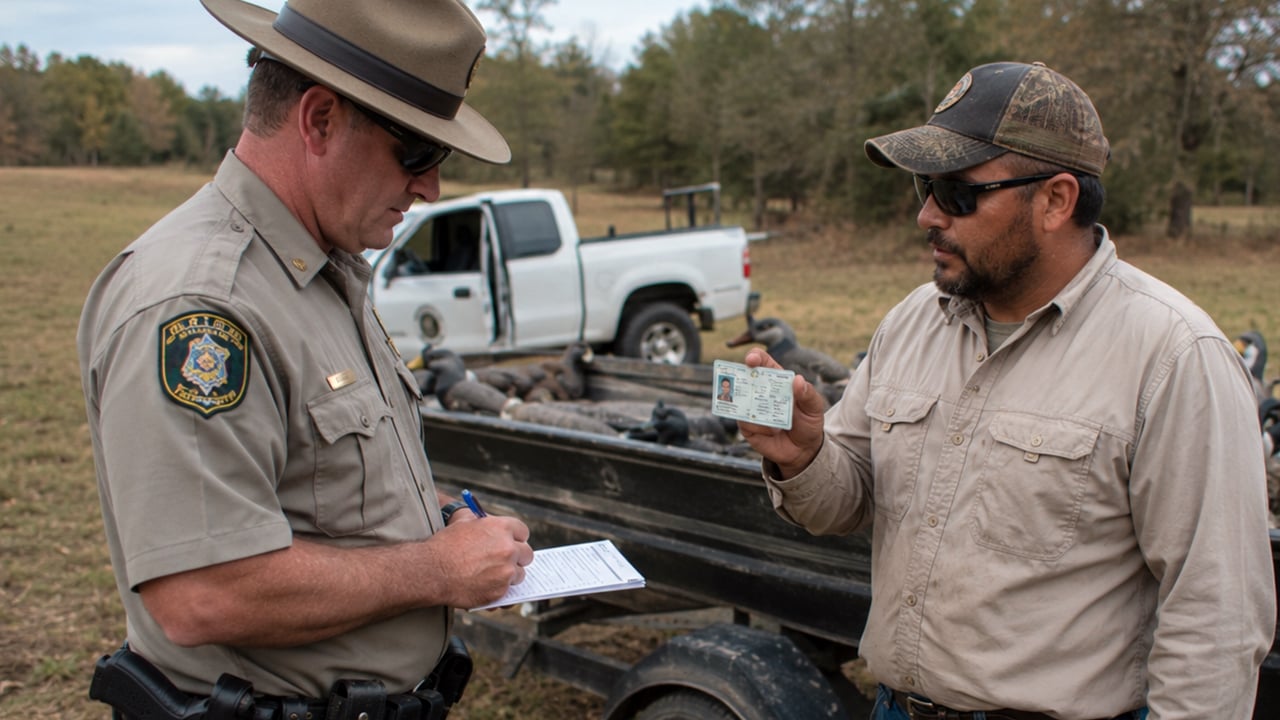
Most folks who make their living on the water or in the woods keep their paperwork squared away. It’s not just about avoiding a fine. It’s about credibility. So when a uniformed game warden stepped onto a busy boat ramp and told a guide he was operating without a valid license, the temperature of the morning changed fast.
It was one of those days that starts early and loud—headlamps bobbing around, coolers thumping onto tailgates, and clients asking questions while the guide tried to keep everyone moving. The warden didn’t care about the pace. He wanted to see the guide license and the usual stack: permits, registration, whatever the state requires for commercial trips.
A routine check turned into a citation
The guide did what most experienced guides do: reached for the waterproof pouch, the console folder, then the glove box. He had plenty of documentation, but not the one card the warden asked for. Maybe it was in yesterday’s jacket. Maybe it was sitting on the desk by the printer. Either way, it wasn’t in his hand at that moment.
The warden wrote it up. Not a warning, not a “bring it by the office later,” but a citation for guiding without the required license on his person. The clients watched. The guide stood there taking it, because arguing on the shoulder of a ramp never ends well.
The guide’s paperwork wasn’t missing—just not where the warden expected
After the warden left, the guide did what any person who depends on a clean record would do. He tore the boat apart, then the truck, then called home. Within an hour he found it—issued recently, still crisp, and valid.
Here’s the kicker: the license wasn’t old, expired, or from the wrong category. It was a fresh issue date—about two weeks prior. Same agency. Same enforcement office network. The guide had the kind of license that usually settles the matter in about five seconds.
That should’ve been the end of it, except it wasn’t just a “forgot it at home” scenario. The guide said he’d been carrying a printed temporary copy for the first few days, then swapped to the hard card when it arrived. Somewhere in that shuffle, the warden’s system and the guide’s reality quit matching.
Why a valid license can still look “invalid” in the field
Anybody who’s bought tags online or renewed a fishing license on a phone at midnight knows the truth: licensing systems aren’t always clean in real time. Some updates take time. Some require a supervisor to push a button. Some don’t sync with whatever handheld device the officer is running until the next day, or the next week.
On top of that, guide licensing is often separate from basic hunting and fishing privileges. It can be stored under a different profile, a business name, or an “operator” record tied to a license number that doesn’t show up if someone searches the wrong field. If the warden pulled up the guide by name and got a blank screen, he may have assumed the guide was either unlicensed or running on an expired credential.
That’s not an excuse, but it’s a realistic failure point. And in the real world, a warden on a ramp has to make a decision with what he can verify in the moment—especially when commercial activity is involved.
The awkward part: the license came from the same office
When the guide brought his license in to straighten it out, the stamp on it made the whole thing harder to swallow. The issuing authority wasn’t a far-off headquarters. It was the local office tied to the same enforcement district—issued just two weeks earlier, meaning the record should’ve been easy to find.
That’s the kind of detail that makes people grind their teeth, because it turns a simple compliance check into a paperwork credibility fight. From the guide’s side, it looks like the state took his money, issued his credential, and still treated him like a violator. From the warden’s side, it can look like a guide who conveniently “found it later,” which is a common story for people who actually are trying to skirt the rules.
The truth can be boring: the guide was legal, the system didn’t show it, and the warden did what wardens do when they can’t verify. But that doesn’t help the guide’s reputation at the dock, and it doesn’t cover the day he spent worrying about court dates and possible impacts to his business.
What outdoorsmen and commenters latched onto
Whenever stories like this circulate around a bait shop or a rural diner, you hear the same two camps. One side says, “Carry it on you, every time, no excuses.” And they’re not wrong. The other side says, “If the state issues a license, the state should be able to confirm it.” Also not wrong.
Plenty of folks focused on the guide’s responsibility: keep a duplicate in the boat, a copy in the truck, and a digital version on your phone in case your wallet takes a swim. Guides already do redundancy with bilge pumps, batteries, and spare props. Licensing should be treated the same way.
Others focused on the warden’s discretion. A lot of experienced outdoorsmen have had a warden give them a chance to produce proof within a set window, especially when the person is known locally and isn’t acting shady. But enforcement culture varies. Some officers warn. Some cite. And if they’ve been burned by fake documents or “my buddy has it” stories, they tighten up.
The third chunk of commentary was about documentation and professionalism. Guides are held to a higher standard for a reason. They’re taking money. They’re putting clients on the water with hooks, sharp knives, and sometimes firearms. People expect them to be squared away, even when the state’s database isn’t.
The practical lessons for guides, hunters, and anglers
If you’re a guide, the easiest protection is boring: carry the credential in a waterproof holder on your person, not buried in a boat compartment. Keep a printed copy in a sealed bag in the boat, and a clear photo on your phone. If your state offers an app, use it, but don’t trust it as the only proof when service is spotty at ramps and trailheads.
If you’re a hunter or angler, the same logic applies. Screens crack. Phones die. Wallets fall out of truck doors. The fish and game world is full of wet hands and cold fingers, and that’s when mistakes happen.
And if you ever do get cited for something you know is valid, handle it like an adult. Don’t argue roadside. Gather your documentation, bring it to the proper office, and keep your cool. Most of the time, the fastest path to fixing a licensing error is being organized and respectful, even when you’re frustrated.
At the end of the day, this wasn’t about someone sneaking limits or running illegal clients. It was about a system hiccup colliding with a warden doing a by-the-book check. The guide learned a hard lesson about having proof in hand, and the agency got a reminder that the public expects their own records to be accurate—especially when a person’s livelihood is tied to a piece of plastic the state printed and signed.
Like The Avid Outdoorsman’s content? Be sure to follow us.
Here’s more from us: