Photo credit: Theavidoutdoorsman.com
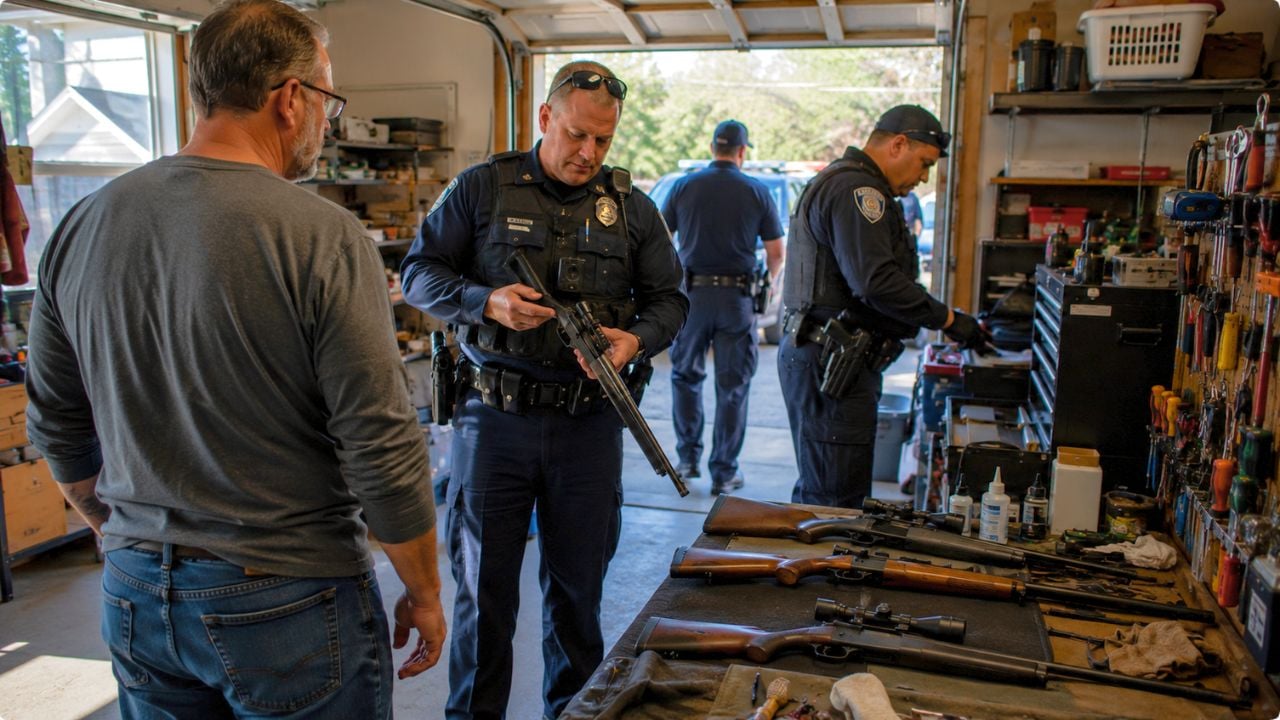
It’s the kind of evening most of us have had in one form or another: garage door up, radio or compressor humming, and a bench covered with rags and solvent because you’re trying to get ready for the weekend. In this case, that routine turned into a law enforcement callout, and by the end of it a gun owner had four rifles taken out of his home after officers pushed past the original reason they were there.
The call started as a simple noise complaint. It ended with a warrantless search, a seizure, and a lot of outdoorsmen asking the same question: when does “checking on a complaint” become “looking for something else”?
A normal garage evening turned into a “check the box” call
The complaint reportedly came in from a nearby neighbor who said there was repeated banging coming from a detached garage and that it “sounded like gunfire.” In tighter subdivisions and older neighborhoods where garages sit close together, that’s a recipe for a call—especially when folks don’t know each other well.
When officers arrived, they didn’t find a shooting scene. They found a man in his garage with a work light on, cleaning firearms at a bench. No muzzle flashes. No rounds being fired. Just a routine maintenance session that most hunters do right after season or before a range day.
Why “noise complaint” and “guns in a garage” can escalate fast
To someone who spends time around firearms, the sounds of cleaning and tinkering don’t raise eyebrows. But from the street, a mallet tapping a stuck pin, a steel punch on a roll pin, a torque wrench clicking, or a vise slipping can sound a whole lot like something else—especially if the listener already thinks guns equal danger.
That’s the tricky part for gun owners living close to neighbors: there’s a big difference between lawful gun handling and behavior that alarms people who don’t understand what they’re hearing. And once law enforcement hears “possible gunshots,” the mindset shifts to officer safety, not neighbor relations.
In situations like this, the smart move is usually to keep it calm, keep your hands visible, and remember that being right doesn’t always keep a situation from going sideways.
The conversation reportedly shifted from “what’s that noise” to “what else is in here”
From the start, officers were there for the complaint. The man explained what he was doing and why the noise was coming from the garage. That should have been the end of it: confirm no shots fired, no injuries, no property damage, and move on.
But the moment guns are visible—especially rifles—some officers start looking for other angles. Are there prohibited persons in the home? Is anything stolen? Are any of the firearms “illegal”? Is there a reason to run serial numbers? Those questions might be common in police work, but they don’t automatically create legal permission to search a private garage or start opening cases and cabinets.
That’s where this incident reportedly took its turn. Instead of leaving after verifying the complaint, officers began looking around the garage and into areas that weren’t part of the original welfare check. Before long, four rifles were seized.
Warrantless searches and seizures are where the real fight starts
Most outdoorsmen understand there are times when police can act without a warrant—like if someone is in immediate danger, or if evidence is in plain view during a lawful contact, or if consent is given. But “plain view” doesn’t mean “I see a rifle on a bench, so I can now search the whole garage.” And consent isn’t consent if it’s pressured, unclear, or treated like it isn’t optional.
A lot of hunters have had an officer ask, “Mind if I take a look?” When you’re standing in your driveway at dusk with a patrol car behind you, that can feel less like a question and more like a command. The problem is, those moments can be the difference between an unpleasant conversation and your property getting hauled off.
Seizing rifles during a noise complaint also creates a practical mess. Firearms can be tied up for months while paperwork crawls along. Optics get bumped. Zeroes get lost. Accessories go missing. And even if everything is returned, you’re often the one who pays the price in time, storage fees, or attorney costs.
What gun owners kept circling back to: consent, cameras, and keeping the peace
When stories like this make the rounds, the comments usually split into two camps. One group says you should always cooperate fully and let officers do what they feel they need to do. The other says never talk, never consent, and record everything.
Reality lives somewhere in the middle. Outdoorsmen who’ve been around the block tend to focus on three practical points:
First, consent matters. If you don’t want a search, it’s possible to say so without getting mouthy. You can be respectful and still be clear. Second, cameras matter. A couple of exterior cameras on the garage and driveway can settle a lot of “he said, she said” quickly—especially when a complaint is based on sound and assumptions. Third, neighbor relationships matter. A quick conversation earlier in the year—“Hey, I do some gunsmithing and cleaning, you might hear tapping sometimes”—can prevent the whole chain of events.
None of that guarantees you won’t get a visit. But it can lower the temperature.
The outdoorsman lesson: keep your routine legal, but don’t assume it can’t be misunderstood
Most of us treat the garage like a safe space. It’s where we tune bows, swap trailer bearings, reload gear, and keep rifles running. But when you’re within earshot of neighbors, normal maintenance can be misread as something else, and that misunderstanding can bring uniforms to your door.
On the gun side, a few habits help keep trouble away. Store firearms securely when you’re not actively working on them. Keep ammo separate while you’re cleaning. Don’t handle guns while you’re arguing with anyone, including an officer. And if an interaction feels like it’s shifting from “responding to a complaint” to “fishing expedition,” it’s worth slowing things down.
This incident is a reminder that the “small” calls are often where rights get tested. A noise complaint doesn’t sound like a big deal—until it becomes a warrantless search and four rifles are gone. The best outcome is always the boring one: calm conversation, clear boundaries, and everyone goes home with their property and their peace of mind intact.
Like The Avid Outdoorsman’s content? Be sure to follow us.
Here’s more from us: