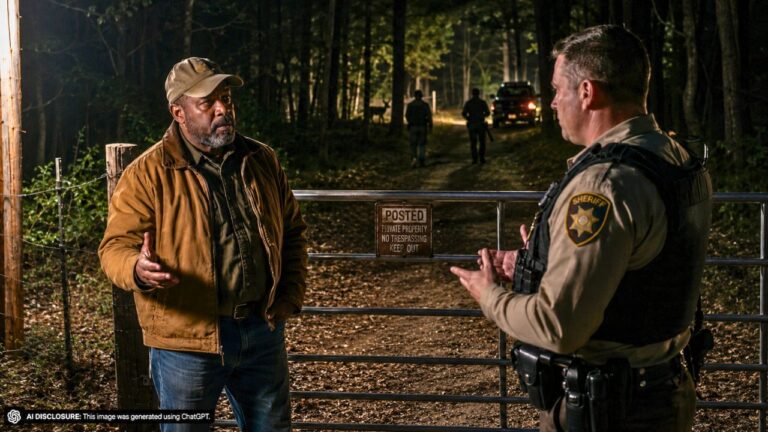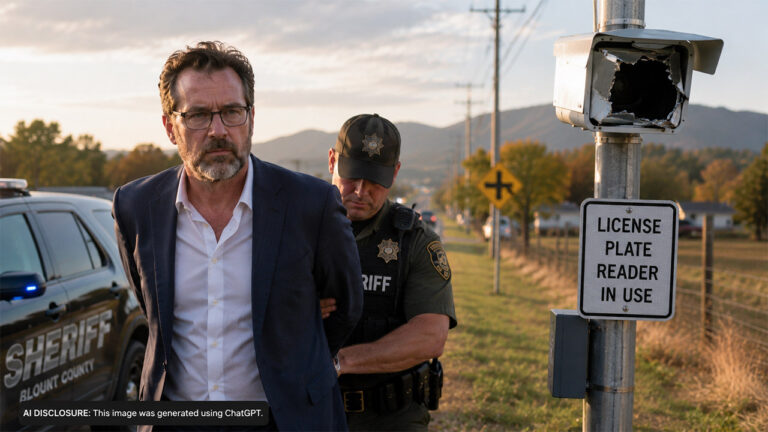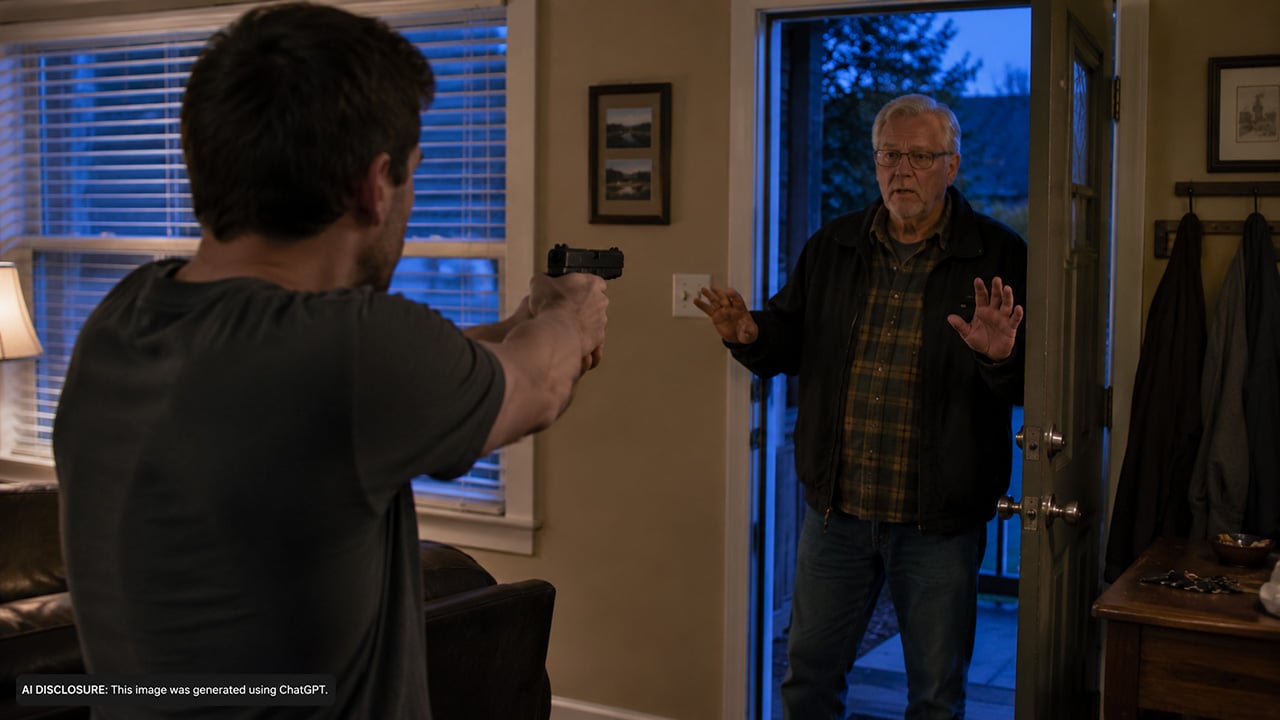
Photo credit: AI-generated image created using ChatGPT. Illustrative only
Most folks who rent a house figure their biggest worries are a leaky roof, a busted water heater, or a landlord who takes their time returning a call. In Washington state, one renter learned there’s a scarier category of problems—when the past of a property shows up at your front door before sunrise.
In the original post, the renter described being inside his single-family rental around 5 a.m. when a man came onto the property acting suspiciously, filming the home, peering into windows, and checking for a way inside. The renter confronted him while holding a firearm, and the stranger backed out, claiming he was the “rightful owner.” Police later confirmed the man was, in fact, the home’s former owner.
A dark, early-morning approach that didn’t look accidental
This wasn’t somebody knocking on the wrong door and realizing it halfway up the steps. The renter said the man spent more than 30 minutes casing the place—looking into windows and checking access points—before he ever tried the door.
Then came the escalation: repeated doorbell rings, banging on the front door, and—somehow—the door opening. The renter wasn’t sure if it had been left unlocked, but the key detail is the man entered without permission while the home was occupied.
A home-defense moment with real consequences
If you’ve spent time in the woods or out on rural ground, you know the feeling: when something is off, it’s off. A stranger prowling around your place in the dark is exactly the kind of situation where a normal person’s brain goes straight to worst-case scenarios.
The renter said he confronted the intruder while holding a firearm. The man immediately backed out and started talking—claiming ownership of the house. From a practical standpoint, that’s the part folks who carry for defense understand: sometimes the gun doesn’t fire a shot, but it changes the decision-making of the person who just crossed the line.
Police removed him, then the backstory got worse
Police arrived and escorted the man off the property. Only after things settled down did the renter learn who he was dealing with: a former owner who lost the home more than two years prior, though the renter didn’t know whether it was a sale, foreclosure, or something else.
The more troubling detail is that this wasn’t the first time. The renter said that before he and his partner moved in, the same man reportedly broke in and squatted there for multiple days until police forcibly removed him.
According to the renter, the man’s ex-wife told him there was a restraining order and that the former owner had a history of mental illness and domestic violence. But when officers checked that morning, they couldn’t find any current restraining order on file.
Why cameras and documentation matter in trespass cases
This is where the outdoorsman mindset—document everything—really pays off. The renter said he has security footage showing the full confrontation at the door, plus more than 30 minutes of the guy surveilling the home beforehand. He also said he pulled video from the man’s own Facebook Live, where the man filmed himself stalking and watching the house from outside.
That kind of time-stamped evidence can be a big deal when you’re trying to get law enforcement and the courts to treat a situation as more than a one-off misunderstanding. A quick “he said, he said” at the curb is one thing. Video of window-peeping, casing, and entry attempts is another.
The renter’s next moves: protection orders, charges, mental health holds, and the lease
After the incident, the renter said he filed a police report, filed for a civil protection order (he mentioned anti-harassment or unlawful trespass), and upgraded security—cameras, locks, and the usual hardening steps a lot of us would do immediately.
But he also laid out the questions that matter when your home stops feeling like a safe place. He wanted to ensure the man can’t come back, push for charges for unlawful entry, and understand whether mental health history could justify an involuntary evaluation. He also asked whether hiring an attorney could help “escalate” things or protect them further, and whether breaking the lease is an option if the threat becomes ongoing—especially since his partner was shaken and wanted to move right away.
Those aren’t theoretical questions. When someone has already forced entry once, has a history at that same property, and is allegedly spiraling, you’re not just talking about locks. You’re talking about patterns, enforcement, and what happens the next time you hear banging at the door.
What practical folks tend to focus on in situations like this
When gun owners and rural homeowners talk through incidents like this, the advice usually clusters around a few commonsense points: keep everything documented, don’t rely on verbal assurances, and don’t assume “former owner” equals “harmless.” The renter’s footage—both from his cameras and the intruder’s own livestream—fits that checklist.
The other thing experienced people tend to stress is keeping responses clean and defensible. Let police handle removal when possible, keep communications minimal, and don’t get baited into a driveway argument. From the renter’s description, he did what most responsible people would do at 5 a.m.: stop the threat, create distance, and get law enforcement on scene.
And on the tenant side, a lot of folks will tell you to get your landlord involved early and in writing. This kind of history—previous squatting, prior removal, possible restraining order drama—can become a property management issue fast, especially if additional security or relocation becomes necessary.
The hard truth is that a protection order and a police report don’t physically stop a determined person. They do, however, create paper that can turn “go away” into “go to jail” the next time he shows up. For many people, that’s the best tool available—stacking consequences before the next incident happens.
For the renter and his partner, the practical decision might come down to whether they believe the system can stay ahead of the threat, or whether peace of mind means packing up and finding a place without a known repeat trespasser attached to it. Either way, the combination of quick police involvement, strong video evidence, and taking the legal steps early gives them the best shot at keeping the next 5 a.m. knock from turning into something worse.
Like The Avid Outdoorsman’s content? Be sure to follow us.
Here’s more from us: