Photo credit: 11BangBang/YouTube
Reliable handguns aren’t the ones that look clean in a glass case. They’re the ones that keep cycling after a long practice session, after lint and dust find their way into the works, and after you’ve carried them more than you’ve pampered them. Real reliability comes from boring stuff: generous clearances in the right places, strong extractor/ejector geometry, magazines that keep presenting rounds at the same angle, and recoil systems that don’t get moody when friction goes up.
Now, nothing mechanical loves being abused, and “dry” shouldn’t be your maintenance plan. But some pistols have designs and track records that hold up when conditions get less than perfect. If you want a gun that keeps doing its job when it’s dirty and not swimming in oil, start here.
Glock 19

If you want a pistol that keeps going when it’s filthy and under-lubed, the Glock 19 is the obvious baseline. The design runs with a lot of tolerance for grit, and it doesn’t rely on tight, hand-fit relationships to function. When carbon builds up and friction increases, it usually keeps cycling as long as the magazine and ammo are decent.
You also get a parts ecosystem that makes it easy to keep the gun in spec. Fresh recoil springs on schedule, quality mags, and a basic inspection go a long way. The trigger feel isn’t fancy, but it’s consistent, and that consistency matters more when you’re tired and the gun is dirty. If you want “runs when neglected” without turning it into a science project, this is where most people land.
Glock 17

The Glock 17 brings the same reliability reputation as the 19, with a little more forgiveness in the cycle thanks to the longer slide and more mass moving. That can help when the gun is dry, hot, and starting to drag from fouling. The longer grip also tends to keep magazines seated and stable, which is a quiet part of reliability that gets overlooked.
You’re not buying it for romance. You’re buying it because it’s been proven in duty use, training classes, and hard range schedules where pistols get shot a lot more than they get cleaned. Keep quality mags in rotation, don’t go wild with questionable aftermarket parts, and the 17 typically shrugs off conditions that make fussier pistols start acting strange.
Glock 45
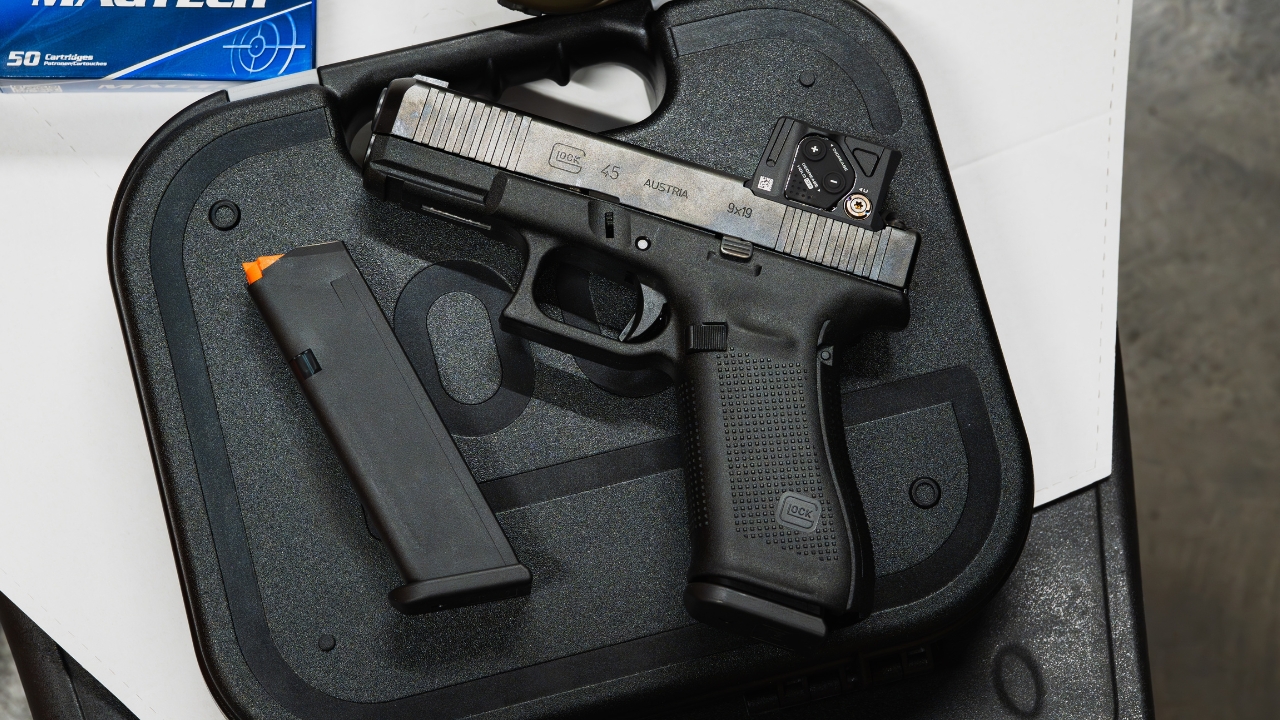
The Glock 45 is basically the “shoot it a lot” Glock setup: compact slide, full-size frame. That pairing often tracks well when the gun is dirty because you’ve got plenty of grip to control it and a cycle that stays predictable with a wide range of ammo. It’s not a magic trick, but it tends to feel calm when things heat up.
If you carry and train, this model makes sense because it runs like a duty gun while still handling like something you can conceal with the right holster. It’s also less sensitive to minor changes in grip than smaller pistols, which helps prevent shooter-induced stoppages when you’re tired. Keep the magazines clean and the recoil spring fresh, and it’s the kind of pistol that doesn’t demand attention to stay reliable.
Smith & Wesson M&P9 2.0

The M&P9 2.0 earned its reputation the honest way—by getting shot hard in classes and duty environments and not being precious about maintenance. The design handles fouling well, and it tends to keep extracting and ejecting even when the gun isn’t running wet. The grip texture also helps you keep a consistent hold when sweat and dust pile up.
Where people get tripped up is mixing old, worn mags with cheap ammo and then blaming the pistol. With solid magazines and reasonable ammo, the 2.0 is typically boring in the best way. It’s also a pistol that many shooters run well under stress, which matters because “reliable” includes how the gun behaves when you’re not perfectly squared up on a bench. It’s a legit workhorse.
SIG Sauer P320

The P320 has been proven through heavy institutional use, and the platform can run very well when it’s dirty—especially when it’s kept close to factory spec with quality magazines. It’s also modular, which makes it easy to keep the gun fitting your hand and your mission without needing sketchy parts.
That said, a P320’s reliability is closely tied to staying disciplined about components. Use good mags, avoid bargain aftermarket internals, and pay attention to recoil spring condition. When you do that, it tends to keep cycling through long sessions where a lot of pistols start slowing down. The lockup and feeding geometry are generally forgiving, and the gun doesn’t require boutique lubrication routines. It’s a duty-grade system—treat it like one, and it usually delivers.
SIG Sauer P226

The P226 is one of those pistols that has lived a long, hard life in the real world, and it’s still respected for a reason. The full-size metal frame soaks up heat and recoil, and the gun tends to keep running even when it’s dirty and not generously lubed. It’s not because it’s “tight.” It’s because the design is mature and the parts are built to last.
You’ll notice the reliability advantage when you’re shooting longer strings. The gun stays controllable, and the cycle stays consistent. The trade-off is weight and size, and you’ll feel that on your belt. But if your priority is a pistol that keeps working when maintenance slips behind life, the P226 has a long history of doing exactly that.
Beretta 92FS / M9

The Beretta 92 series has a reputation for running in ugly conditions, and a lot of that comes down to the design. It’s a full-size pistol with a track record in environments where sand and dust aren’t just a talking point. The open-slide layout is often credited with reducing the chance of certain feed stoppages, and the gun generally keeps chugging when it’s dirty.
The 92 also tends to be forgiving with ammo and extraction, provided the mags are good. That’s the key: magazine quality makes or breaks reliability, and the 92 has seen plenty of worn-out surplus mags over the years. Keep decent springs in your mags and don’t let the gun run completely bone-dry forever, and it’s the kind of pistol that keeps firing when smaller, tighter guns start feeling sluggish.
HK USP 9

The USP line was built around durability and harsh-use reliability, and it shows when you run it hard. It’s not a dainty pistol, and it doesn’t act like one. The recoil system and overall build are designed to keep the gun cycling even when friction climbs, and the platform has a reputation for eating a lot of rounds without becoming temperamental.
You also get a pistol that tends to stay predictable when it’s hot and gritty. Controls are larger and more positive than many modern striker guns, which can matter when your hands are sweaty or dirty. The downside is bulk. It’s not the easiest carry for every body type, and it’s not cheap. But if your goal is a handgun that keeps working when maintenance isn’t perfect, the USP is a solid bet.
HK VP9

The VP9 gets credit for being shootable, but it also deserves credit for being reliable under real training schedules. HK tends to build guns that don’t require babying, and the VP9 follows that pattern. It generally feeds and extracts well even when it’s dirty, and it doesn’t demand a puddle of oil to stay consistent.
The big factor, again, is magazines and keeping the gun reasonably in spec. A lot of “my VP9 got weird” stories trace back to worn mags or questionable parts swaps. In factory form with good mags, it tends to stay boring through long sessions. It’s also a pistol many shooters grip well, which matters because limp-wrist malfunctions are a real thing when you’re tired, cold, or working from awkward positions.
CZ P-10 C

The CZ P-10 C has earned a strong reputation as a working striker gun that doesn’t fall apart when you shoot it a lot. It tends to run reliably with a wide range of ammo, and it doesn’t usually get sensitive when carbon and grime build up. The gun’s straightforward design helps—there’s not a lot of drama in the cycle when it’s set up correctly.
It’s also a pistol that encourages a solid grip, which can keep you from inducing stoppages when you’re learning or when you’re fatigued. The caveat is the same as always: stick to quality magazines, don’t get cute with bargain aftermarket internal parts, and replace springs on schedule if you’re truly high round-count. Do that, and the P-10 C usually keeps running even when it’s not freshly cleaned.
Ruger P89

The Ruger P89 is not a modern beauty queen, but it’s hard to argue with its reputation for being tough and forgiving. These older Ruger autos were built like service pistols for people who didn’t have time to fuss over them. They tend to keep working when they’re dirty, and they aren’t usually picky about lubrication.
You’re dealing with an older design, so sights and ergonomics won’t feel current, and the trigger isn’t what most shooters call refined. But reliability is where it shines. The gun’s mass and sturdy parts help it cycle through grime that can slow down lighter, tighter pistols. If you find one in good condition with good mags, it’s the kind of handgun that keeps doing its job even when it’s been treated like a glovebox gun.
Ruger GP100

If you want reliability when things get dirty and dry, revolvers belong in the conversation—especially robust ones like the GP100. A good double-action revolver doesn’t care about magazine springs, feed angles, or limp-wristing. If the cylinder turns and the firing pin hits, it goes bang, and that’s a different kind of confidence.
The GP100 is built to handle heavy use and rough handling. Dirt can still cause problems—especially under the extractor star or in the action—but it usually takes a lot before the gun stops functioning. The trade-off is speed and capacity compared to modern semi-autos, plus the need to practice that double-action trigger. If you’re willing to do the work, the GP100 is a dependable tool that keeps working when semi-autos start complaining.
Smith & Wesson 686

The 686 is another revolver that has earned trust by simply not being fragile. It’s strong, it handles full-power .357 loads, and it tends to stay functional even when it’s not pampered. For a lot of shooters, a revolver like this is the “it will still work” option when they’re thinking about long-term storage or harsh conditions.
Again, revolvers aren’t immune to dirt. Fine grit under the ejector star can lock you up, and a badly fouled forcing cone can make things tight. But in normal real-world dirt and neglect, the 686 keeps doing revolver things: it fires when you press the trigger, without relying on cycling energy. If you want mechanical dependability over high capacity, this one has a long track record.
Springfield Armory XD

The XD series has been around long enough that plenty of people have put real round counts on them, and many examples run reliably even when they aren’t cleaned constantly. The design tends to be forgiving with typical range grime, and it’s not usually a pistol that demands a specific lube routine to keep functioning.
The biggest reliability variable is maintenance of wear parts and keeping magazines in good shape. A lot of complaints come from tired magazine springs, questionable aftermarket mags, or neglecting recoil spring replacement after high round counts. With factory mags and reasonable upkeep, the XD can be a dependable striker pistol that keeps running when it’s dirty. It may not be everyone’s favorite for feel or controls, but reliability is one of the reasons it still has a following.
Glock 20

The Glock 20 is a reminder that “reliable when dirty” isn’t only about 9mm carry guns. The 20 has a long reputation for functioning in harsh use, and the platform’s tolerance for grime carries over here. It’s also a pistol that gets used outdoors—hard—by people who aren’t wiping it down every five minutes.
Because it’s 10mm, ammo choice matters more than with 9mm, and recoil can make weak technique show up faster. But the gun itself tends to keep cycling when it’s dirty and under-lubed, as long as you’re using solid magazines and ammo that’s appropriate for the gun. If you spend time in the woods and want a semi-auto that’s known for working even when it’s not clean, the Glock 20 has earned that reputation.
Like The Avid Outdoorsman’s content? Subscribe to our newsletter so you never miss an article.
Here’s more from us: