Photo credit: Theadvidoutdoorsman.com
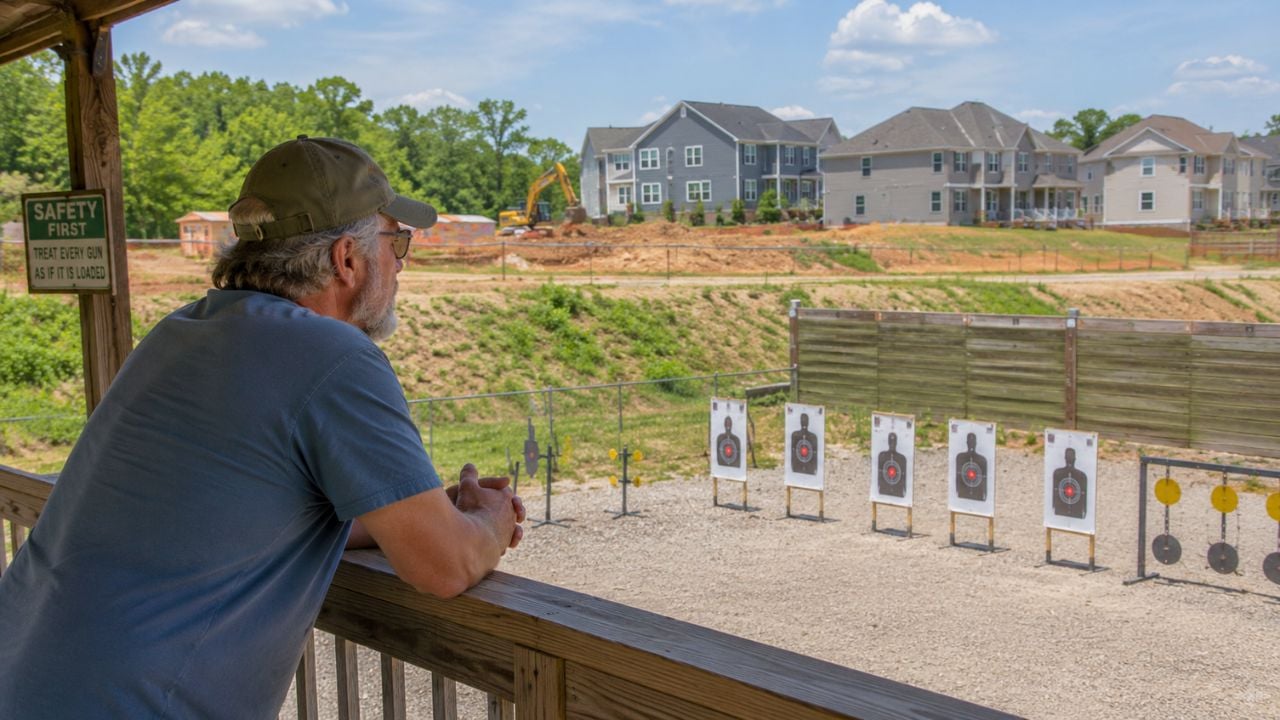
For three decades, the little shooting range sat out in the open country doing what it was built to do: give locals a safe place to sight-in deer rifles, run a pistol drill, and teach kids the basics without pointing guns at a pasture fence. The owner kept the berms tall, the lanes clean, and the hours reasonable. Most folks in the area barely thought about it—until rooftops started popping up on the far side of the property line.
That’s how these stories usually go. A business builds in the county when it’s quiet and affordable. Years later, development creeps in, and suddenly the same thing that was “out there” is now “right next door.”
Thirty years of routine, then the view from a new back porch
The range didn’t look like a problem on paper. It had established firing lines, a clear impact area, and backstops that were maintained like they should be. Members signed waivers, rules were posted, and ceasefires were run with the kind of seriousness you expect from people who have spent their lives around firearms.
But when a subdivision went in nearby, the range got new neighbors who didn’t buy into that history. Folks who move from town to the edge of the county often want the quiet and the wildlife. They don’t always expect regular gunfire on a Saturday morning, even if that gunfire has been there longer than the new streets and cul-de-sacs.
At first it sounded like complaints about noise—nothing new for anybody who has run a range, hosted a dove shoot, or even just zeroed a rifle behind the barn. But once the houses were occupied, the tone shifted from “annoyed” to “alarmed.” A few homeowners started calling the county with questions about safety, stray rounds, and whether the range was “allowed” to be there at all.
The county didn’t shut him down outright—they boxed him in
Instead of a straight “cease operations” order, the county took the slower route: rezoning. That’s the move that can look neutral on a meeting agenda while it does real damage in the real world.
The range had been operating in a classification that made sense for rural land use—something that tolerated outdoor recreation, low traffic, and a certain amount of noise. After development arrived, commissioners voted to change the zoning designation around that corridor. In plain terms, the new zoning made the range a nonconforming use, and that’s where the trap snaps shut.
A nonconforming use can sometimes keep operating, but it can’t expand, rebuild, or “intensify.” If a windstorm takes out the overhead cover on the firing line, replacing it may suddenly require hearings, permits, or a variance that can be denied. If the owner wants to add a few more pistol bays to move shooters away from the new rooftops, the county can say no. If the business changes hands, the permission might not transfer cleanly.
It’s not always a dramatic shutdown. Sometimes it’s death by paperwork, insurance headaches, and the slow realization that you’re not allowed to adapt to the very growth that created the conflict.
Safety questions got folded into the politics
When these cases hit the county meeting room, safety becomes the loudest word in the conversation. And to be fair, safety is the whole ballgame with a range. If a range can’t prove its rounds stop where they’re supposed to stop, it shouldn’t be open.
But there’s a difference between a legitimate safety issue and a fear-based argument. Longtime ranges typically have decades of incident-free operation precisely because they chose the location for safe lines of fire. When houses arrive later, the range doesn’t magically become unsafe—but the consequences of a mistake feel bigger to people who didn’t grow up around it.
One of the ugly parts here is that new development can change conditions. Tree lines get cleared. Dirt gets moved. The visual “buffer” disappears. A shooter who used to look out at a wall of timber now sees rooftops beyond it and worries even if the berm is doing its job. A homeowner hearing shots now imagines a bullet skipping across a field, even if the geometry and backstops make that unlikely.
That anxiety can become political leverage. Commissioners don’t like angry crowds. They like even less the idea of liability—real or imagined. And once the word “subdivision” enters the discussion, tax base and growth start whispering in the background.
The range owner’s options weren’t simple or cheap
When the county changes the rules around you, you basically have four paths: fight, comply, relocate, or close. None of them are easy when your livelihood is tied to dirt, berms, and a specific piece of ground you’ve improved for 30 years.
Fighting usually means attorneys, hearings, and documentation. A smart range owner keeps records: membership logs, incident reports (or the lack of them), photos of berm maintenance, range rules, and any past permits. The point is to show this wasn’t a pop-up operation—it was established, run responsibly, and relied on by the community.
Compliance can be worse than it sounds. If the county says the range needs engineered berm studies, sound mitigation, limited hours, or expensive redesigns to meet new “compatibility” standards, the cost can crush a small business. And if the range is labeled nonconforming, it may be barred from making the very improvements that would address the complaints.
Relocating a range isn’t like relocating a bait shop. Suitable property is hard to find, neighbors are unpredictable, and building new berms and bays costs real money. Even if you find land, you may get the same “not in my backyard” pushback all over again.
Closing is the quiet ending nobody talks about at the county meeting. It means fewer safe places to train, fewer places for new shooters to learn under supervision, and more folks sighting-in rifles on whatever patch of ground they can find—sometimes with sketchy backstops and zero oversight.
What folks argued about online sounded familiar
Once word got out, the usual camps formed fast. One side said the range was there first and the new homeowners should have done their homework. Another side said growth happens and “things change,” as if that’s a complete argument by itself.
A lot of shooters focused on the obvious: if counties can rezone a long-running range out of existence after development shows up, then no range is really secure. Today it’s a range. Tomorrow it’s a rod-and-gun club, a drag strip, a horse arena, or a working farm that smells like a working farm.
Others latched onto practical suggestions—some good, some wishful. People talked about sound baffles, taller berms, and moving firing lines. Those can help, but they cost money and require permission. A few mentioned state “range protection” laws that exist in some places, designed to keep established ranges from being shut down due to newcomers. Those laws aren’t universal, and they don’t always cover rezoning tactics.
The most grounded comments sounded like advice from old landowners: document everything, don’t get emotional in public meetings, and be the most responsible guy in the room. Not because it’s fair, but because credibility is what you spend when the county starts voting.
The real loss is what happens after the gates lock
If the rezoning sticks and the range can’t operate, the county doesn’t just lose a business. It loses a controlled environment where backstops are designed, rules are enforced, and unsafe behavior gets corrected on the spot.
Hunters still have to check zero before season. New gun owners still want a place to learn. And people who care about being competent with a firearm will still practice somewhere. When a legitimate facility gets pushed out, that demand doesn’t disappear—it just scatters into gravel pits, back fields, and “my buddy’s place,” where safety depends entirely on who’s behind the trigger and what’s behind the target.
The tough part is that this could have been handled like neighbors. A range can be a good neighbor: posted hours, clear signage, controlled access, and a willingness to build smarter buffers when possible. But once the county chooses rezoning as the tool, it stops being a neighbor problem and becomes an existence problem.
For landowners and shooters watching from the sidelines, the lesson is plain: if you’ve got a range, a hunting spot, or any rural use that depends on being left alone, don’t assume time equals protection. Development moves fast, and politics can move faster. The best day to make your operation “boring” on paper—permitted, documented, and defensible—was years ago. The second-best day is before the first new foundation gets poured down the road.
Like The Avid Outdoorsman’s content? Be sure to follow us.
Here’s more from us: