Photo credit: Peter Paplanus, CC BY 2.0/Wiki Commons
A lot of hikers worry most about bears, big cats, or the idea of getting lost after dark, but snakes cause plenty of ugly surprises on American trails. The worst part is that some bites hurt fast, some barely hurt at first, and a few create problems that build before people realize how serious things are. In the U.S., pit vipers like rattlesnakes, copperheads, and cottonmouths are responsible for most venomous bites, and pit viper bites often bring rapid pain, swelling, bruising, and tissue damage. Coral snakes can be trickier because their bites may cause little early pain even while dangerous neurologic symptoms develop later.
That’s what makes this topic worth taking seriously. A snake does not have to be huge, aggressive-looking, or sitting out in the open to create a bad day. Some of the snakes on this list are famous for their bite. Others cause trouble because people step too close, reach where they should not, or assume a snake that holds still will stay harmless. If you spend time on trails, near creeks, around rocks, or in brushy country, these are the kinds of snakes that can turn one careless second into a hospital trip.
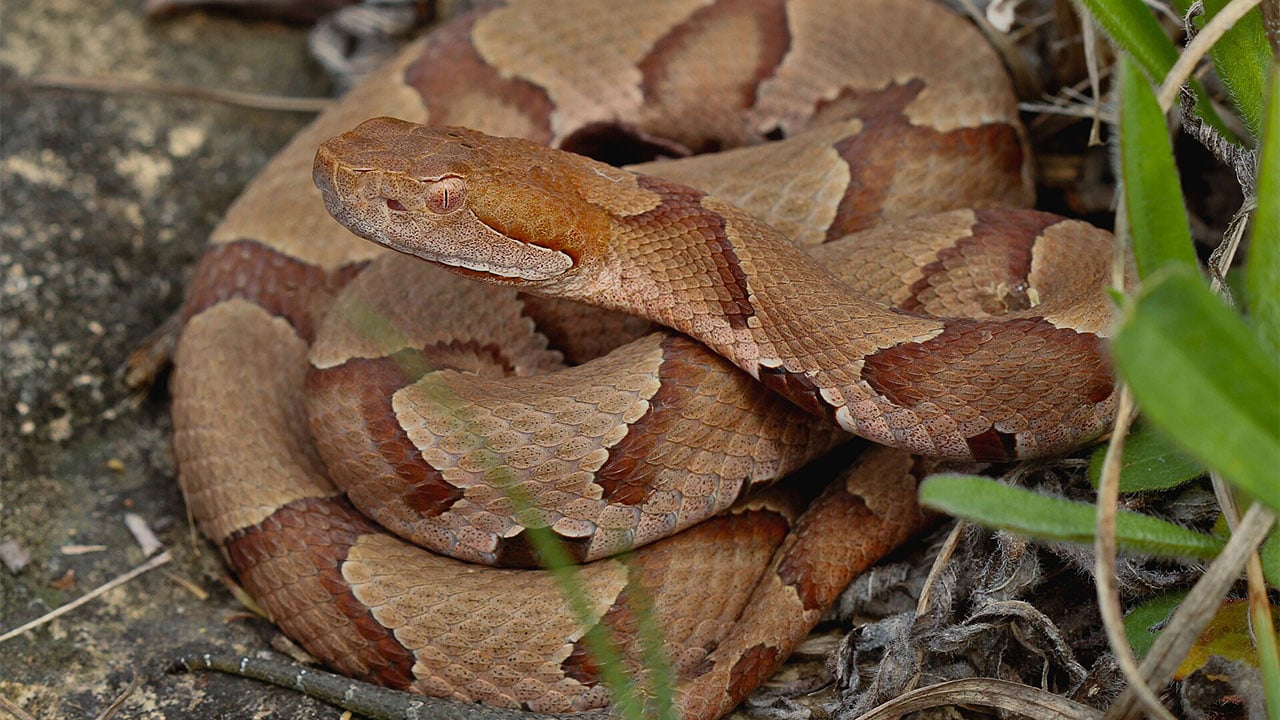
Eastern copperhead
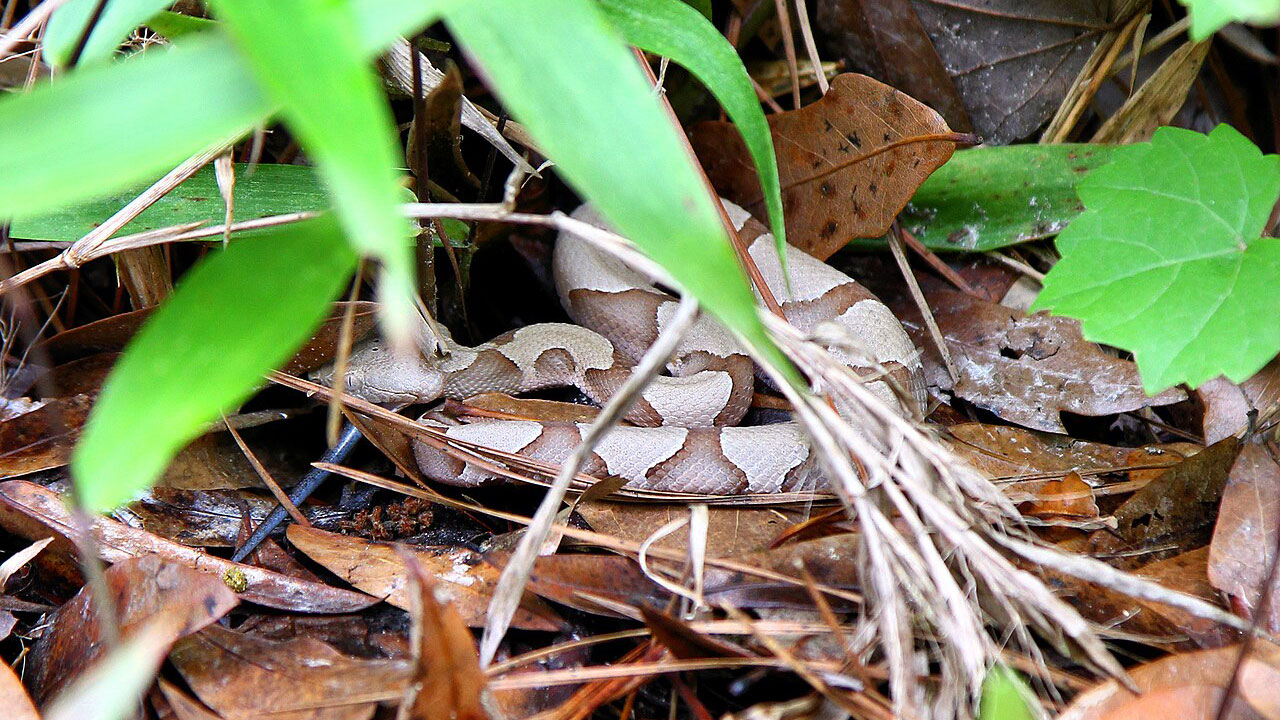
The eastern copperhead is probably responsible for more painful surprises than a lot of hikers would guess because it blends in so well. Its pattern disappears into dead leaves, pine straw, and mixed forest floor cover better than most people expect. A person can walk right up on one without noticing it, especially in the shoulder seasons when the woods are full of brown and tan ground cover. That camouflage is a big reason copperheads catch people off guard.
The bite is often not the deadliest venomous bite in the country, but it can still be extremely painful and can bring swelling fast enough to ruin the rest of the day in a hurry. Pit viper bites in general tend to produce rapid pain and swelling, and copperheads fit that pattern. A lot of people hear “less dangerous than a big rattlesnake” and wrongly translate that into “not a big deal.” It can still be a very big deal, especially if the bite lands on a hand, ankle, or lower leg.
Northern cottonmouth
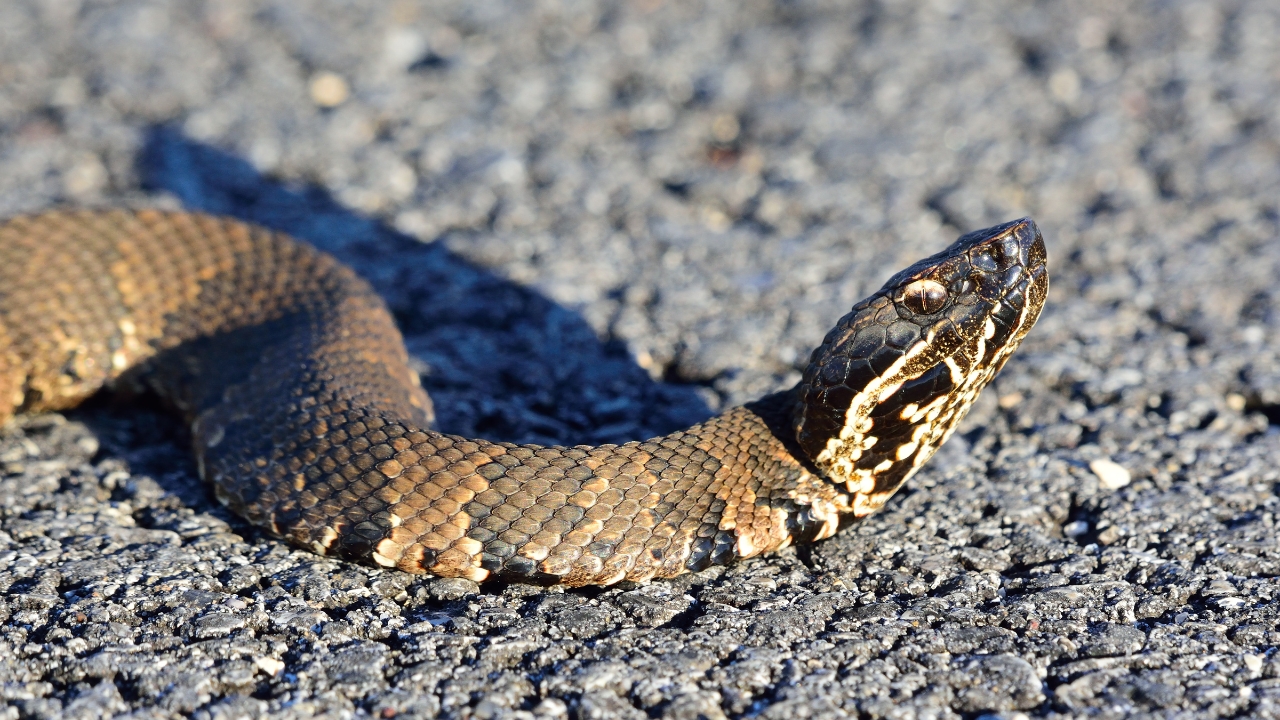
Cottonmouths have a reputation, and while people do exaggerate some snake stories, this one earns respect. A northern cottonmouth usually shows up where hikers are already a little distracted anyway: near water, muddy edges, logs, overgrown banks, and low places where footing is not great to begin with. That matters because a bad step around creeks or marsh edges can put somebody right into the snake’s comfort zone before they ever realize it is there.
A cottonmouth is a pit viper, so the pain and swelling can come on hard and fast when venom gets injected. Even when the bite itself is survivable with treatment, the local damage can be nasty, and that is the kind of surprise hikers remember for the wrong reasons. A lot of people also freeze because they were not expecting a venomous snake in what looked like a quiet wetland or shaded fishing path. That mix of poor visibility, wet ground, and quick pain makes cottonmouth encounters especially ugly.
Timber rattlesnake
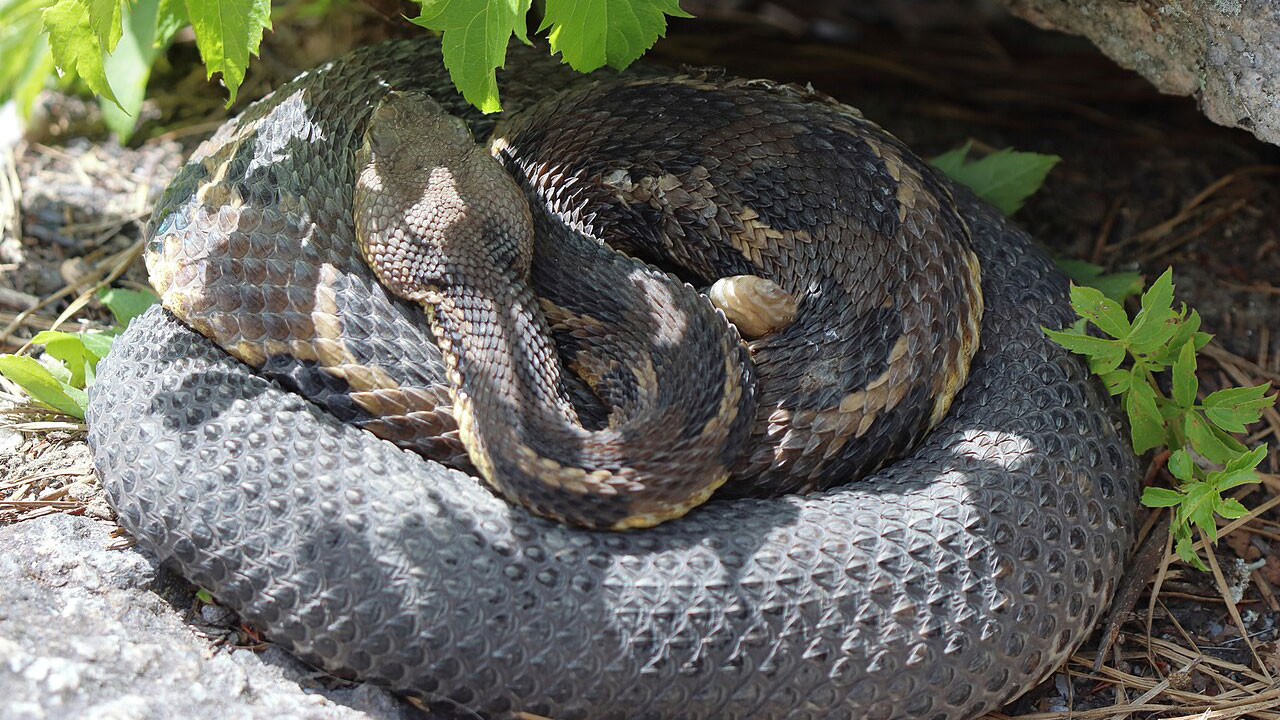
The timber rattlesnake is one of those snakes that makes even experienced outdoorsmen pay attention. It can be found in rough country hikers already like to explore, including ridges, rocky forested hills, bluffs, and remote wooded areas. People often expect a dramatic warning rattle every time, but real life is not always that neat. Sometimes the snake stays quiet, sometimes the hiker is moving too fast, and sometimes the terrain itself hides the problem until the distance is already too close.
When a timber rattlesnake does connect, you are dealing with the same broad pit viper danger zone: rapid pain, swelling, bruising, and potentially severe tissue injury. The larger issue with rattlesnakes in general is that they account for most venomous snakebites in the U.S. and nearly all snakebite deaths here. So even though hikers may talk more about copperheads because they are easy to blunder into, a timber rattlesnake is still one of the most serious trail surprises in the country.
Western diamondback rattlesnake

The western diamondback is the snake a lot of people picture when they think about desert or scrub-country danger, and for good reason. It lives in country where hikers, ranchers, and hunters regularly move through brush, rock, dry washes, and open ground that looks harmless until it isn’t. That landscape can fool people because the visibility seems good, but snakes like this can still tuck beside a rock, under low brush, or along a trail edge and stay unnoticed until the last second.
A bite from a western diamondback is not the kind of thing you walk off with a funny story. Pit viper envenomation commonly brings fast pain, progressive swelling, skin discoloration, and sometimes serious systemic symptoms. Hikers also make the mistake of assuming a warning rattle will always buy them time. Sometimes that happens. Sometimes a person has already stepped too close before the snake feels it needs to sound off. That is what turns a famous snake into a painful surprise instead of a preventable encounter.
Mojave rattlesnake
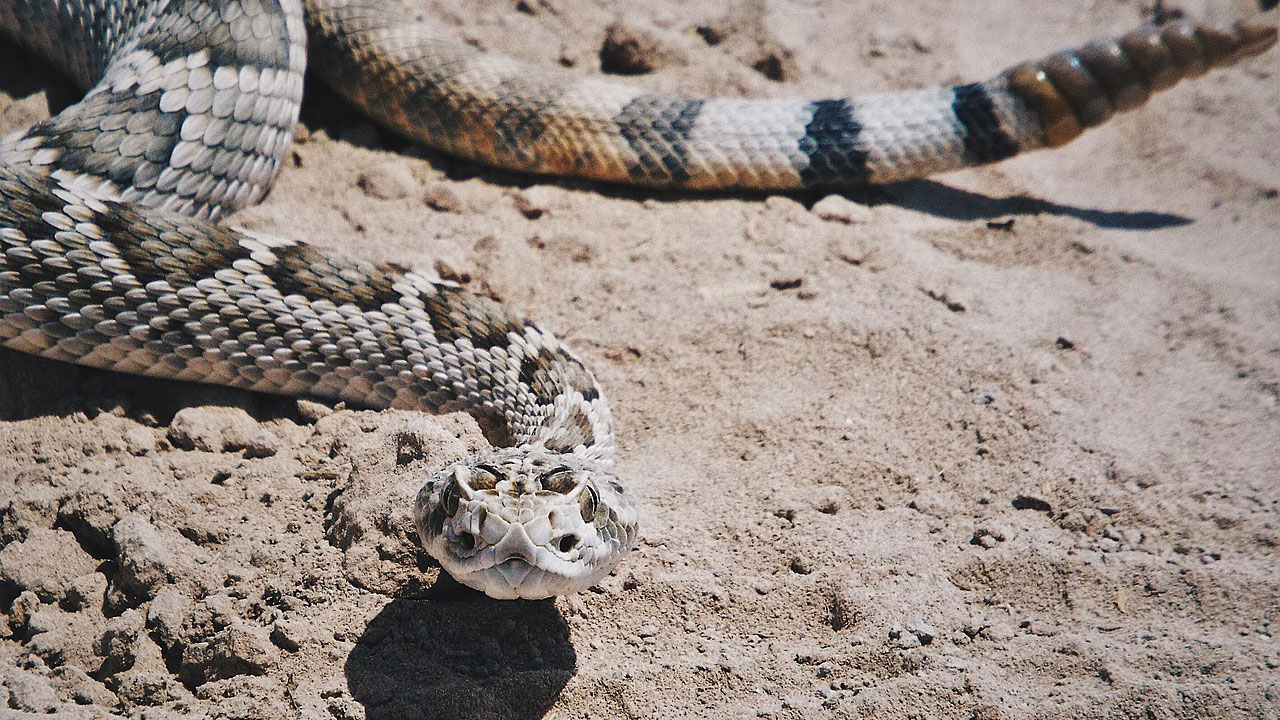
The Mojave rattlesnake deserves more fear than the average casual hiker gives it. People hear “rattlesnake” and think they already understand the situation, but Mojaves are one of those snakes that can add another layer of danger because rattlesnake bites can bring neurologic symptoms like tingling, numbness, and other systemic effects, and breathing problems are noted especially after Mojave rattlesnake bites. That is a rough combination when somebody is far from quick medical help.
What makes the Mojave especially ugly in a hiking context is that dry-country hikers are already dealing with heat, distance, dehydration, and slower access to treatment. A painful bite is bad enough. A bite that also carries extra concern about breathing or neurotoxic effects is a different level of problem. It is the kind of snake that punishes anybody who treats all rattlesnakes like the same animal with the same risk profile. They are not all the same, and the Mojave is a good reminder of that.
Prairie rattlesnake

Prairie rattlesnakes live in the sort of country people often underestimate. Open grassland, mixed prairie, badlands, rocky breaks, and sunny trail systems do not always feel as snake-heavy as deep southern woods or desert washes, but these snakes do just fine there. Hikers who spend time in the Great Plains and nearby western country can get relaxed because the terrain feels open and readable. That relaxed mindset is part of why prairie rattlesnakes still catch people off guard.
The painful surprise usually starts with the assumption that open ground means lower risk. In reality, a prairie rattlesnake can be tucked near a rock edge, trail-side brush, rodent hole, or small rise in the terrain and stay hidden until somebody is almost on top of it. Once a pit viper bite happens, the usual hard realities follow: pain, swelling, bruising, and the need for prompt medical care. Getting bitten in a place that looked easy to read makes the whole thing even more frustrating.
Sidewinder
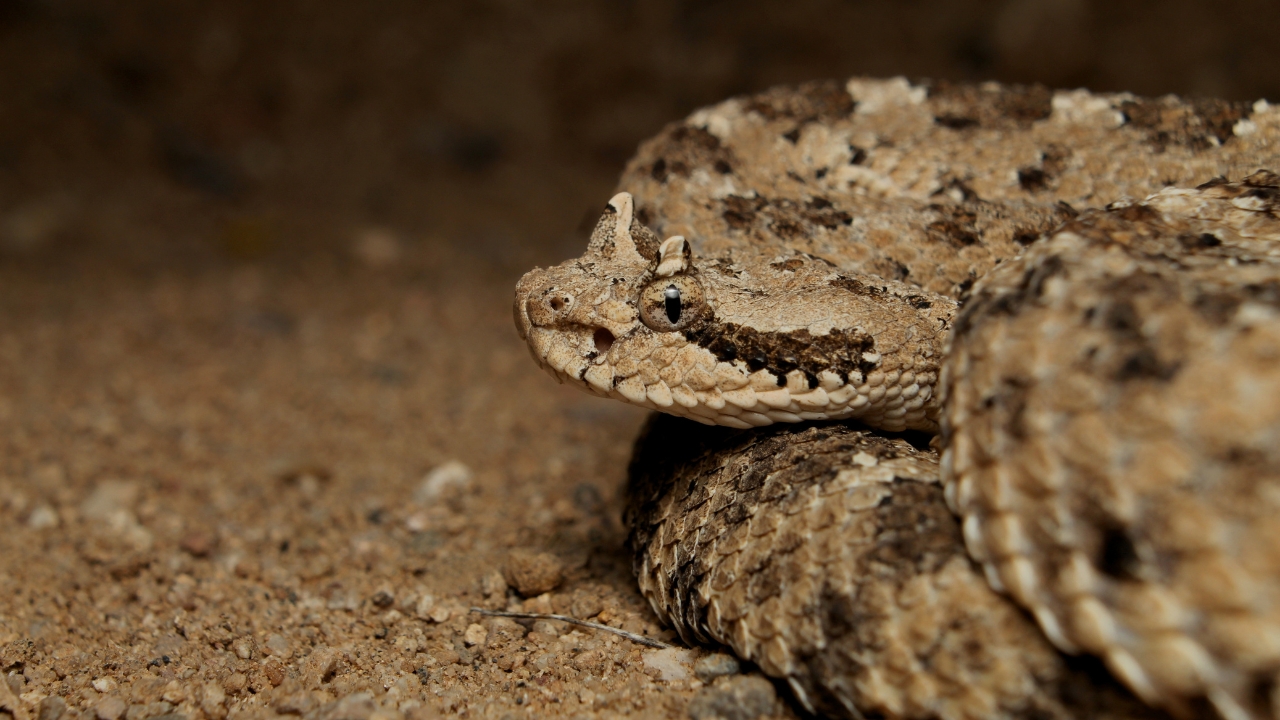
The sidewinder does not always get the same attention as bigger rattlesnakes, but desert hikers ought to know better. This snake is built for loose sandy country, and that alone makes it a problem. Sand, glare, heat, sparse cover, and a snake that can disappear into the terrain are a bad mix for somebody scanning ahead but not really scanning down. Plenty of people think of deserts as empty. They are not empty, and sidewinders prove it.
What makes a sidewinder encounter especially frustrating is how easy it is to miss the snake before the distance closes. In soft, hot country, hikers are often focused on footing, water, and sun exposure. That split attention is enough. Even though it may not have the same giant reputation as a western diamondback, it is still a venomous pit viper, and that means real pain and real swelling are on the table. It only takes one poorly placed step to learn that lesson the hard way.
Massasauga
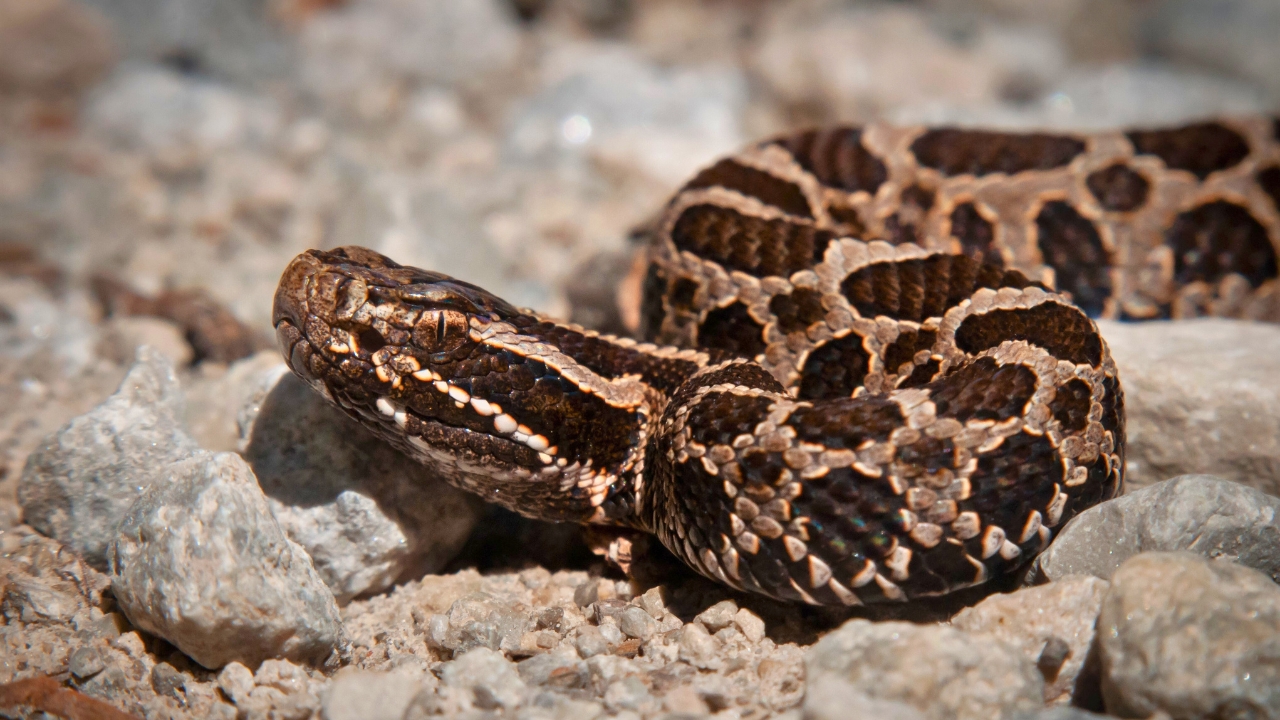
Massasaugas do not always come up first in casual snake conversations, which is exactly why they can surprise hikers. They tend to live in habitat people do not always associate with rattlesnakes right away, including wet prairies, marshy ground, and mixed edge cover depending on region. Because they are smaller than some of the famous western rattlers, some people mentally downgrade them before they should. That is a mistake.
Small does not mean harmless, and being overlooked can actually make a snake more dangerous in the moment because people get sloppy around it. A hiker who would have been extra cautious around a big, obvious rattlesnake may crowd a smaller snake without realizing how fast things can go bad. Like other pit vipers, a massasauga bite can bring serious local pain and swelling. The surprise here is not just the bite itself. It is how many people never expected that kind of snake in that kind of place.
Pygmy rattlesnake
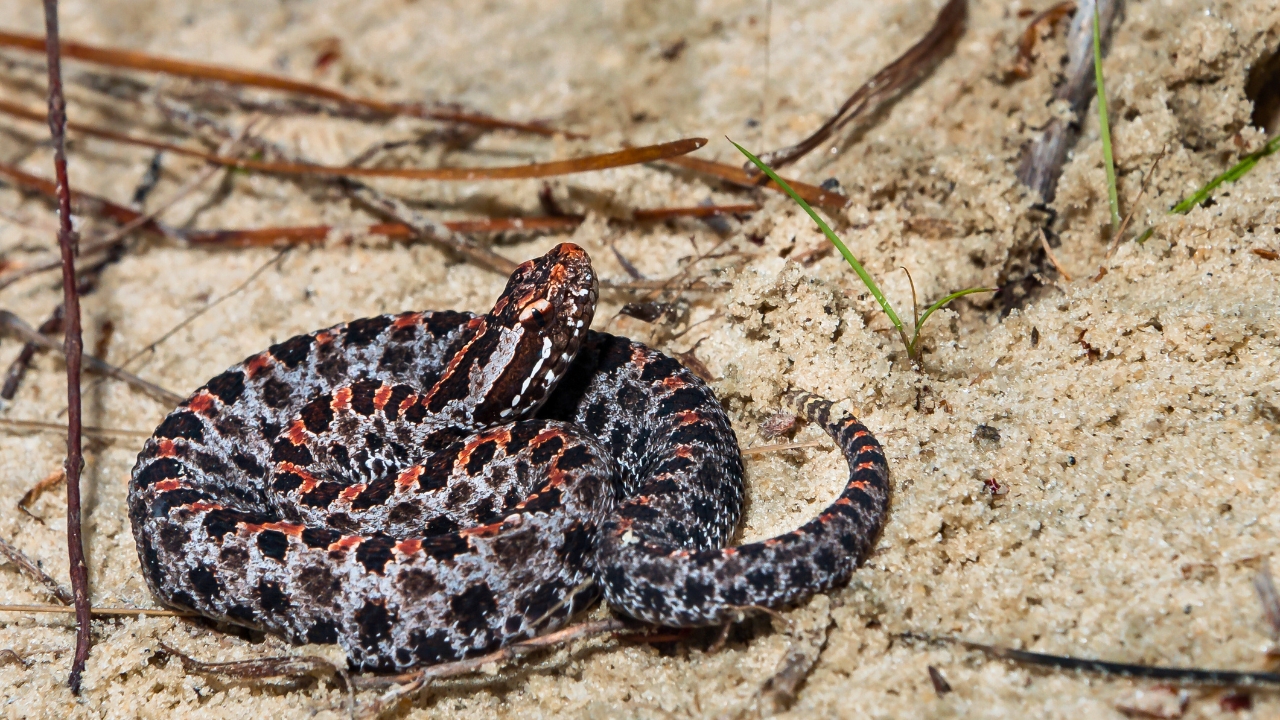
Pygmy rattlesnakes are a perfect example of why size can fool people. These little snakes can stay hidden in leaf litter, palmetto edges, brushy trail margins, and mixed southern habitat where hikers are paying more attention to roots and mud than to something that small. Some people also miss the warning because the rattle is not the dramatic sound they expect from a larger snake. By the time the brain catches up, the distance can already be gone.
That makes the bite feel even more unfair. A lot of painful snake surprises are not about aggression. They are about people failing to detect what is right in front of them. A pygmy rattlesnake may not carry the same size or notoriety as a larger western rattler, but it can still inject venom and create a bad injury. For hikers, the biggest takeaway is simple: the smaller the snake, the less margin for casual detection, and that can make the encounter worse.
Eastern coral snake

The eastern coral snake belongs on this list because it breaks the pattern people think they understand. A lot of hikers assume a bad venomous bite always comes with immediate severe pain and dramatic swelling. Coral snakes can be the opposite. Their bites may cause little or no early pain or swelling, while more serious neurologic symptoms can show up later. That delay is exactly what makes them dangerous in a different way.
The painful surprise here is not always pain first. Sometimes it is false reassurance. Somebody thinks the bite was minor, or maybe even dry, because the area does not look awful right away. Then weakness, trouble talking, trouble swallowing, blurred vision, or breathing problems start entering the picture. That is why coral snake bites deserve more respect than a lot of hikers give them. A bite that does not look dramatic at first can still turn into a serious emergency, and that kind of delayed problem catches people flat-footed.
Texas coral snake
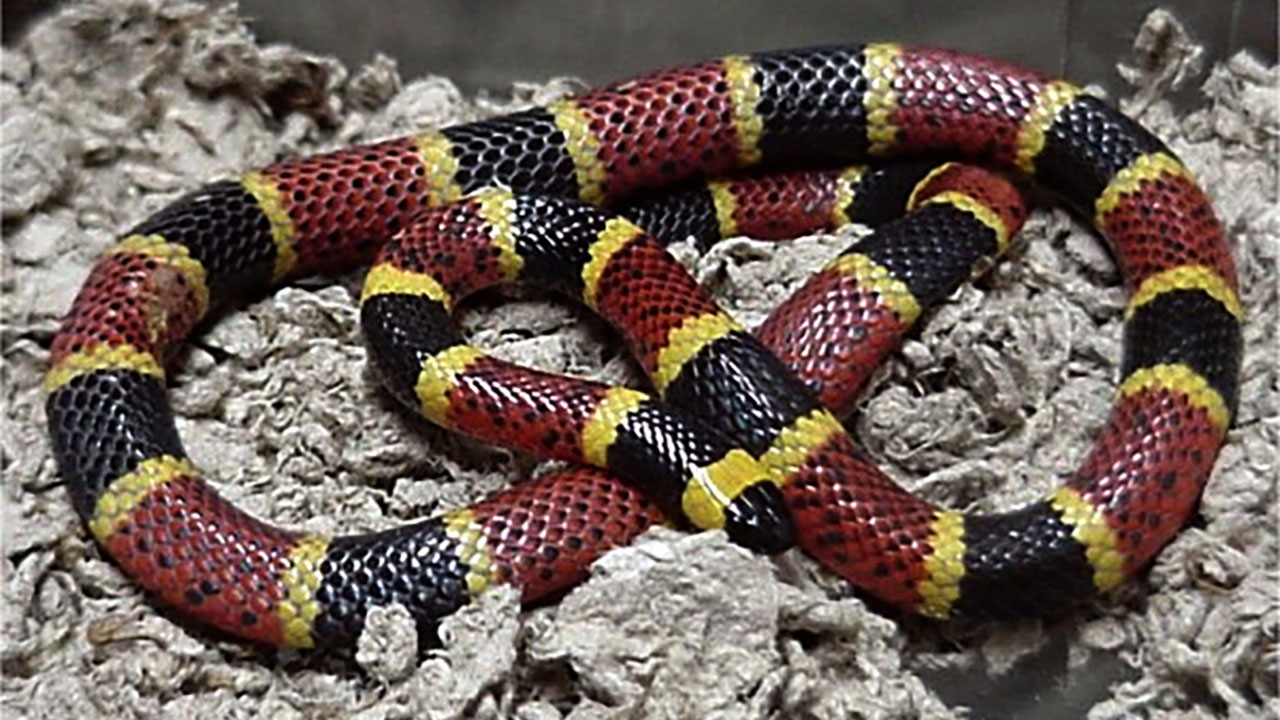
The Texas coral snake follows the same dangerous script as other coral snakes: less obvious local injury at first, but the potential for later neurologic trouble that can become serious without prompt care. That runs against the mental picture many people have of a venomous bite. People expect swelling, obvious tissue damage, and immediate agony. Instead, a coral snake can leave somebody thinking they dodged a bullet right up until symptoms start building.
For hikers and trail users in the South, that matters because not every bad snake encounter announces itself in a loud, dramatic way. The Texas coral snake is not usually the snake people obsess over in trail conversations, which gives it an advantage in the public imagination. It gets underestimated. Anything that gets underestimated tends to produce more “I didn’t think it was that serious” stories, and that is exactly the kind of painful surprise this list is about.
Water moccasin in trail-side wetlands
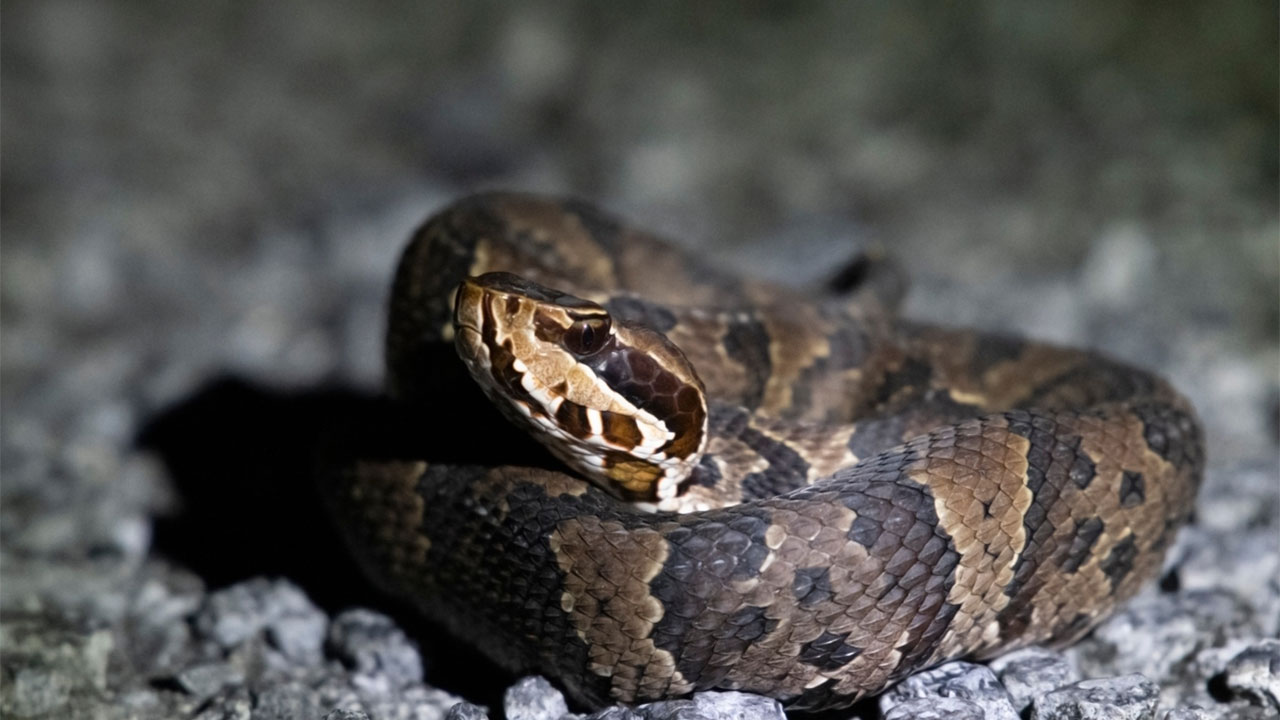
A lot of hikers underestimate how often a bad snake encounter starts near a place that felt peaceful. Slow water, cypress edges, boardwalk approaches, muddy side trails, and wet lowland country tend to look calm. That is why the water moccasin, or cottonmouth, keeps earning mention in southern hiking conversations. People are not always moving with the same caution near water that they use in rocky snake country, even though the risk is very real there too.
A cottonmouth surprise also tends to happen in awkward footing, and that makes everything worse. If someone slips, grabs at brush, or steps off a log wrong, the bite is only part of the problem. Getting out cleanly and staying calm gets harder. Since pit viper bites can produce rapid pain, swelling, and significant tissue damage, a wetland bite can turn ugly fast. The setting itself helps create the surprise because the danger does not always feel as obvious as it should.
Juvenile pit vipers people never see coming
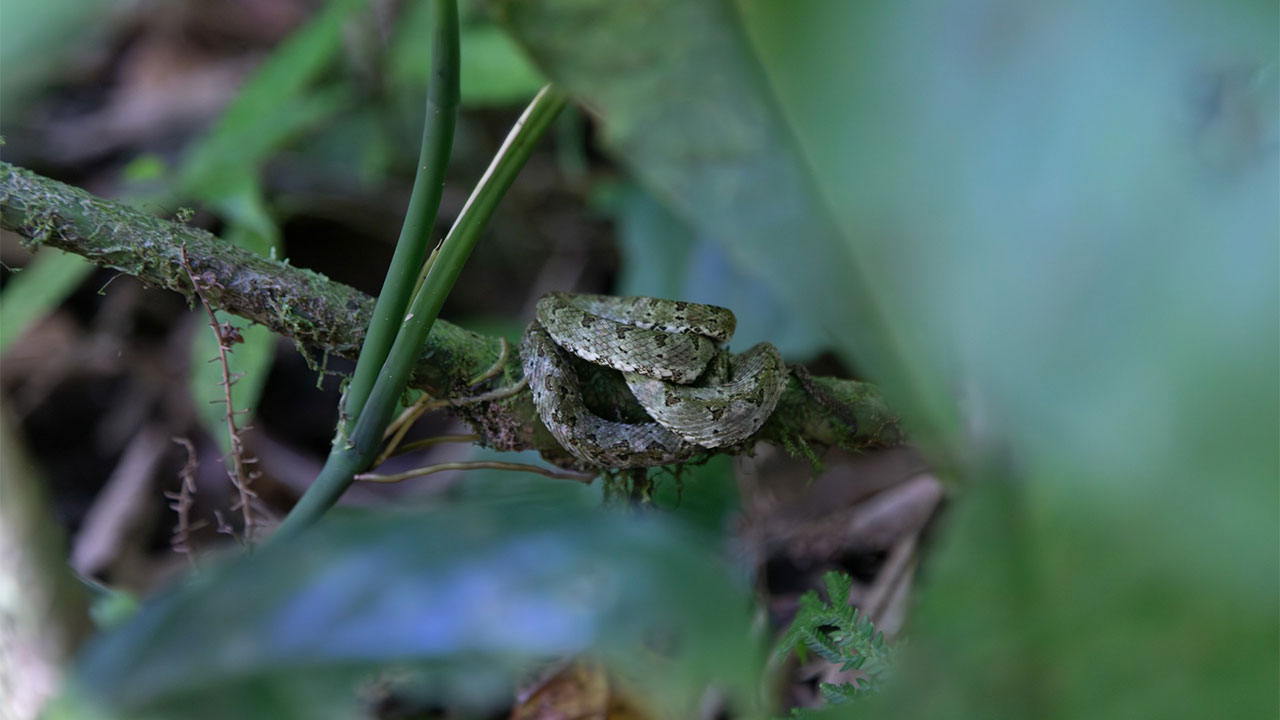
One thing hikers keep learning the hard way is that young venomous snakes still matter. People sometimes repeat the idea that juveniles are automatically worse because they “cannot control” venom, while others wave them off like they barely count. The smarter view is simpler: a juvenile venomous snake is still a venomous snake, and if you do not see it, the debate stops mattering. Tiny body size and excellent camouflage can make young pit vipers easier to step near than adults.
That turns them into painful surprises by pure visibility problems alone. A juvenile copperhead in leaves or a small rattlesnake near trail cover can be much harder to spot than the big adult people think they are watching for. If the bite envenomates, you are still dealing with the same general pit viper pattern of pain, swelling, bruising, and medical urgency. Hikers who only picture large snakes are basically training themselves to miss half the problem.
Snakes hidden in rock ledges and talus

This is less about one species and more about a setting that keeps producing bad outcomes: rocky ground, ledges, talus slopes, and sunny stone edges. Timber rattlesnakes, western rattlesnakes, and other species use those places well, and hikers love those same places for views, shade breaks, and route changes. The issue is that hands and feet go exactly where snakes like to sit. Reach before you look, or step over a rock without checking the landing side, and that is where the surprise happens.
The pain factor becomes worse because rock country often means awkward evacuation. Even a bite with manageable early symptoms becomes a bigger problem when the trail is steep, broken, or remote. A lot of experienced hikers do a good job scanning the trail ahead and still get careless at rest stops, overlooks, and rock scrambles. That is why this setup keeps producing bites that feel sudden and unfair. The snake was using the terrain exactly the way snakes have always used it.
Snakes hiding in leaf litter at trail edges

Leaf litter is one of the great equalizers when it comes to snake surprises. Copperheads are the classic example, but they are not the only reason hikers should take this seriously. Trail edges collect cover, warmth, prey traffic, and the kind of visual noise that hides a coiled snake better than many people realize. A snake does not have to be in the center of the trail to become a problem. It only has to be close enough to react when a boot drifts off line.
That matters because hikers are constantly stepping aside for other people, dogs, bikes, or muddy patches. Those little off-trail moves are often where the trouble starts. The surprise feels painful not just because of the bite, but because the person usually believes they were doing something minor and safe. In reality, leaf litter is one of the easiest places in the woods to miss a snake completely. That is why so many trail stories start with some version of “I never saw it at all.”
Like The Avid Outdoorsman’s content? Subscribe to our newsletter so you never miss an article.
Here’s more from us: