Photo credit: AI-generated image created using ChatGPT. Illustrative only
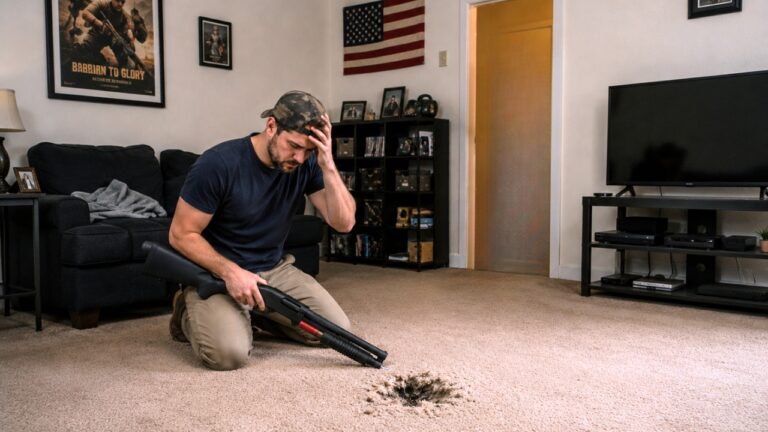
Cleaning out a parent’s gun safe after a death is hard enough without the legal questions piling on. One son found himself staring at nearly two dozen firearms—rifles, handguns, shotguns, “etc.”—and a simple request from his mom: get them out of the house. His first instinct was the same one a lot of outdoorsmen have had: load them up and drive them where they need to go.
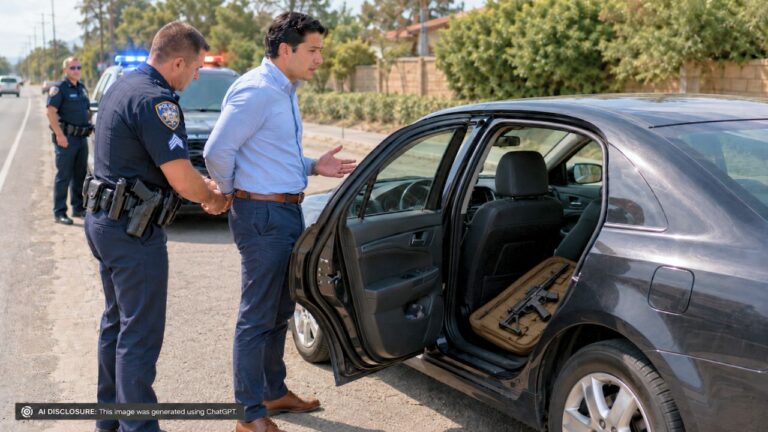
But after he started thinking through what a traffic stop might look like—with “over 30 guns” in the truck, no permit, and uncertainty about registration—he hesitated and asked for help in the original post. That hesitation matters, because the difference between “moving family guns” and “an illegal transfer across state lines” can be a single county road and a state boundary.
The load in the truck wasn’t the only thing weighing on him
The son explained that his dad passed away late the previous year and left behind a sizable collection—nearly two dozen firearms by his count, spanning long guns and handguns. Mom wanted them gone, and he was the one staring down the logistics of removing them.
He also admitted two things that will make any law enforcement encounter tense: he didn’t believe all the guns were registered, and he didn’t have a permit. Then he asked the question that every gun owner should ask before “just making a quick run” across a state line: what happens if he gets pulled over and an officer finds a truck full of firearms?
Why crossing a state line can turn a family errand into a legal mess
Within one state, a lot of folks are used to thinking in terms of “it’s my property” or “it’s Dad’s, and I’m family.” Interstate movement is different. Federal rules kick in, and states can add their own restrictions on top—especially around handguns, “assault weapon” definitions, magazine limits, and how firearms must be stored and transported.
The big trap is that people picture “transport” as separate from “transfer.” In real life, those two blur fast. If the firearms are going to end up in the son’s possession in another state, or get sold or given away after the move, the law can treat it like an interstate transfer—even if the intent is perfectly innocent and it’s all within the family.
That’s where the licensed-dealer requirement comes into play in many situations. In plain language: when firearms change hands across state lines, the safest and most commonly lawful path is to route the transfer through a Federal Firearms Licensee (FFL) in the recipient’s state. That doesn’t mean every single trip with a cased rifle is illegal; it means the moment the situation becomes “I’m taking Dad’s guns to my home in another state,” you’re in territory where an FFL is often the clean, legal bridge.
The traffic-stop question he asked is the same one cops will ask
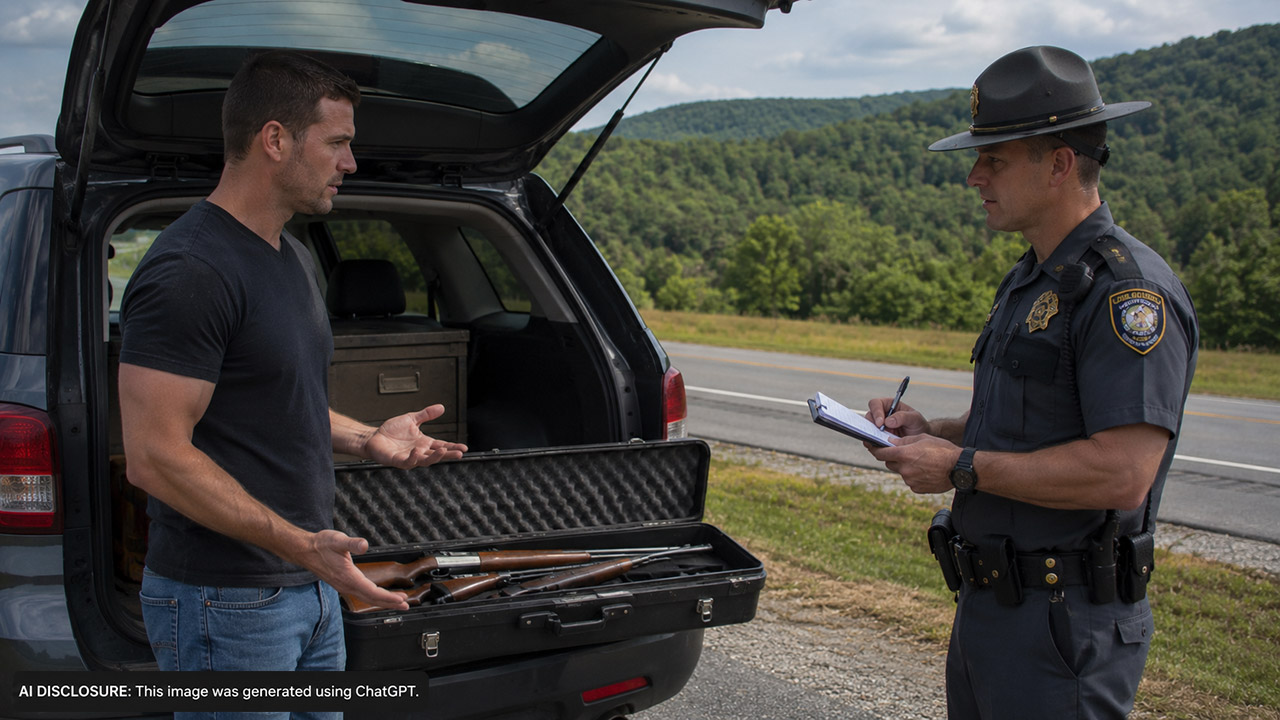
His worry wasn’t abstract. He imagined being pulled over, being asked if there are weapons in the vehicle, and then having an officer “discover over 30 guns.” Anyone who’s hunted out of state or driven to a match knows how quickly a routine stop can change tone when firearms are involved—especially if the guns are not cased, not separated from ammo, or are stacked in a way that screams “in a hurry.”
Even when everything is legal, a large number of firearms raises eyebrows. Officers may want to ensure none are stolen, none are prohibited types in that state, and that the driver is allowed to possess them. If the driver can’t clearly explain ownership, destination, and legal authority to possess and transport them, that’s when the stop can turn into a long roadside conversation, a call for a supervisor, or a trip to the station while things get sorted out.
His mention of having “no permit” adds another layer. Some states require permits to carry handguns, some require permits to purchase, and some have specific rules about handgun transport in vehicles. There’s also a practical issue: the officer at the window doesn’t know if “no permit” means “no concealed carry license,” “not legally allowed to possess,” or simply “I’ve never needed one where I live.” That uncertainty tends to go against you in the moment.
Registration and paperwork: what people get wrong in the real world
The son said he didn’t believe all the firearms were registered. That line is common, and it’s also where a lot of folks get tangled up. Most states don’t have universal gun registration. Some do. Some “register” handguns through purchase records. NFA items (like suppressors or certain short-barreled firearms) have federal registration requirements. And then there’s the simple reality that older hunting guns often have no paper trail in a family beyond “Dad bought it years ago.”
The important part isn’t winning an internet argument about “registration.” The important part is understanding that, at a traffic stop, the lack of clear documentation can create suspicion even when the guns are lawfully owned. If a firearm comes back stolen, or if one of them is restricted where you are, or if you’re not legally the person who can possess them yet, you don’t want to be figuring that out on the shoulder of the highway.
Estate guns are their own category. When someone passes, there are usually lawful ways for heirs to take possession. But the details depend on state law, family status, whether there’s a will, and where the firearms are going. That’s another reason interstate movement tends to point back to using a dealer: it creates a clear, documented chain that’s easy to explain later.
If you’re in this situation, the goal is simple: don’t turn grief and cleanup into criminal exposure. The safest approach is to slow down and do it in a way that leaves a paper trail and keeps you on the right side of both states’ rules. For many families, that means contacting an FFL and asking what they need to process an interstate transfer from an estate and how the receiving state wants it handled.
It’s also worth separating the “get them out of the house” problem from the “where do they end up long-term” problem. If mom needs them removed quickly for peace of mind, a local in-state storage option—handled legally—can buy time to sort out the estate side and the interstate side without rushing. The more rushed the move, the more likely guns get tossed in cases with loose ammo, mixed magazines, and no inventory list, which is a recipe for mistakes.
On the safety side, treat it like a serious transport: unloaded, secured, and not accessible from the driver’s seat. If there are any guns you suspect might fall under special federal rules, don’t guess. Those are the ones that can create the biggest consequences if handled incorrectly.
Most of all, don’t rely on “I’m family” as your plan. Family relationships matter, but state lines and federal rules don’t care. A licensed dealer may feel like an extra step, but it’s often the step that keeps an honest situation from turning into a long-term headache.
The son’s gut check was the right move. When you’re talking about a couple dozen firearms and an interstate trip, the smart play isn’t to white-knuckle it and hope you don’t get stopped. It’s to move them in a way you can explain in one sentence, with receipts and a clear process behind it.
Like The Avid Outdoorsman’s content? Subscribe to our newsletter so you never miss an article.
Here’s more from us: