Photo credit: AvidOutdoorsman
It doesn’t take much to light a fuse in the country. A property line gets blurry, a gate gets left open, somebody strings wire where it wasn’t yesterday, and suddenly neighbors who used to wave from the mailbox are talking through attorneys. In one recent case, that slow-burning kind of dispute didn’t just turn into a shouting match—it turned into a law enforcement visit that left a hunter without a single firearm in his home.
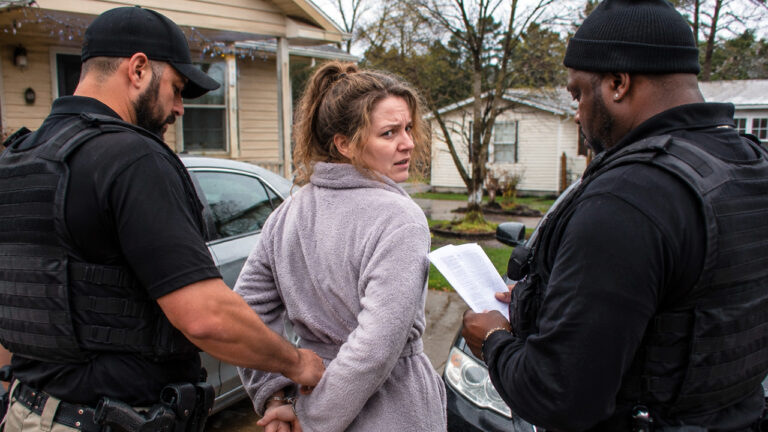
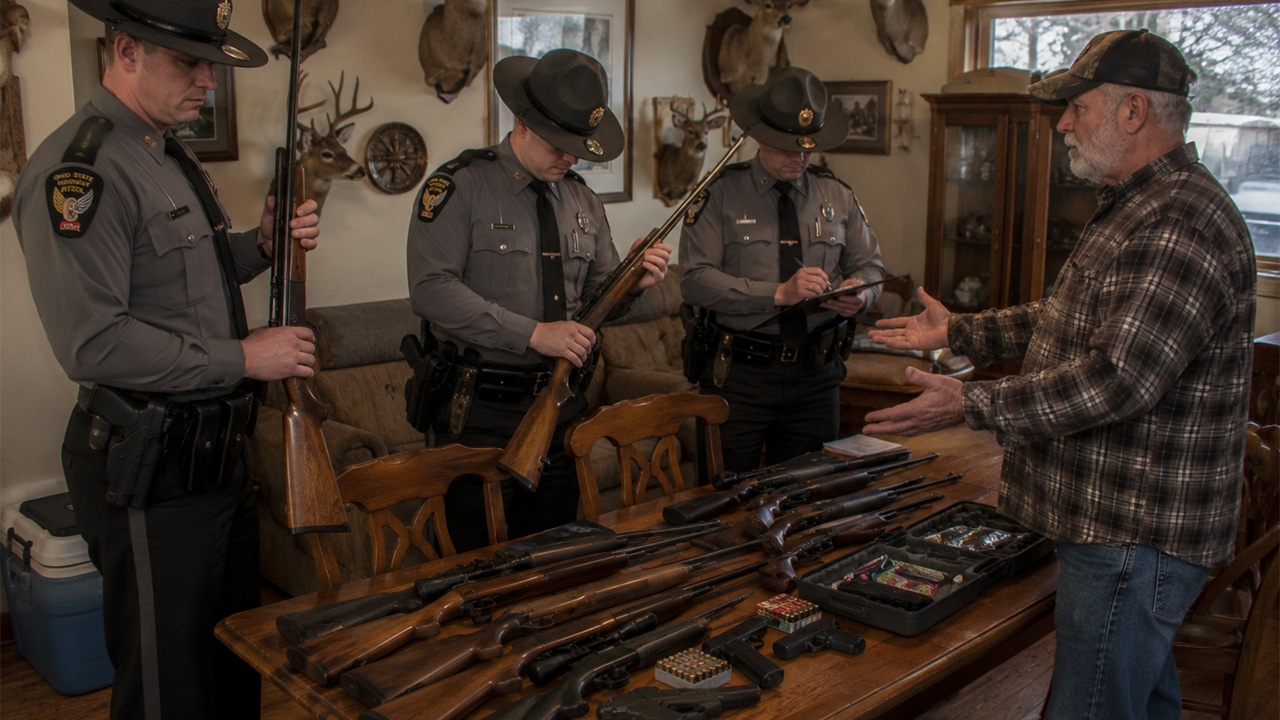
The order that showed up at the door wasn’t a warrant tied to a crime. It was a court-issued risk order—what most folks know as a “red flag” action—served by state police. By the time the patrol vehicles rolled out, the hunter’s entire collection was gone: rifles, shotguns, handguns, and the hunting tools he’d spent decades collecting and maintaining.
A fence line dispute that got dressed up as “danger”
The backstory looked like a lot of rural disagreements do. Two neighboring properties shared a long boundary that ran through timber and brush. One side wanted a new fence—part to keep dogs and livestock where they belonged, part to make the boundary obvious during deer season when trucks and four-wheelers start moving around.
The other side didn’t like where the posts were going. There were claims of an encroachment, a survey disagreement, and a whole lot of “that’s not where the line has always been.” The hunter who ended up on the wrong end of the order wasn’t out marching around with a rifle. By all accounts, he was doing what many landowners do: working the edge of his property, checking trail cameras, maintaining access paths, and trying to keep his place squared away.
But somebody decided the easiest way to stop the fence wasn’t a civil complaint or a surveyor. It was to frame the dispute as a safety risk.
The day the order was served didn’t feel like a neighbor problem anymore
When police show up with a court order, the conversation changes fast. It’s not “can we talk about this?” It’s “here’s what we’re doing today.” The hunter was required to surrender firearms in his possession, and officers didn’t cherry-pick a couple items. They took the whole lot—everything that met the definition in the order.
That’s what hits hard for a hunting household. It’s not just “guns.” It’s a slug gun set up for the back forty. It’s the .22 you teach kids on. It’s the old pump shotgun that’s been in the family longer than you’ve owned your truck. It’s optics, cases, and in some situations even ammunition depending on how the order is written and how aggressively it’s enforced.
It also turns your schedule upside down. If you’re working, raising a family, or trying to keep a small farm running, you don’t have time for emergency hearings and paperwork sprints. And meanwhile, you’re disarmed in your own home because a judge got a version of events you may not have even known was being told.
Neighbors later admitted the complaint wasn’t really about firearms
Here’s the part that makes outdoorsmen grit their teeth: after the fact, the neighbors reportedly acknowledged the root issue wasn’t some escalating threat. It was the fence. The boundary. The dispute they didn’t want to fight the normal way.
That admission matters because it lines up with what a lot of rural folks already suspect. A process meant to stop genuine, immediate danger can be used as a shortcut in a personal feud. If you can get a court to believe there’s a risk, you don’t have to argue about a survey pin or a right-of-way—you can remove someone’s ability to push back, hunt, or even feel secure on their own place.
Even if the hunter eventually gets his property back, the damage is real. Firearms can be held for weeks or months. Some come back scuffed, some come back missing parts, and some folks end up spending more on legal fees than the collection is worth on paper.
Why red flag actions hit hunters and collectors differently
A lot of people hear about these orders and think it’s one pistol in a nightstand. In a hunting household, it’s usually a safe full of purpose-built tools. The deer rifle might be sighted-in for one stand. The turkey gun might wear a specialty choke. There may be a muzzleloader with a particular scope setup for late season. It’s equipment, not just “a gun.”
Collectors are in an even worse spot. If you’ve got older firearms, rare models, or sentimental pieces, the value isn’t replaceable. And the simple act of transporting and storing a big collection increases the odds of bumps, rust, lost magazines, and paperwork errors. One wrong serial number on a receipt can turn into a headache you didn’t earn.
Then there’s the safety piece nobody talks about: when a lawful gun owner is suddenly stripped of their means of defense because of a civil-style order, it can make them feel cornered. That’s not a recipe for calm. The system should be set up to reduce heat, not add it.
What other outdoorsmen focused on: surveys, documentation, and staying boring
When this kind of story makes the rounds at the feed store or online, the same advice comes up over and over, and it’s not glamorous. It’s “get a survey.” It’s “document everything.” It’s “put it in writing.” That’s not because paperwork is fun. It’s because the boring stuff is what holds up when a dispute turns into court filings.
Plenty of folks also pointed out that boundary fights are where trail cameras and no-trespassing signs can help, but only if you use them right. Cameras should be placed legally on your side, posted notices need to match local rules, and none of it should be used as an excuse to confront someone face-to-face out by the fence line. If you think things are going sideways, your best move is often to get witnesses, keep your temper, and let the process work—slow as that can be.
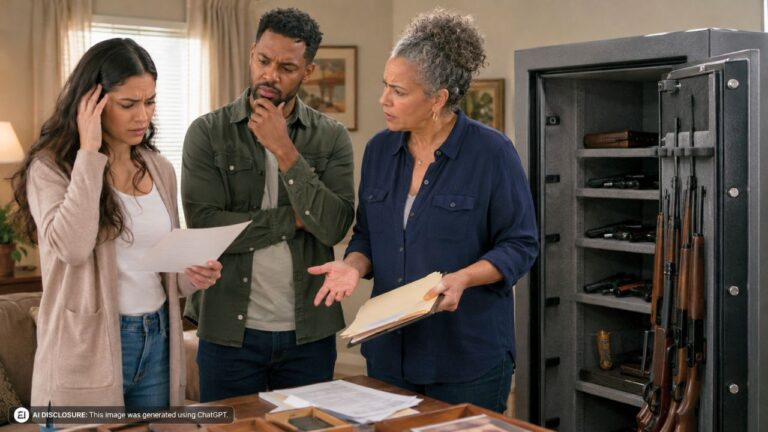
Another common point: if you own a larger collection, keep an up-to-date inventory with serial numbers, photos, and notes on accessories. Not because you expect police to haul it off, but because house fires, theft, and paperwork mistakes all happen. If something gets taken and later returned incomplete, you’ll want proof of what you had.
The lesson is ugly but simple: neighbor disputes can become legal ambushes
This is the kind of mess that makes people feel like they’re living in upside-down world. A fence argument—something that should end with survey flags, a handshake, or a civil court date—turned into an order that removed a hunter’s firearms as if he were a danger to himself or others.
If you’re dealing with a boundary issue, treat it like it could end up in a courtroom even if you’re convinced you’re right. Keep the conversations calm. Get the line surveyed. Save texts and voicemails. And if you hear even a whisper that someone is trying to paint you as a threat, it’s time to talk to an attorney who understands both property disputes and firearms law in your state.
Out in the country, we all want to believe common sense will win. Sometimes it does. But when a personal grudge finds a legal shortcut, the cost can be a whole lot more than a few fence posts.