Photo credit: AI-generated image created using ChatGPT. Illustrative only
Apartment living and handguns can mix just fine—right up until somebody gets casual about the one thing you can’t afford to be casual about: verifying the chamber. In a situation shared in the discussion, the core issue wasn’t a bad guy or a home-invasion scenario. It was a negligent discharge during gun cleaning, and the kind of “downward backstop” mistake that can turn a quiet evening into a life-changing problem for everyone in the building.
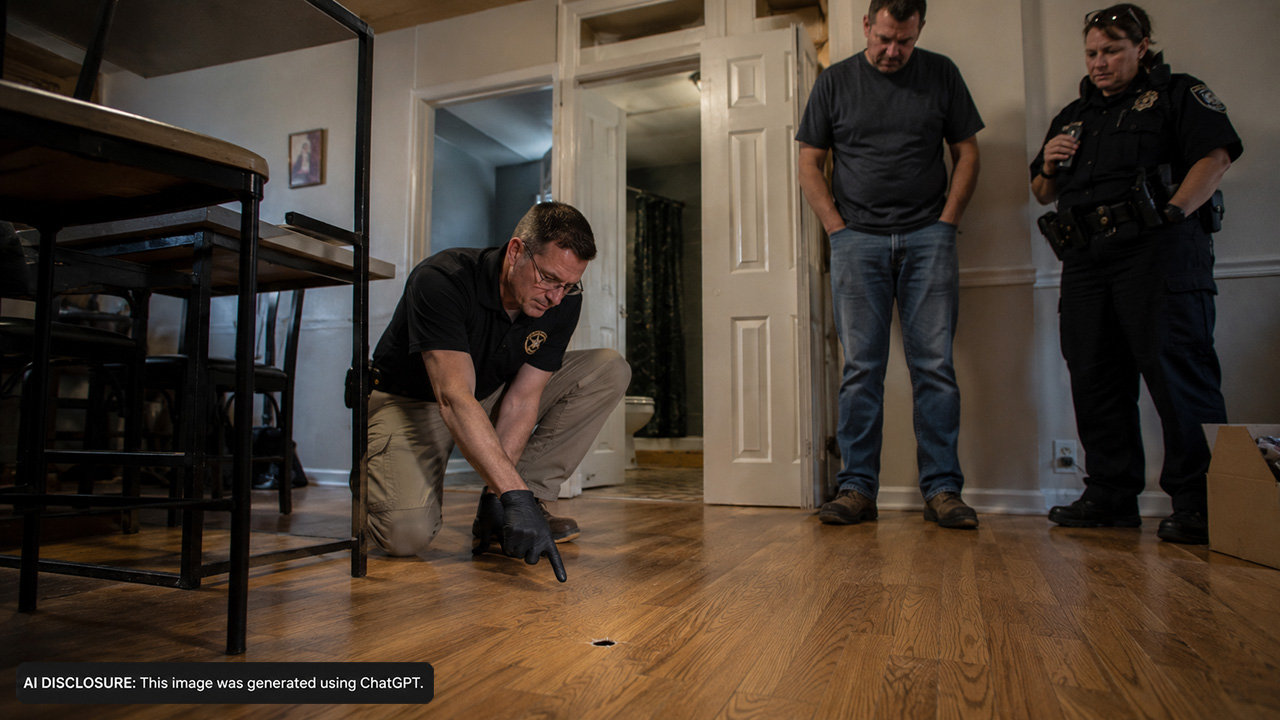
A simple cleaning session turned into a through-the-floor shot
The details that matter are painfully familiar to anybody who’s spent time around pistols: someone thought the gun wasn’t loaded, began handling it as if it was safe, and a round went off. Commenters pointed out the classic semi-auto trap—magazine out, but a live round still sitting in the chamber.
That’s the part that should stop every gun owner in their tracks. In a house out in the country, a negligent discharge is still serious, but you might have dirt, a safe berm, or at least a predictable direction of travel. In an apartment, there’s drywall, subfloor, and then somebody else’s living space. If you’re above another unit, “down” is not a safe direction—it’s a question mark with a neighbor attached to it.
The eviction question is real—and it depends on the landlord
The legal question raised was straightforward: could this lead to eviction? One response summed it up in plain language: yes, it certainly could, and a lot would hinge on the conversation with the landlord.
That’s not fearmongering; it’s the practical reality of leases and liability. When a round goes through a floor, it’s no longer just a personal mistake. It becomes a property-damage issue and a safety issue, and landlords tend to treat those the same way insurers do: as risk they don’t want repeated. Even without digging into specific statutes or policies, common sense says a landlord may not want a tenant back in the building if they’ve already proven they can put a bullet into the unit below.
Commenters zeroed in on the “how” of most accidental discharges
What stood out in the responses wasn’t sympathy for bad luck—it was frustration with preventable handling errors. Several commenters emphasized that most “accidental discharges” are really negligent discharges, typically happening when someone assumes the gun is unloaded.
The common scenario described is the one every range officer has seen: a person removes the magazine and mentally checks the “unloaded” box, forgetting that a semi-automatic can still have a round chambered. That one round is all it takes. Folks also pushed back on the idea that anyone would knowingly clean a loaded gun, because the mistake is usually not intentional—it’s a failure to verify.
“Treat every gun as loaded” doesn’t mean “never unload it”—it means you personally verify
One thread in the conversation got into a point that newer shooters sometimes misunderstand: the old rule that “the gun is always loaded.” A commenter clarified the grown-up version of that rule—assume it’s loaded until you, personally, have checked the chamber.
Not your buddy who handed it to you. Not the last person who shot it. Not the guy who said, “It’s empty.” You check it every time you pick it up and before you start doing anything that could put you in a bad spot if you’re wrong.
That’s the mental gear shift that prevents holes in floors. It’s also what keeps a “quick wipe-down at the kitchen table” from turning into a phone call nobody wants to make.
Some pistols make mistakes easier—especially during disassembly
A practical detail came up that’s worth repeating because it bites people all the time: some popular pistol designs require a trigger pull as part of the disassembly process. The example mentioned was a Glock. That’s not a design flaw by itself—it’s just how the system works.
But it creates a harsh truth: if you didn’t clear the chamber correctly, the gun will “remind” you at the worst possible moment. That’s why the clearing process has to be more than a habit you do halfway. The gun doesn’t care what you meant to do. It only cares what’s in the chamber and where the muzzle is pointed.
In an apartment, that muzzle direction is everything. If you don’t have a truly safe direction—something that can reliably stop a bullet—then the right move is to stop and rethink the whole setup before you start handling a firearm.
What responsible gun owners can take from this (without getting cute)
This kind of incident is a reminder that “I was just cleaning it” isn’t a shield from consequences. A lease can be ended. Trust with neighbors can be wrecked. And if anyone had been below the shooter when that round went through, the outcome could have been far worse than an uncomfortable talk with a landlord.
The best takeaway is the simplest one, and it’s the same whether you’re in a deer camp bunkhouse or a third-floor apartment: verify the chamber yourself every time, and don’t let routine make you sloppy. If your living situation doesn’t offer a safe direction that can actually stop a round, then your gun-handling routine needs to be even more conservative—because the stakes aren’t theoretical. They’re sitting under you.
Like The Avid Outdoorsman’s content? Subscribe to our newsletter so you never miss an article.
Here’s more from us: