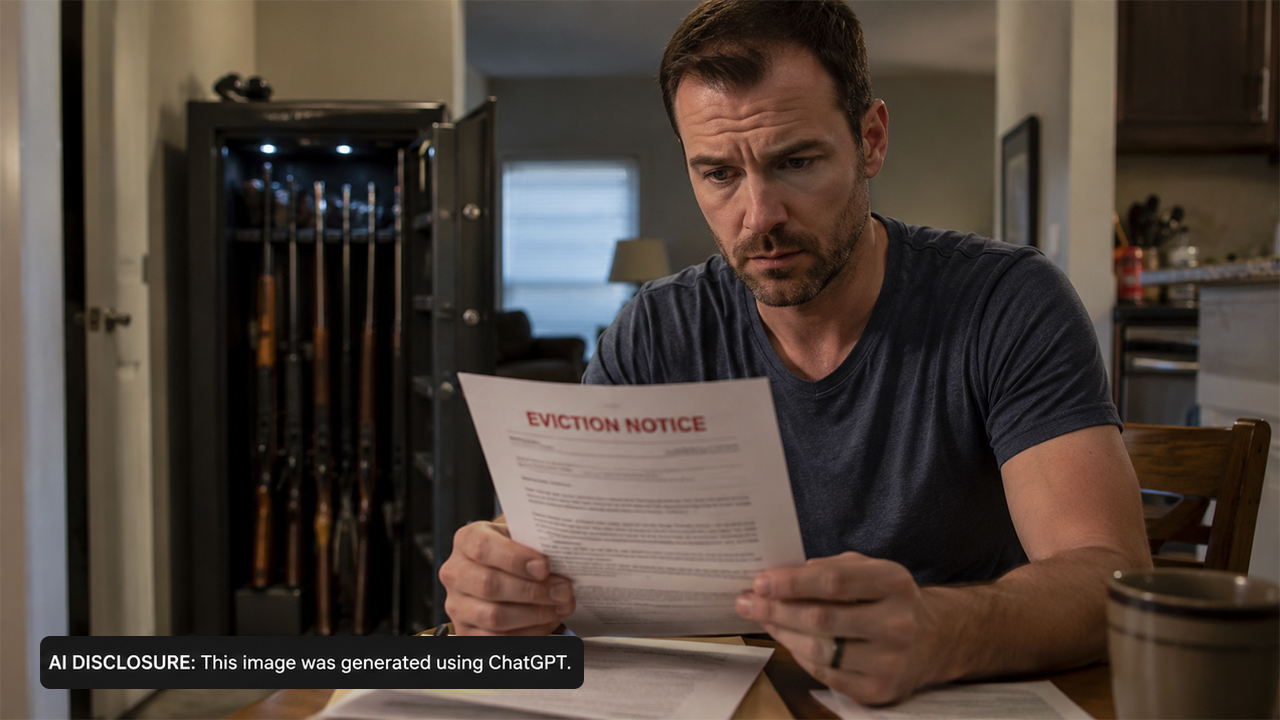
Photo credit: AI-generated image created using ChatGPT. Illustrative only
Six years of paying on time and keeping the peace can feel like it ought to buy you a little stability. But for one Ohio renter, a quick look inside a garage turned into a hard line in the sand: get the guns out, or get out.
That’s the situation laid out in the original post, where a tenant says his landlord delivered a 30-day move-out letter after spotting a gun safe and learning it held hunting rifles. The problem, according to the tenant, is that the lease doesn’t ban firearms—and Ohio law has a say in whether a landlord can try to add that rule after the fact.
A routine visit turned into a line-crossing argument
The tenant says he moved into the house in early 2016 and had rented it for six years without trouble—no late rent, no neighbor problems, no damage issues. The lease, he notes, doesn’t mention firearms at all.
Things changed when the landlord needed to retrieve personal property stored in the attic. They scheduled a time, and she entered through the garage. That’s where she saw one of his gun safes, pointed to it, and asked what was inside. He told her it held his hunting rifles—and he says her reaction was immediate, with comments about gun violence and a clear statement that she didn’t want guns in “her house.”
According to the tenant, she told him to move them to a storage unit or sell them, and warned there would be “consequences” if he didn’t remove them.
The “remove them” demand came with a 30-day letter
A few days later, the landlord called to ask if the firearms were gone. The tenant says he told her he had no legal obligation to disarm in his own home. She responded by emphasizing that he was a tenant and it was her property.
Then came the letter. The tenant says it was not stamped—meaning it was hand-delivered into his mailbox—and it gave him 30 days to move out. The letter, as summarized in the post, praised him as a great tenant but said he was being told to leave because he ignored her instruction to remove firearms, followed by a “gun violence” rant.
That’s where the real-world panic sets in. He says he spent hours looking for other houses and couldn’t find suitable options. To anyone who has tried to rent with a job, a family, pets, or just a decent set of standards, you already know: “30 days” goes fast.
Here’s where Ohio law matters: leases, notice, and firearm restrictions
The tenant says he’s in Ohio on a yearly lease that doesn’t end until January 3, 2022. That detail matters. A landlord can’t typically treat a fixed-term lease like a month-to-month arrangement just because they’ve decided they don’t like something that was never prohibited.
And Ohio has an additional wrinkle that gun owners should know about. Ohio Revised Code 5321.04 is often cited for limiting landlords from prohibiting tenants from legally possessing firearms in their rental unit. In plain terms: if you’re legally allowed to own it, a landlord generally can’t invent a “no guns” rule mid-lease and use it as a club to force you out.
That doesn’t mean a landlord has zero power. They can still enforce the lease, address legitimate safety issues, and respond to actual illegal conduct or dangerous behavior. But simply owning firearms—especially hunting rifles secured in a safe—is a very different thing than negligent storage, criminal misuse, or threatening someone.
“Eviction” isn’t the same as a scary letter in the mailbox
A lot of folks hear the word “eviction” and think a landlord can just issue a letter and the clock starts ticking. In reality, that letter is often just a demand to leave. An actual eviction is a legal process, usually filed in court, with service requirements and a chance for the tenant to respond.
In the post, the tenant calls it an eviction notice, but what he describes sounds more like a unilateral 30-day termination letter—despite the fact he says he’s in a fixed-term lease. If that lease is valid and still in force, a simple “you’ve got 30 days” note typically doesn’t override it.
One more practical detail: he says it wasn’t mailed and she placed it in the mailbox herself. That’s not just tacky—it can also raise questions about proper notice and delivery methods, depending on how Ohio requires notices to be served and what the lease itself requires. Even when a landlord has a legitimate complaint, sloppy procedure can cost them.
What people keyed in on: documentation, the lease, and not giving up leverage
When situations like this pop up, the most useful advice usually isn’t about “winning an argument,” it’s about tightening up the facts. The big items here are straightforward: the written lease, the dates, the exact language in the landlord’s letter, and whether there’s any lease clause being violated.
If the landlord can’t point to a lease term, and the tenant is otherwise in good standing, the landlord’s complaint becomes more of a personal preference than a legal basis. That’s especially true when the firearms are lawfully owned and stored responsibly.
It’s also why experienced renters tend to avoid doing anything that hands the other side leverage. If you start moving guns out just to “keep the peace,” you can accidentally make it look like you accepted the new rule. On the flip side, escalating into a shouting match or making threats is the fastest way to turn a civil dispute into something uglier. Stay calm. Keep it clean. Keep it documented.
Practical options for the tenant—without turning it into a showdown
The tenant asked what to do before paying for an expensive attorney. The practical move is usually a step-by-step approach: read the lease carefully, keep copies of everything, and respond in writing. If the lease doesn’t prohibit firearms, and Ohio law prevents that kind of prohibition anyway, a written response can matter later.
From there, many renters look for low-cost legal help first—tenant advocacy groups, legal aid, or a short consultation with a landlord-tenant attorney. Paying for one hour of a competent local attorney can be cheaper than losing a home, rushing into a bad rental, or getting an eviction filing on your record.
And while it shouldn’t have to be said: keep the guns secured. If you’re a hunter with rifles in a safe, you’re already thinking that way. But in a dispute like this, “safe storage” isn’t just good practice—it’s also a way to keep the conversation grounded in responsibility instead of emotion.
At the end of the day, this is the kind of conflict that shows why clear leases and clear laws matter. A landlord can have opinions about firearms, but opinions don’t rewrite contracts—and in Ohio, the statute gives tenants real footing when they’re legally owning and safely storing guns in the place they call home.
Like The Avid Outdoorsman’s content? Subscribe to our newsletter so you never miss an article.
Here’s more from us: