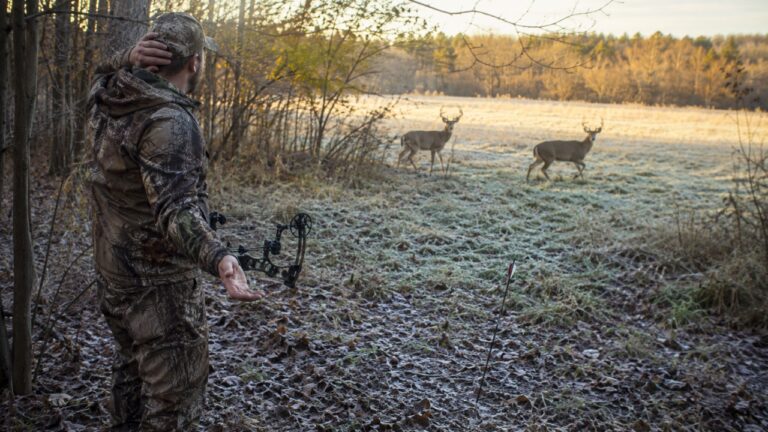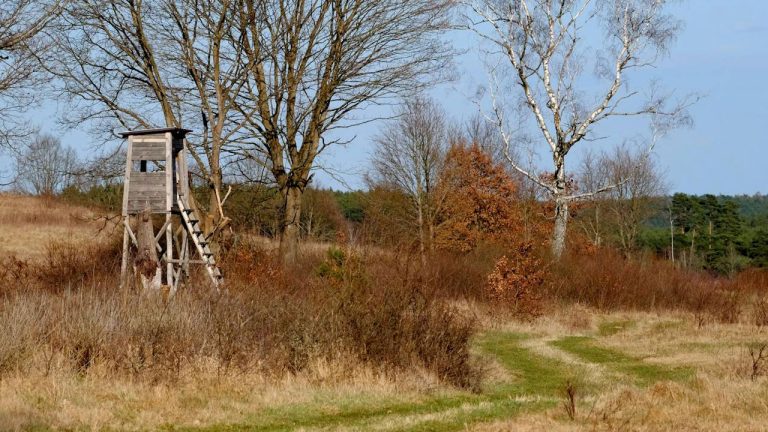
Photo credit: AI-generated image created using ChatGPT. Illustrative only
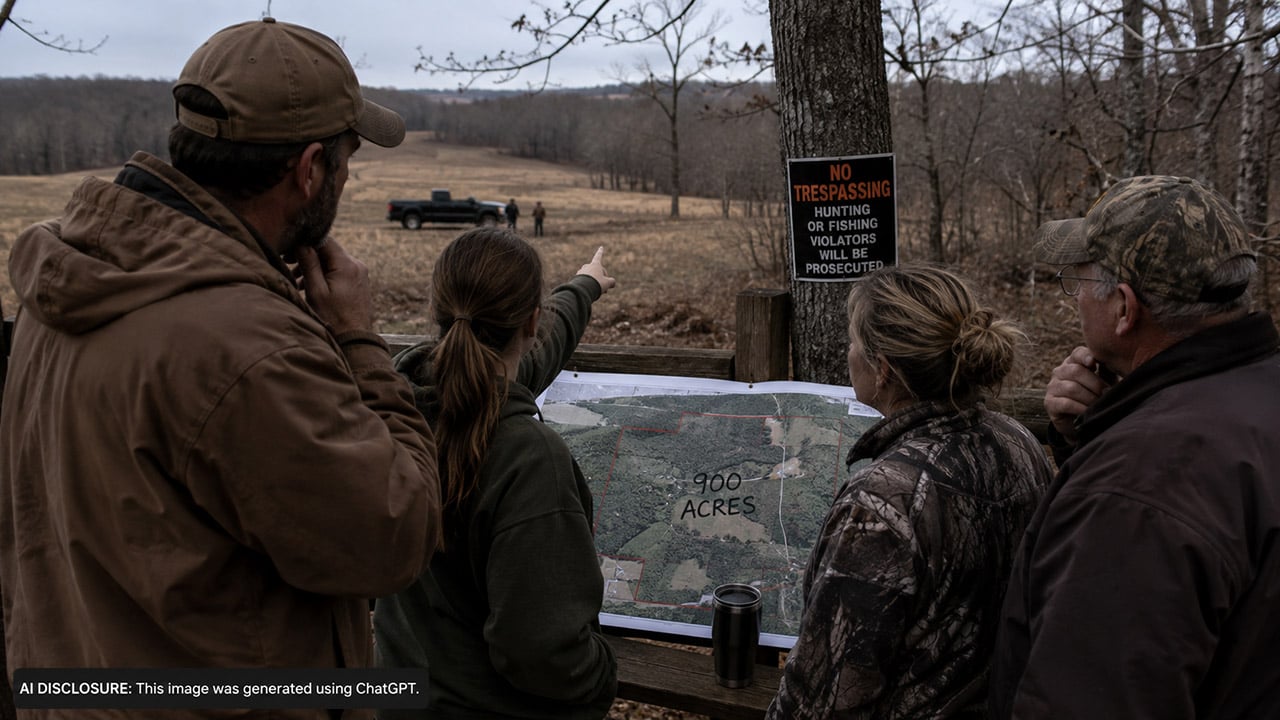
When you’ve poured time and money into a place meant for family hunts and weekends at the cabin, nothing turns your stomach faster than headlights sweeping your timber after dark. That’s the situation one landowner laid out in the original post: a 900-acre property getting hit hard by deer poachers, especially “spot lighters coming through with crossbows.”
The setup makes it tougher. The land is about 30 miles from town, there’s no cell service for cellular trail cameras, and the property runs along a gravel road for a couple miles. In other words, a long, easy drive-by border where a trespasser can roll slow, shine a light, and be gone before anybody can even get boots on.
The access problem: long road frontage and easy drive-bys
Big acreage doesn’t always mean secure acreage. When a property follows a road for miles, it creates a long “front door” that’s hard to watch, especially when it’s mostly just wire fencing and typical rural boundaries.
That road frontage also favors the kind of poaching the landowner described: slow cruising, a light out the window, and a quick opportunity. Even if the shooter never steps far off the gravel, a deer can be killed on private ground in seconds, and the vehicle can disappear down the road just as fast.
No cell service means fewer easy tech solutions
These days, a lot of folks lean on cell cams to solve trespass problems. You get real-time photos, you call the local game warden, and you start building a pattern. But when there’s no cell service, that whole playbook changes.
Traditional trail cameras can still help, but they don’t stop anything in the moment. They’re evidence after the fact, and if you can’t get to the camera quickly—or if it gets stolen—you’re right back where you started: knowing it’s happening and feeling helpless to prevent it.
The moment that made it personal: spotlighting the cabin yard
The landowner said they make their presence known and are on the property 2–3 times a week, with most weekends spent there. Even with that kind of use, someone still drove by and spotlighted the front yard “not knowing we were there watching just after dark.”
That’s the part that changes the tone from “property problem” to “safety problem.” Spotlighting around a cabin isn’t just about deer. It tells you the poacher is comfortable, bold, and not worried about who might be nearby. When people are shooting at night—no matter what weapon they’re using—mistakes and bad decisions get more dangerous in a hurry.
What makes spotlight poaching so hard to stop
Spotlighters rely on speed, darkness, and predictability. They know most landowners aren’t sitting in a driveway at 9 p.m. on a random weeknight, and they know a quick scan of a field edge can reveal eyes before anyone can react.
On a property with miles of roadside access, it’s also hard to “harden” every vulnerable spot. You can’t stand guard on two miles of gravel, and you can’t be everywhere at once on 900 acres, even if you’re there constantly. The poacher only needs one short window to do damage.
Practical options that don’t involve risky confrontations
The first priority is staying out of a face-to-face conflict. A poacher running a light after dark is already breaking the rules, and you don’t know what else they’re willing to do if they feel trapped or challenged. The smartest approach is one that increases the odds of identification and enforcement without putting family members in the middle of it.
That usually means a mix of clearer boundaries, better documentation, and smart choke points. Roadside signage that’s consistent and obvious can help in court and with wardens, even if it won’t stop the hardened guys. Gated access points (where feasible), cable barriers, or limited entry routes can slow down the easy “pull off and walk in” behavior—again, not everywhere, but in the spots that get used most.
Even without cell service, non-cell trail cameras can be set to cover likely entry points, turns in the road, and places where vehicles have to slow down. The goal isn’t a pretty buck photo. It’s a plate number, a vehicle description, a time stamp, and repeatable patterns that a game warden can actually act on.
And if the poachers are truly using the road itself to spotlight, it’s worth thinking like a security guy: where do they naturally slow down, where do they have line-of-sight into fields, and where can you collect information without advertising the camera’s location?
The bigger frustration: it’s a family place, not just a deer lease
One line in the post says more than a dozen angry paragraphs could: they’ve put “a lot of time and money into this property for ourselves and extended family from out of state to enjoy and make memories at.” That’s the heart of it.
This isn’t only about lost deer. It’s the feeling that strangers are treating your family’s place like a free-for-all, and that all the sweat equity you’ve invested—food plots, habitat work, stand locations, and simple quiet weekends—can be undone by someone riding a gravel road with a light and a weapon.
There’s also the mental tax of it. Once you’ve watched someone spotlight your yard while you’re sitting on the porch, you start wondering what happens on the nights you’re not there. You start hearing every truck on the road. And that’s not what a hunting cabin is supposed to be.
Poaching thrives on the idea that nobody is watching. The family in this situation is doing the right thing by taking it seriously, increasing their presence, and looking for deterrents that fit a remote property with limited connectivity. On ground like that, the best path forward is usually steady pressure: tighten up the easy access, document what you can, and lean on the people whose job it is to deal with night hunters—without turning a deer problem into a personal confrontation in the dark.
Like The Avid Outdoorsman’s content? Subscribe to our newsletter so you never miss an article.
Here’s more from us: