
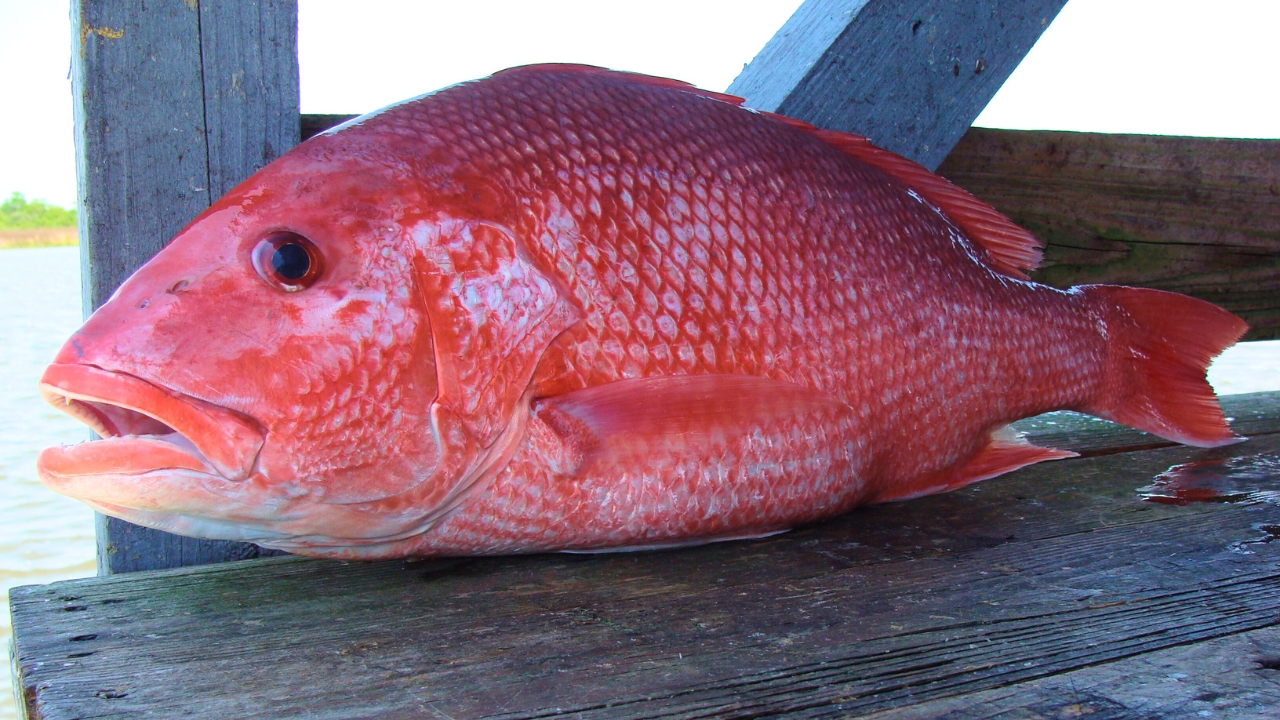
Photo credit: Geeklikepi, CC BY-SA 3.0, via Wikimedia Commons
Texas offshore anglers who spent 2025 enjoying a long, generous red snapper run are about to hit a hard wall in federal waters. As the calendar flips to Jan. 1, the rules that let you chase red snapper far off the Texas coast reset in a way that will feel abrupt, especially after a record stretch of opportunity. The surprise is not that there are limits, but how sharply the door slams on private boats in federal Gulf waters off Texas just as a new year of fishing begins.
From record run to sudden stop
If you fished offshore last year, you felt how unusual 2025 was for red snapper off Texas. The federal season for private anglers opened in early summer and, instead of closing in a matter of weeks, stayed open until it was set to end on November 21, a stretch long enough that charter captains and weekend warriors alike started to treat it as the new normal. That extended window, described as a record run for Texas offshore anglers, created expectations that 2026 might look similar, or at least taper off more gently.
Instead, you are walking into a new year where the private-boat opportunity in federal waters off Texas is already spoken for on paper. The same federal management system that allowed the 2025 season to last until November 21 is now triggering an early cutoff for 2026, and the contrast between those two realities is what makes the Jan. 1 reset feel so jarring. The long 2025 run, highlighted in coverage of the Record Run of Federal Red Snapper Season in Texas, is precisely what sets up the rude awakening as you plan trips for the first weeks of 2026.
The Jan. 1 shock in federal waters off Texas
The core of your New Year surprise is simple: for private anglers, federal waters off Texas are already on a countdown to closure before you even launch your boat in 2026. The federal government has laid out a specific action for the red snapper private angling component in the Gulf, and for Texas that means a closure in the federal zone off the state that kicks in far earlier in the year than you might expect after last season. You are not losing access because of a sudden crisis, but because the numbers that govern your share of the fishery have been recalculated.
In the regulatory language, this is framed as the Reef Fish Fishery of the Gulf of America; 2026 Red Snapper Private Angling Component Closure in Federal Waters Off Tex, an action that spells out how and when private recreational fishing for red snapper must stop in the federal Gulf off the state. For you, that bureaucratic phrase translates into a hard line offshore, where crossing into federal water after the closure date with red snapper gear on board could put you on the wrong side of enforcement. The timing, coming right as you might be mapping out winter and spring trips, is what makes it feel like the rug is being pulled.
How Texas red snapper rules split between state and federal waters
Part of the confusion you are likely to feel on Jan. 1 comes from the split personality of red snapper rules off Texas. Inside nine nautical miles, you are in state waters, where Texas Parks and Wildlife Department sets its own season and bag limits for recreational anglers. Outside that line, you are in federal waters, where the National Marine Fisheries Service and the Gulf of Mexico Fishery Management Council control the calendar and the quotas, and where the private angling component is now facing that early 2026 closure.
Texas has tried to keep your options open close to shore, with a year-round state-water opportunity that sits alongside the more rigid federal framework. The state spells out that the Red Snapper Season in Federal Waters has its own Opens and Closes dates and a specific Bag limit, while recreational anglers in state waters operate under a separate set of rules. That dual system means that even as the federal Gulf off Texas tightens, you still have some room to chase red snapper inside the state line, but it also means you must track two overlapping regimes instead of one simple calendar.
What the 2025 federal season taught Texas anglers
The long 2025 run in federal waters off Texas did more than fill coolers; it reshaped your expectations about what a red snapper season can look like. When the federal season opened in early summer and kept going until November 21, it gave you time to plan multiple trips, reschedule around weather, and bring family or clients offshore without racing a midseason shutdown. That kind of stability is rare in a fishery that has often been defined by short, intense bursts of opportunity.
Texas officials and offshore businesses leaned into that extended window, promoting the chance to book trips deep into the fall and pointing to the way the season was projected to Open and Close in Federal Waters with a clear Bag structure. For you, the lesson was that when allocations and catch rates line up, the system can deliver a long, predictable season. The flip side, which you are about to feel on Jan. 1, is that the same formulas can just as easily compress your access when the numbers move the other way.
Inside the federal closure decision for 2026
The early 2026 shutdown for private anglers in federal waters off Texas is not arbitrary; it is the product of a formula that ties your access directly to a quota. Federal managers track how many red snapper are landed by private boats in each Gulf state, then compare that to the allocation assigned to that state’s private angling component. When projections show that Texas private anglers will hit their share, the law requires a closure to prevent the total from being exceeded, and that is exactly what is happening as the new year begins.
In the formal notice, the National Marine Fisheries Service explains that it has determined the timing for the Red Snapper Private Angling Component Closure in Federal Waters Off Tex based on those catch estimates and the need to keep the Reef Fish Fishery of the Gulf of America within its limits. The agency notes that this closure applies to anglers fishing in federal waters off Texas, regardless of where they intend to land, which means you cannot skirt the rule by running back to a Louisiana or Alabama dock. For you, the takeaway is that the closure is baked into the math, not something that can be negotiated on the dock or ignored because the fish still seem plentiful.
Why for-hire boats are playing by different rules
As a private angler, you may look offshore in early 2026 and see federally permitted charter and headboats still targeting red snapper while your own boat is sidelined in the federal zone. That split is not a mistake; it reflects the way the Gulf red snapper fishery is divided into separate components, with private anglers in one bucket and for-hire vessels in another. Each component has its own allocation and its own season, which means the closure that hits you does not automatically shut down the charter fleet.
Federal managers have already signaled how they intend to handle the for-hire side in 2025 and beyond, describing how NOAA Fisheries Announces the Reopening of the 2025 Federal Gulf of America Red Snapper Recreational For Hire Season Press Rel to allow charter and headboats to catch the remaining allocation. That kind of targeted reopening underscores how tightly the for-hire sector is managed as its own category. For you, the practical effect is that booking a trip with a federally permitted captain may still give you access to red snapper in federal waters even when your own boat is locked out.
How state and federal managers coordinate your access
Behind the scenes of your Jan. 1 surprise is a complex dance between Texas regulators and federal managers. Texas Parks and Wildlife Department collects data on private angler landings and uses that information to help set seasons and bag limits in state waters, while also feeding those numbers into the federal system that tracks how much of the Gulf-wide red snapper quota is being used. That coordination is what allowed Texas to stretch the 2025 federal season so far into the fall, and it is also what is now triggering the early 2026 closure.
On the federal side, the Gulf of Mexico Fishery Management Council and the National Marine Fisheries Service rely on a process that has been described in detail, including how NOAA Fisheries Announces the Reopening of the Federal Gulf of America red snapper season for the for-hire sector and notes that the timing is determined by state agencies. That same interplay applies to the private angling component, where Texas’ own decisions and data feed into the federal closure you are now facing. For you, it means that complaining only to one side, state or federal, misses the reality that both are locked together in the same management framework.
What you can still do on the water in early 2026
The early federal closure does not mean you have to park your boat or hang up your rods as soon as the new year begins. You still have access to red snapper in Texas state waters, where the season for recreational anglers remains open under state rules even when the federal Gulf is closed. That nearshore zone, inside nine nautical miles, can hold keeper-size fish on artificial reefs, rigs, and natural structure, and it becomes your primary option once the federal line goes dark for private boats.
At the same time, you can pivot to other offshore and nearshore species that are not tied to the same tight quota system. Amberjack, king mackerel, and a range of reef fish remain on the table under their own regulations, and planning trips around those targets can keep your offshore calendar full even as red snapper access shrinks. The key is to study the latest Federal Waters and state-water rules before you go, so you know exactly where the line is and what you are allowed to keep on each side of it.
How to plan your 2026 season around the new reality
To avoid being blindsided again, you need to treat the Jan. 1 shock as a planning lesson rather than a one-off frustration. Start by building your 2026 fishing calendar around the known closure for the private angling component in federal waters off Texas, then layer in state-water opportunities and potential for-hire trips that can legally access red snapper offshore. That means booking key dates early, especially if you want to fish with a federally permitted captain who can still operate in the federal zone under the separate for-hire allocation.
You should also get in the habit of checking both Texas and federal updates before every major trip, since the same system that produced the Red Snapper Season Opens and Closes in 2025 can adjust again if catch rates or allocations change. Watching how the Reef Fish Fishery of the Gulf of America is managed, including any future notices about the Red Snapper Private Angling Component Closure in Federal Waters Off Tex, will help you anticipate shifts instead of reacting to them at the dock. If you adapt your expectations and your planning to that reality, the Jan. 1 surprise becomes less of a rude awakening and more of a reminder that in the Gulf red snapper game, the calendar is always written in pencil.
Like The Avid Outdoorsman’s content? Be sure to follow us.
Here’s more from us:


