
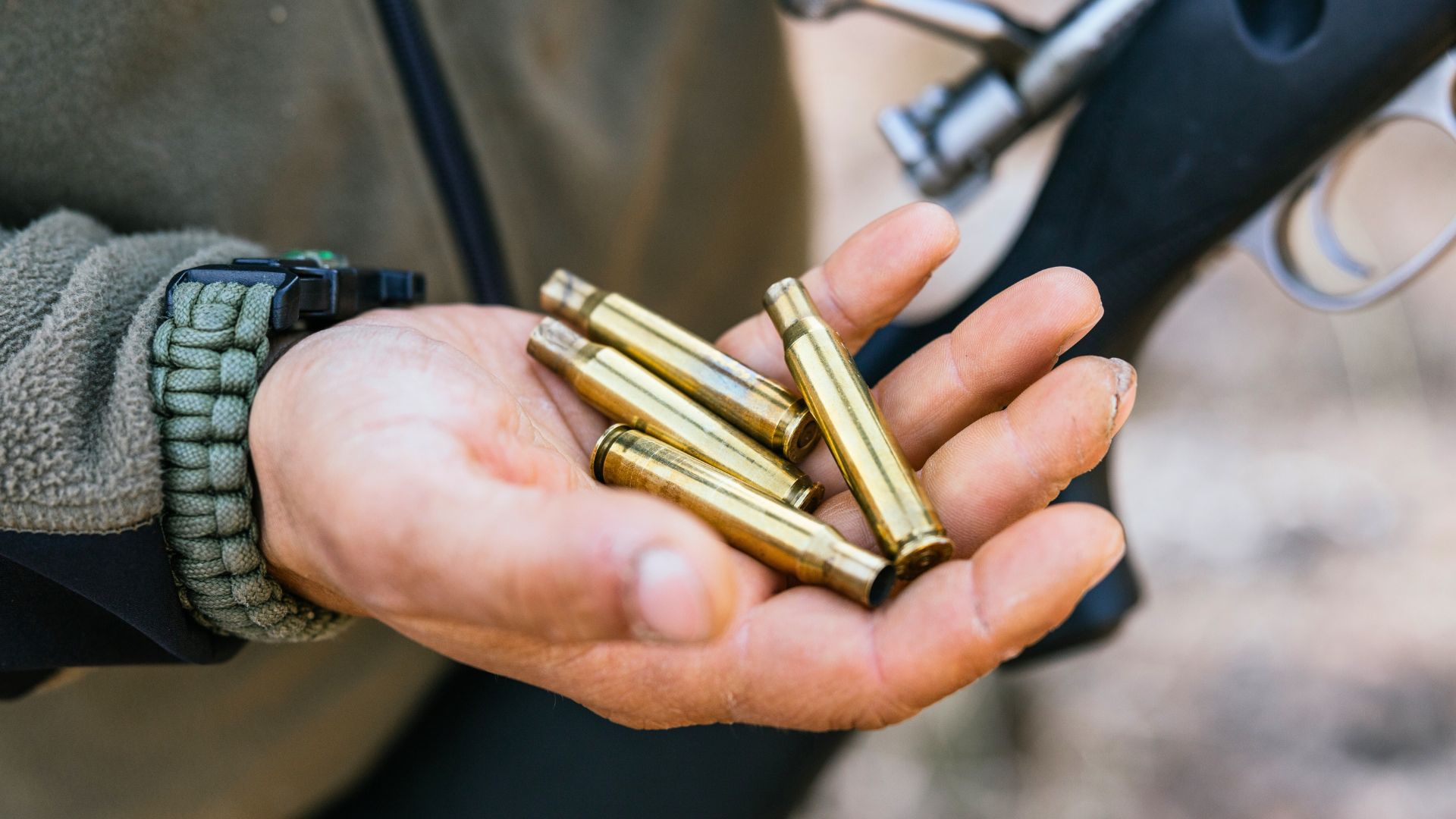
Photo credit: Jordi Mora/Shutterstock.com
New rifle and handgun loads have altered what hunters can reasonably expect from common cartridges, especially at longer distances and in jurisdictions with tighter rules around lead and minimum performance. The shift is not one single “magic bullet,” but a set of ammo categories that have spread from niche to mainstream as manufacturers chase better terminal performance, more consistent accuracy, and cleaner results on game.
Bonded and “controlled expansion” hunting bullets are raising the floor on performance
Bonded bullets and other controlled-expansion designs have become a default recommendation in more hunting conversations because they reduce the two most common field failures: early breakup at close range and shallow penetration on heavier animals. The concept is simple—keep the core and jacket together so the bullet can expand without shedding so much mass that it stops too early—but the practical effect is that cartridges hunters once considered “marginal” for larger game now perform more predictably when shot angles are less than perfect. Hunters using common deer cartridges are seeing fewer cases where a bullet fragments and leaves a difficult tracking job, and outfitters guiding clients with mixed skill levels often prefer loads that remain stable if the shot hits bone. The broader change is consistency: controlled expansion tends to produce more repeatable wound channels across a wider velocity window, which matters when the same rifle might take a 50-yard woods shot one day and a 250-yard field shot the next.
Monolithic copper and lead-free loads are no longer just a specialty option
Copper and other monolithic bullets used to be treated as a regulatory workaround for lead-restricted areas, but they have evolved into a mainstream choice because modern designs expand more reliably than earlier generations. The reason hunters pay attention is that monolithic bullets typically retain near-total weight, drive deep, and often create straight-line penetration that holds up well on quartering shots, which is valuable on tough animals and in places where recovery is difficult. The tradeoff has historically been that some all-copper bullets needed higher impact velocity to expand well, leading to mixed results at longer range, but newer designs with improved hollow points, skives, and polymer tips have reduced that gap. Another factor pushing adoption is the policy landscape: more properties, public lands, and regions are tightening lead rules, and hunters who switch early avoid scrambling later. The result is a category that has moved from “only if you have to” to “many hunters prefer it,” especially where meat care and minimizing lead fragments are part of the decision.
Polymer-tipped, high-BC hunting loads are changing what “effective range” means for average hunters

Polymer-tipped hunting bullets and other high-ballistic-coefficient designs have changed the practical limits for standard hunting rifles by making trajectories flatter and wind drift smaller, which reduces the number of judgment calls a shooter must get exactly right. This matters because many misses and poor hits at distance are not caused by bad rifles but by small errors stacking up: an inch or two of range error, a misread wind, and a hold that is slightly off. When a load carries velocity better and holds a tighter line in crosswinds, it increases the odds that a decent shooter makes a clean hit rather than a marginal one. It has also influenced rifle setups—more hunters are using dial-capable scopes and verified drop data because their ammunition supports that approach and produces repeatable results. The most important change is not that everyone should shoot farther, but that hunters can choose to shoot within their limits with more confidence that the bullet will behave as intended when it arrives, particularly on medium game like deer and pronghorn.
Purpose-built subsonic and “suppressed hunting” loads are carving out a real niche
Subsonic hunting loads and suppressed-friendly ammunition have expanded beyond curiosity status as suppressor ownership grows and manufacturers invest in bullets designed to expand at lower velocities. Traditional subsonic rifle ammunition often struggled on terminal performance because many bullets were never engineered to open at those speeds, but new expanding subsonic designs are attempting to solve that problem by using softer materials, larger cavities, or specialized shapes that deform at lower impact energy. The practical application is narrow but real: close-range hunting where noise reduction is a priority, pest control on properties where neighbors are near, and situations where recoil-sensitive shooters benefit from a softer impulse. These loads are not a replacement for standard hunting ammunition, and ethical distance limits remain tighter, but the category reflects a broader trend in the market—hunters want ammo matched to how they actually shoot and hunt, not just a one-size load built around old assumptions. As the category grows, hunters should still verify function and accuracy in their specific rifle, because low-velocity loads can be more sensitive to barrel and twist differences.
Like The Avid Outdoorsman’s content? Subscribe to our newsletter so you never miss an article.
Here’s more from us:


