Photo credit: TheBackwoodsHermit/YouTube
The .30-30 is one of those cartridges people love to talk about like it’s “old.” And it is. But “old” doesn’t mean “done.” The reason the .30-30 Winchester is still hanging around isn’t nostalgia — it’s because it keeps solving the same real-world hunting problems it solved a hundred years ago. It’s easy to shoot, easy to find, and it drops deer clean inside the distances most folks actually hunt. If you grew up around lever guns, you already know the story. If you didn’t, the .30-30 can still make a lot of sense, especially if you hunt in timber, brush, thick creek bottoms, or any place where a 300-yard shot is more of a campfire claim than a normal day.
A lot of modern hunting talk is built around long range and flat trajectories. That’s fine if you’ve got wide-open country and you practice like a disciplined adult. But most deer in most states are killed well inside 150 yards, often closer than that. When your “shot window” is a 40-yard lane between saplings, trajectory charts stop mattering as much as handling, speed, and putting a bullet where it belongs. That’s the .30-30’s home turf. It’s not trying to be a laser. It’s trying to be reliable and decisive where people actually hunt.
It hits hard enough for deer without beating you up
The .30-30 doesn’t have the shoulder-thump reputation that a lot of bigger cartridges do, and that’s a big deal for real hunters — not internet hunters. Less recoil means more people shoot it well. It also means you’re more likely to practice with it, and you’re more likely to stay sharp when the season rolls around. A rifle you can shoot comfortably from awkward positions — leaning around a tree, kneeling in leaves, perched in a cramped blind — is worth more than a “better” cartridge you flinch with.
Inside its effective range, the .30-30 puts plenty of authority on target. With good ammo and good placement, it’s not underpowered for whitetails. It’s more than enough. And because it’s been so widely used for so long, ammo makers have spent decades refining loads that perform well on deer-sized game. It’s not a specialty round that only shines with one boutique load. You can find solid hunting ammo without turning it into a research project.
Lever guns make it fast, handy, and hard to hate
The .30-30’s reputation is tied to lever-action rifles for a reason. A good lever gun carries easy, points naturally, and comes up fast when a deer steps out and gives you five seconds. In thick woods, that matters more than people admit. You’re not usually settling into a perfect prone position. You’re usually trying to shoulder the rifle smoothly, find the animal in the sight picture, and make a clean shot before it slips back into cover.
A lot of .30-30 rifles are slim and balanced, and they don’t feel like you’re lugging a fence post through brush. That “handy” feeling isn’t fluff — it shows up every time you climb into a stand, step over deadfall, or track along a creek bank. And lever actions aren’t slow the way some folks assume. With a little familiarity, you can run one smoothly and stay on target. When the shot isn’t perfect and you need a quick follow-up, the .30-30 lever gun setup is still one of the best combinations for that kind of hunting.
It’s forgiving in the places most deer live
People love to compare cartridges on paper: drop, wind drift, energy at 300, energy at 500. But the .30-30 keeps winning in the real world because it’s built for the places where the majority of hunters spend their time. Timber edges. Thickets. Cedar breaks. Pine plantations. River bottoms. Those places don’t reward flat-shooting magnums as much as they reward a rifle that handles well and a cartridge that performs reliably at common distances.
Also, the .30-30 has a nice “practical” personality. It’s not picky about being babied. You don’t have to run an ultra-light rifle with a brake and a 5-25x scope to make it workable. A basic lever gun with a simple optic (or even irons, if you’re honest about your limits) is enough. When the weather turns ugly, when you’re climbing in and out of trucks, when you’re hunting hard and not treating the rifle like a safe queen, the .30-30 setup holds up.
Modern ammo and optics quietly made it better than people think
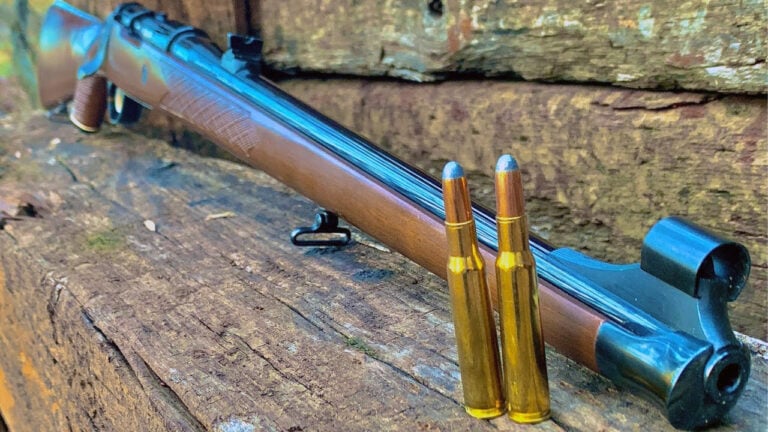
A lot of folks still picture .30-30 as iron sights and a flat-nosed bullet, and that’s not wrong — but it’s not the full picture anymore. Modern ammo options, including newer bullet designs made specifically for tubular magazines, have helped performance and extended effective range a bit for hunters who want it. You’re still not turning it into a long-range cartridge, but you can get better accuracy and better terminal performance than the old stereotypes suggest, especially out of a solid rifle with a decent sight setup.
Optics are another piece. A low-power scope or a red dot can make a .30-30 even more effective for the way it’s actually used. Fast target acquisition, clear sight picture in poor light, and the ability to place shots precisely at normal woods distances — that’s what matters. The .30-30 doesn’t need a fancy optic, but it benefits from modern glass the same way any hunting rifle does. If you’ve ever tried to pick a deer out of shadowy brush right at last light, you know exactly why.
It’s everywhere, and that matters more than people admit
There’s another reason the .30-30 keeps sticking around: it’s available. Rifles are everywhere. Ammo is everywhere (even when shelves get weird, it tends to come back). Parts, knowledge, and support are everywhere. If you’re the kind of hunter who likes being able to walk into a normal store and solve a problem without ordering something and waiting, that’s worth something.
And it’s not just about convenience. It’s about continuity. Lots of people hunt with the .30-30 because it’s the rifle they trust — the one that’s been in the family, the one that’s put meat in the freezer, the one that’s familiar in the hands. That kind of confidence matters. A cartridge that’s “good enough” on paper becomes “the right tool” when you’ve got history with it and you shoot it well.
The real truth: it does the job if you do yours
The .30-30 isn’t magic. It’s not for 400-yard shots across cut corn. It’s not a do-everything cartridge. But it’s still one of the most honest deer rounds ever made. If you keep your shots reasonable, use good ammo, and put the bullet where it belongs, it’ll keep doing what it’s always done.
That’s why shooters still rely on it. Not because they’re stuck in the past. Because the woods didn’t change. Deer didn’t change. And most hunting still comes down to being ready when it happens fast, in tight cover, with a real shot you can actually take. The .30-30 fits that world like it always has.
Like The Avid Outdoorsman’s content? Subscribe to our newsletter so you never miss an article.
Here’s more from us: