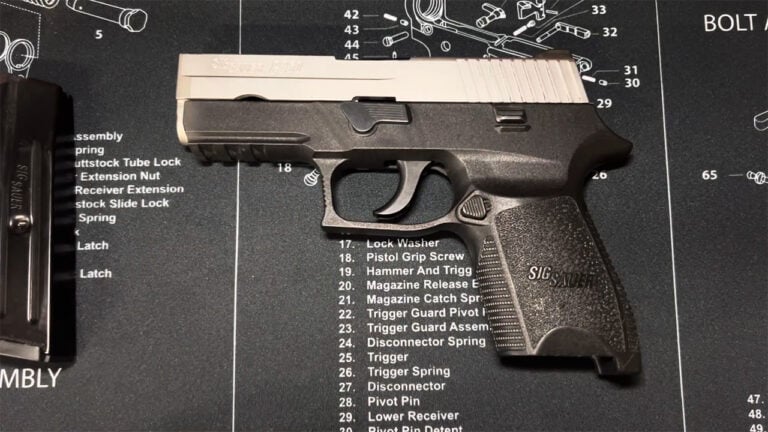
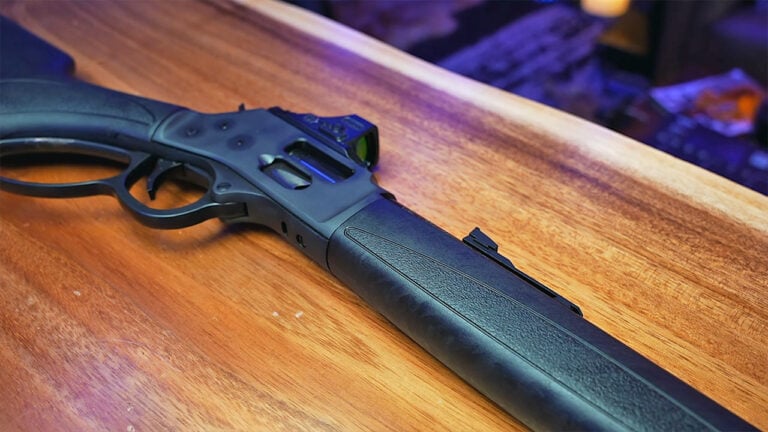
Photo credit: Tactical Toolbox/YouTube.com
A lot of handgun marketing is built around a simple idea: if a feature sounds like it would help in a worst-case moment, buyers assume it will help in real life too. That’s how you end up with pistols that look impressive on a spec sheet but create new failure points, new training problems, or new carry headaches that show up every single day. The issue isn’t that “features are bad” or that people should stick to barebones guns forever. The issue is that some features solve problems most shooters don’t actually have, while introducing problems they absolutely will have—especially under stress, in poor light, or when the gun has to live in a holster for months at a time without constant babying.
The easiest way to spot a feature that’s going to cause real problems is to ask two questions: does it improve the gun’s ability to fire every time, and does it reduce the number of decisions you have to make when your heart rate spikes. If the answer is “no” and “no,” you’re looking at a feature that’s more about selling than serving. Reliability and simplicity aren’t sexy, but they’re what keep guns running when they’re dirty, when you’re tired, or when your grip isn’t perfect because you’re shooting from an awkward position. The “sounds smart” features are usually the ones that promise convenience, speed, or performance on paper, but quietly demand more maintenance, more fine motor control, or more perfect setup than most people will realistically provide.
The ultra-light trigger trend creates timing and safety issues fast
A lighter trigger can help a skilled shooter tighten groups, but the way many people chase light triggers creates more problems than it solves. When triggers get pushed too light—especially on carry guns—people often start seeing unintended inputs under stress, premature shots during movement, and inconsistent performance when gloves, cold hands, or awkward grips enter the picture. The other issue is timing: very light triggers can encourage “riding the edge” and slapping the trigger during recoil, which can lead to inconsistent follow-up shots for shooters who haven’t built disciplined trigger control. If the trigger makes the gun harder to run safely and consistently when you’re not perfectly calm and squared up, that feature isn’t helping the job the pistol is most likely to be asked to do.
External “controls” can add decisions you don’t have time for
Many pistols add levers, switches, and controls that seem helpful in theory—thumb safeties, decockers, magazine disconnects, grip safeties, ambidextrous everything, and various internal locks. In the real world, the more you stack on the gun, the more you must train to avoid hesitation and prevent user-induced failures. A safety that feels “reassuring” can become the reason the gun doesn’t fire when you need it if you don’t consistently train to sweep it under pressure, and a decocker can create confusion if someone doesn’t understand exactly what condition the gun is in after it’s used. None of these are automatically wrong, but every control is a cognitive tax, and the bill comes due when the shooter is scared, rushed, or half-awake, not when they’re standing in a bright range lane.
The “competition” sights that look precise can slow real shooting down
Tall target sights, super-narrow front blades, and ultra-fine rear notches can be great for slow, deliberate fire, but they can punish shooters who need fast sight acquisition in mixed light. Many people choose sights based on what looks crisp in perfect daylight, then discover they disappear against dark clothing, cluttered backgrounds, or indoor lighting. Others choose sights that snag on garments or chew up holsters because the profile is too sharp for carry. The smart-sounding idea is “more precision,” but the real-world requirement is “fast enough to find and clear enough to confirm.” If your sight setup makes you hunt for the front sight under stress, you’ve traded a theoretical advantage for a practical disadvantage you’ll feel the first time you try to draw quickly and shoot accurately.
Porting and compensators are not free performance
Porting and comps can reduce muzzle rise, but they also add noise, blast, and maintenance demands that many owners underestimate. They can change how the gun cycles, increase sensitivity to ammo choice, and throw hot gas upward—something that matters if the gun is fired close to the body, from retention, or in positions where blast can be punishing. In low light, ported guns can also increase visible flash, which can be distracting at the worst moment. The “sounds smart” pitch is flatter shooting, but the real trade is more complexity and more variables. If the pistol is a range toy, that trade may be fine. If the pistol is meant to be a dependable defensive tool, you should be honest about whether the added variables are worth it.
Fancy coatings and tight tolerances can turn into reliability and wear headaches
Some guns advertise ultra-tight slide fit, match-grade everything, and exotic coatings as a sign of “premium.” Tight guns can be accurate and smooth, but tight tolerances can also be less forgiving when dirt, sweat, lint, or dried lube enters the system. The same is true for some finishes: they may look great and resist corrosion, but if they change friction surfaces or interact poorly with certain lubricants and holsters, you can see abnormal wear or sluggish cycling. A pistol that runs perfectly clean on the bench isn’t the same as a pistol that runs after months of carry, a day in the rain, or a dusty class. “Premium” features that reduce tolerance for normal grime can create problems in the exact scenarios where reliability matters most.
Choose features that reduce failure and reduce thinking
If a feature increases your maintenance burden, adds decisions, or demands perfect conditions to deliver its benefit, you should treat it with skepticism—especially on a carry gun. A good defensive pistol is boring in the best way: it’s predictable, it runs across ammo types, and it doesn’t ask you to remember extra steps when you’re stressed. That doesn’t mean you can’t upgrade anything. It means every change should earn its place by improving reliability, durability, or shootability without introducing new failure points. When you choose features the way professionals tend to choose them—based on consistent performance, not marketing—you end up with a gun that’s easier to carry, easier to run, and less likely to surprise you.
Like The Avid Outdoorsman’s content? Subscribe to our newsletter so you never miss an article.
Here’s more from us: