Photo credit: Nickolas Hunt/Youtube
Every few years, it seems like another agency clears out the armory, signs a new contract, and the old duty guns hit the trade-in market by the pallet. Sometimes that makes sense. Sometimes it feels like they dumped a perfectly good tool because a brochure promised lighter, smaller, higher capacity, or “more modular.”
I’m not here to romanticize every old service pistol. Some of them were bricks, some had quirks, and a few deserved to be put out to pasture. But there are a handful that got pushed out before their time—guns that still run hard, shoot straight, and make a ton of sense for a working outdoorsman who values reliability over fashion.
1. SIG Sauer P229 (DA/SA duty classic)

The P229 is one of those pistols that feels like it was built for people who actually carry a gun for long hours. It’s not light, and it’s not sleek, but it points naturally and soaks up recoil in a way polymer guns usually don’t. When you pick one up, you can feel the difference in how the slide rides and how the controls click.
Departments moved away from them for cost and weight, and I get it. Still, the P229’s “boring” durability is exactly why it shouldn’t have been tossed aside so quickly. Trade-in mags and parts are still around, and a clean one is the kind of pistol you can hand down without worrying it’ll turn finicky.
2. Beretta 92FS/M9 (the one that just keeps running)
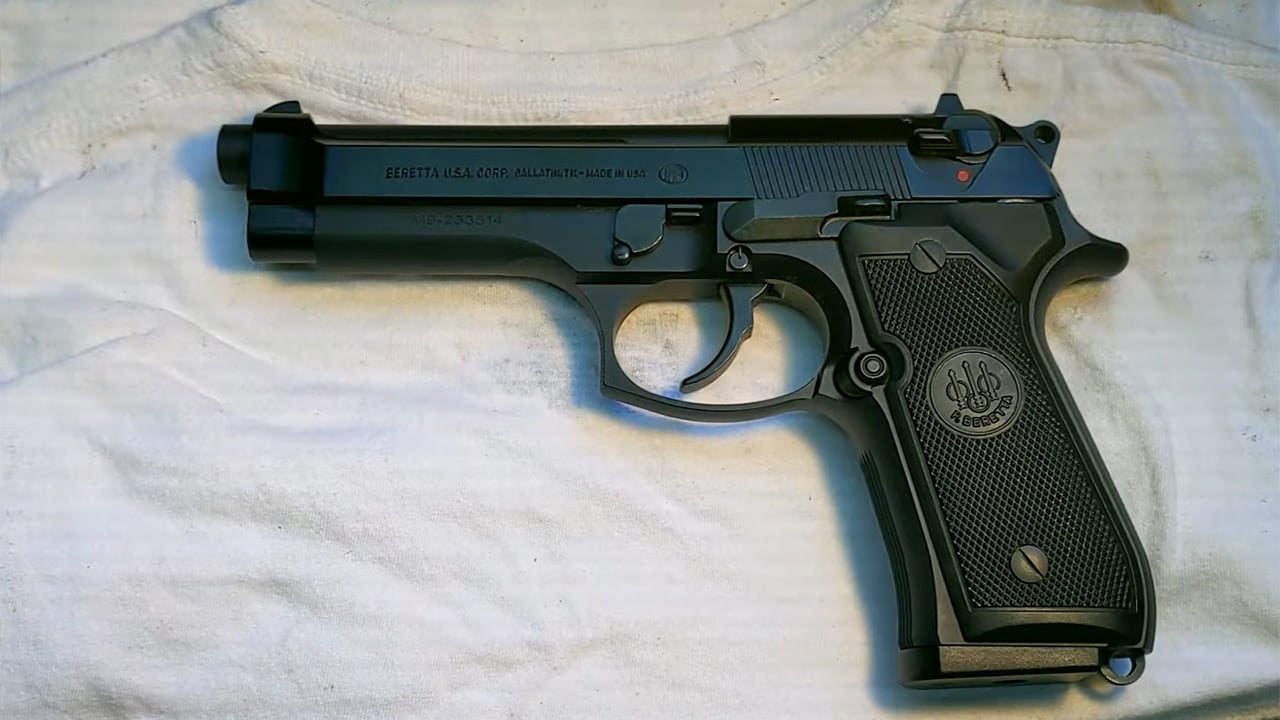
There’s nothing compact about a 92FS, and nobody calls it a great concealed carry choice unless they own a long cover garment and a sturdy belt. But as a duty gun and a nightstand gun, it’s hard to argue with a full-size Beretta that’s been maintained. The open-top slide design tends to run clean, and the gun is flat-shooting for 9mm.
A lot of agencies wanted accessory rails, different trigger systems, or a more modern grip profile. Fine. But the 92 has a track record that’s tough to replace, and magazines are everywhere. If you find a police trade-in with honest holster wear and a decent barrel, it’s usually still got a lot of life left.
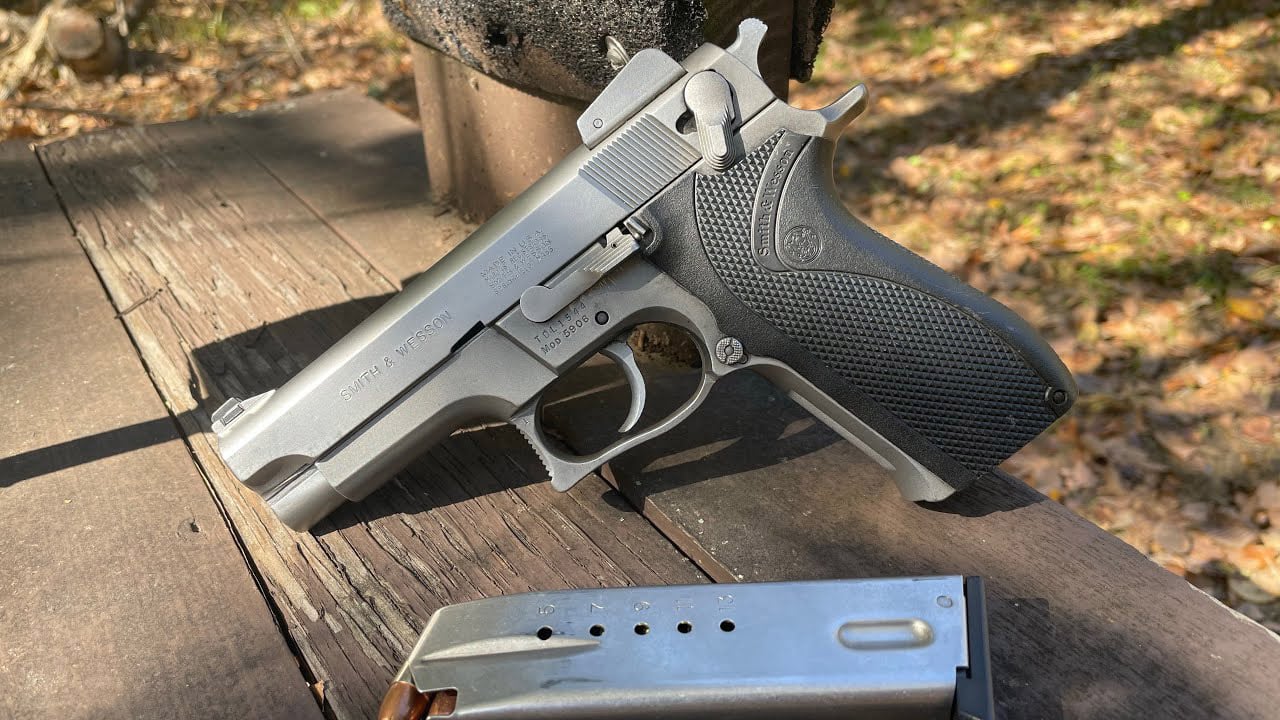
3. Smith & Wesson Model 5906 (stainless tank energy)
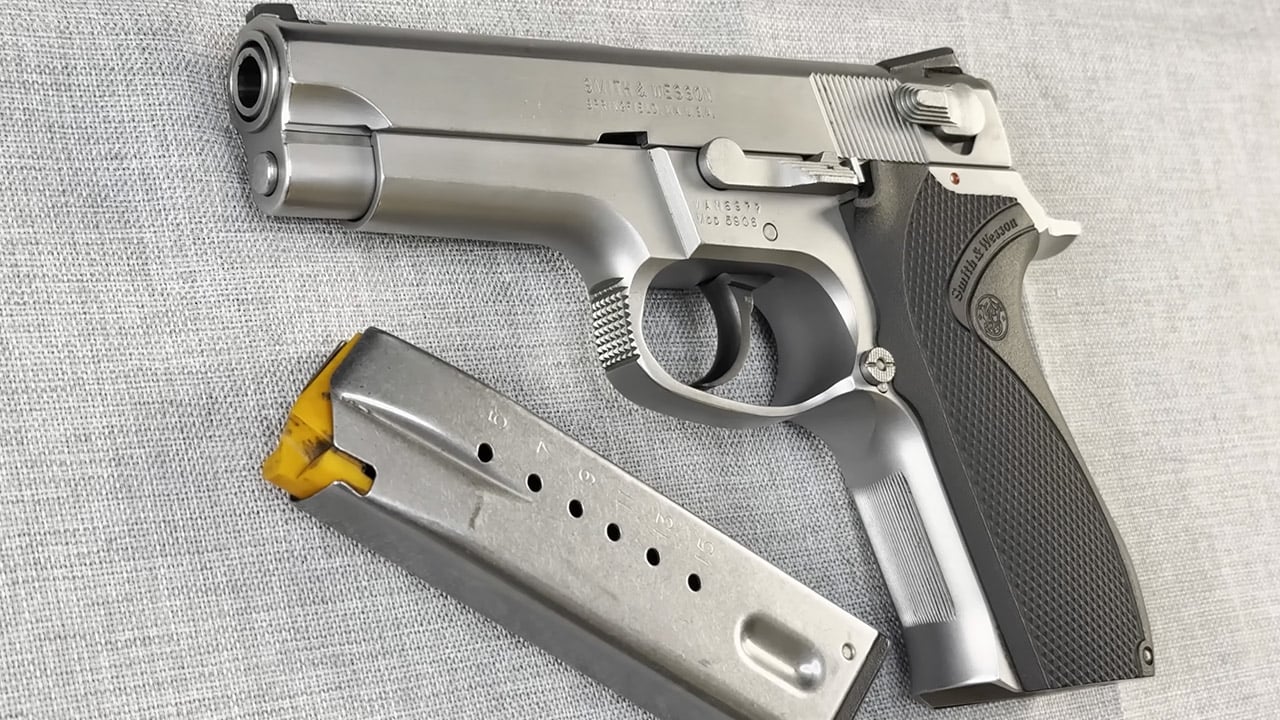
The 5906 is heavy, stainless, and unapologetically old-school. It’s also one of those pistols that settles down in your hand and just shoots. The double-action pull can be long, but it’s predictable, and the single-action break is usually clean enough to do real work.
When departments rushed into polymer, a lot of these got dumped like they were obsolete. That one hurts. For an outdoors truck gun that can ride in a console, get sweaty, get dusty, and not turn into a rust problem, the all-stainless build is a feature, not a flaw.
4. Ruger P95 (ugly, reliable, and honest)

If you want pretty, don’t buy a P95. The lines are blocky, the trigger isn’t going to impress anyone at a gun counter, and it feels like it was designed by someone who cared more about function than looks. And that’s exactly why I still respect it.
Plenty of agencies and security outfits used Ruger P-series pistols because they worked and they were affordable. They got replaced because they weren’t “modern,” not because they quit. For a budget-minded shooter who wants a 9mm that feeds about anything and doesn’t need babying, the P95 still makes sense.
5. Heckler & Koch P2000 (quietly excellent, easy to overlook)

The P2000 never had the glamour of some other HKs, which is probably part of why it got moved out in some places. But it’s a well-balanced duty pistol with excellent reliability, good ergonomics, and a recoil impulse that feels more controlled than you’d expect for its size.
Where it stings is the “why” behind some retirements: not performance, but procurement trends and accessory compatibility. HK magazines cost more than Glock mags, no question, but they’re durable. If you find a trade-in P2000 that wasn’t abused, it’s a carry gun you can trust in bad weather and long days.
6. SIG Sauer P226 (full-size confidence)

A good P226 is like a solid pair of boots. It’s not the lightest thing you’ll own, but it does what it’s supposed to do without drama. The sight radius helps, the gun tracks well in recoil, and it tends to be forgiving when you’re shooting fast but not perfect.
Departments that ditched the P226 often cited weight and cost, and polymer striker guns are cheaper to buy in bulk and simpler to teach. Still, for shooters who appreciate a DA/SA system and a pistol that feels planted, the P226 didn’t suddenly become less capable because a new contract got signed.
7. Smith & Wesson Model 4006 (a .40 that wasn’t fragile)
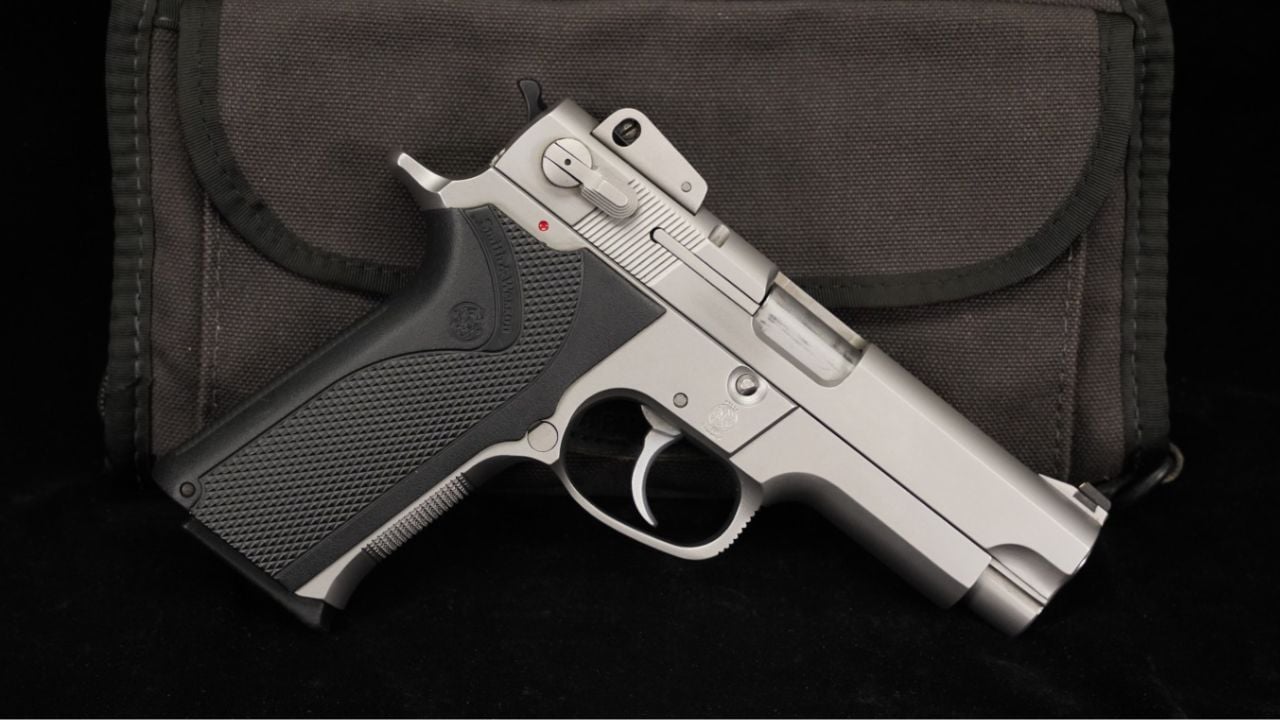
.40 S&W has been shoved out of the spotlight, but the 4006 was built in a time when duty pistols were expected to last. It’s another stainless hammer-fired chunk of metal that handles .40 better than most lighter guns. The recoil is there, but it’s more of a push than a snap in that heavy frame.
A lot of .40 retirements were about ammo cost, qualification scores, and trend shifts back to 9mm. Fair enough. But if you’ve got a case of .40 and want a pistol that doesn’t beat itself up, a 4006 trade-in is still a very usable tool.
8. Glock 22 (the .40 workhorse that got blamed for everything)

The Glock 22 became almost a symbol of the .40 era. When agencies moved back to 9mm, the G22 took the fall like it was the problem. In reality, most of them ran and ran and ran, and they were simple to maintain with parts that are everywhere.
The real issue for a lot of shooters was the snappier recoil and the way some folks shot it under stress. But retiring them “too soon” shows up when you realize how easy they are to keep running. If you can shoot .40 well, a used G22 is still a dependable, no-nonsense pistol—especially for outdoors carry where you want corrosion resistance and a gun that tolerates neglect.
9. Glock 17 (some agencies chased “smaller” and gave up easy shooting)

This one sounds odd because the Glock 17 is still everywhere, but plenty of departments cycled away from it chasing compact frames, modular grip shells, or a different brand entirely. The G17’s strength is that it’s easy to shoot well. The longer grip and sight radius help real people on real qual courses.
When you go smaller, you don’t just lose a little comfort—you lose control, especially with gloves or cold hands. For the average shooter, a full-size 9mm like the G17 is a sweet spot. It’s not fancy. It’s just effective, and it’s hard to argue that any agency was “too good” for a gun that simple and proven.
10. Beretta PX4 Storm (soft shooter that got dismissed as weird)

The PX4 has always been the odd duck. The styling is different, and the rotating barrel system gets talked about like it’s either magic or nonsense. What I can tell you is it’s a very controllable pistol, especially in .40, and it runs smoother than a lot of people expect.
Some agencies tried it and moved on fast, often because the market shifted and everyone wanted the same striker-fired template. Still, a PX4 that’s set up right is comfortable to carry, points naturally, and doesn’t beat you up on the range. “Different” isn’t the same thing as “bad.”
11. Smith & Wesson M&P9 (1.0) (solid duty gun that got replaced by its own update)

The original M&P9 wasn’t perfect—early triggers were nothing to write home about. But they were reliable, ergonomic, and they fit a wide range of hands. A lot of departments adopted them, then turned around and traded them out when the 2.0 version improved the trigger and texture.
I get upgrading. What I don’t get is treating the 1.0 like it suddenly stopped being a dependable 9mm. For a guy looking for a used pistol that carries well and doesn’t feel like a 2×4, the older M&Ps can be a smart buy, especially when they come with duty sights and extra mags.
12. Heckler & Koch USP (overbuilt on purpose)

The USP is big, it’s chunky, and it feels like it was designed with a safety margin measured in miles. The recoil system and overall build give it that “overbuilt” feel that a lot of modern pistols don’t even try to match. It’s the kind of gun you can shoot a lot and not worry about it getting loose.
Agencies that retired them often did it because they were expensive and the market moved toward lighter polymer guns with simpler triggers. The irony is the USP is already polymer, just from a time when HK wasn’t trying to shave every ounce. If you want a duty-grade pistol that tolerates hard use and rough weather, the USP is still a contender.
13. SIG Sauer P220 (a .45 that behaves)

There’s a reason the P220 has loyal fans. For a .45, it’s generally accurate, it feeds well, and it doesn’t feel like it’s fighting you. The grip is slimmer than a lot of double-stack .45s, and the gun balances in a way that makes slow-fire accuracy feel almost easy.
Departments moved off .45 for capacity and cost reasons, and I can’t argue with the math. But the P220 itself didn’t deserve the boot. If you’ve ever wanted a .45 that’s more “working pistol” than “range trophy,” a used P220 is worth a hard look.
14. Smith & Wesson Model 686 (when revolvers got treated like dinosaurs)

Yes, revolvers got replaced for good reasons. Capacity and reload speed matter. Still, when agencies cleared out their duty revolvers, a lot of excellent wheelguns got sold off like they were nothing. The 686 is one of the best .357s ever made for a belt gun.
For an outdoorsman, this is where “retired too soon” really shows. A 686 with the right holster is a serious woods sidearm, and it’s about as straightforward as it gets: point, press, repeat. No magazines to lose, no slide to go out of battery because you were wrestling gear in a cramped blind.
15. Ruger GP100 (the rugged revolver that still fits the woods)
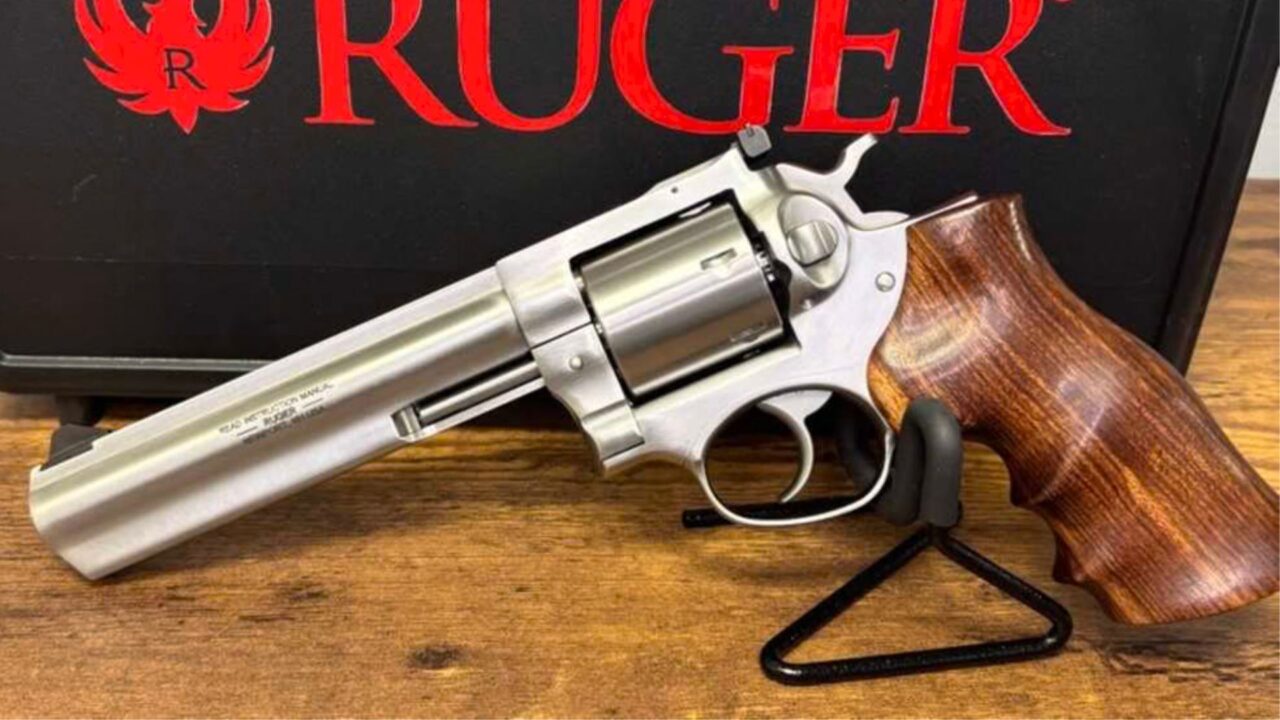
The GP100 doesn’t have the same refined feel as some Smiths, but it’s tough and it’s reliable. In wet weather, dusty roads, and the general abuse that comes with rural life, “tough” counts. The action smooths out with use, and the gun carries its weight in a way that doesn’t feel as top-heavy as some big revolvers.
When agencies retired them, it wasn’t because they were failing. It was because the world went semi-auto. For folks who spend time around hogs, predators, or just want a simple belt gun while checking fences, the GP100 remains one of the best practical revolvers you can buy.
16. CZ 75B (metal-framed accuracy that got ignored)

Not many American departments issued CZs, but plenty of specialized units and smaller outfits have run them, and a lot of those guns eventually got traded out for more mainstream options. The CZ 75B is one of those pistols that makes average shooters look better than they are. It points well, the grip fits a lot of hands, and it’s usually accurate.
The downside is magazines and parts aren’t always as common on a random rural gun shop shelf as Glock or Smith. Still, they’re not rare, and the gun is worth the mild inconvenience. If you stumble onto a former-service CZ that’s been cared for, don’t dismiss it because it isn’t the popular pick.
17. Walther P99 (ahead of its time, then left behind)

The P99 had good ergonomics long before “ergonomics” became a marketing buzzword. It’s a pistol that sits low, carries comfortably, and has a trigger system that some shooters really take to. It’s also one of those guns that feels like it was designed by people who actually shoot.
It got edged out by newer striker guns and the endless cycle of “latest and greatest.” The thing is, the P99 still does the job. If you can find magazines and you like the way it fits your hand, it’s a practical pistol that didn’t deserve to be treated like a relic.
18. SIG Sauer SP2022 (budget SIG that didn’t act cheap)

The SP2022 never got the respect it should have, probably because it was positioned as a more affordable SIG. But a lot of them have proven to be extremely reliable, with a DA/SA system that feels familiar if you’ve run other classic SIGs. They’re not as refined as a P226, but they work.
Some agencies moved on because they wanted uniformity across units or a different trigger system. For the rest of us, the SP2022 is one of those trade-in opportunities where you can get a lot of dependable pistol for the money. There is nothing fancy about it, and that is kind of the point.
19. Smith & Wesson 3913 (slim 9mm that carried like a dream)
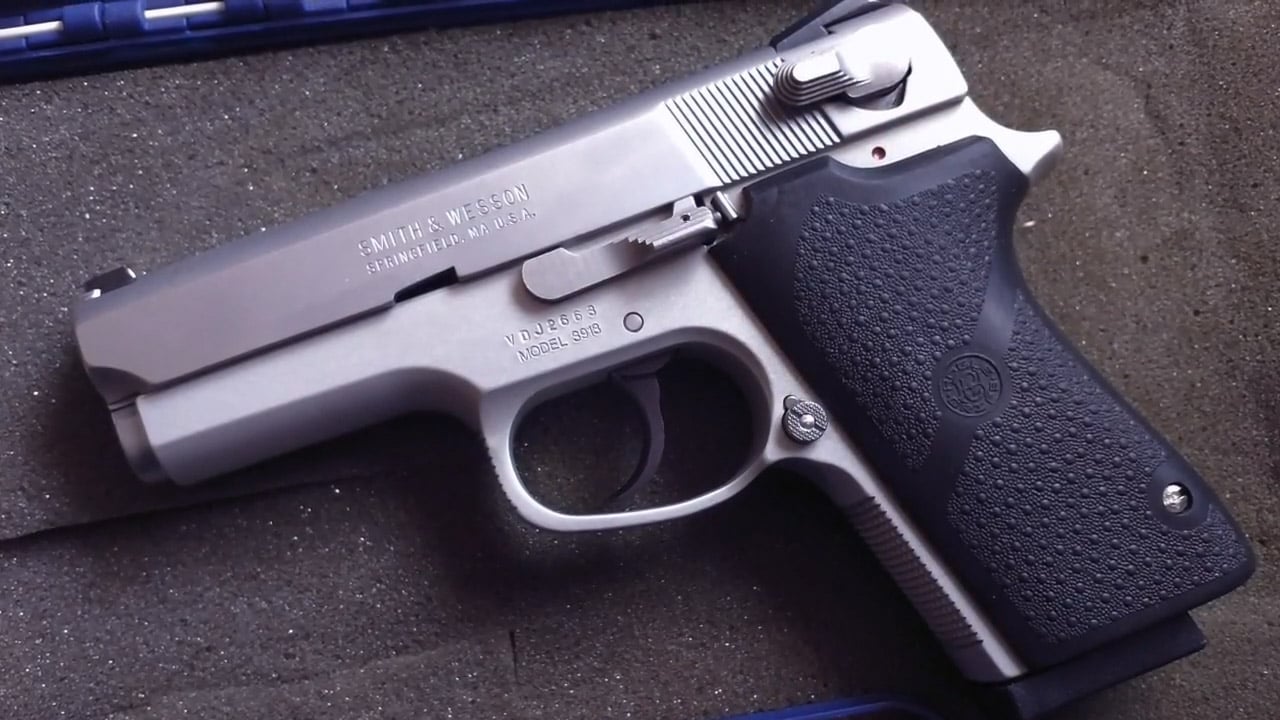
The 3913 is one of the best “real carry” pistols Smith ever made. Thin, reliable, and comfortable on the belt, it disappears under a jacket and doesn’t feel like an anchor by lunchtime. The single-stack capacity looks small by modern standards, but the gun carries so well that you actually keep it on you.
Departments that issued compact 3rd Gen Smiths eventually went to double-stack polymers and never looked back. I think that was premature. If you’ve ever tried to carry a chunky compact all day while doing farm chores or bouncing around in a truck, you understand why a slim pistol matters.
20. Colt Detective Special (the snubnose that still has a place)

Snub revolvers aren’t glamorous, and they’re not easy for everyone to shoot well. But the Detective Special is one of those classic designs that earned its reputation the hard way. It’s compact, dependable, and it carries in places where bigger guns don’t.
Agencies retired them because times changed and training moved toward semi-autos. That doesn’t mean the gun became useless. For a backup gun role, a tackle box gun (stored safely and legally), or a discreet carry option when you’re layered up in the fall, the Detective Special still does what it was designed to do.
Watching departments rotate gear is a reminder that “new” and “better” aren’t the same thing. A lot of these retired sidearms weren’t pushed out because they failed, but because budgets, trends, and training pipelines shifted. If you come across a police trade-in and it passes a careful inspection, don’t be afraid of a little holster wear. Sometimes that’s just proof it was carried, not proof it’s worn out.
Like The Avid Outdoorsman’s content? Be sure to follow us.
Here’s more from us: