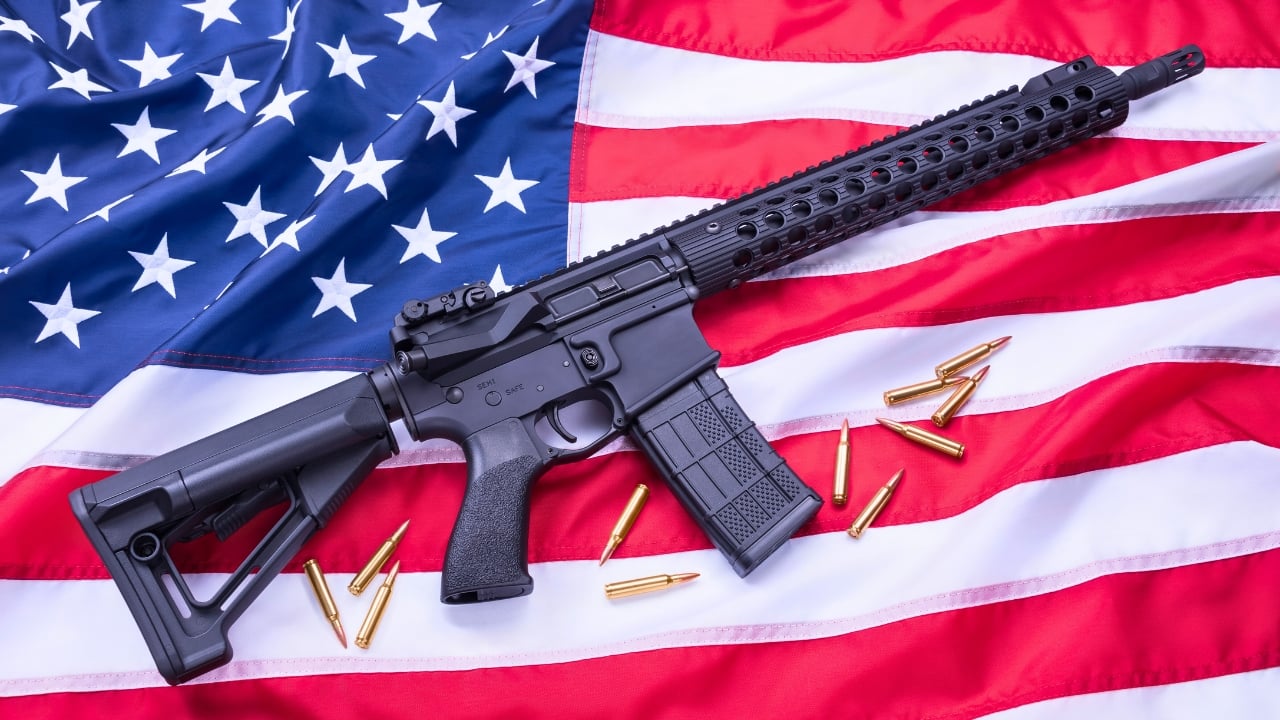
Photo credit: Mendenhall Olga/Shutterstock.com
The ground under the Second Amendment is shifting again as you head toward 2026, and the changes are coming from every direction at once. Federal agencies, The Supreme Court, state legislatures, and advocacy groups are all testing how far gun rights and gun regulations can go, leaving you with a legal map that looks very different from even a few years ago. If you care about where, when, and how you can carry or own a firearm, you are walking into a period of rapid, high‑stakes change.
The Trump administration’s new federal posture on gun rights
Your starting point is a sharp turn in federal policy under President Trump, who has made gun rights a central part of his broader law‑and‑order agenda. In Dec, civil rights lawyer Harmeet Dhillon announced that the DOJ is creating a dedicated Second Amendment enforcement section inside the Civil Rights Division, signaling that the federal government now sees gun ownership as a civil right it will actively protect rather than a space for new restrictions. Dhillon has said this unit will target what she calls “obstacles” to lawful gun ownership so that, in her words, people “will be able to protect ourselves,” a promise that reframes federal civil rights work around the right to keep and bear arms through the new Second Amendment section.
This is not a symbolic move. A separate analysis describes the new office as a “historic course correction” from the Biden years, when federal agencies were more willing to experiment with new gun regulations and test them in court. Under the Trump Administration, the Department of Justice is being pushed to treat the Second Amendment as a fixed constitutional boundary that regulators cannot cross, rather than a flexible policy space where novel rules can be tried and defended. That shift is expected to limit how far agencies can go with new restrictions before they run into a Justice Department that is now structured to challenge them, a change that one report calls a stark departure from a prior era in which gun regulations were allowed to “give way to regulatory experimentation” and that now frames the DOJ’s 2A Protection Office as a central tool of the Trump Administration.
DOJ enforcement, lawsuits, and the new civil-rights theory of the Second Amendment
For you, the most concrete sign of this new posture is litigation. In Dec, The Trump administration filed suit against the District of Columbia over its gun laws, arguing that the city’s rules unlawfully burden residents who want to exercise their right to keep and bear arms. The Justice Department’s complaint accuses the District of Columbia of treating the Second Amendment as a privilege that can be rationed rather than a right that must be broadly accessible, and it frames the case as part of a broader promise that “law‑abiding citizens” should not be forced to navigate a maze of local restrictions just to own or carry a firearm, a claim laid out in the federal lawsuit against the District of Columbia.
At the same time, Dhillon has said the Justice Department will not stop at one high‑profile case. She has promised that the Justice Department will challenge what she calls unconstitutional gun policies across the country, including “multi‑thousand‑dollar” fees and other hurdles that make it hard to obtain concealed carry permits. In her telling, the department will target any rule that effectively prices ordinary people out of exercising the right to carry the “arms the Second Amendment protects,” a phrase that signals a willingness to litigate not just licensing systems but also restrictions on particular types of weapons. For you, that means the federal government is positioning itself as a plaintiff against state and local gun regulations at the same time it continues to defend some existing federal statutes, a tension that critics say undercuts the Justice Department’s new promise to challenge unconstitutional gun policies.
The Supreme Court’s next wave: property, age limits, and semi-auto bans
Even as the executive branch reorients, you are also staring at a packed Second Amendment docket at The Supreme Court that could redraw the map of permissible gun regulation. One major case asks whether states can bar you from carrying guns on private property that is open to the public, such as shopping malls or parking lots, unless the owner posts a sign explicitly allowing firearms. The dispute grew out of a Hawaii and public carry regime that sharply limited who could carry guns in public, and the justices are being asked to decide whether that approach is compatible with the court’s own “history‑and‑tradition” test for gun laws, a standard that already reshaped public carry rules nationwide and now hangs over new fights about carrying guns on private property.
Another front involves who counts as part of “the people” protected by the Second Amendment. On Friday in Nov, The Supreme Court agreed to hear a challenge to federal and state rules that bar 18‑to‑20‑year‑olds from buying or possessing certain firearms, a case that squarely asks, “Can 18‑to‑20‑year‑olds own guns?” The justices are expected to hear arguments in early 2026, and their answer will determine whether young adults are treated as full participants in the constitutional right to keep and bear arms or as a separate category that can be disarmed based on age alone. At the same time, other petitions are pressing the court to review bans on semi‑automatic rifles, including a case known as Grant v. Rella and related challenges such as Vermontes v. Cook County (Illinois) and NAGR (national gun rights) v. Lamont (Connecticut), which together ask whether governments can outlaw entire classes of commonly owned rifles in the name of public safety, a question now squarely teed up by Other 2A challenges.
Drugs, status, and the ACLU’s surprising Second Amendment turn
One of the most striking developments for you to watch is how gun rights are colliding with the country’s evolving approach to drugs. In Dec, the American Civil Liberties Union joined a Supreme Court challenge to the federal ban on gun possession by marijuana users, arguing that people should not lose their Second Amendme rights simply because they use a substance that is legal under many state laws. The case involves individuals who faced criminal charges after their arrest for firearm possession while using marijuana, and the ACLU’s brief contends that disarming them based solely on that conduct violates both the Second Amendment and broader principles of equal treatment, a position that puts the American Civil Liberties Union on the same side as gun owners in a high‑stakes Supreme Court challenge.
The ACLU’s move is especially notable because The ACLU previously opposed the Supreme Court’s 2022 decision in New York State Rifle & Pistol Association Inc. v. Bruen, which expanded public carry rights and imposed the current history‑and‑tradition test. In its new filing, the group argues that the government should not be allowed to strip gun rights from broad categories of “persons based on status alone,” and it has also weighed in on related litigation, including a case captioned United States v. Daniels, No. 24‑1234, that tests similar status‑based prohibitions. For you, this signals a potential realignment in which civil liberties advocates who once criticized expansive gun rights are now warning that status‑based bans on people who use drugs or have other disfavored traits could become a template for disarming unpopular groups more broadly, a concern that runs through the ACLU’s criticism of New York State Rifle.
Lower courts, 922(k), and the limits of Bruen
While the headlines focus on The Supreme Court, you should not overlook how lower courts are quietly defining the edges of Second Amendment doctrine. In a case called Gomez, the Second Circuit recently rejected a facial challenge to 18 U.S.C. § 922(k), the federal law that makes it a crime to possess a firearm with an obliterated serial number. The court held that, even under the history‑and‑tradition framework, Congress can require traceable serial numbers and punish those who remove them, concluding that at least some applications of the statute are constitutionally valid and that the entire scheme under 922(k) does not have to fall just because it sweeps broadly, a result that keeps Gomez on the books.
At the same time, other federal appeals courts are wrestling with how far Bruen really goes. A commentary by Joel Johnson on United States v. Hemani, for example, describes how the justices may be inclined to resolve some gun cases on narrow statutory grounds rather than issuing sweeping constitutional rulings, especially when the underlying law can be interpreted in a way that avoids a direct Second Amendment clash. For you, that means not every gun case will produce a blockbuster opinion, and some of the most important boundaries may be drawn in technical decisions about how to read federal statutes like 18 U.S.C. § 922 rather than in grand pronouncements about rights. The result is a patchwork in which some restrictions, such as bans on defaced serial numbers, survive close scrutiny, while others are struck down or sidestepped, as illustrated by the ongoing debate over how the court should handle United States.
Restoring rights: DOJ procedures and who gets a second chance
Even as courts and lawmakers argue over new limits, you are also seeing fresh attention to how people can regain gun rights after losing them. In 2025, the Department of Justice rolled out a new process for restoring federal gun rights, aimed at individuals who are barred from possessing firearms because of past convictions or other disqualifying events. The DOJ has described this as an effort to streamline and modernize restoration efforts, creating clearer criteria and more predictable timelines so that people who have completed their sentences and stayed out of trouble can apply to have their rights reinstated, a change that could matter a great deal if you or someone you know is navigating the Department of Justice process.
This restoration track fits awkwardly alongside the Trump Administration’s aggressive enforcement stance. On one hand, the new Second Amendment section in the Civil Rights Division is designed to protect law‑abiding gun owners from what it sees as overreach. On the other, the same federal apparatus is deciding who qualifies as rehabilitated enough to get a second chance at gun ownership, and under what conditions. For you, that means the stakes of a past conviction are changing: the door to regaining rights is more clearly marked, but it is still controlled by the same DOJ that is litigating the boundaries of lawful possession in court. How generously or narrowly that door is opened will determine whether the promise of restoration is meaningful or mostly theoretical for people seeking to reenter lawful gun ownership through the DOJ.
States push and pull: New Mexico’s waiting period and Florida’s open carry fight
While Washington resets its approach, you are also watching states test the outer edges of what Bruen allows. In 2024, New Mexico enacted a law requiring individuals to wait seven days before taking possession of a newly purchased firearm, a cooling‑off period that supporters said would reduce impulsive violence and suicides. Gun rights advocates challenged the law, and in Dec the Tenth Circuit allowed a lower‑court ruling in favor of the National Rifle Association to stand, effectively blocking the waiting period and signaling that at least some federal judges see extended delays as inconsistent with the Second Amendment, a result that leaves New Mexico’s seven‑day rule on hold and bolsters similar challenges in states like Wyoming, Kansas, and Oklahoma, according to the decision involving New Mexico.
In Florida, the fight has taken a different shape. An appeals court there ruled the state’s open carry law unconstitutional, finding that a blanket ban on openly carrying firearms could not be reconciled with the constitutional guarantee to keep and bear arms. That decision has thrown Florida’s regulatory landscape into flux, as lawmakers and local officials try to reconcile long‑standing restrictions with a judicial ruling that treats public carry as a core right rather than a privilege. For you, the message from these two states is clear: even relatively modest regulations, such as waiting periods or limits on how you carry, are now vulnerable under the post‑Bruen framework, and the outcome of each case will depend heavily on how individual judges read the Second Amendment in light of Florida’s changing gun regulation landscape described in Florida.
Immigration, crime, and how federal priorities shape gun enforcement
Gun policy does not exist in a vacuum, and you can see that in how the Trump Administration has reorganized federal law enforcement priorities. Trump (Donald Trump) began drastically reshaping federal law enforcement almost as soon as he returned to office, channeling resources toward immigration enforcement and border security while also elevating gun rights as a core constitutional value. Analysts note that this shift goes beyond the focus on immigration enforcement, affecting how agencies allocate agents, prosecutors, and investigative bandwidth across the country, which in turn influences how aggressively federal gun crimes are pursued and which kinds of cases get priority in a system where Trump and his team are rebalancing the mix of Trump, Donald Trump initiatives.
At the same time, other parts of the federal government are tightening rules in adjacent areas, showing you how regulatory philosophies can diverge. For example, legislative amendments in Georgia’s immigration system introduced in mid‑2025, and entering into force in phases from September 2025 through March 2026, are steering that state toward a more regulated, compliance‑oriented immigration model with stricter work permit rules for foreign nationals. While these Georgia Immigration Reform 2025 changes do not directly address firearms, they illustrate how the same political environment that is loosening constraints on gun ownership can simultaneously harden oversight in other domains, creating a patchwork in which some rights are expanded while others are more tightly controlled under a more regulated, compliance‑oriented immigration model.
Looking toward 2026: a Supreme Court in the spotlight and what it means for you
All of these threads converge as you look ahead to 2026, a year in which The Supreme Court will be in the spotlight for reasons that go well beyond guns but will inevitably include them. Political analysts are already predicting that there will be hundreds of legal challenges to Trump (President Trump) executive actions, and that undoubtedly more will be considered in 2026, putting the justices at the center of fights over immigration, administrative power, and the scope of individual rights. Within that crowded docket, Second Amendment disputes over property rules, age limits, status‑based bans, and semi‑automatic rifle restrictions will test how far the current majority is willing to extend the logic of Bruen and how much room it will leave for states and cities to experiment with new regulations, a dynamic that will keep The Supreme Court at the center of national politics.
For you, the practical takeaway is that the Second Amendment landscape heading into 2026 is not settling down, it is accelerating. Federal agencies are rebranding gun rights as a civil rights priority, states are testing how far they can go in either direction, and courts from the Second Circuit to The Supreme Court are refining a history‑and‑tradition test that still leaves many questions unanswered. Whether you are a gun owner, a business that serves them, or a local official trying to write ordinances that will survive review, you are operating in a moment when the rules can change quickly and dramatically, and when each new decision, from Hawaii and property disputes to New Mexico waiting periods, can ripple across the country and reshape what the Second Amendment means in your daily life as the impact of the Supreme Court’s decisions continues to be filtered through the evolving history‑and‑tradition test.
Like The Avid Outdoorsman’s content? Subscribe to our newsletter so you never miss an article.
Here’s more from us: