Photo credit: Dmitri T/Shutterstock.com
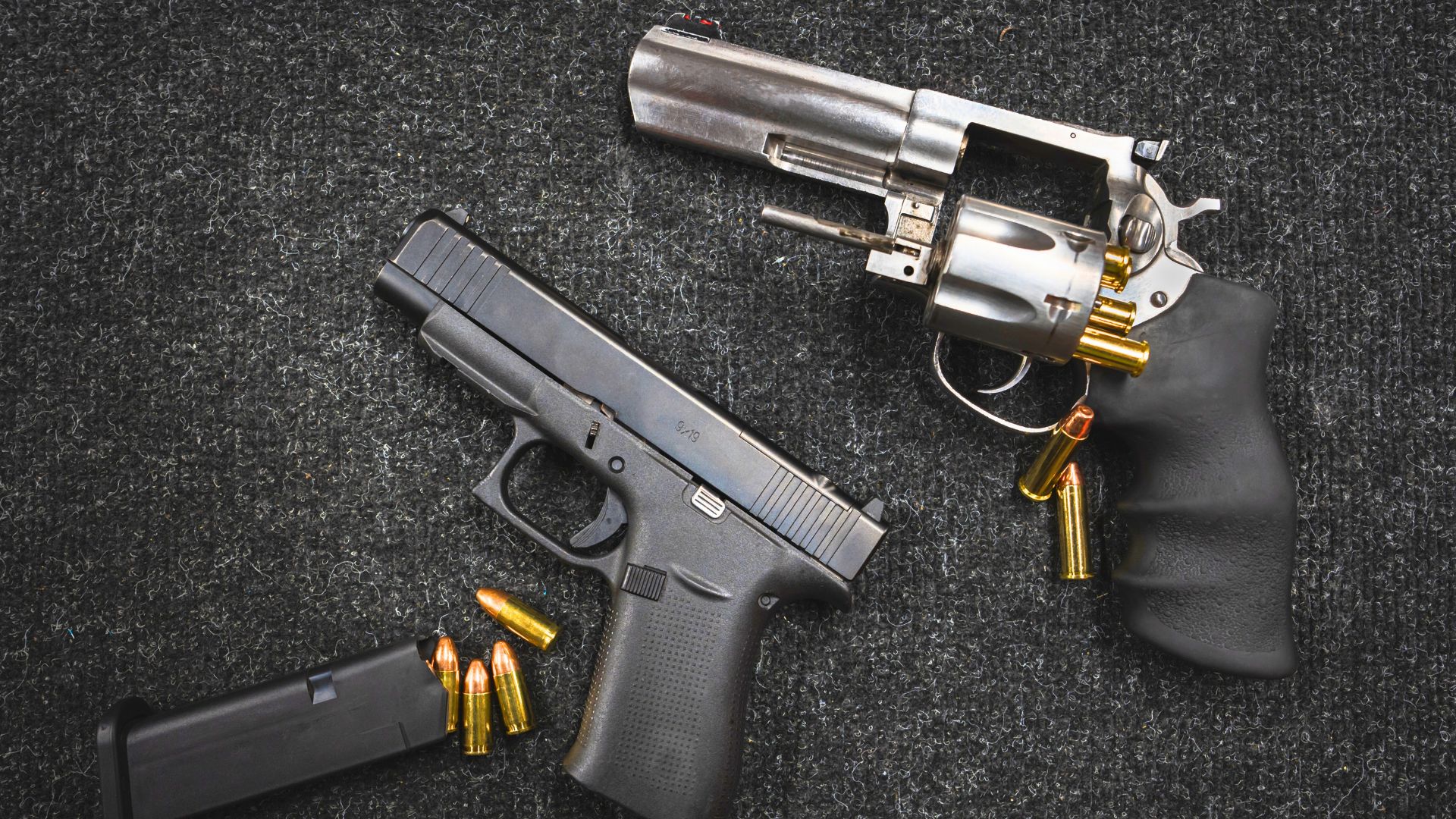
The revolver didn’t get “beat” because it stopped working. It got replaced because the job changed. Cops started carrying more ammo, dealing with faster fights, and training around quicker reloads. Departments also wanted guns that were easier to learn, easier to keep running, and easier to shoot well under stress with average hands and average range time.
A good semi-auto brought real advantages: higher capacity without a bulky belt full of speedloaders, faster reloads with a fresh magazine, and a flatter package that carried better all day. You also got easier one-handed operation for many tasks, and a trigger system that could be trained into consistency without mastering a long double-action pull.
None of that makes a revolver “bad.” It means a service pistol fit the modern reality better. These are the semi-autos that helped push that shift, and they did it for practical reasons you can still feel every time you load up and start shooting.
Glock 17

The Glock 17 hit departments like a hammer because it solved problems without adding new ones. You got 17 rounds on board, quick magazine changes, and a consistent trigger press that was easier to standardize across a whole agency. It was lighter than many steel guns, carried flatter than a duty revolver, and it didn’t demand a bunch of hand-fitting to keep running.
The other reason it replaced revolvers is boring reliability under neglect. The Glock’s internal design tolerates grit, sweat, and long stretches between deep cleanings better than most traditional service handguns of its era. When you’re issuing guns to thousands of people with uneven skill levels, “runs every day” matters more than character. That’s how a lot of wheelguns got retired.
Beretta 92FS

The Beretta 92FS proved that a full-size 9mm could be soft shooting, high capacity, and dependable in the kind of daily abuse a service gun sees. Its open-top slide and feed path developed a reputation for steady function, and the gun handled long training days without beating shooters up. That made qualification easier, and it kept people practicing.
Revolvers had a big advantage in trigger consistency if you trained hard, but the 92FS brought a different kind of consistency: fast reloads and a predictable shooting rhythm once you learned the DA/SA transition. When agencies looked at sustained fire, reload speed, and the reality of multiple threats, the math shifted. The 92FS helped make that shift feel safe.
SIG Sauer P226

The SIG P226 showed departments they could have a high-capacity semi-auto that still felt like a serious duty tool. It carried a lot of ammo, the magazines swapped quickly, and the gun had the kind of mechanical stability that held up through constant holster wear and heavy range schedules. It also shot well for a wide range of skill levels, which mattered as more agencies leaned into structured training.
Revolvers often demanded more work to run fast—especially reloads under stress. The P226 reduced that learning curve while keeping strong accuracy and durability. You could shoot it hard, reload it faster than any speedloader, and keep moving. That’s a practical upgrade when real fights don’t pause to let you top off a cylinder.
Smith & Wesson Model 59

The Model 59 was one of the early signals that the American service market was ready to leave the six-shot era behind. You had a double-action first shot that felt familiar to revolver-trained shooters, but you also had a magazine full of 9mm and a reload that didn’t require fine motor skills and loose rounds. It was a bridge gun—familiar enough to accept, different enough to change expectations.
It also helped normalize the idea that a semi-auto could be a duty gun instead of a specialist’s choice. Revolvers were trusted because they were known. The Model 59 started building a new “known” for agencies: higher capacity, faster reloading, and a platform that could be trained at scale. Even when later pistols improved on it, the direction stayed the same.
Smith & Wesson 5906

The 5906 is what happened when S&W took the service semi-auto concept and hardened it for real duty life. Stainless steel construction, proven magazines, and a reputation for taking a lot of rounds without turning finicky made it a serious replacement for the revolver in many holsters. It was also a pistol you could issue, qualify with, and maintain in an armory without constant surprises.
For revolver holdouts, the 5906 still felt “serviceable” in the old sense—solid, substantial, and durable. But it brought the advantages revolvers couldn’t: capacity and speed. When you’re looking at officer survival and the realities of multiple-shot engagements, six rounds starts feeling like a limit instead of a tradition. The 5906 helped erase that limit in a very workmanlike way.
Browning Hi-Power

The Browning Hi-Power made a strong case decades before many American departments were ready to hear it. Thirteen rounds of 9mm in a slim grip changed what “duty capacity” meant, and it did it in a package that carried well and pointed naturally. Compared to a revolver, you gained ammo and reload speed without carrying a heavier brick on your belt.
It also offered something revolvers struggled to match for many shooters: a consistent single-action trigger that made accurate, fast shooting easier to learn. That mattered as training moved toward quicker strings and tighter standards. The Hi-Power wasn’t perfect, but it proved the concept that a fighting pistol could be high capacity, controllable, and practical for daily carry. A lot of modern service pistols owe it a nod.
Colt 1911

The 1911 replaced revolvers in certain roles because it delivered fight-stopping performance and fast handling in a semi-auto package. In .45 ACP, it gave you a flatter, easier-to-carry sidearm than many big-frame revolvers, with reloads that were faster and more repeatable under pressure. When your hands are shaking and time is short, a magazine swap is a cleaner motion than feeding a cylinder.
It also brought shootability that many people could master quickly. A good 1911 trigger can make accurate shooting feel more natural, especially at speed. While it carried fewer rounds than later 9mms, it still moved the conversation forward: service sidearms could be semi-auto, reliable, and faster to keep fed. It helped break the idea that a revolver was the only “serious” choice.
CZ 75

The CZ 75 helped push revolvers aside by mixing high capacity with practical shootability. You got a double-action first shot for carry safety, a comfortable grip that fit a lot of hands, and a gun that tracked well in rapid fire. For agencies and shooters moving off revolvers, that combination made the transition easier: familiar operation up front, faster reloads and more ammo once the shooting started.
It also built a reputation for durability and accuracy without demanding constant attention. A service pistol that shoots well encourages practice, and practice makes the whole system more effective. Revolvers had great accuracy potential, but many shooters struggled with the long pull under stress. The CZ 75 gave you an easier path to fast hits while keeping the capacity advantage that made the switch inevitable.
HK USP

The HK USP earned trust in the era when departments wanted a pistol that could handle hard use, rough weather, and long training cycles without getting fragile. It brought higher capacity than a revolver, fast reloads, and a recoil system designed to take sustained shooting. That reliability under real conditions was a big piece of why semi-autos became the default.
The USP also offered flexible trigger variants, which helped agencies and individuals match the gun to their policy and training style. Revolvers were loved for their straightforward manual of arms, but they couldn’t match the USP’s ability to stay topped off and reload instantly. When the job demands more rounds on tap and faster recovery between strings, a pistol like the USP makes the choice feel obvious.
HK P7

The HK P7 wasn’t a mass-issue replacement everywhere, but it showed why semi-autos could beat revolvers on safety and speed at the same time. The squeeze-cocker system let you carry with a chambered round while keeping the gun inert until you gripped it. That gave people confidence, and it gave them a fast first shot without the long double-action pull that challenged many revolver shooters.
It also delivered excellent practical accuracy because the trigger and sights worked with you. Revolvers can be extremely accurate, but they demand more trigger discipline to do it quickly. The P7 reduced that barrier and paired it with quick reloads and higher capacity. It’s a specialized pistol, but the idea it proved was big: you can build a service semi-auto that’s fast, safe, and very shootable.
Walther P99

The Walther P99 helped modernize what shooters expected from a service pistol: good ergonomics, adaptable grip fit, and a trigger system that could be carried and run efficiently. Compared to a revolver, it offered more ammo, quicker reloads, and a flatter profile that didn’t feel like a brick on your hip at the end of a long shift.
The real “replacement” reason is how it supported consistent shooting across different people. Revolvers punished small hands and weaker grips with heavy trigger pulls. The P99, like other modern semi-autos, made it easier for average shooters to qualify and stay competent. When agencies want predictable performance across a wide pool of users, pistols that fit more hands and reload faster naturally take over.
SIG Sauer P229

The SIG P229 represents the practical middle ground that a lot of revolver carriers wanted: compact enough to carry, heavy-duty enough to trust. It offered real capacity and fast reloads in a package that felt substantial and controllable. You could shoot it hard, handle recoil well, and still carry it without feeling like you needed a different belt.
It also kept the familiar DA/SA feel that eased the mental jump for revolver-trained shooters. A long first pull and shorter follow-ups let people transition without feeling like they were learning an alien tool. Yet the advantages were still there: more rounds, faster reloads, and easier sustainment during extended strings. For detectives, plainclothes, and anyone who wanted a serious carry pistol, the P229 showed why the cylinder era was ending.
Glock 19

The Glock 19 became the carry-sized proof that you didn’t have to choose between concealment and real duty capability. Revolvers carried well in some ways, but once you wanted more than five or six rounds, things got bulky fast. The 19 gave you a compact pistol with strong capacity, quick reloads, and a consistent trigger press that simplified training.
It also handled the grind of daily carry better than many people expected. Sweat, lint, dust, and neglect are real, and the Glock 19 tends to keep functioning in that reality. Agencies, armed professionals, and regular carriers leaned on it because it stayed predictable. When the smaller gun in your lineup can still run like a service pistol and reload instantly, it’s hard to defend the old limitations of a revolver.
Smith & Wesson M&P9

The M&P9 is a modern example of why revolvers faded: it’s easier to standardize training around a pistol that fits more hands and carries more ammo. Interchangeable backstraps let the gun fit different shooters without custom work, and the recoil impulse in 9mm stays manageable for high-volume practice. That helps people build skill, and skill is what wins fights.
It also offers fast reloads and strong magazine capacity without turning into a bulky carry chore. Revolvers are straightforward, but keeping them fed under stress is slower and more complex than swapping a magazine. The M&P9 made the semi-auto manual of arms feel normal and repeatable across a large group. When departments prioritized consistent performance across the board, pistols like this sealed the deal.
SIG Sauer P320

The P320 represents the newer logic behind replacing revolvers: modularity and support at scale. Agencies can adapt grip size, slide length, and configuration while keeping a consistent operating system. For training, that matters because you can standardize the way people run the gun, even if the exact fit changes. Revolvers never offered that kind of adaptable platform.
It also delivers the core advantages that ended the wheelgun’s reign: higher capacity, faster reloads, and a shooting rhythm that’s easier to maintain during long strings. When you’re running drills, a semi-auto keeps you in the flow instead of stopping to manage loose rounds or speedloaders. The P320 isn’t replacing revolvers in the cultural sense—those are already mostly gone. It’s replacing the last reasons people held onto them.
FN 509

The FN 509 is a duty-minded pistol built around the modern expectations that pushed revolvers out: durability, capacity, and repeatable handling under stress. You get a lot of rounds on tap, magazines that swap quickly, and a platform designed for hard daily use. That means less downtime, fewer training interruptions, and fewer weird surprises when the weather turns ugly.
It also highlights another big change: semi-autos became easier to run well for average shooters. Grip texture, controls, and recoil behavior are tuned for fast strings and quick recovery. Revolvers demand more trigger mastery to shoot fast and clean. A pistol like the 509 lowers that barrier while giving you the ammo and reload speed advantage. When you stack those benefits together, the revolver’s old edge stops looking like an edge.
Like The Avid Outdoorsman’s content? Subscribe to our newsletter so you never miss an article.
Here’s more from us: