Photo credit: The Avid Outdoorsman
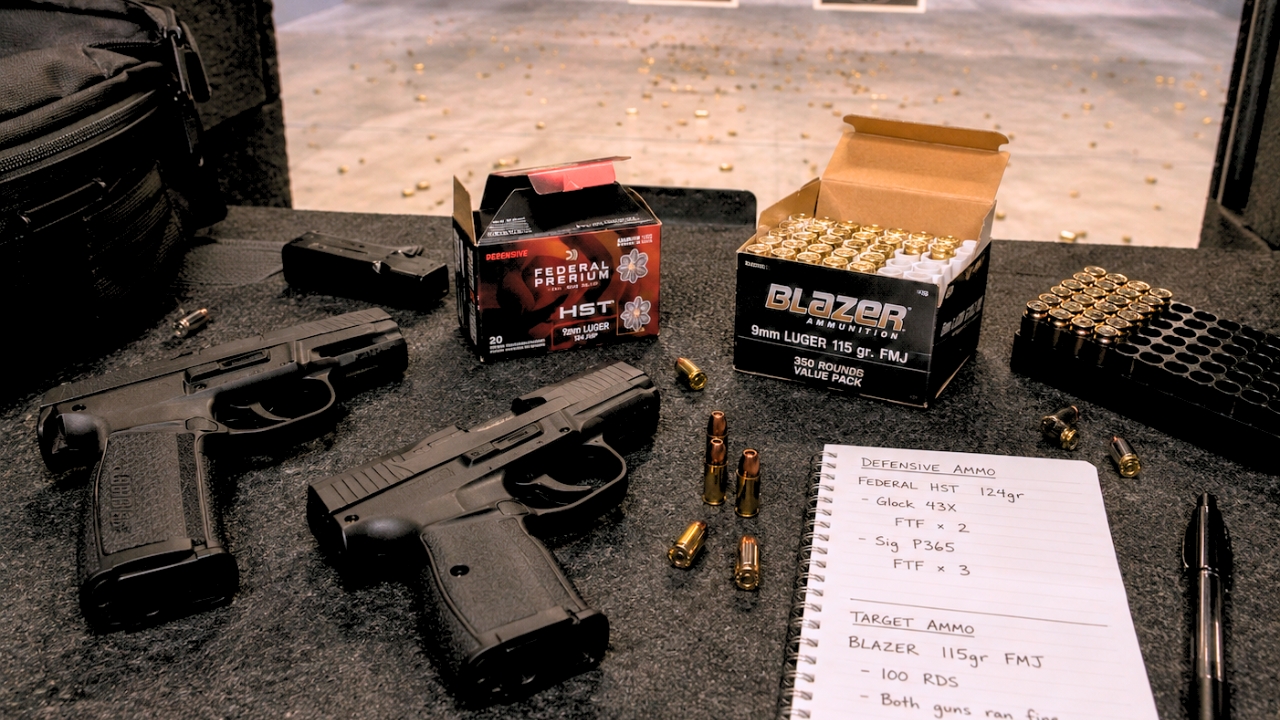
The shooter did not have one gun act strange.
He had two.
That is what made the range trip feel so frustrating. A single pistol choking on defensive ammo is enough to make a carrier stop and think. But when two carry guns both start having problems with the ammo that is supposed to be trusted most, the whole setup starts feeling questionable.
In a Reddit post, the gun owner said his defensive ammo failed in two different guns. Then, right after those issues, he put about 100 rounds of target ammo through them without the same trouble.
That is the exact kind of range day that leaves a person staring at the ammo box like it personally lied.
Most people expect the opposite. Defensive ammo is expensive. It comes in smaller boxes. It has serious-looking hollow points, better packaging, and a reputation built around reliability and performance. Range ammo is the cheap stuff you burn through for practice. So when the defensive load creates the problems and the target ammo runs fine, it feels backwards.
But that does happen.
A gun can run ball ammo beautifully and still stumble on certain hollow points. Full metal jacket rounds usually have a smooth, rounded profile that feeds easily in most pistols. Hollow points can have a wider nose, sharper edges, different overall length, or a shape that hits the feed ramp differently. A gun that seems perfectly reliable with practice ammo may not be proven with carry ammo at all.
That is why this range trip mattered.
The shooter did the thing people always say to do: he tested the ammunition he planned to rely on. It just did not give him the answer he wanted. Instead of confirming confidence, the test exposed a problem. And because it happened in two different firearms, the natural question became whether the issue was the ammo, the guns, the magazines, or something in the way the rounds were being loaded.
That is a hard one to sort out without more testing.
If both guns failed with the same defensive load, the ammo becomes a major suspect. Maybe the bullet profile did not feed well in either platform. Maybe that box or lot had an issue. Maybe the cartridges were seated oddly, had a rough case mouth, or were out of spec. But there are other possibilities too. If both guns were small carry pistols, they may have been more sensitive to grip or bullet shape. If the same shooter fired both, technique could play some role. If the ammo was repeatedly chambered before the range trip, setback or damage could be involved.
The important thing is not guessing too fast.
It is tempting to say, “This ammo is junk,” or “These guns are unreliable,” but a smart carrier slows down and separates the variables. Try a different box from a different lot. Try a known reliable defensive load. Try the same ammo in a larger pistol. Mark the magazines. Clean and lube the guns. Look closely at the failed rounds. Were they nose-diving into the feed ramp? Hanging halfway into the chamber? Failing to extract? Failing to eject?
The type of failure tells the story.
Still, the carry decision is pretty simple while the cause is unknown: do not carry that combination.
A defensive gun is a system. Gun, magazine, ammunition, holster, and shooter all have to work together. If the ammo fails in the guns you plan to carry, the brand reputation does not matter much in that moment. It may be great ammo in someone else’s pistol. It may be recommended everywhere online. It may test well in gel. None of that helps if your guns will not feed it.
This is where a lot of carriers get caught by cost. Defensive ammo is expensive, and nobody loves buying multiple boxes just to find out which load their gun likes. But the cheaper route is not really cheaper if it leaves you carrying rounds that have already failed in testing.
Target ammo running clean afterward was useful, but it did not solve the carry problem. It showed the guns were capable of functioning with something. It did not prove they were reliable with the defensive load that mattered most.
That distinction is important.
A gun that runs 100 rounds of ball ammo after choking on hollow points may still be mechanically fine. But for carry, the hollow points have to prove themselves too. A reliable practice gun and a reliable defensive setup are not always the same thing.
The shooter’s range day may have been aggravating, but it was also the best possible place for that failure to show up. Paper target. Controlled environment. Time to stop and inspect. No real threat. No desperate clearing drill in a parking lot. No life-or-death moment made worse by a round hanging up when it mattered.
That is what testing is for.
The range gave him bad news early.
That is still better than getting it late.
Commenters mostly focused on the difference between range ammo reliability and carry ammo reliability.
Several people said ball ammo feeding well does not prove hollow points will work. Defensive rounds can have different bullet shapes, and some guns are picky about what they feed cleanly.
Others suggested trying a different defensive load instead of forcing that one. Federal HST, Speer Gold Dot, Hornady Critical Defense, and other popular loads all feed differently depending on the pistol. The best load is the one that works in the specific gun.
A lot of advice came down to isolating variables. Test different magazines, use a fresh box of ammo, clean and lubricate the guns, and pay attention to exactly what kind of malfunction is happening.
Some commenters also warned against carrying ammo that has already shown repeated failures. Even if the guns run target ammo fine, the carry ammo still has to prove itself.
The main lesson was simple: defensive ammo is not trustworthy because it costs more. It is trustworthy only after it runs in your gun.