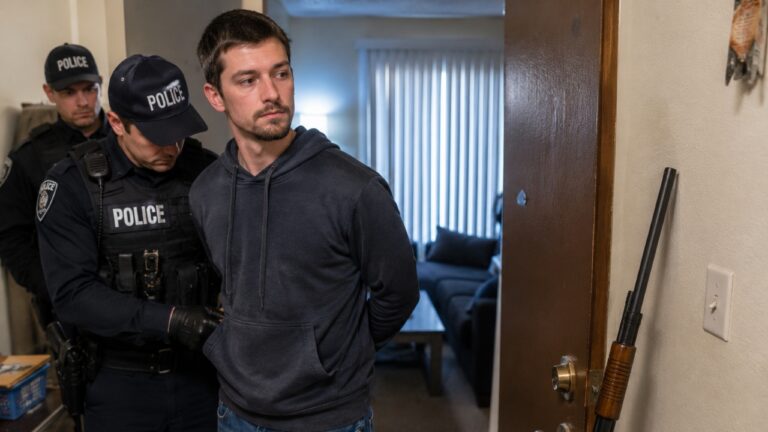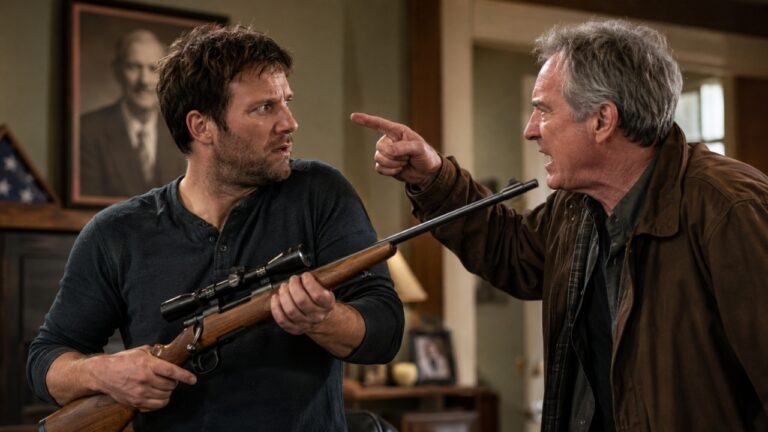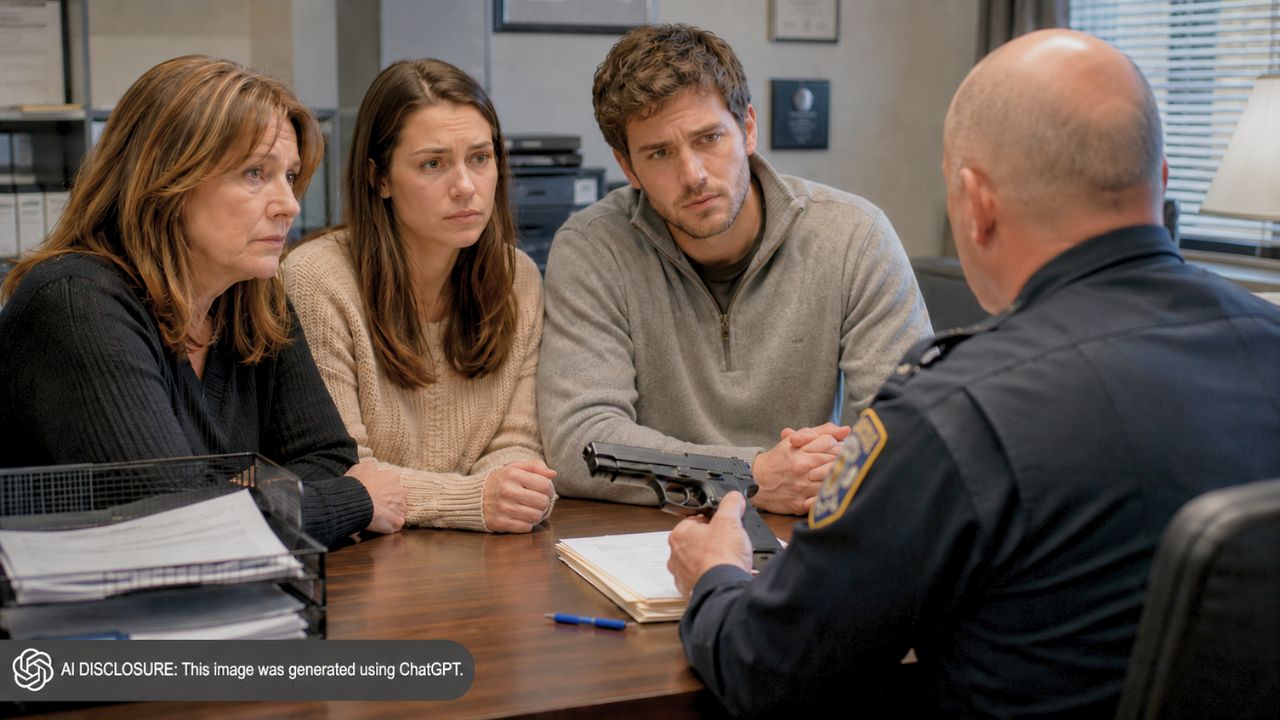
Photo credit: AI-generated image created using ChatGPT. Illustrative only.
When a family loses a loved one, the last thing they want is another fight—especially one with a law enforcement evidence room. But that’s exactly where one Colorado family found themselves after their father died while a criminal case involving his handgun was still in motion.
In the original post, a family member explained that their father had been arrested after a heated argument where he fired a Glock 10mm inside the house. No one was harmed, but the incident led to a felony menacing charge with a firearm, and the responding agency seized the pistol during the arrest.
A confiscated Glock and a case that didn’t get to finish
According to the family, the father accepted a plea deal that would have reduced the felony charge to a misdemeanor. The offense happened in February 2018, and by October 2018 he was “on track”—then he passed away.
That’s where the practical, personal side kicked in. The family said guns were part of his life, and this Glock was the one they didn’t have. They weren’t asking to rewrite history or excuse what happened. They just wanted to know if there was any lawful route to getting that pistol back as next of kin and property owners.
Why “it was going to be a misdemeanor” doesn’t automatically mean “give the gun back”
Out in the real world, plenty of folks assume a firearm comes home once the legal dust settles—especially if a serious charge gets reduced. But seized guns don’t work like a loaner tool you pick up after court. They’re often treated as evidence, and sometimes they’re handled as potential contraband depending on how they were used and what the court orders.
In this case, the gun was reportedly tied to a felony menacing allegation involving a discharge in a home. Even with no injuries, that kind of fact pattern tends to keep a firearm locked down as evidence for a long time. And if the case ends in an unusual way—like the defendant dying midstream—there may not be a clean “final order” that tells the property unit what they’re allowed to release, to whom, and when.
The hard question the family asked: does death make the crime “moot”?
The family member floated a question a lot of outdoorsmen would ask in the same spot: if the person is deceased and can’t be prosecuted, doesn’t that make the whole thing go away? And if the plea deal would have reduced it anyway, why can’t the firearm be returned lawfully?
Common sense says, “Nobody’s coming back to court, so return the property.” Bureaucracy often says, “We need paperwork that specifically authorizes release.” When a defendant dies, the criminal case may not end with the kind of conviction, dismissal, or sentencing event that triggers a routine property return. Without a clear court directive, agencies tend to default to “not our call,” which can feel like a brick wall to a grieving family.
What families run into when they try to retrieve a seized firearm
Even when a gun is legally owned and the heirs are lawful gun owners, departments usually won’t hand it over on a handshake and a death certificate. Property and evidence units are built around chain-of-custody. They want proof of ownership, proof of authority to act for the estate, and confirmation the firearm isn’t required for an ongoing matter.
That’s the nuts-and-bolts reality: a next-of-kin relationship doesn’t always equal “automatic authority” to claim property—especially a firearm taken during an arrest. If the father didn’t have a will, or if there’s no appointed personal representative for the estate, the family may have to take steps in probate just to become the right person to make the request.
On top of that, there’s the uncomfortable possibility the family already mentioned: the gun may have been destroyed, transferred, or otherwise disposed of under whatever policies and court orders applied to the case at the time. Whether that happened appropriately is a separate question, but it’s one reason families are told “case closed” even when it doesn’t feel closed.
Where the conversation usually lands: documentation, the court file, and the evidence room
The family member noted they’d heard “in some cases the pistol is returned, even if involved in a crime,” but they recognized that was hearsay. That’s an important detail, because there’s no universal rule of thumb that fits every county, every court, and every set of charges.
What tends to matter is what the court ordered (or didn’t order) about the firearm, and how the agency logged it: evidence, safekeeping, or forfeiture-related handling. If it was booked strictly as evidence, the release usually ties back to the status of the criminal case and the prosecutor’s position. If it was treated as a forfeiture item, that can be its own track with deadlines and procedures that don’t care much about grief or family history.
For gun owners reading this, the takeaway isn’t “you’ll never get it back.” It’s that the path, if there is one, usually runs through official channels: the case number, the property receipt, the agency’s release process, and often the court clerk’s file. Phone calls alone don’t always move it, because the person on the other end may not be allowed to do anything without specific documentation.
The real-world lesson for gun owners: paperwork and planning matter more than we like to admit
This situation is a gut punch because it mixes two things that already carry weight: family loss and firearms. But it’s also a reminder that if you own guns—and especially if you own a particular gun your family might want someday—your best defense against chaos is planning while you’re still around.
That can mean keeping purchase records where your family can find them, documenting serial numbers for insurance and ownership purposes, and having a clear will or estate plan that spells out who gets what. It also means understanding that if a gun gets wrapped up in a criminal case, it may not come back quickly—or at all—no matter what you intended for it.
For this Colorado family, the Glock 10mm wasn’t just a tool. It was a piece of their dad’s life. And when a gun goes into an evidence locker, it stops being personal property in the usual sense and starts living by court timelines, policy binders, and signatures. That’s a hard truth, but it’s one every gun-owning family is better off knowing before they’re forced to learn it the painful way.
Like The Avid Outdoorsman’s content? Be sure to follow us.
Here’s more from us: