Photo credit: Precision Machine Shed/YouTube
The tiny ring of metal at the muzzle of a rifle rarely gets the glamour treatment, yet it quietly records how a firearm has been built, carried and cared for. When that ring, the crown, looks rough or battered, it can reveal far more than cosmetic neglect, from sloppy factory work to decades of hard use or careless cleaning. I see a messy crown as a kind of forensic clue, a compressed history of a rifle’s past that also predicts how well it will shoot in the future.
Why the crown matters more than it looks
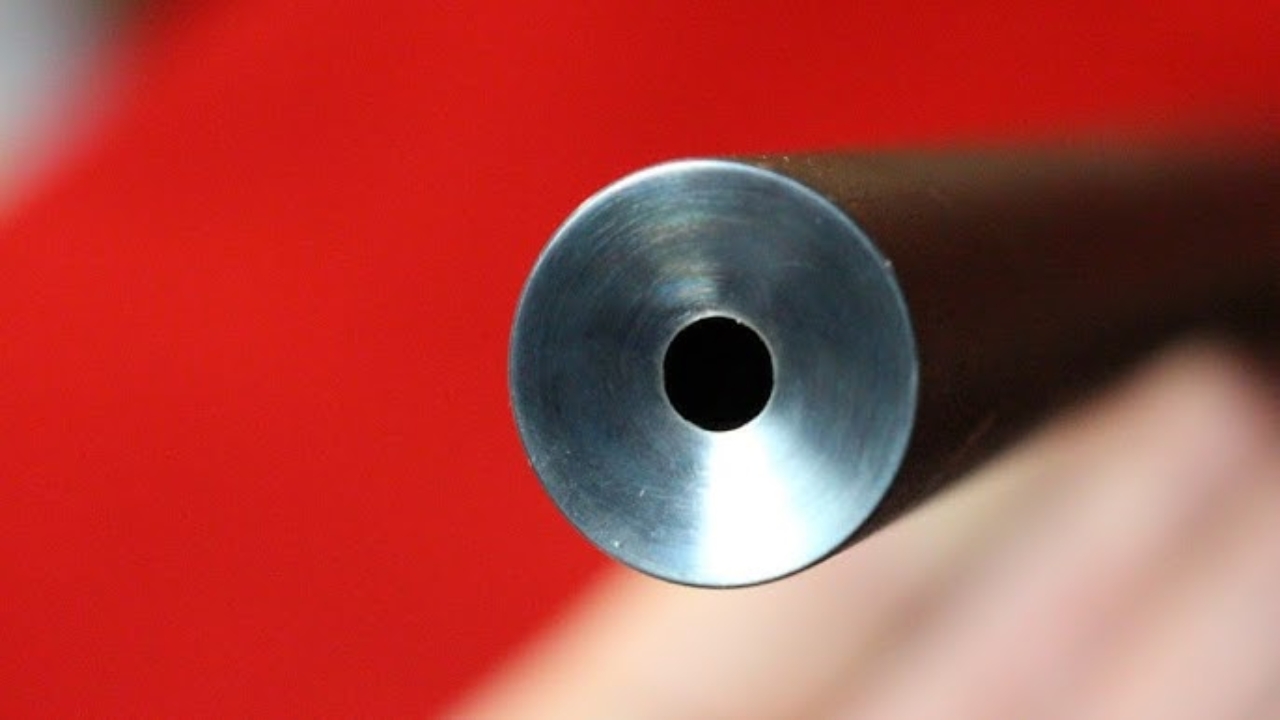
The crown is the last surface to touch the bullet as it leaves the barrel, so any flaw there can tilt gas pressure, disturb the projectile and open up groups. A clean, even edge lets propellant gases peel away symmetrically, while a nick or burr vents gas early on one side and nudges the bullet off course before it has even cleared the muzzle. That is why precision builders obsess over this tiny detail and why a sloppy crown is often the first suspect when a rifle that should shoot well suddenly starts printing erratic patterns on paper.
On sporting rifles, a gently rounded crown is common because it balances accuracy with some protection against everyday bumps in the field, yet even that profile is surprisingly fragile and easily damaged if it is not cut and finished correctly. Guidance aimed at tightening groups stresses that the greatest care should be taken with this rounded transition, and even suggests using a cartridge to check how consistently the muzzle has been cut, a reminder that the crown is both a performance part and a diagnostic tool for the rifle’s overall condition, as described in group-tightening tips.
What a damaged crown does to your groups
When a crown is chipped, dented or worn unevenly, the effect on accuracy is usually out of proportion to the size of the defect. Gas escaping early on one side of the bullet can introduce yaw, so shots that should cluster into a tight knot instead string vertically or drift sideways in a way that no amount of scope adjustment can fully correct. I have seen rifles that looked mechanically sound and wore quality optics suddenly behave like budget plinkers, only for a close look at the muzzle to reveal a scarred crown that was quietly undoing all the shooter’s efforts.
Modern chassis makers who live and die by precision have demonstrated how even small crown imperfections can open up groups, using slow-motion footage and side-by-side comparisons to show the difference between a clean muzzle and one that has been carelessly dinged. In one detailed breakdown, the company MDT explains that the crown is central to how a barrel performs and that once it is compromised, no amount of stock bedding or trigger tuning will fully mask the problem, a point they illustrate in a video on how a damaged crown affects your rifle.
Reading the story in a sloppy crown
A rough or uneven crown can tell you a great deal about where a rifle has been before it ever lands on your bench. Heavy dings and flat spots around the muzzle often point to physical impacts, such as a barrel striking a rock, truck bed or blind rail, which can be especially common on surplus rifles that spent years in military racks. In other cases, a crown that looks washed out, rounded over and no longer crisp may suggest thousands of rounds combined with aggressive cleaning from the muzzle, a pattern that hints at long service life rather than a single accident.
Enthusiasts discussing how to check older SKS barrels with a cartridge often note that muzzle and crown damage tends to come from being struck, leaving visible dings and scars, while a healthy muzzle should look sharp and shiny like a mirror. That kind of field check, sliding a cartridge into the muzzle to see how far it swallows the bullet, can reveal both erosion and past abuse, and it has become a common shorthand for judging whether a rifle’s crown has been compromised by rough handling, as seen in a thread on checking SKS barrels with a cartridge.
Factory work, custom cuts and what they reveal
The way a crown is cut at the factory can reveal a manufacturer’s priorities and sometimes its shortcuts. A sharply recessed target crown, with the rifling set back from the outer edge, signals that the maker is trying to protect the bore and give the bullet a clean, consistent exit, even if it adds machining time. By contrast, a shallow, uneven or visibly tool-marked crown on a new rifle can hint at rushed production, where the muzzle was given just enough attention to pass a quick visual check but not enough to satisfy a precision shooter.
Some brands lean into more elaborate muzzle treatments, pairing spiral fluted bolts and stylized stocks with crowns that are cut to look aggressive but may not always be finished with the same care as their marketing suggests. Owners dissecting the Mossberg Patriot, for example, have noted that the B/A Bolt is spiral fluted with shallow flutes and that the bolt head design is a standard Savage style, two-piece but not sloppy, while also commenting on how the Safety is positioned and how the overall package is designed to look cool. Those same discussions often turn to whether the muzzle work lives up to the rest of the rifle’s design, a question that surfaces in a forum thread on Mossberg Patriot rifles.
Target crowns and the pursuit of precision
For shooters chasing tiny groups, the crown is not just a finishing touch, it is a deliberate design choice. Target crowns are often recessed and carefully squared so that the rifling ends in a protected pocket, shielding it from knocks while ensuring that the bullet exits through a perfectly concentric ring of steel. When I evaluate a precision rifle, I look for that recessed geometry and a flawless transition from bore to crown, because any asymmetry there will show up on the target long before it is visible to the naked eye.
Technical guides on muzzle design highlight how a properly executed target crown protects both the riflings and the edge of the crown itself, often using examples like the Browning X-Bolt to show what a well-finished muzzle should look like. In those illustrations, the crown is not just recessed but also polished and free of chatter marks, underscoring that the last few millimeters of barrel are treated as critical real estate for accuracy, a point driven home in a breakdown of the rifle muzzle crown.
How crowns wear over a rifle’s lifetime
Over time, even a well-cut crown can degrade, and the pattern of that wear helps decode how a rifle has been used. High round counts erode the edges of the rifling at the muzzle, especially on smallbore rifles that see constant competition use, gradually softening what was once a crisp transition. When that erosion is combined with cleaning from the muzzle using steel rods or abrasive brushes, the result can be a crown that looks smeared or rolled over on one side, a visual cue that the rifle’s best accuracy years may be behind it unless the muzzle is recut.
Competitive shooters who have lived with a single barrel for years often describe how accuracy slowly fades as the crown and throat wear, even when the rest of the rifle remains mechanically sound. One smallbore shooter recalled running an Anschutz 1807 through years of competition, after his brother had already used it to win a state junior championship, and noted that while .22 rimfire barrels are rarely truly worn out from shooting alone, the muzzle and crown can eventually become the limiting factor. That experience, shared in a discussion about how long it takes to wear out a .22 rimfire, shows how a rifle like an Anschutz 1807 can carry its history in the condition of its crown.
Cleaning habits that quietly ruin crowns
Many sloppy crowns are not born at the factory or in the field but in the cleaning room, where well-intentioned owners unknowingly drag rods and brushes across the most delicate edge of the barrel. Pushing a rod in from the muzzle, especially without a proper guide, can chip or round off the sharp transition where the rifling meets the crown, creating uneven wear that is almost impossible to see without magnification. Over years, that subtle damage accumulates, and the rifle that was once a tack driver starts to throw unexplained flyers that no amount of load tuning can cure.
Maintenance advice for pistols like the 1911 makes this risk explicit, urging shooters to Brush from the Breech The business end of the barrel is finished a certain way for a reason. Even on the cheapest of 1911s, there is a deliberate effort to protect the edges of the crown, and cleaning from the muzzle with hard rods can cut into those edges and cause uneven wear. That same logic applies to rifles, where starting from the breech and using proper guides helps preserve the crown’s geometry, a point emphasized in guidance on what you need to know about maintaining your 1911.
Recrowning: giving a tired barrel a second life
When a crown is visibly battered or when accuracy has fallen off without another clear cause, recrowning can be a surprisingly effective way to revive a rifle. The process involves cutting back the muzzle just enough to reach clean, undamaged rifling, then machining a new crown that is square to the bore and finished to a high polish. I have seen rifles that were written off as “shot out” suddenly return to respectable accuracy after a careful recrown, revealing that the barrel’s interior was still healthy and that the real problem had been confined to the last millimeter of steel.
Gunsmithing demonstrations show how much attention goes into this step when it is done properly, with machinists indicating the bore, using piloted cutters and checking their work under magnification to ensure that the new crown is perfectly concentric. One instructional video walks through how a rifle crown is the last part of a rifle to touch the bullet and explains that special attention to the manufacturing processes will either preserve or destroy the rifle’s potential, underscoring why recrowning is treated as a precision operation rather than a quick cosmetic fix, as seen in a tutorial on crowning a rifle barrel.
How experienced shooters judge a crown
Seasoned shooters often develop a quick visual and tactile checklist for evaluating a crown, especially when they are inspecting used rifles or diagnosing accuracy problems. They look for a uniform ring of rifling at the muzzle, free of chips or asymmetry, and they run a cotton swab or fingertip lightly around the edge to feel for burrs that might not be obvious to the eye. If the crown passes that test, they are more likely to trust the barrel and focus their troubleshooting on ammunition, bedding or optics; if it fails, they know that no amount of scope dialing will fix a mechanical flaw at the muzzle.
Instructional content from experienced marksmen reinforces this habit, treating the crown as a critical checkpoint that is commonly mentioned but rarely understood in depth. In one video, Mark and Sam walk through different crown styles and explain how subtle defects can undermine accuracy, encouraging viewers to inspect their muzzles closely and not to dismiss small dings as harmless. Their discussion of barrel crowns, presented in a segment by Mark and Sam, captures the core lesson that a sloppy crown is both a symptom and a cause, revealing how a rifle has been treated and how it is likely to perform the next time it is fired.