Photo credit: G Squared Tactical/YouTube
Handgun design is shifting faster than at any point since polymer frames went mainstream, and the changes are not just cosmetic. From modular internals to biometric locks and optics-ready slides, manufacturers are rethinking what a pistol should do, who it is for, and how it fits into a tightening regulatory climate.
What looks like a wave of new models is really a deeper redesign of the platform itself, driven by consumer demand for lighter, easier pistols, political pressure on internal mechanisms, and a race to integrate electronics without sacrificing reliability.
Ergonomics and “lightweight” expectations are rewriting the brief
The modern handgun buyer is no longer content with a chunky service pistol that happens to fit a holster. I see a clear pivot toward pistols that are easier to carry, softer to shoot, and less intimidating for first-time owners, which is pushing engineers to shave ounces and refine grip geometry. Guides aimed at new shooters now emphasize controllable recoil, intuitive controls, and compact dimensions as core criteria for a best first handgun, and that expectation is bleeding into the broader market.
That shift shows up in product pipelines that lean heavily on compact, polymer-framed designs marketed around comfort and ease of use. Coverage of new handguns coming in 2023 highlighted how often manufacturers now lead with weight and carry comfort, rather than raw capacity or caliber, and the word “lightweight” has become a selling point in its own right. When I look across these launches, the pattern is consistent: slimmer slides, shorter grips, and tuned triggers are no longer niche features, they are the baseline for what a modern defensive pistol is supposed to feel like in the hand.
Modularity and Fire Control Units are reshaping the core of the pistol
Under the skin, the most consequential redesign is the move toward modular internals that separate the legal “firearm” from the grip and slide. The easily replaceable fire control unit, or FCU, in the SIG Sauer M17 and M18 shows how a single serialized core can drop into multiple grip modules and slide lengths, letting the same pistol morph from duty gun to compact carry. That concept has migrated from the military to the civilian counter, where buyers increasingly expect to tune size, capacity, and even color without buying a whole new firearm.
Industry analysis notes that the rise of modular fire control units is now a defining trend in service and competition pistols, with designs that treat the FCU as a separate, self-contained unit independent of the frame. Reporting on Glock’s patent activity points out that Fire Control Units are becoming increasingly central to how new generations are conceived, hinting that even legacy platforms are preparing to follow SIG’s lead. For shooters, that means a future where “buy once, configure often” replaces the old model of owning multiple fixed pistols for different roles.
Optics-ready slides and advanced sights are now standard, not special
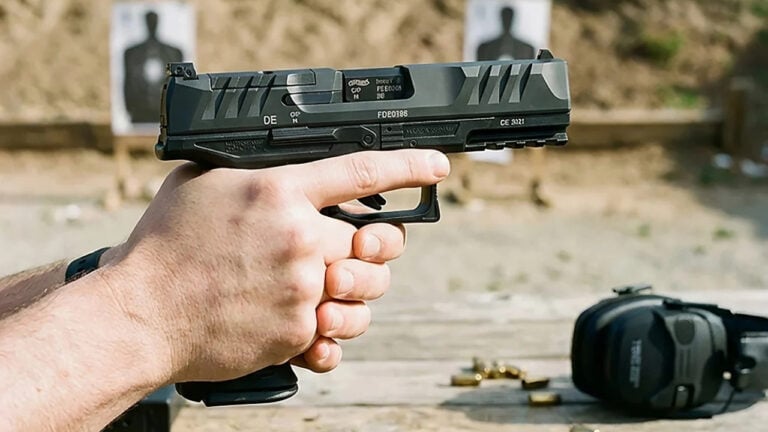
Another driver of redesign is the expectation that a handgun should be ready for a red dot out of the box. What started as a competition experiment has become mainstream, and I now see optics cuts and taller backup sights treated as must-have features rather than custom work. Technical overviews of pistol optics stress that the first step is having a pistol with a slide machined or milled for a red dot, and manufacturers have responded by shipping slides that accept common footprints from day one.
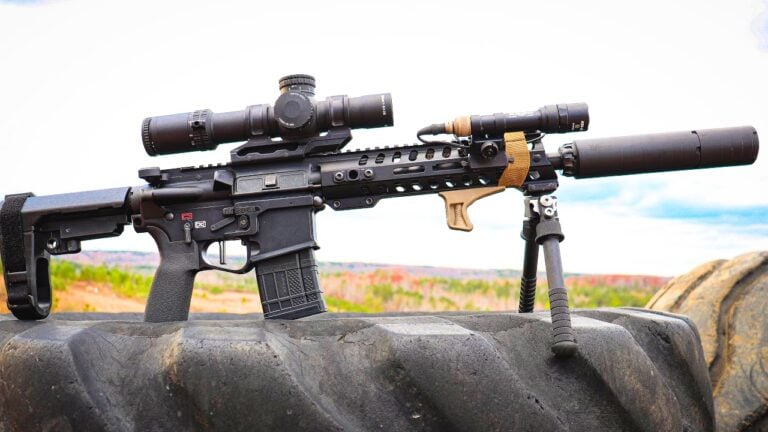
That shift is reinforced by factory upgrade paths that treat the slide as a modular component in its own right. SIG’s catalog of Outfitting options for red dot ready slides shows how a simple top-end swap can transform an older pistol into an optics host, with faster target acquisition and more precise follow-up shots. Broader small-arms programs echo this trajectory, with analysts noting that optics and suppressors are becoming a clear trend and moving from accessory to essential in small arms sights and fire control systems. Handgun slides are being redesigned accordingly, with reinforced mounting points, improved ejection patterns, and taller sights baked into the blueprint.
Smart guns and biometrics are moving from concept to commercial reality
Perhaps the most radical redesign pressure comes from efforts to integrate electronics that control who can fire the gun. Smart pistols have long been a political talking point, but the latest generation is finally reaching the market with serious engineering behind it. One flagship example is the Biofire Smart Gun, which is presented as a fully integrated platform at smartgun rather than an add-on lock, signaling that the entire handgun has been built around its electronic core instead of treating biometrics as an afterthought.
The technical heart of that system is described as Lightning, Fast Biometrics Biofire, Guardian Biometric Engine, which combines fingerprint and 3D facial recognition to unlock the gun only for authorized users, with no external switches or gadgets. That kind of redesign forces engineers to rethink frame dimensions, battery placement, and even how the trigger interfaces with the firing mechanism. It also intersects directly with public opinion: a poll of New Mexico voters found that 64% of respondents support a new effort to regulate assault weapons focused on the gun’s internal mechanisms, which is exactly the terrain where smart-gun advocates hope to make their case.
Regulation, liability, and Glock’s “V Models” are forcing internal changes
Legal pressure is not just shaping smart guns, it is also pushing mainstream manufacturers to harden their designs against conversion and misuse. Reporting on Glock’s internal deliberations describes a potential discontinuation of most existing pistol models in favor of new variants that are harder to modify. One analysis of Glock’s big shake-up, titled Nov, Glock, Big Shake, What It Means for Shooters and the Ammunition Market, points to redesigned slide components that limit convertibility as a key part of the strategy, signaling that the company is willing to alter its iconic profile to address legal risk.
Separate reporting notes that Oct, Reported, Models, Circulating describe “V Models” that would feature anti-conversion design elements, although the exact technical details have not been verified. Even at the rumor stage, the direction of travel is clear: internal geometry, slide cuts, and fire control layouts are being reconsidered not only for performance, but to make it harder to add auto sears or other illegal parts. That is a profound shift from the era when manufacturers focused almost exclusively on reliability and accuracy, and it suggests that future redesigns will be judged as much by what they prevent as by what they enable.
Materials, coatings, and PDW-style compacts are blurring categories
Alongside electronics and legal constraints, basic materials science is quietly transforming how pistols are built. Engineers are borrowing from aerospace and automotive manufacturing to use advanced polymers, aluminum alloys, and surface treatments that cut weight while improving durability. One technical overview compares this moment to the way Yes, but the manufacturing and design choices of pioneers like Apr, Just, Eugene Stoner replaced heavy steel with cast aluminum, arguing that modern coatings and polymers now let pistols run smoother and clean easier while surviving harsher environments.
Market research underscores how Rapid technological evolution and shifting regulatory regimes are redefining the competitive landscape, with manufacturers leaning on new coatings to enhance both performance and ergonomics. At the same time, the line between handgun and personal defense weapon is blurring. Industry trend reports describe PDWs For Everyone, noting that compact, braced platforms with pistol roots are now marketed as home-defense tools that bridge the gap between sidearm and carbine. That feedback loop is influencing handgun redesigns, which increasingly borrow features like extended rails, threaded barrels, and higher-capacity magazines from their PDW cousins.
Marketing, consumer identity, and the next phase of redesign
Behind all of these technical shifts is a marketing machine that has learned to speak directly to niche user identities. As the firearms industry enters 2025, analysts note that As the market fragments, staying competitive means adapting to rapidly evolving consumer expectations, regulatory pressures, and digital disruption. That reality is visible in how companies pitch their latest pistols: not just as tools, but as lifestyle accessories for concealed carriers, competitive shooters, or tech-forward early adopters who want biometrics and optics as part of their everyday kit.
Product roundups of Jan, New Handguns On the Way, Lightweight emphasize how messaging now leans on ease, versatility, and multi-role capability from the same load, rather than on raw power alone. Broader industry commentary at industry trends points to a consumer base that expects modularity, optics readiness, and accessory support as standard. Taken together, those expectations explain why the latest wave of handgun redesigns feels so sweeping: the pistol is no longer a fixed object, but a configurable platform that must satisfy a more demanding, more diverse audience than ever before.
Innovation pipelines and what comes next
Looking ahead, I see handgun redesigns accelerating rather than slowing, as manufacturers race to integrate new tech without alienating traditional buyers. Engineering blogs focused on future platforms argue that innovation in firearms will increasingly revolve around modular components, improved manufacturing tolerances, and user-friendly maintenance, all of which are easier to implement in pistols than in larger systems. That aligns with the way PDW-style compacts, modular FCUs, and optics-ready slides have already moved from high-end experiments to mainstream offerings in just a few product cycles.
At the same time, the entry-level market is pulling in the same direction from the other end. Buyer guides that walk new shooters through choosing a best first handgun now treat features like accessory rails, optics compatibility, and manageable ergonomics as non-negotiable, which pressures even budget manufacturers to redesign around those expectations. As regulatory debates focus more on internal mechanisms and as smart-gun technology matures, the next generation of pistols is likely to look even less like the metal-framed sidearms of the past and more like configurable, sensor-rich devices that sit at the intersection of mechanics, software, and politics.
Like The Avid Outdoorsman’s content? Subscribe to our newsletter so you never miss an article.
Here’s more from us: