Photo credit: Rainier Arms Media/YouTube
Gun buyers walking into a shop this winter are seeing familiar names on the tags, but the pistols and rifles behind the glass are not quite the same guns they were a few years ago. From striker‑fired handguns to compact carbines, manufacturers are quietly revising core models rather than ripping up their catalogs. I see a convergence of pressures behind that shift, as companies respond to cautious consumers, fast‑moving laws and a new generation of shooters who expect more capability out of the box.
Legacy brands are refreshing workhorse models instead of starting from scratch
The most striking trend is how established brands are updating their staples rather than betting everything on clean‑sheet designs. Companies that built their reputations on classic duty pistols and revolvers are now layering in modern ergonomics, accessory support and modularity while keeping the model names that already resonate with buyers. A visit to a major maker’s site, for example, shows how a traditional catalog of revolvers and polymer pistols now sits alongside optics‑ready slides, tuned triggers and carry‑focused variants, all under the same brand umbrella that appears on the front page of Smith & Wesson.
This incremental strategy is not just about aesthetics, it is a financial calculation in a market where margins are tight and demand is uneven. Industry reporting notes that, as of March, Ruger held cash and short‑term investments totaling $108.3 million and carried no debt, a position that gives it room to refine proven platforms instead of chasing risky moonshots. When a company can keep the same basic frame and action while updating controls, sights and finishes, it preserves manufacturing efficiency and dealer familiarity while still giving customers a reason to buy the “new” version.
Optics‑ready handguns have gone from niche to default
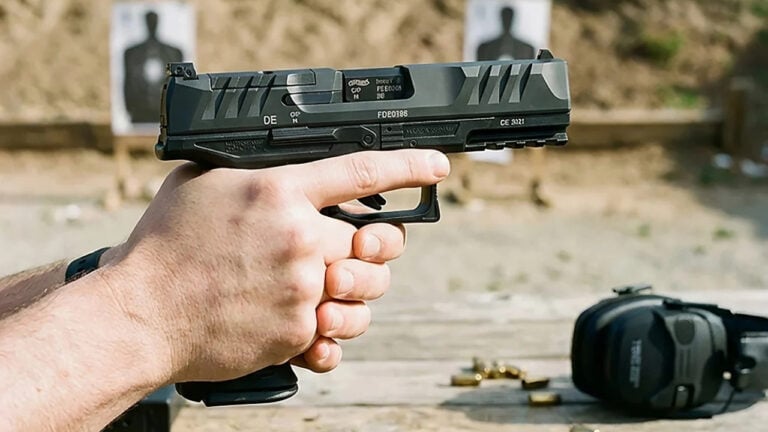
One of the clearest reasons popular pistols are being revised is the rapid normalization of slide‑mounted red dots. What started as a competition and tactical experiment is now a mainstream expectation, especially among younger buyers who grew up with dot sights on carbines and even airsoft guns. Guides to the best “first handgun” for new shooters now routinely list models like the Glock 19 Gen 5 MOS alongside classics such as the CZ 75, signaling that optics‑ready cuts are no longer a specialist feature but a baseline requirement for many entry‑level buyers.
Manufacturers have responded by rolling out factory slides that accept micro red dots, often branded as “optics ready” or “MOS” variants, and by integrating mounting systems directly into new generations of pistols. Technical overviews describe how GLOCK engineers created a dedicated Modular Optic System to simplify attaching popular sights and speed up target acquisition, a feature that has migrated across multiple models. Broader handgun roundups now treat “What Are Red Dot Ready Pistols” as a core explainer, framing red dot ready designs as the new standard rather than an exotic upgrade, which helps explain why so many familiar pistols are quietly getting milled slides and revised sight heights.
Glock’s portfolio shake‑up shows how updates and discontinuations go hand in hand
No brand illustrates the current churn more clearly than Glock, which is simultaneously launching new generations and trimming older SKUs. The company has introduced a sixth generation of pistols that reworks ergonomics, optics integration and user‑centric controls, with coverage describing how Glock is “reimagining” familiar territory rather than abandoning it. At the same time, official notices explain that multiple commercial pistols are being retired so the company can “focus on the products that will drive future innovation and growth” and reduce its current portfolio, a rare public acknowledgment that the catalog had become unwieldy.
The shake‑up is not happening in a vacuum. A recent announcement of a new V‑branded family of pistols emphasized that “The GLOCK V Series is Coming” while also stressing that an earlier leak came from a retailer that was “Yesterday” and “NOT” affiliated with the company, underscoring how carefully Glock manages expectations around its lineup changes. That same statement framed the V‑series as part of a broader effort to streamline products while simplifying processes, a message that aligns with the decision to discontinue older models and is captured in the description of The GLOCK V Series. On social media, commentary about Glock models “Just got by California” and remarks like “Yeah, I said it” highlight how state regulations and litigation risk, especially around conversion devices and “switches,” are also nudging the company to retire or reconfigure certain offerings that attract scrutiny in places like California.
Regulation is forcing design tweaks and compliance‑friendly variants
Behind the cosmetic changes, a more serious driver is the patchwork of new gun laws that manufacturers must navigate. Compliance teams are tracking a wave of state‑level measures, with one analysis noting that, six months into the year, “Six months into 2025, more than a dozen states have passed new gun safety laws” aimed at keeping communities safe. That kind of rapid legislative activity, summarized in a gun law trendwatch, pushes companies to adjust magazine capacities, safety mechanisms and even model names to avoid running afoul of shifting definitions.
Federal rules are also in flux, and that is changing how popular guns are configured from the factory. Guidance for licensed dealers underlines that “New Gun Laws 2025” have altered how Federal firearms regulation applies to categories like pistol‑braced carbines and privately made firearms, signaling that every FFL “Need to Know” the details to stay compliant. When a compliance advisory spells out how Federal definitions have moved, it is not surprising to see manufacturers quietly revising buffer tubes, barrel lengths and accessory compatibility so that a familiar model can be sold in all 50 states without inviting enforcement headaches. Those changes may not show up in the model name, but they are baked into the latest production runs.
Consumers are more cautious, but they expect more features for their money
Even as regulations tighten, the bigger constraint on gun makers right now is a buyer base that is both more educated and more selective. Industry executives describe a market where “Looking at the overall firearms market, we continue to see consumers generally being cautious due to macroeconomic factors and cost increases,” a sober assessment captured in a 2025 market report. When inflation and uncertainty weigh on household budgets, buyers are less likely to impulse‑buy a second or third handgun unless it offers a clear upgrade over what they already own.
At the same time, those buyers are more informed than ever. Trade coverage of new rifle introductions notes that “When manufacturers up their game, everyone benefits” and that “Firearm consumers are an increasingly educated lot,” a dynamic that is reshaping what sits on shelves. That observation, drawn from a rundown of new rifles coming, applies just as much to handguns: shoppers now expect ambidextrous controls, accessory rails and optics cuts as standard, not premium extras. In that environment, quietly updating a long‑running model with better ergonomics or an improved trigger is often the most efficient way to meet higher expectations without asking customers to learn a completely new platform.
New shooters and crossover buyers are reshaping what “popular” looks like
The surge of first‑time gun owners over the past few years has not faded, it has matured, and that is changing which models count as “must have.” Industry outlooks describe how “These new consumers in turn introduce their friends — our new consumers — to firearms,” creating a network effect that keeps bringing fresh faces into the market. Analysts also point out that “While the election and unified g…” political climate can spike interest, it is lifestyle factors and peer recommendations that now “drive consumers’ interest to purchase,” themes laid out in a 2025 industry outlook.
Manufacturers are tailoring updates to meet those newcomers where they are. A preview of “New Handguns Coming in 2025” notes that “Manufacturers continue to deliver guns that satisfy the need or urge to hunt, defend,” capturing how one pistol might be pitched simultaneously as a home‑defense tool and a range toy. That same overview frames the slate of New Handguns Coming as a “tall order” that must serve concealed carriers, hunters and recreational shooters at once. The result is a wave of revised models with interchangeable backstraps, threaded barrels and suppressor‑height sights, all designed to let a single SKU appeal to a broader, more diverse audience without losing the brand recognition that comes with a familiar model name.
Rifles and carbines are being modernized for modular, multi‑role use
The quiet refresh is not limited to handguns, it is just as visible in the rifle aisle. Enthusiast previews of “New Guns For 2025” highlight models like the Bushmaster V‑RADICATOR AR‑15 Rifles, with “Bushmaster V‑RADICATOR AR‑15 Rifles” and “Bushmas…” branding that lean heavily on modular platforms. That list of what shooters can look forward to, introduced with a simple “Here are just a few of the models,” shows how companies are taking proven AR‑15 patterns and layering on new handguards, gas systems and barrel profiles to keep them competitive, as seen in the rundown of Bushmaster V-RADICATOR Rifles.
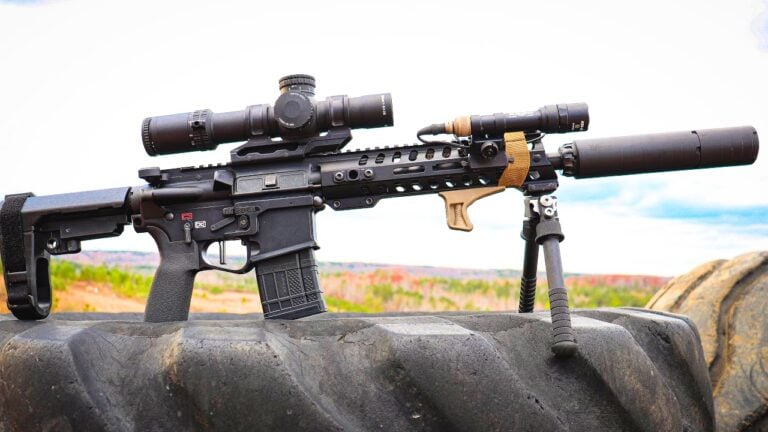
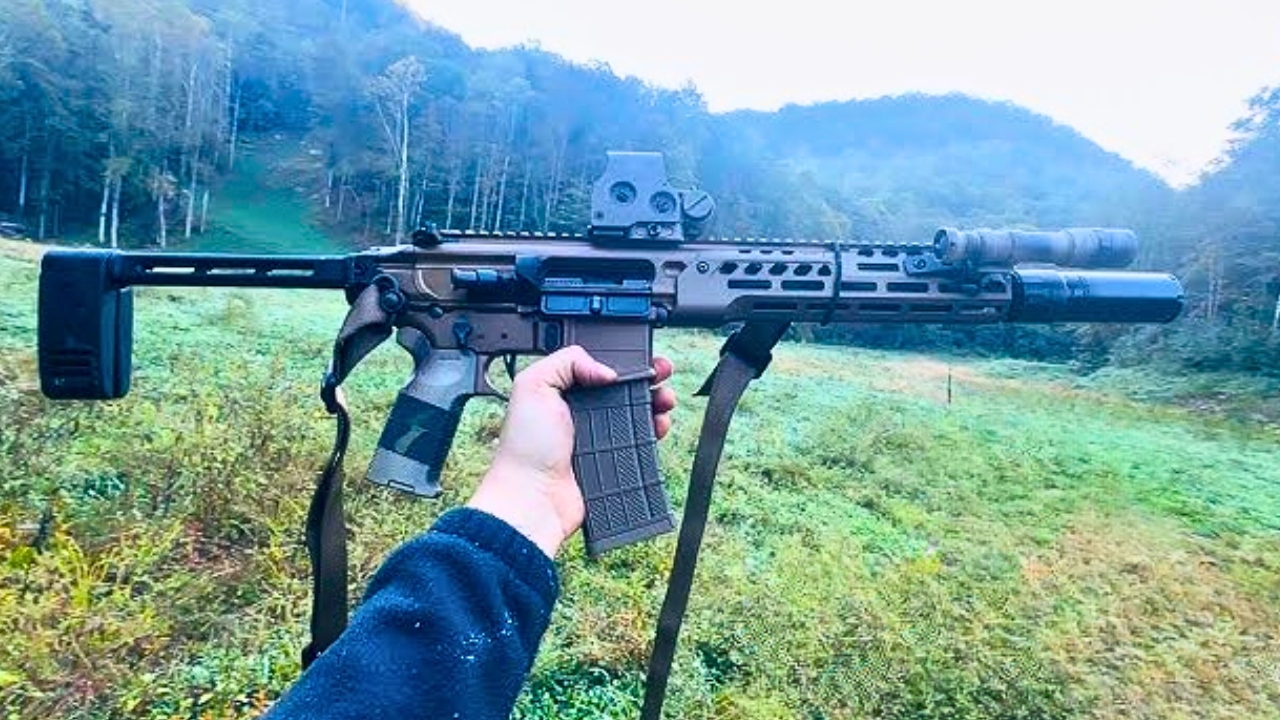
On the premium end, manufacturers are pushing compact carbines that blur the line between rifle and pistol. One example is the MCX‑Rattler LT, described as “Designed to meet the needs of Special Operations forces” with fully ambidextrous controls, an “MCX” lineage and a “Rattler LT” configuration that includes a flat‑blade trigger for precise control. That combination of duty‑grade pedigree and civilian‑friendly features, detailed in the product overview for the MCX Rattler LT, reflects a broader move to update popular rifle families with better ergonomics, suppressor compatibility and folding stocks so they can serve as home‑defense tools, truck guns and training platforms all at once.
SHOT Show previews hint at how far the update cycle will go
Trade show floors offer a preview of how deep these revisions will cut into existing catalogs over the next year. Organizers of major industry events frame their handgun showcases around the idea that it is “a tall order” to build one gun that can be a “hunting or defense gun,” yet that is exactly what many exhibitors are attempting with refreshed versions of their best sellers. The curated list of Manufacturers bringing new handguns underscores how much of the buzz now centers on updated triggers, optics cuts and grip modules rather than entirely new operating systems.
Rifle previews tell a similar story, with organizers noting that “Firearm consumers are an increasingly educated lot” who scrutinize every feature and expect manufacturers to “up their game” each model year. The showcase of Jan new rifles makes clear that even incremental changes, like improved stocks or ambidextrous controls, are now marketed as headline features. In that environment, I expect the quiet refresh of popular guns to continue, with each passing year bringing another round of small but meaningful tweaks that keep familiar model names at the top of sales charts while steadily raising the baseline for what a “standard” firearm can do.
Like The Avid Outdoorsman’s content? Subscribe to our newsletter so you never miss an article.
Here’s more from us: