Photo credit: Natallia Vinahradskaya/Shutterstock.com
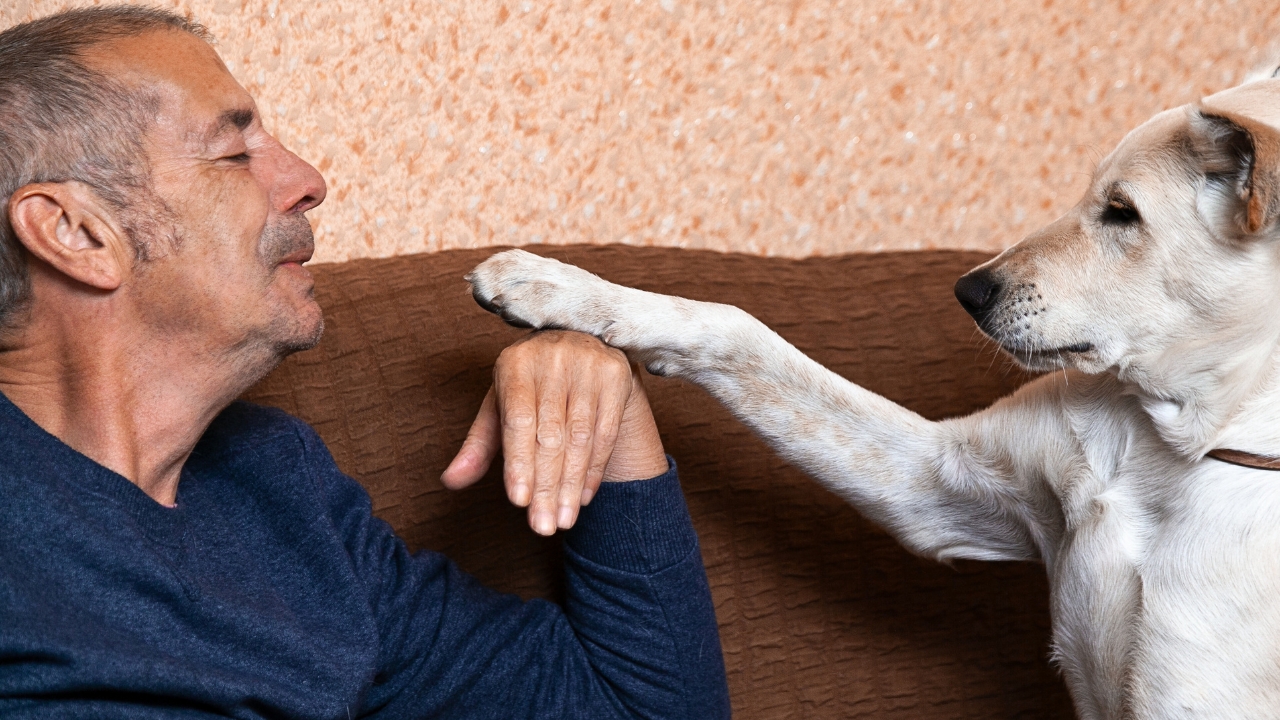
When a dog puts a paw on you, it usually is not random. It is a form of communication, and the meaning changes with the dog, the moment, and what happened right before it. The American Kennel Club notes that pawing often means a dog is trying to tell you something, not that one fixed emotion is always behind it. Sometimes your dog wants attention. Sometimes your dog wants food, outside time, or a little reassurance. Sometimes the paw lands on your leg because you have unknowingly taught the dog that this works. The key is to read the whole picture instead of treating the paw itself like a universal message.
If you pay attention to timing, body language, and whether the behavior is new or sudden, you can usually make better sense of it. A relaxed dog pawing you on the couch is different from a tense dog pawing you while panting, pacing, or showing wide eyes. VCA notes that pawing can also show up as an attention-seeking behavior during stress, which is why context matters so much. If the behavior suddenly becomes intense or comes with other odd changes, it is smart to consider discomfort, anxiety, or a medical issue instead of writing it off as a cute habit.
Your dog is trying to get your attention
A lot of the time, the answer is the obvious one: your dog wants you focused on them right now. PetMD notes that dogs often paw at people to get attention, especially when they are bored, want affection, or want to start play. If your dog drops a paw on your knee while you are on the phone, working, or watching television, that is often the canine version of tapping you on the arm. It is direct, physical, and hard to miss, which is exactly why dogs keep using it.
You can usually spot this version by what comes next. The dog may wag, lean in, stare at you, or paw again if you ignore them. If you respond by petting, talking, or playing, you reinforce the behavior whether you mean to or not. That is why pawing can become more frequent over time. Dogs repeat what gets results, and even scolding can count as attention in their mind. If the paw always earns a reaction, your dog learns that this is one of the most reliable buttons they can push.
Your dog wants something specific
Sometimes the paw is not vague at all. It is a request. The AKC notes that dogs may paw to signal hunger, treats, potty time, or play. In plain terms, your dog may be trying to move you toward the next thing they want. If the pawing happens around dinner time, near the door, when the leash comes out, or while you are holding snacks, the message is often tied to a clear goal. Many dogs learn that a paw gets your attention faster than standing quietly and hoping you notice.
This is where pattern matters. If your dog paws you, then looks at the door, food bin, toy basket, or leash hook, that is useful information. The paw is often the opening move, not the whole message. Dogs are good at linking behaviors to outcomes, and a dog who has been rewarded for pawing in these moments will keep using it. If you want to understand what your dog is “saying,” do not stop at the paw itself. Watch where they look, where they walk next, and what time of day it happens.
Your dog is showing affection and seeking contact
A paw can also be a social gesture. Some dogs put a paw on you during petting because they want the contact to keep going or because they are leaning into a calm moment with you. The AKC notes that pawing can be a sign of seeking affection, and VCA also describes kneading-type behavior in pets as something that can happen when they are content and close to you. In those cases, the paw is less of a demand and more of a way to maintain touch.
You can usually tell this kind from the rest of the dog’s body. A soft face, loose muscles, quiet breathing, and a relaxed posture point to a dog that is settled in and comfortable. The paw may rest on your arm and stay there rather than jab, scrape, or repeat. That matters. A calm resting paw often reads more like connection than insistence. Your dog is not making a speech here. They are using one of the few tools they have to stay physically linked to someone they trust.
Your dog may be feeling stressed or unsure
Not every paw on your leg is friendly or playful. In some situations, it can be a sign that your dog feels uneasy and is reaching for reassurance. The AKC says pawing can also be linked to stress, and VCA notes that attention-seeking behaviors like pawing can show up when dogs are anxious. If your dog paws you during thunderstorms, around strangers, at the vet, or in a busy environment, the behavior may be tied to discomfort rather than affection.
This is where you need to read the rest of the dog, not only the paw. A tense face, low ears, panting when it is not hot, pacing, trembling, lip licking, or a tucked posture all point toward stress. In that setting, the paw may mean your dog is looking for stability or trying to pull you into the moment with them. It is less “pay attention because I am bored” and more “something feels off and I need help reading this.” That difference matters if you want to respond in a way that actually helps.
Your dog has learned that pawing works
A lot of pawing is not deep emotion at all. It is plain old learned behavior. PetMD identifies pawing as a common attention-seeking behavior, and older PetMD guidance notes that dogs repeat behaviors that get a response. If your dog paws once, and you immediately pet them, talk to them, toss a toy, or hand over food, the dog learns fast. The paw becomes a tool because it has a strong history of paying off. Dogs are practical that way.
That is why some dogs become very polished at it. They use the exact same move in the exact same way because it has been reinforced again and again. In many homes, owners accidentally build the habit because the behavior feels harmless or funny at first. Then the dog starts pawing during meals, while guests are over, or any time attention shifts away. If you have a dog that paws constantly, the real story may be less about what they feel in that second and more about what the behavior has successfully earned in the past.
Your dog may be trying to comfort you
Dogs do sometimes use touch in a way that looks a lot like social support. The AKC notes that pawing can be part of empathy or comfort-seeking behavior, especially when a dog responds to your tone, posture, or emotional state. If your dog places a paw on you while you are upset, sitting still, or speaking in a strained voice, it may be a social response rather than a request for something concrete. Dogs are keen observers of routine and emotional shifts, and many react when your behavior changes.
You do not need to turn that into magic to recognize what is happening. A dog that moves in close, stays settled, and adds gentle contact may be responding to the fact that you sound or act different than usual. The paw can be part of that contact. It is not proof your dog understands every detail of what you feel, but it can be a real attempt to connect in the moment. In practical terms, your dog may be saying, “I am here, and I want in on whatever is going on with you.”
Sometimes the paw means you should look closer
If pawing is sudden, constant, or comes with other unusual behavior, do not assume it is only a cute quirk. PetMD notes that sudden behavior changes can sometimes point to underlying medical issues, and VCA stresses that stress signals in dogs are easy to misread unless you look at the full context. A dog that suddenly becomes clingy, frantic, or pushy with their paws may be anxious, uncomfortable, overstimulated, or not feeling right physically. That does not mean every paw is a red flag, but a new pattern deserves attention.
The best read comes from the whole dog. If the pawing shows up with panting, pacing, shaking, appetite changes, reluctance to be touched, or other behavior that feels off, it is worth paying closer attention and, if needed, calling your vet. Dogs do not have many ways to flag discomfort, and behavior is one of the first places it shows. A paw on your leg can be affection, habit, or a request. But when the overall picture shifts, it can also be your dog’s way of telling you something is not right.
Like The Avid Outdoorsman’s content? Subscribe to our newsletter so you never miss an article.
Here’s more from us: