Photo credit: RPeppenster/Shutterstock.com
A grizzly is one of the hardest animals in North America to push around, and most creatures know it. That said, “top predator” does not mean “untouchable.” In the real world, big fights are usually decided by risk, position, numbers, and whether the other animal has the kind of size or weapons that can wreck a bear in one bad second. Grizzlies are powerful, fast, and willing to throw their weight around, but they also avoid needless injury because a busted shoulder, ripped face, or punctured lung can be a death sentence in the wild. That is why there are a handful of animals a grizzly cannot treat like easy work. These are the ones that can stand their ground, turn a charge, and in the right situation leave the bear backing off—or worse.
American bison
A mature bison is the kind of animal that can make even a grizzly think twice. Yellowstone notes that bison usually face attackers instead of running, and that herd defense, raw bulk, and a willingness to charge make them harder to kill than prey animals that break and flee. A grizzly may test one, especially if it sees weakness, but a healthy adult with room to move can turn that fight around in a hurry.
If you have ever watched a bull bison hold ground, you already know why. A grizzly needs to get in close to do damage. A bison only needs one clean hit with its horns or enough force behind a shove to flip the whole script. In a straight-up clash, that size gap and forward-driving power can put the bear on the losing end fast.
Moose
Moose kill people and hurt more folks in Alaska than many visitors expect, and that tells you plenty before you even bring a grizzly into the picture. Alaska Fish and Game says moose can charge, stomp, and kick when threatened or when protecting young. Those long legs are not there for show. A grizzly that misjudges distance can end up under a rain of hooves and in a very bad spot.
Yes, grizzlies do prey on moose, including calves and sometimes adults, but that cuts both ways. Predators get hurt all the time going after big hoofed animals. A cow defending a calf or a fired-up bull with space to plant and strike is not a soft target. When the moose stands instead of breaking, the bear can go from hunter to casualty in one ugly exchange.
Musk ox
A musk ox does not look fast, but that is not the point. Its whole survival plan is built around refusing to panic. The National Park Service describes how musk oxen form lines or tight circles with horns out when predators close in, and Alaska Fish and Game says that defensive strategy is highly effective against wolves and grizzly bears. That is about as direct a sign of respect as you will get in the wild.
A lone grizzly can sometimes kill a musk ox, especially if the herd breaks or a calf gets separated. But a planted adult that holds formation is another matter. You are talking about a stocky animal built like a battering ram, armed at both ends of the problem. If the bear commits and the musk ox does not fold, the grizzly is gambling with its face, shoulders, and ribs.
Gray wolves
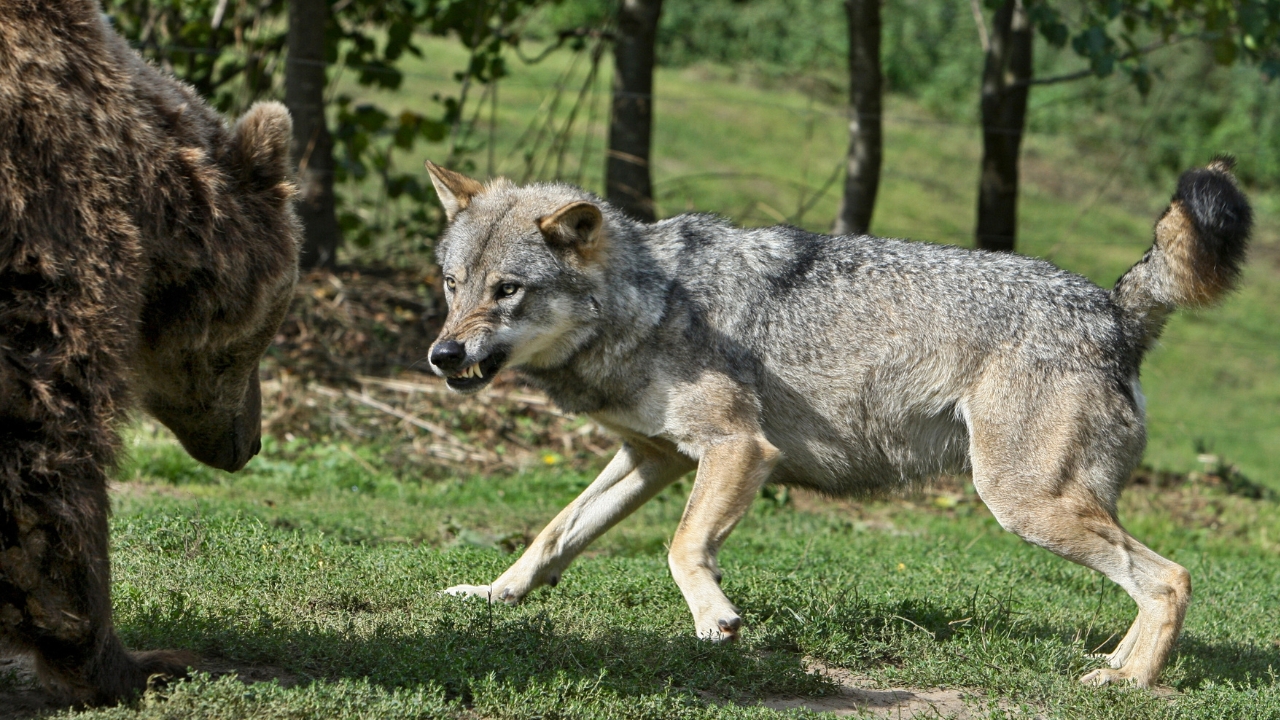
One wolf is usually not enough to own a grizzly. A pack is different. Wolves and grizzlies spend a lot of time fighting over carcasses, and that constant competition is serious enough that researchers studying Yellowstone found wolf behavior and kill rates change when bears are around. That tells you these are not meaningless standoffs. Numbers matter, pressure matters, and wolves know how to work both.
A pack does not need to bulldoze a grizzly head-on to come out ahead. It can harass, flank, snap, and keep the bear turning until the cost stops being worth it. Most of these encounters end in posturing or one side giving ground, not a kill, but if a grizzly is tired, outnumbered, or pinned on a carcass, wolves can absolutely make that bear lose the contest.
Another grizzly
The animal a grizzly may have the most reason to fear is another grizzly, especially a bigger adult male. National Park Service guidance in Grand Teton notes that lower-ranking bears, including family groups and subadults, may use roadside habitat partly to avoid dominant adult males, which sometimes kill other bears. That is not rumor. That is part of the pecking order.
You do not need much imagination to see why. Same weapons, same aggression, same instincts—then add a size mismatch. When one mature boar has the edge in weight, confidence, or position, the smaller bear can get run off, mauled, or killed. If your question is what can face down a grizzly and come out on top, another grizzly belongs near the front of the list every single time.
Polar bear
A big male polar bear is one of the few animals that can meet a grizzly at equal footing and sometimes exceed it. Alaska Fish and Game says polar bears are the size of large brown bears, with average adult males around 600 to 1,200 pounds and the biggest males even heavier. The U.S. Fish and Wildlife Service also identifies the polar bear as the largest living bear species. On size alone, this is not a mismatch in the grizzly’s favor.
Direct grizzly-polar bear fights are not a routine thing, and they do not overlap everywhere, so this is not something you should picture happening every day. But where ranges and food pull them into the same country, a fully grown male polar bear is one of the few bears that can force a grizzly to deal with an equal-or-bigger problem. In a hard contest, that matters more than attitude.
Walrus
A walrus is not a normal grizzly matchup, but if you are talking about animals that can shut down a bear’s plans, it belongs in the conversation. NOAA notes that walruses use their long ivory tusks to defend against predators. Add in the size of a full-grown bull and the fact that adults are not easy prey even for far more marine-adapted hunters, and you have an animal that a grizzly would be smart to leave alone.
This is not the kind of fight a grizzly wants because the usual bear playbook does not line up well here. Getting close means entering tusk range against an animal that can punch holes instead of throwing swats. A grizzly’s strength still matters, but one bad angle against a walrus can turn into a crippling injury fast. Sometimes “coming out on top” simply means the bear decides that lesson early and backs off.
Like The Avid Outdoorsman’s content? Subscribe to our newsletter so you never miss an article.
Here’s more from us: