Photo credit: Kathrineva20/Shutterstock.com
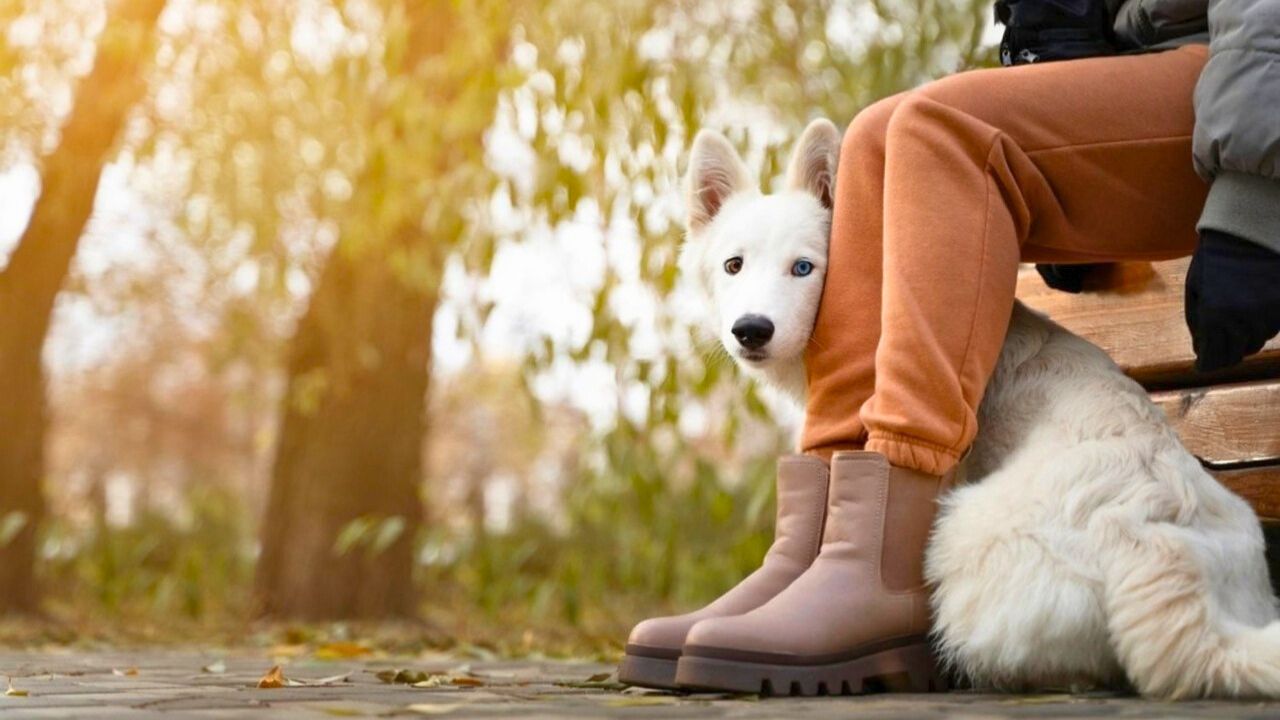
When your dog sits on your feet, it might look like a random habit, but it’s usually intentional. Dogs use positioning to stay connected and to feel secure in their environment. Sitting on your feet lets them keep physical contact with you while also facing outward to monitor what’s happening around them. In their mind, they’re staying close to their safe person without losing awareness of the room.
For many dogs, this is simply affection. Your feet are warm, stable, and familiar, and resting there gives them comfort. You’ll often see it when they’re relaxed at home or when they’re settling in after a busy moment. It’s similar to leaning against you on the couch — just their way of staying connected without asking for constant attention.
What they may be protecting
Sometimes sitting on your feet has a mild protective element. It doesn’t always mean aggression or serious guarding. Instead, it can be your dog’s way of managing space. By anchoring themselves to you, they’re creating a small buffer between you and the rest of the environment. This often shows up when new people are around, when you’re in a crowded place, or when something unfamiliar is happening.
Dogs that are unsure or cautious may sit on your feet as a way to stay brave while still feeling supported. It allows them to watch what’s going on without stepping fully into it. They’re not necessarily trying to “guard” you in a dramatic sense — they’re just choosing the safest position they know.
When it’s harmless and when to watch it
If your dog sits on your feet and stays loose and calm — relaxed posture, normal breathing, no tension — it’s usually nothing to worry about. It’s comfort and closeness. But if they stiffen, block others from approaching, growl, or seem hyper-alert while sitting on you, it may be the early stages of resource guarding.
In that case, it helps to guide them toward sitting beside you instead of on you. Teaching a simple “place” cue or rewarding them for settling calmly nearby can keep the connection without letting them feel responsible for controlling access to you.
Most of the time, though, sitting on your feet is your dog’s quiet way of saying, “I’m with you, and I feel safe right here.”
Like The Avid Outdoorsman’s content? Subscribe to our newsletter so you never miss an article.
Here’s more from us: