Photo credit: RossHelen/istock.com
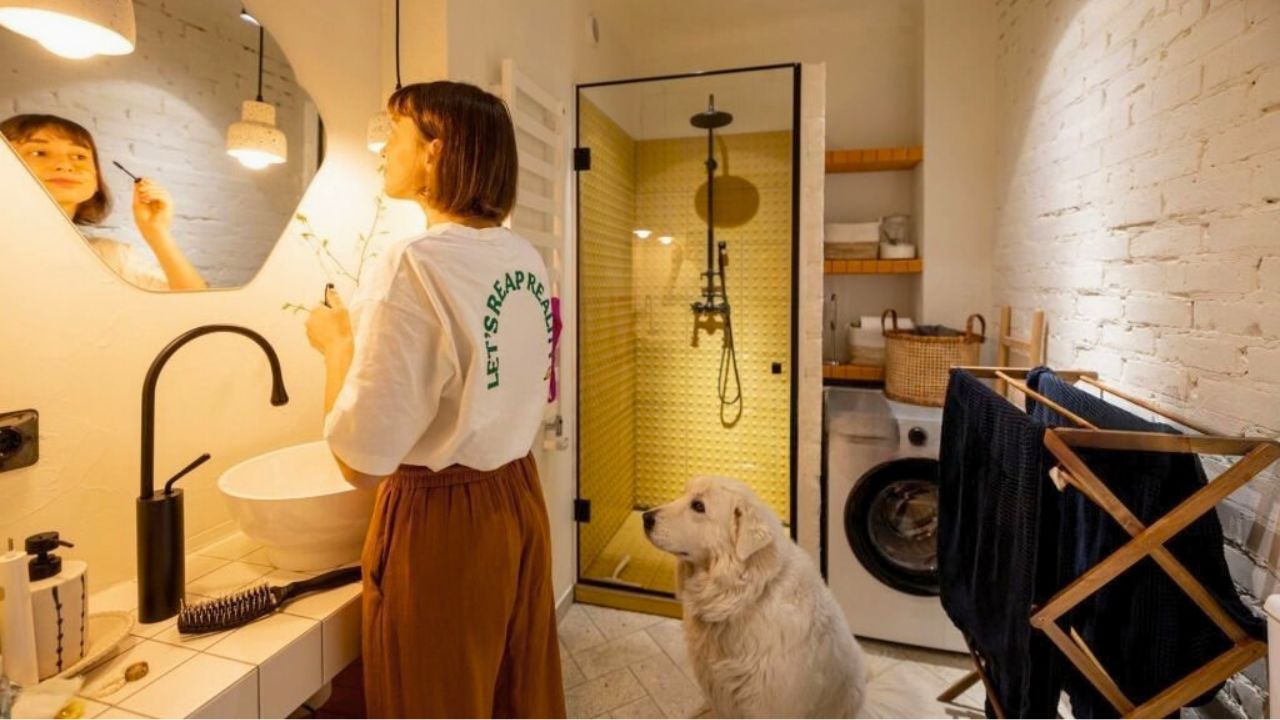
Dogs don’t see the bathroom as “private.” They see it as another room you walked into, and their instinct is to keep tabs on their person. In a dog’s world, separation can mean risk, so sticking close is normal behavior. A lot of dogs also learn that your movement predicts the next part of the routine — breakfast, going outside, a walk, car keys, or you sitting somewhere they can settle beside you. Following you is often their way of staying plugged into what’s happening next.
Some dogs are also just curious. Bathrooms have strong smells, weird echoes, running water, and small spaces that feel secure. For dogs that are a little unsure or easily overstimulated, being near you in a tight space can feel calming. It isn’t always clinginess; sometimes it’s simply comfort plus habit.
What it actually says about your bond
Most of the time, it says your dog trusts you and wants to be near you. You’re their safe base, and being close makes their world feel predictable. Dogs that are strongly people-focused — either by breed tendency or personality — will do this more. It can also be a sign that you’ve built a routine where proximity equals connection. If your dog follows you and you talk to them, pet them, or even make eye contact, they get a little social reward for sticking close.
It’s not automatically separation anxiety. The real question is what happens when they can’t follow. If you close the door and your dog lies down outside it and waits, that’s normal attachment. If they panic, scratch, howl, drool, pace, or seem unable to settle, that’s closer to anxiety and is worth addressing sooner rather than later.
When it can be a problem
Bathroom-following becomes a problem when it’s paired with distress and inability to handle short separations. Some dogs also start doing it more when their environment changes — moving homes, schedule shifts, a new baby, another pet, or less exercise. It can also ramp up if your dog has learned that following you means they get attention every single time, so it becomes their default strategy for interaction.
Another issue is safety and manners. If your dog pushes the door open, crowds your legs, or gets underfoot, it can turn into a tripping hazard. That’s not them being “bad.” It’s them doing what worked before without realizing they’re in the way.
How to handle it without hurting the relationship
If you don’t mind it, you can leave it alone. It’s harmless for most dogs. If you want more space, teach an alternative that still feels safe to them. A simple “place” cue works great: send them to a bed or mat outside the bathroom, reward them for staying put, then come back and reward calm again. Start with short durations — 10 to 30 seconds — and build up gradually so it stays easy.
If your dog shows real distress when separated, focus on making alone-time feel normal and positive. Give them a high-value chew only during short separations, practice closing doors briefly and reopening before they escalate, and keep your exits and returns boring. The goal is to teach them that you leaving for a minute doesn’t predict anything scary. With consistency, most dogs stop treating the bathroom like a mission and start treating it like, “Cool, she’ll be back.”
Like The Avid Outdoorsman’s content? Subscribe to our newsletter so you never miss an article.
Here’s more from us: