Photo credit: Oleg Volk/YouTube
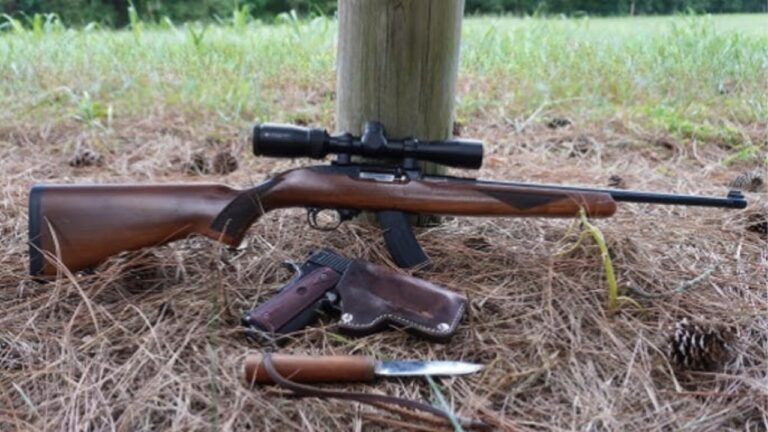
There’s something funny that happens when you put an old lever gun on the bench next to a modern AR. One looks cleaner, newer, more tactical. The other might have a few dents in the stock and some faded bluing. But when the trigger breaks and the target tells the truth, that battered lever gun will often walk away with the win. It’s not nostalgia talking—it’s repeatable performance. The best of these rifles were made when precision mattered more than mass production. You’re not chasing fast fire rates or rail space with a lever gun. You’re leaning on craftsmanship, balance, and barrels that were made to hit. If you’ve ever shot a well-kept .30-30 or .35 Remington from the bench, you already know. And if you haven’t, maybe it’s time to stop underestimating the walnut-and-steel workhorses that keep proving themselves, season after season.
They’ve Got Barrels That Were Actually Finished Right
One of the biggest reasons older lever guns outshoot most factory ARs is barrel quality. Not materials—plenty of ARs use good steel—but in how those barrels were finished and fitted. Back then, even mid-priced rifles got attention at the muzzle and chamber that you’d pay extra for now.
A decent Marlin or Winchester from the ‘70s often shows better crown work than what you’ll find on a rack-grade AR. Rifling was cleaner, bore polish was better, and quality control wasn’t left to the customer. That translates to better groups, even with off-the-shelf ammo. You can throw all the free-float handguards and match triggers you want on an AR, but if the barrel’s rough, it won’t hang with a vintage lever gun that was made to shoot tight.
You’re Not Fighting the Ergonomics to Stay Steady

Most ARs are built to be modular and adjustable—but not necessarily steady. Between the pistol grip, tall optic rails, and lightweight stocks, the average AR is a little squirrelly when you settle in for a shot. Lever guns, on the other hand, were designed to point and shoot from real field positions.
That balance shows up on the bench. A lever-action settles into a bag or rest naturally. The grip and stock alignment put your shoulder, wrist, and cheek in a straight line, and you’re not dealing with any weird torque from vertical grips or clamshell handguards. You squeeze the trigger, and the gun doesn’t flinch out from under you. That repeatable steadiness matters more than folks give it credit for—and it helps you put rounds right where you want them.
Triggers That Actually Break Clean
An honest trigger will teach you a lot about your rifle, and lever guns have some of the best “honest” triggers around. Not because they’re fancy, but because they’re consistent. Most AR triggers, even the nicer ones, have a little grit or slop unless you’ve upgraded them. That adds variation from shot to shot.
Older lever guns tend to have short, crisp pulls with minimal overtravel. They’re not match-grade, but they’re trustworthy. You don’t have to fight the break. You’re not surprised by a mushy wall or a creeping reset. It’s a clean snap, and the bullet goes where you sent it. That alone can cut groups in half compared to a jittery mil-spec AR trigger that feels different every time.
Less Gas, Less Jerk, Less Excuse

When you’re shooting from the bench or off sticks, the way the rifle recoils matters. Lever guns—especially in classic deer calibers like .30-30 or .35 Rem—have a smooth push to them. They cycle manually, so there’s no bolt carrier slamming back or buffer spring twanging through your cheek weld.
That difference shows up in how quickly you can recover and how well the rifle stays in place through recoil. ARs, especially the lightweight ones, tend to jump a bit. And the gas system throws in variables that don’t help with precision. A well-fit lever-action with a soft pad lets you stay planted, stay consistent, and stay accurate through long shooting sessions.
Fixed Stocks That Don’t Shift or Rattle
A lot of AR owners don’t realize how much their stock flexes until they watch their group open up. Adjustable stocks are great for customization, but most of them aren’t rock solid. They move a little under pressure, especially with cheek pressure or when shooting off bags. That slight movement throws off your consistency.
Old lever guns don’t have that problem. The buttstock is fixed tight to the receiver. No adjustment levers, no play, no give. When you shoulder the rifle, it fits the same every time. That stable point of contact helps keep everything aligned—from eye to reticle to muzzle—and that pays off in tighter groups, especially beyond 100 yards.
Fewer Parts, Fewer Problems

An AR has dozens of moving parts and plenty of tolerance stacking. That’s great for modular builds and easy maintenance, but it also introduces room for things to go wrong. Barrel nut torque, gas block alignment, buffer weight, carrier speed—all of those can affect consistency. It doesn’t take much to throw off your zero or open up your group.
Lever guns? They’re simpler. You’ve got a bolt, a lever, and a hammer. Fewer things to worry about means fewer surprises at the range. If the barrel is good and the sights are right, you can count on the next shot behaving like the last one. That predictability is something too many shooters give up chasing features they won’t use.
They Were Designed to Be Accurate With Factory Ammo
Back when most lever guns were being sold, folks weren’t handloading for them. These rifles were designed to shoot well with whatever you pulled off the shelf at the hardware store. That meant chambers were cut for accuracy, not speed, and twist rates matched the bullets those cartridges actually used.
Most ARs today are optimized for NATO ball or match handloads. Toss in some soft-point hunting ammo and performance can get spotty. But feed a vintage lever gun its favorite 150- or 170-grain soft point, and it’ll put them in tight groups all day. That kind of real-world compatibility matters more than lab specs when you’re sighting in for the season or punching paper on a calm afternoon.
Like The Avid Outdoorsman’s content? Be sure to follow us.
Here’s more from us:
The worst deer rifles money can buy
Sidearms That Belong in the Safe — Not Your Belt
*This article was developed with AI-powered tools and has been carefully reviewed by our editors.